Volume 27, Number 3
Xieling Chen1, Haoran Xie2, Xingquan Peng1, Xiaohui Tao3, Lin Li4, S. Joe Qin2, and Fu Lee Wang5
1School of Education, Guangzhou University, Guangzhou, China; 2School of Data Science, Lingnan University, Hong Kong SAR; 3School of Mathematics, Physics, and Computing, University of Southern Queensland, Australia; 4School of Computer Science and Artificial Intelligence, Wuhan University of Technology, Wuhan, China; 5School of Science and Technology, Hong Kong Metropolitan University, Hong Kong SAR
Artificial intelligence in online learning (AIOL) has attracted increasing attention in academia. This study applied BERTopic, a transformer-based topic modeling approach that leverages contextual embeddings, to examine the thematic structure and evolution of AIOL research. By analyzing 1,048 AIOL publications, this study sought to answer three research questions. What are the major research topics in AIOL? How have these topics evolved over time? What future research directions are recognized? Several research themes were identified, such as adaptive learning systems, sentiment analysis, and predictive analytics. Temporal analysis revealed a shift from early applications of traditional AI toward machine learning and deep learning approaches. The results also revealed an increasing emphasis on multimodal data integration for emotion recognition and personalized learning support. Based on the findings, a conceptual model has been proposed to guide AIOL research and practice by integrating four components: data, AI processing, adaptive learning, and learner development. Overall, the study offered a data-driven overview of AIOL research and demonstrated how topic modeling can be used to examine thematic development in emerging research fields.
Keywords: artificial intelligence, online learning, BERTopic, research topics, topic evolutions
Artificial intelligence (AI), with capabilities in predicting, diagnosing, recommending, and decision-making, has become increasingly prominent in education for supporting learning across various settings (Chen et al., 2022). AI technologies like machine learning (ML) and deep learning (DL) have been integrated into online education to optimize teaching and learning (Torres-Vergara et al., 2025). Tools such as intelligent tutoring systems, instructional robots, learning analytics dashboards, and adaptive learning systems have enhanced student experiences and academic performance (Chen et al., 2020). As a result, research on AI applications in online learning (AIOL) has grown, introducing new thematic directions (Dogan et al., 2023). To understand the development and shifts in research trends, scientific literature, particularly topic models, has offered valuable insights into thematic patterns.
The body of AIOL research has not merely expanded in volume; it has also evolved across interconnected thematic areas, such as AI’s functional applications (e.g., prediction, personalization, assessment), methodological approaches (e.g., machine learning algorithms, data mining techniques), and context-specific implementations (e.g., MOOCs, blended learning, language learning). Understanding how these thematic areas have converged and diverged over time is essential for mapping the intellectual structure of AIOL research.
Given the rapid development of AIOL, a review of existing literature is timely. Several studies have identified key themes and roles in AIOL applications. Munir et al. (2022) reviewed 60 publications (2013–2018), highlighting six core themes: (a) intelligent tutoring, (b) dropout prediction, (c) performance prediction, (d) adaptive learning, (e) learning analytics, and (f) automation. Similarly, Ilić et al. (2023) analyzed 305 studies (2010–2021) and identified four AI roles: (a) learner modeling, (b) learning analytics, (c) adaptive assessment, and (d) personalized learning. In terms of AI techniques, Dogan et al. (2023) examined 276 publications (1999–2022) and found three thematic clusters: AI in teaching, student behavior prediction, and personalized learning. They also highlighted the consistent use of AI methods such as neural networks and support vector machines. Ouyang et al. (2022) reviewed 32 studies (2010–2020) and confirmed four key AI functions in online higher education: (a) predicting learning outcomes, (b) recommending resources, (c) automating assessment, and (d) enhancing learning experiences.
Recent studies have explored AI applications in specific subfields of online education. Rather than forming isolated lines of inquiry, these studies have collectively extended core functional themes like prediction, personalization, and assessment into different learning contexts. For example, research in MOOCs has focused primarily on dropout prediction and learner analytics (e.g., Alghamdi et al., 2025), while studies in blended learning have examined AI’s role in supporting asynchronous and individualized learning (Park & Doo, 2024). In language learning contexts, particularly English as a foreign language, AI tools like ChatGPT have been studied for their influence on sustained engagement and learning support (Tram et al., 2024).
Similarly, intelligent tutoring systems integrated with emerging technologies like augmented and virtual reality have enhanced immersive and personalized learning experiences (Lampropoulos, 2025). Research on AI-driven assessment has evaluated automated essay scoring and adaptive testing, highlighting both technical progress and functional limitations (Gardner et al., 2021). Studies on AI in learning management systems and broader digital platforms have emphasized adaptive learning, intelligent proctoring, and outcome optimization (Daniel et al., 2024; Qazi et al., 2024).
These subfield-specific reviews illustrate how similar AI functions—prediction, personalization, adaptive feedback, and automated assessment—have been repeatedly implemented across various educational settings. However, these reviews were typically organized around specific contexts, tasks, or technologies, making it difficult to model cross-context thematic structures. It is unclear how recurring themes intersect, overlap, or evolve at the broader field level.
Methodologically, most existing reviews have relied on qualitative synthesis, manual coding, or small datasets. Conceptually, they described themes but did not quantitatively model how these themes related to one another or evolved over time. Given the rapid growth of AIOL publications, such approaches may have been insufficient for capturing large-scale thematic dynamics.
Compared to traditional qualitative reviews, a quantitative, ML-driven overview that applies automated analysis to a large corpus allows research themes to emerge from data rather than being imposed a priori. This approach has been successfully applied in recent studies, such as Chen et al. (2025), who used topic modeling to identify research themes related to metacognition in education, and Liu et al. (2021), who conducted a topic modeling and trend analysis of MOOCs publications. These studies demonstrated the advantages of ML-driven methods in revealing thematic structures and relationships that are difficult to capture through qualitative reviews. Accordingly, a quantitative, ML-driven overview of AIOL research is both timely and methodologically appropriate.
To this end, this study adopted a topic-based bibliometric approach using BERTopic, a transformer-based topic modeling technique, to analyze 1,048 AIOL publications from 2010 to 2023. Unlike traditional probabilistic topic models like latent Dirichlet allocation (LDA), which rely on bag-of-words representations, BERTopic performs topic discovery using contextual document embeddings derived from pre-trained transformer models (e.g., BERT). Clustering occurs in the embedding space, with bag-of-words representations used only in the final stage to construct interpretable topic representations via c-TF-IDF weighting. BERTopic provides insights into structural patterns across a corpus, enabling researchers to map trends, forecast developments, and make informed decisions about research directions and educational initiatives.
By systematically modeling topic structures and temporal shifts, this study identified current hot topics, emerging directions, and allowed for comparison between data-driven themes and those synthesized in prior reviews. This approach directly addressed the fragmentation noted in earlier literature and offered an integrated, quantitative mapping of the AIOL research landscape.
This study was guided by three research questions:
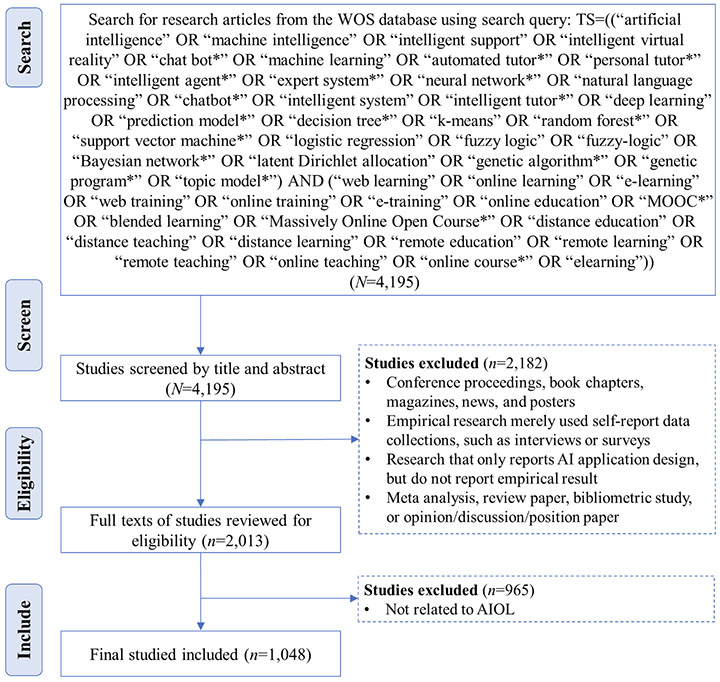
This study followed the PRISMA guidelines (Figure 1) to collect AIOL articles from the Science Citation Index (SCI) and Social Sciences Citation Index (SSCI) databases on the Web of Science platform, using search terms that consisted of three components combined with AND operators (Moher et al., 2010). AI-related terms (e.g., artificial intelligence, machine learning, and neural network*) were adapted and expanded based on prior studies such as Chen et al. (2023) and Chu et al. (2022) to ensure comprehensive coverage of major AI-related terminologies while maintaining search precision. Online learning-related keywords (e.g., online learning, e-learning, MOOC*, and massively open online course*) were informed by Liu et al. (2021). In the search query, the asterisk (*) is used as a wildcard character in the search strategy to capture different word endings and variations of the root term. The full list of search phrases is shown in Figure 1. The data search returned 4,195 journal articles. The first and last authors excluded studies that were duplicated, not authored in English, retrospective analyses, or unrelated to AIOL according to the criteria presented in Table 1, resulting in 1,048 studies published between 2010 and 2023 for analysis. The titles, keywords, and abstracts of the selected papers were consolidated into a single document for topic modeling.
Figure 1
Data Search and Collection Process
Table 1
Inclusion and Exclusion Criteria
| Criteria | Code | Meaning |
| Inclusion | I1 | Conducted in online education |
| I2 | Reported the actual AI-supported instruction and learning processes | |
| I3 | Published in peer-reviewed journals | |
| I4 | Empirical research that demonstrated AI’s actual effects on education | |
| Exclusion | E1 | Conference proceedings, book chapters, magazines, news, or posters |
| E2 | Only used self-report data collections (e.g., interviews or surveys) | |
| E3 | Only reported AI application design without empirical results | |
| E4 | Meta-analysis, review papers, bibliometric study, or opinion/discussion/position papers |
This study employed BERTopic, a framework that integrates contextual document embeddings with clustering techniques for topic modeling. Unlike traditional probabilistic models such as latent Dirichlet allocation, which rely on bag-of-words representations, BERTopic clusters documents in an embedding space derived from pre-trained transformer models (e.g., BERT). Topic discovery occurs in the embedding space, while bag-of-words representations are used at the topic representation stage to extract interpretable keywords via class-based term frequency-inverse document frequency (c-TF-IDF). Thus, topic formation via BERTopic was driven by embeddings rather than word frequency statistics. The modeling process consisted of five steps as described below: (a) document embedding, (b) dimensionality reduction, (c) clustering, (d) cluster-level bag-of-words generation, and (e) topic representation. The workflow is shown in Figure 2.
In step 1, embed documents, the abstracts of AIOL research articles were transformed into numerical representations using the sentence-transformers framework with the all-MiniLM-L6-v2 English language model. This model mapped sentences and paragraphs into a 384-dimensional dense vector space. These embeddings represented the contextual semantic relationships between documents and served as the basis for clustering.
Step 2, reducing dimensionality, was performed using uniform manifold approximation and projection (UMAP), a non-linear technique that preserved both local and global data structure (McInnes et al., 2018). Three parameters were considered: (a) n_neighbors (number of nearest neighbors for approximating local structure); (b) n_components (number of dimensions in the reduced embedding space); and (c) min_dist (minimum distance between data points in the low-dimensional space). Default BERTopic parameter settings were retained unless otherwise specified.
In step 3, cluster documents. After dimensionality reduction, density-based clustering and outlier detection were conducted using hierarchical density-based spatial clustering of applications with noise (HDBSCAN). This method identified clusters of varying shapes and outliers to improve topic representation by reducing noise and enhancing accuracy. Clustering occurred in the embedding space, so topic allocation reflected semantic proximity rather than keyword overlap. The HDBSCAN algorithm included two key parameters: min_cluster_size (which controled the minimum number of samples per cluster) and min_samples (which influenced noise point identification by setting a threshold for the minimum number of samples to avoid classification as noise).
Step 4 was to generate bag-of-words. After clustering, all documents within each cluster were aggregated into a single document. Word frequencies were computed to create a cluster-level bag-of-words representation. Initially, the default stopword list provided by BERTopic was used. However, as the initial modeling results showed limited interpretability, the stopword list was expanded by incorporating widely used English stopwords from the natural language toolkit (NLTK). The final stopword list was a merged set of BERTopic’s default stopwords and the extended NLTK list, with duplicates removed. The resulting vectors were L1-normalized to account for differences in cluster size. It is important to note that the bag-of-words representation was used only to enhance topic interpretability; it did not determine cluster formation, which was based exclusively on contextual embeddings.
Step 5, represent topics using class-based term frequency-inverse document frequency (c-TF-IDF). The c-TF-IDF score for a word \(x\) in cluster \(c\) was calculated as:
\[W_{x,c} = d = tf_{x,c} \times log({{1 + A} \over {f_x}})\]
where \(tf_{x,c}\) denoted the word frequency of \(f_x\) in cluster \(c\), \(A\) represented the average number of words per cluster, and \(f_x\) denoted the total word frequency across all clusters. Words within each cluster were ranked according to their c-TF-IDF scores. In this study, the top 20 words (N = 20) with the highest c-TF-IDF values were selected to represent each topic. It is important to note that the computationally derived topics do not aim to replicate author-provided keywords. Instead, they represent emergent semantic structures at the corpus level.
During topic modeling, comparisons across different models with varying numbers of topics were conducted by two domain experts. These experts evaluated the models based on representative terms and articles according to four criteria adapted from Chen et al. (2025).
Based on this evaluation, a total of 11 distinct and meaningful topics were identified.
Figure 2
Workflow For BERTopic Modeling
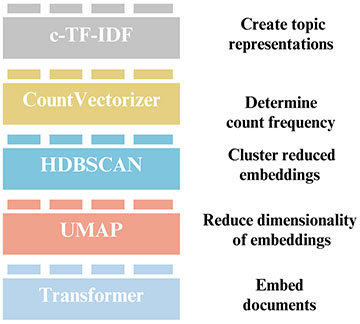
Table 2 shows the BERTopic modeling results for the 1,048 AIOL research articles, from which a total of 11 distinct and meaningful topics were extracted. The largest topic was machine learning for online predictive analytics, while the smallest significant topic was optimization algorithm-based personalized online learning. In Table 2, the topic proportion was calculated as
\[P_k = (\sum_d {\theta_{d,k} \over D})\]
where \(P_k\) represented the prevalence of the topic, and \(\theta_{d,k}\) was the probability of document \(d\) being associated with the \(k\)th topic.
Table 2
AIOL Research Topics
| Topic | Proportion | S | p | Trend |
| Machine learning for online predictive analytics | 17.50% | 37 | 0.04874 | ↑↑ |
| MOOC forum and review analysis | 10.44% | 41 | 0.02854 | ↑↑ |
| Intelligent adaptive online learning systems | 12.77% | -79 | 1.954e-05 | ↓↓↓↓ |
| Emotion recognition and deep learning in online learning | 9.22% | 29 | 0.1253 | ↑ |
| AI-enhanced online language education | 10.22% | 13 | 0.5112 | ↑ |
| Online learning in COVID-19 | 7.47% | 51 | 0.006196 | ↑↑↑ |
| Self-regulated online learning | 10.34% | 37 | 0.04874 | ↑↑ |
| AI chatbots-assisted online learning | 6.27% | 31 | 0.1005 | ↑ |
| AI-assisted online music and art education | 5.72% | 33 | 0.0798 | ↑ |
| Electroencephalogram (EEG)-based online learning analytics | 3.69% | 37 | 0.04874 | ↑↑ |
| Optimization algorithm-based personalized online learning | 6.37% | -65 | 0.0004589 | ↓↓↓↓ |
Note: ↑(↓): increasing (decreasing) trend but not significant (p > 0.05)
↑↑(↓↓), ↑↑↑(↓↓↓), and ↑↑↑↑(↓↓↓↓): significantly increasing (decreasing) trend (p < 0.05, p < 0.01, and p < 0.001, respectively).
Figure 3 illustrates the proportion of each topic in the dataset, highlighting their relative prevalence to emphasize the dominant themes in the AIOL research field. Figure 4 presents the temporal evolution of each topic, identifying emerging, declining, or stable research directions over time. Significant topics included machine learning for online predictive analytics, MOOC forum and review analysis, online learning in COVID-19, self-regulated online learning, and EEG-based online learning analytics, all of which have seen notable increases in research interest. In contrast, two topics, namely intelligent adaptive online learning systems and optimization algorithm-based personalized online learning, have shown a significant downward trend.
Figure 3
Distribution of Topics Among Articles
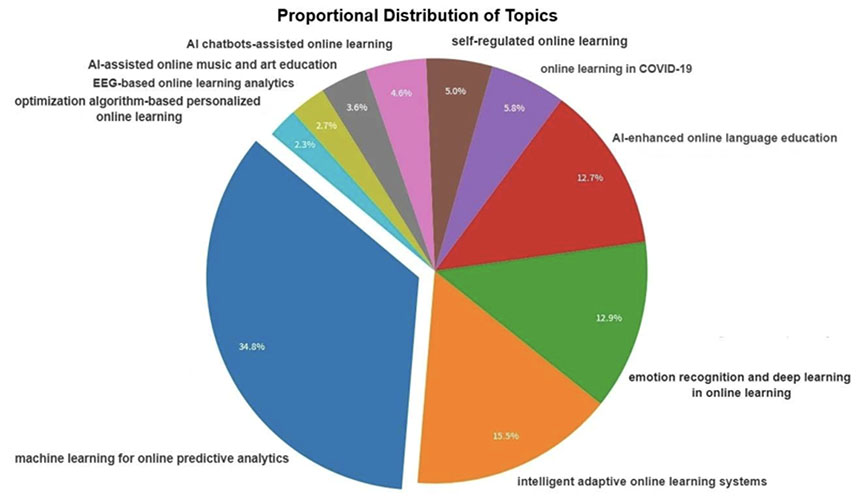
Figure 4
Topic Trends
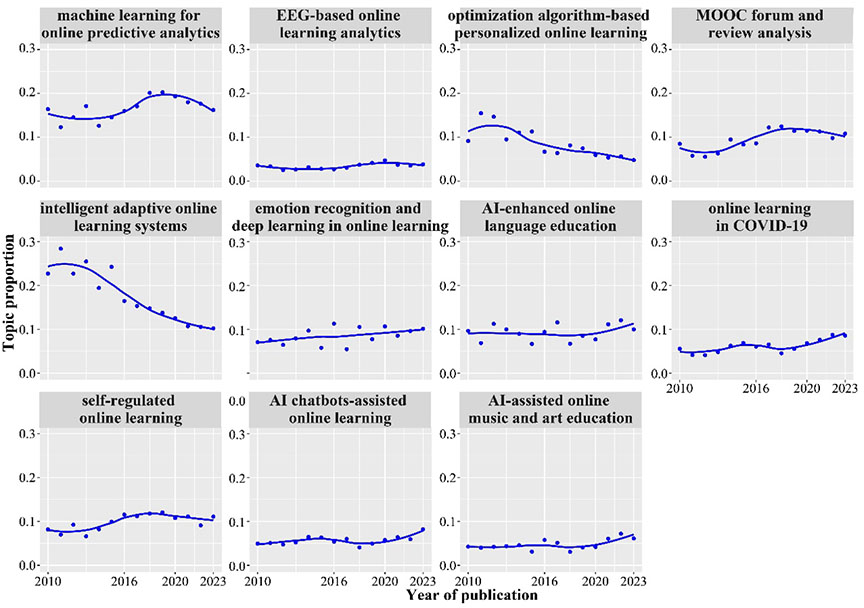
Figure 5 shows the distribution of AIOL research articles. Each dot represents an article, and the color indicates the topic to which it belongs, providing a deeper understanding of the relationships between topics in a two-dimensional space. The axes, D1 and D2, were derived from the UMAP dimensionality reduction technique, which projected the high-dimensional topic space into two principal components. These components captured the most important patterns and relationships in the data, allowing for a visualization of how articles were distributed based on their topic associations. Articles on machine learning for online predictive analytics (orange) were concentrated, indicating content similarity, while those on MOOC forum and review analysis (green) formed a distinct cluster. Articles on online learning in COVID-19 and self-regulated online learning were closely grouped, suggesting content overlap. In contrast, articles on EEG-based online learning analytics were more dispersed, reflecting diversity in research methods or applications.
Figure 5
Distribution of AIOL Articles
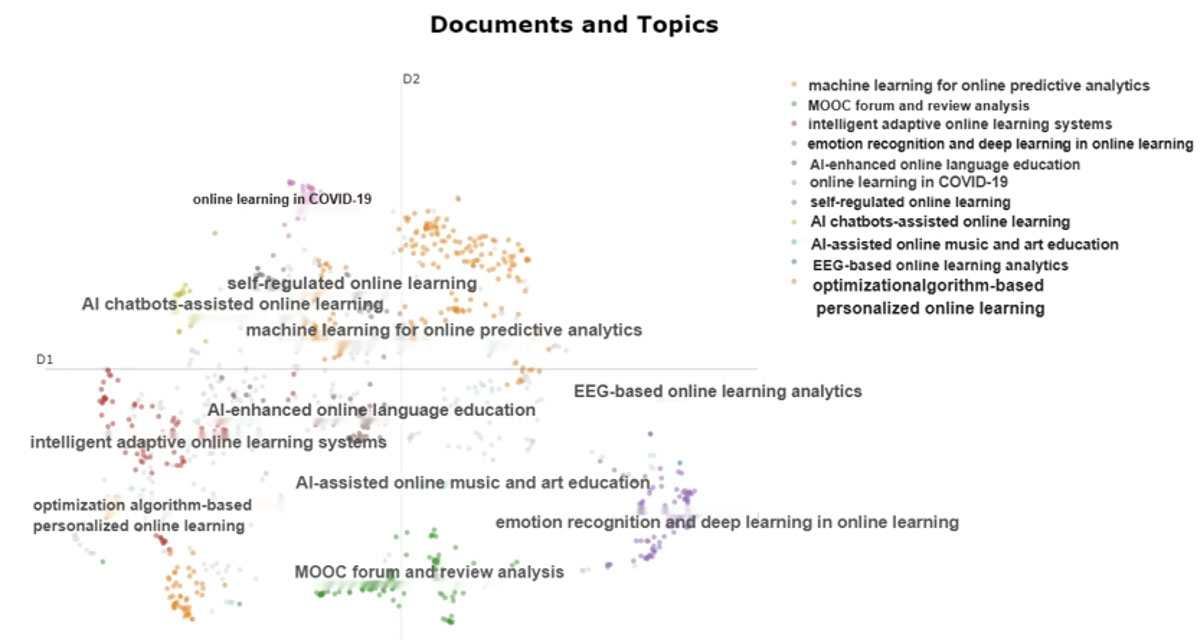
Figure 6 depicts the terms used most frequently, providing an intuitive overview of the key concepts within the dataset. The term student appeared most frequently, with other commonly occurring terms including e-learning, model, education, use, and learning. A key finding from the analysis was the prevalence of terms related to AI-supported online learner engagement, such as MOOC, method, system, model, machine learning, and neural network. These terms reflected a focus on online learning platforms, instructional methods, learning systems, and AI applications. Figure 7 presents word clouds for each topic to complement the BERTopic analysis by visually highlighting the most salient terms within each identified cluster. While the cluster labels provided a structured understanding of the topics, the word clouds offered an intuitive, at-a-glance view of the key terms associated with each topic, allowing for a more immediate grasp of the thematic focus. For example, the topic of machine learning for online predictive analytics emphasized words such as MOOC, learning, student, and model, underscoring the significance of MOOCs in online learning. Similarly, other word clouds focused on keywords such as chatbot, EEG, and algorithm, showcasing diverse research topics in AIOL, including AI, electroencephalogram analysis, and algorithm design.
Figure 6
Word Cloud Analysis Results
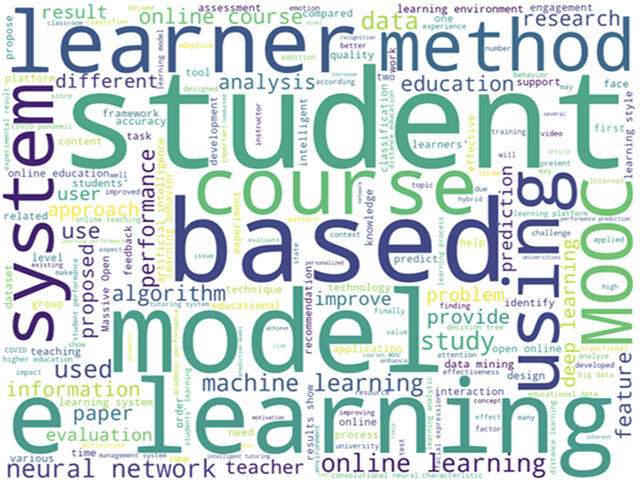
Figure 7
Specific Topic Word Clouds
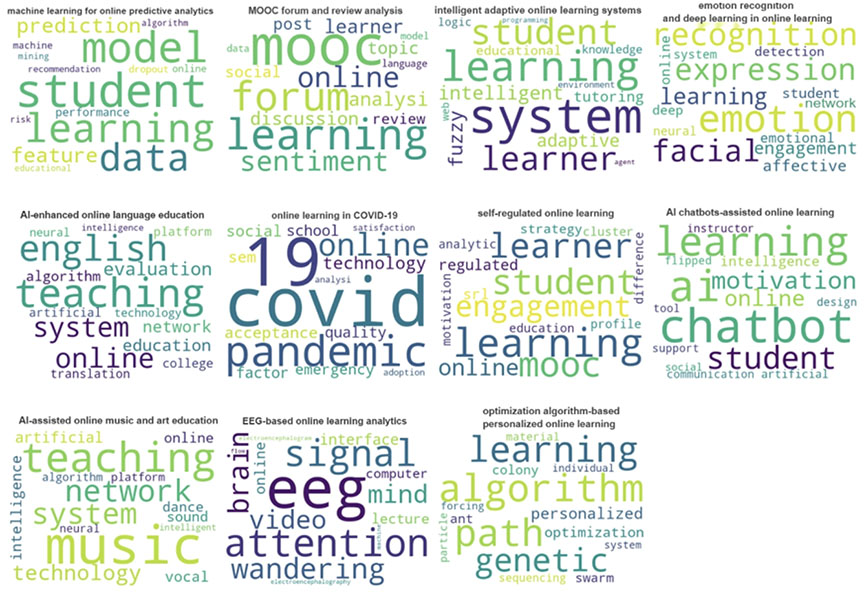
Figure 8 shows a heatmap of the number of articles for each topic by publication year, highlighting periods of heightened research activity. Overall, AIOL research has shown a continuous upward trend, with an increasing number of articles published, particularly since 2017. Six out of the eleven topics reached their peak in volume by 2022. It should be noted that the total number of articles presented in the figure does not equal the total analyzed (1,048) due to how the BERTopic algorithm handles clustering. When using the HDBSCAN algorithm, points that do not belong to sufficiently dense clusters are assigned the label -1, which represents noise points. Following Grootendorst (2022), this study excluded articles labeled as -1.
Figure 8
Heat Map of AIOL Topics
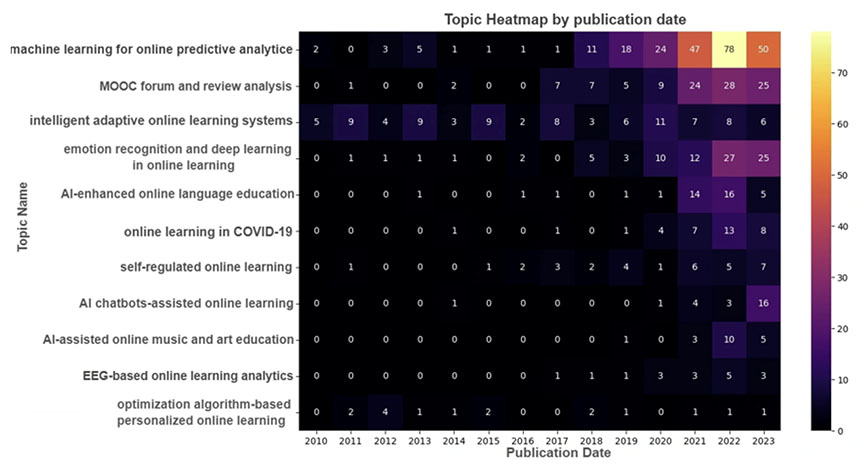
Figure 9 presents the hierarchical clustering analysis of AIOL topics, visualizing their relationships and similarities through a dendrogram. This analysis revealed how different topics were related and grouped, highlighting potential overlaps and shared themes. It provided deeper insights into the underlying structure of the topic distribution over time. Results showed that machine learning for online predictive analytics clustered with MOOC forum and review analysis and self-regulated online learning, which indicated high content relevance. Intelligent adaptive online learning systems tightly clustered with optimization algorithm-based personalized online learning, which reflected similarities in personalized learning technologies. AI-assisted online music and art education grouped with AI-enhanced online language education and EEG-based online learning analytics, which suggested common AI applications. Lastly, online learning in COVID-19 clustered with AI chatbots-assisted online learning, which highlighted the rise of chatbot-enhanced education during COVID-19.
Figure 9
Hierarchical Clustering Analysis Results
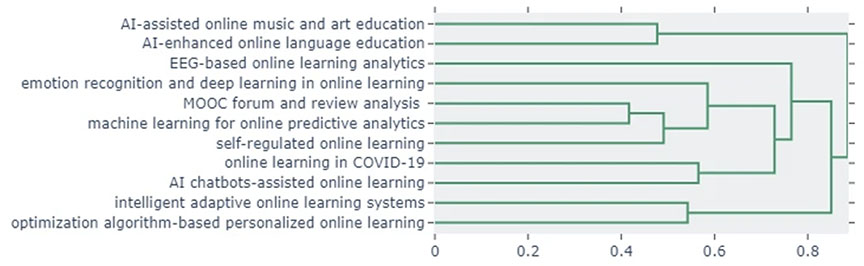
Figure 10 synthesizes the annual article counts to depict the developmental stages of AIOL research, from emerging to mature phases. Results indicated that AIOL research is still in a phase of rapid development. The whole period of AIOL research can be divided into two stages: a stable development period (2010–2016) and a rapid development period (2017 to the present). To analyze the topic differences and evolution during these two developmental stages, this study modeled the articles from each period separately; the results are summarized in Table 3.
Figure 10
Developmental Stages of AIOL Research
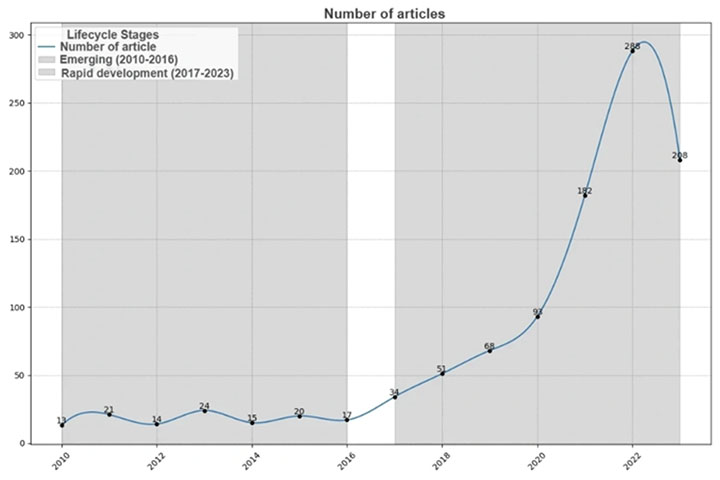
Table 3
Topics From the Two Periods of AIOL Research
| Stage | Topic name |
| Stable development (2010–2016) | Intelligent online learning systems |
| Machine learning for online education | |
| Personalized online learning | |
| Rapid development (2017 to the present) | Recommender systems for personalized online learning |
| MOOC forum analysis | |
| Machine learning for online predictive analytics | |
| Emotion recognition and deep learning in online learning | |
| AI-enhanced online language education | |
| Online learning in COVID-19 | |
| Self-regulated online learning | |
| Clustering analysis in online learning data mining | |
| AI chatbots-assisted online learning | |
| AI-assisted online music and art education | |
| MOOC dropout prediction using machine learning | |
| MOOC dropout prediction using deep learning | |
| EEG-based online learning analytics | |
| Online learning analytics and visualization | |
| Data-driven online learning decision systems | |
| Deep learning for online predictive analytics | |
| IoT-enhanced smart online learning platforms |
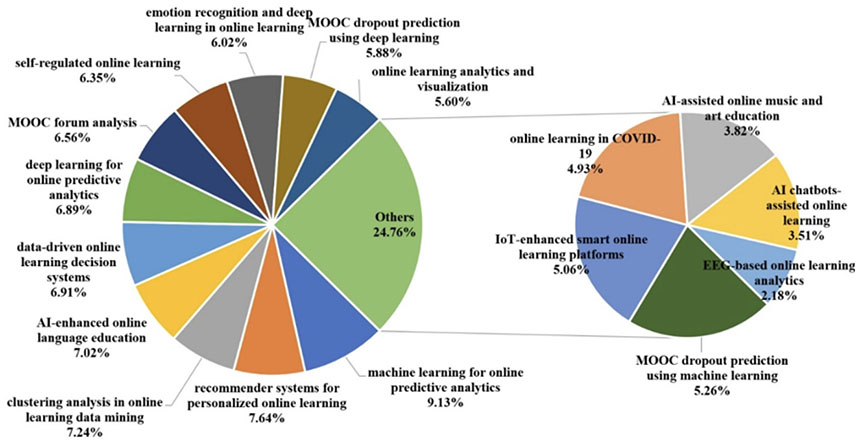
Figure 11 summarizes the AIOL research topics in the rapid development period, with the top three topics being machine learning for online predictive analytics, recommender systems for personalized online learning, and clustering analysis in online learning data mining.
Figure 11
Topics in the Rapid Development Period
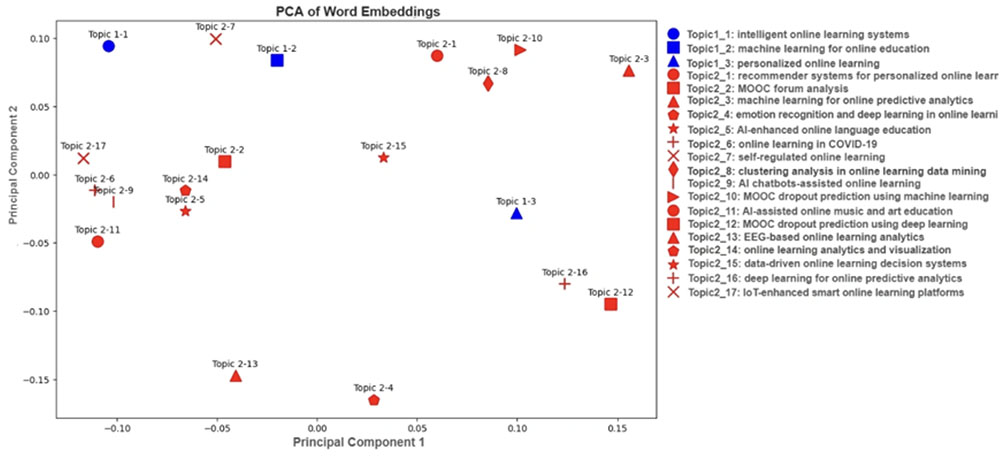
This study used word embedding vectors generated by the all-MiniLM-L6-v2 model to represent topic vectors. The embeddings of top topic words were averaged to obtain the semantic representation of the topic; subsequently, principal component analysis was adopted for dimensionality reduction to visualize the distribution of topics (Figure 12), with the Euclidean distance between the reduced points representing the path of topic evolution.
Figure 12
Distribution of Topics
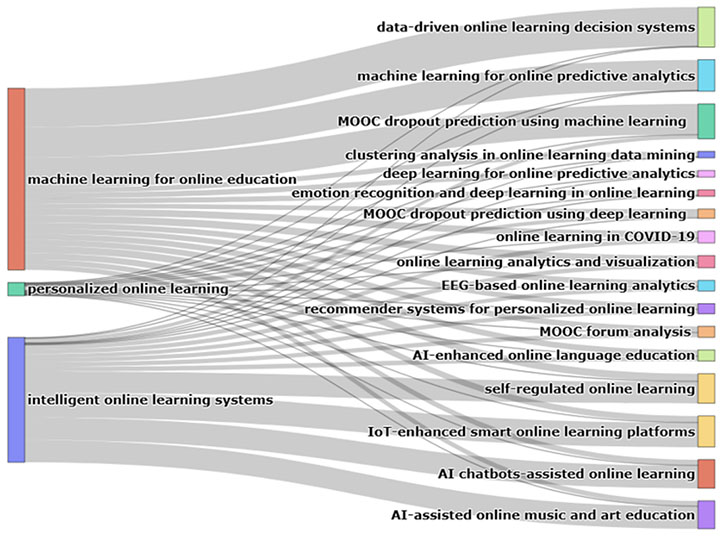
The evolutionary relationship between topics from the two periods was determined by calculating the inverse of the Euclidean distance between them, with a larger value indicating a stronger evolutionary relationship between two topics. To intuitively represent the evolutionary path of AIOL research, this study calculated the inverse of the Euclidean distances between all topics and used them as evolutionary weights to create a Sankey diagram (Figure 13), where the thickness of the connections between topics from different periods indicated their evolutionary weight, with thicker connections representing closer evolutionary relationships. One of the most prominent patterns was the strong expansion of machine learning for online education into a wide variety of specialized subtopics in the later period, including (a) data-driven decision systems, (b) predictive analytics, (c) MOOC dropout prediction, (d) clustering and data mining approaches, and (e) deep learning-based analytics. The thick flows indicated that the early foundational focus on machine-learning methods acted as a platform for more intricate applications aimed at understanding learner behavior, forecasting outcomes, and improving educational decision-making.
Figure 13
Evolution of AIOL Topics in the Two Stages
The BERTopic analysis (Table 2) revealed recurring themes in AIOL research, notably machine learning for online predictive analytics and self-regulated online learning. Trend tests from 2010 to 2023 showed sustained growth in AI's role in supporting learner performance and self-regulation. Figures 3 and 4 highlighted increasing interest in interactive platforms, pandemic-driven online learning, and multimodal data analysis. In contrast, the decline of intelligent adaptive online learning systems and optimization algorithm-based personalized learning suggested a shift from system-centric approaches to data-driven, learner-centered AI support. These findings reflected a transition toward more applied, learner-focused, and technologically advanced research.
In online environments, predictive analytics using machine learning models learner engagement, predicts outcomes, and assesses dropout risks, addressing challenges in the absence of face-to-face interaction (Sjølie et al., 2022). SRL, essential in flexible, learner-centered environments, has remained a critical area despite a slight decline in recent years (Figure 4), as confirmed by trend analysis (Kim & Kumi-Yeboah, 2025). AI tools like intelligent feedback systems and personalized trackers have helped foster motivation, self-efficacy, and metacognitive awareness (Jin et al., 2023; Shi & Zhang, 2025).
Emerging themes such as MOOC forum and review analysis, AI-enhanced online language education, and AI chatbots-assisted learning indicated a shift from traditional content delivery to interactive learning. Figures 6 and 7 highlight AIOL’s focus on computational modeling and data-intensive analytics, with studies analyzing forum interactions and AI-driven language tools, such as chatbots, for personalized learning (Ruyang et al., 2025; Sharma et al., 2024). The rise of emotion recognition also pointed to integrating multimodal data, addressing learners’ cognitive and emotional states.
The growing focus on online learning in COVID-19 reflected the shift to remote education, with research on adaptive learning systems and AI supporting large-scale remote learning during the pandemic (Karakaya, 2021). In contrast, the decline of intelligent adaptive systems reinforced the shift toward emotion-aware, data-driven AI support. The adoption of large language models and conversational agents illustrated a move toward learner-responsive AI capable of addressing diverse needs (Bahari & Liu, 2025).
Compared to dominant themes synthesized in prior reviews, the data-driven topics identified in this study showed both convergence and extension. Previous reviews (e.g., Alghamdi et al., 2025; Daniel et al., 2024; Gardner et al., 2021; Lampropoulos, 2025; Qazi et al., 2024;) consistently highlighted predictive analytics, adaptive learning, learner modeling, and automated assessment as central areas of AIOL research. Our findings largely confirmed these conclusions, with several prominent topics aligning closely with these established categories. However, the topic modeling approach further refined these broad themes by revealing more nuanced substructures. For instance, while earlier reviews like Gardner et al. (2021) often grouped assessment-related applications together, our analysis differentiated among automated grading, AI-generated feedback, and adaptive testing systems, indicating increasing specialization in the field. Additionally, emerging themes related to generative AI technologies, which were less prominent in earlier reviews, pointed to a shift in research focus from predictive modeling toward interactive and generative AI applications in online learning contexts.
The analysis highlighted the interdisciplinary nature of AIOL research, linking fields like computer science, pedagogy, psychology, and linguistics. Hierarchical clustering (Figure 9) showed strong connections across areas like AI-assisted online music education and EEG-based learning analytics. Developmental trends (Figure 10) revealed AIOL’s rapid evolution, with core themes consolidating while new areas emerge (Table 3). This underscored the need for greater collaboration across disciplines, as AI integration into online learning requires a holistic understanding of both technological and human factors.
The emerging trends identified reflected a leap forward in both analytical capability and pedagogical potential of AI through three major stages. Early AI systems were largely rule-based or expert systems that demonstrated high transparency and interpretability. However, they offered limited adaptability. This is because these systems relied mainly on predefined rules and simple decision trees to provide basic guidance and personalization, often in the form of automated quizzes or instructional content suggestions; however, they lacked the ability to learn from data and adapt over time. According to Figures 4 and 9, topics such as machine learning for online predictive analytics have dominated research since 2017, reflecting increasing adoption of data-driven approaches for modeling learner behavior, engagement, and performance.
Advances in machine learning have enabled data-driven predictions of learner behavior, engagement, and performance, improving retention and outcomes in large-scale online courses. Recent applications of deep learning and multimodal data analysis allow AIOL systems to process diverse data (e.g., text, video, audio, and physiological signals), enabling emotion recognition, cognitive load monitoring, and automated feedback. The integration of AI with immersive technologies like AR and VR have created more interactive, personalized, and dynamic learning experiences.
According to Figures 8 and 9, AIOL research has shown a clear shift from traditional behavioral data modeling (e.g., clickstreams and quiz scores) toward multimodal learning analytics that integrate both cognitive and affective dimensions to support real-time adaptation and personalization (Becerra et al., 2025). This form of adaptation emphasizes learner-centered AIOL systems that provide emotion-aware and data-driven support to enhance both academic achievement and emotional well-being, aligning with the observed growth in topics related to emotion recognition, EEG-based analytics, and SRL.
Based on the empirical findings from the BERTopic analysis, this study proposed a conceptual model to guide future AIOL research and AI-powered online learning practices (see Figure 14). The model is a synthesis of the dominant and emerging thematic trends identified in the results, rather than an independently theorized framework. It integrates four interrelated components, namely data, AI processing, adaptive learning, and learner development.
Figure 14
Conceptual Model of AIOL
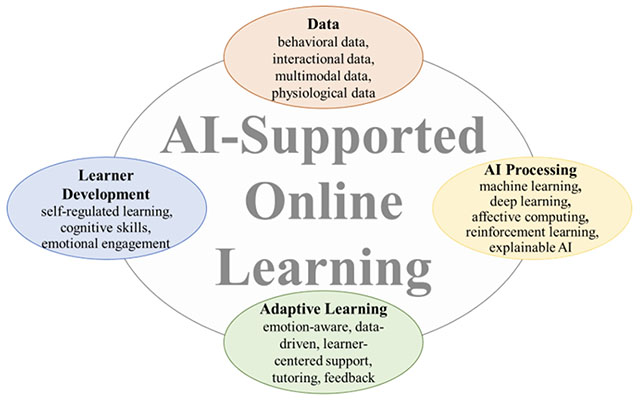
The emphasis on multimodal and physiological data within the data component was directly informed by the observed growth of topics such as emotion recognition, deep learning, and EEG-based online learning analytics. These findings indicated a shift from simply behavioral tracking to richer representations of learners’ cognitive and affective states. Learner data, including (a) behavioral data (e.g., quiz scores and clicks); (b) interactional data (e.g., forum participation); (c) multimodal data (e.g., video, audio, eye-tracking); and (d) physiological data (e.g., heart rate or brainwave patterns) have been integrated into AI systems to capture not only what learners do but also how they think and feel.
Building on these data sources, the AI system applies machine learning for predictive analytics and deep learning to process complex inputs. The prominence and sustained relevance of predictive analytics in our topic modeling results provided the empirical basis for positioning prediction as a core function of the AI processing component. In addition, affective computing techniques have been incorporated to recognize learners’ emotional states, reflecting the significant upward trend in emotion-aware research themes identified in the analysis.
Explainable AI (XAI) was included in the model as a cross-cutting design principle rather than as a distinct empirical topic. Although XAI did not emerge as an independent theme in the modeling results, its inclusion responds to the growing reliance on AI-driven predictions and adaptive decisions identified in our findings. In this context, explainability served as a transparency mechanism to enhance trust, accountability, and informed learner engagement.
The insights generated by the AI are used to deliver adaptive support. Consistent with the declining trend of traditional system-centric adaptive systems observed in the results, adaptation in this model has been conceptualized as data-driven and emotion-aware support, rather than rule-based pathway optimization. Examples include feedback aligned with learners’ emotional states, performance-informed resource recommendations, and real-time scaffolding.
Finally, these adaptive supports aim to foster learner autonomy and self-regulation. The statistically significant long-term growth of self-regulated online learning identified in the trend analysis provided the empirical foundation for positioning learner development as the ultimate outcome of the model. Through continuous feedback loops, both the AI system and the learner co-adapt over time.
Overall, the proposed model represents a synthesis of empirically identified thematic trajectories and illustrates how data-driven insights can inform the design of future AI-supported online learning systems.
Based on the findings, this study has provided several implications for future AIOL research.
This study also provided implications for future AIOL pedagogical practice.
This study had some limitations. First, we focused on SCI/SSCI journal publications on AI-supported instructional and learning processes in online education, excluding position papers, opinions, and design-oriented works, which often lack empirical evidence. We also excluded survey- and interview-based studies to maintain focus on observable learning processes and AI-driven instructional mechanisms grounded in behavioral or system-generated data. Including self-report studies, which examine perceptions and attitudes toward AI, would have broadened the scope to perception-oriented research, outside the study’s process-centered focus. This may explain the underrepresentation of social constructivist or community-oriented research, where outcomes are harder to capture. Future research could separately analyze self-report studies to compare perception- and process-oriented research trajectories, offering a more comprehensive understanding of AIOL scholarship. Additionally, the study covered publications from 2010 to 2023, a period selected for bibliometric analysis, ensuring stable indexing records and citation data. Including more recent publications, still undergoing updates, would have affected the stability and comparability of longitudinal analyses. Future research could incorporate newer publications once their bibliographic and citation data stabilize. For instance, Dağhan and Gündüz (2022) reviewed studies from 2000 to 2018. Chen et al. (2025) also noted that including recent publications could impact the accuracy of trend identification due to fluctuating citation counts. Lastly, search-term selection involved trade-offs between recall and precision. Future studies may expand datasets using advanced screening strategies to manage larger retrieval sets and broaden coverage.
From a methodological perspective, this study did not use keyword-based analyses due to limitations in the availability and precision of keywords, as some articles lack author keywords or use predefined lists that may not fully capture the study’s scope. Instead, embedding-based topic modeling was used to analyze contextual relationships across titles, keywords, and abstracts, which better summarized core research focuses, suitable for large-scale bibliometric studies (e.g., Chen et al., 2025; Liu et al., 2021). During modeling, each document was assigned to a single dominant topic based on embedding similarity. While this approach provided a macro-level analysis, it may have oversimplified the multidimensional nature of scholarly articles. Future studies could explore multiple topic assignments per article to better capture topic overlap. As with any unsupervised method, the topics identified may be sensitive to hyperparameters (e.g., min_cluster_size) and domain-specific terminology. To address this, we used careful preprocessing, parameter tuning, and expert validation, following established procedures in previous studies (e.g., Chen et al., 2025; Liu et al., 2021). Additionally, BERTopic’s data-driven nature means that research themes can only emerge as distinct topics when they form coherent clusters. Although socially oriented studies on AI-supported collaborative learning and community development exist, they did not emerge as dominant topics in this dataset, reflecting the current focus on individual-level analytics in AIOL. Future research may explore more socially oriented AI-supported learning designs. Finally, while some identified domains (e.g., MOOCs, language learning, COVID-19 education) have been popular in broader distance learning literature, the topics in this study specifically reflected how AI methods are integrated into these contexts. Future studies could conduct comparative analyses with broader online learning corpora to distinguish AI-specific trends from general pedagogical developments.
This topic-based bibliometric study traced the evolution of AIOL from 2010 to 2023 using BERTopic, a topic modeling framework that integrates contextual embeddings with clustering techniques. Analyzing a large corpus of publications, the study identified major thematic patterns and shifts in research focus. Unlike traditional probabilistic models like LDA, which use bag-of-words representations, BERTopic operates in a semantic embedding space, allowing for more accurate document-level thematic identification. The findings showed progression from early AI applications to more sophisticated ML and DL approaches, with emerging hotspots in predictive analytics, sentiment recognition, adaptive learning systems, and EEG monitoring, highlighting a focus on data-driven personalization and learner modeling. Current research directions include enhancing adaptive learning systems, supporting SRL, and integrating multimodal data to capture learners’ cognitive and emotional states through DL and affective computing. While the study did not assess the effectiveness of these approaches, it identified areas of sustained research interest. It also underscored the importance of developing adaptive, transparent, and interpretable AI algorithms and suggested that future research could explore AI applications beyond traditional academic subjects, such as the arts and sports. By combining bibliometric analysis with BERTopic, this study offered a macro-level overview of AIOL research trends, illustrating how embedding-based topic modeling complements qualitative reviews. The findings should be interpreted within the methodological limits of computational text analysis.
The authors declare that they have no conflicts of interest to report regarding the present study.
This work was fully supported by the National Natural Science Foundation of China (No. 62307010), the Fund for Innovative Technology-in-Education (FITE) for UGC Funded Inter-institutional Collaborative Activities Project (120045) entitled “Advancing Digital Competency for University Teachers and Students in the Era of Generative Artificial Intelligence”, and the Teaching Development Grant (102729) entitled “Integrate GPT-based Intelligent Feedback and Tutoring for Data Science Courses” of Lingnan University, Hong Kong.
Alghamdi, S., Soh, B., & Li, A. (2025). A comprehensive review of dropout prediction methods based on multivariate analysed features of MOOC platforms. Multimodal Technologies and Interaction, 9(1), 3. https://doi.org/10.3390/mti9010003
Bahari, A., & Liu, Y. (2025). AI integration in EFL teacher development: A mixed-methods evaluation of digital competency, professional trajectories, and pedagogical innovation within adaptive learning ecosystems. Interactive Learning Environments, 1-17. https://doi.org/10.1080/10494820.2025.2591251
Becerra, A., Cobos, R., & Lang, C. (2025). Enhancing online learning by integrating biosensors and multimodal learning analytics for detecting and predicting student behaviour: A review. Behaviour & Information Technology, 45(9), 1885-1910. https://doi.org/10.1080/0144929X.2025.2562322
Chen, X., Cheng, G., Zou, D., Zhong, B., & Xie, H. (2023). Artificial intelligent robots for precision education: A topic modeling-based bibliometric analysis. Educational Technology & Society, 26(1), 171-186. https://doi.org/10.30191/ETS.202301_26(1).0013
Chen, X., Li, X., Zou, D., Xie, H., & Wang, F. (2025). Metacognition research in education: Topic modeling and bibliometrics. Educational Technology Research and Development, 73, 1399-1427. https://doi.org/10.1007/s11423-025-10451-8
Chen, X., Xie, H., Zou, D., & Hwang, G. J. (2020). Application and theory gaps during the rise of artificial intelligence in education. Computers and Education: Artificial Intelligence, 1, 100002. https://doi.org/10.1016/j.caeai.2020.100002
Chen, X., Zou, D., Xie, H., Cheng, G., & Liu, C. (2022). Two decades of artificial intelligence in education: Contributors, collaborations, research topics, challenges, and future directions. Educational Technology & Society, 25(1), 28-47. https://www.jstor.org/stable/48647028
Chu, H. C., Hwang, G. H., Tu, Y. F., & Yang, K. H. (2022). Roles and research trends of artificial intelligence in higher education: A systematic review of the top 50 most-cited articles. Australasian Journal of Educational Technology, 38(3), 22-42. https://doi.org/10.14742/ajet.7526
Dağhan, G., & Gündüz, A. Y. (2022). Research trends in educational technology journals between 2000 and 2018: A Web scraping study. Education and Information Technologies, 27(4), 5179-5214. https://doi.org/10.1007/s10639-021-10762-2
Daniel, K., Msambwa, M. M., Antony, F., & Wan, X. (2024). Motivate students for better academic achievement: A systematic review of blended innovative teaching and its impact on learning. Computer Applications in Engineering Education, 32(4), e22733. https://doi.org/10.1002/cae.22733
Dogan, M. E., Goru Dogan, T., & Bozkurt, A. (2023). The use of artificial intelligence (AI) in online learning and distance education processes: A systematic review of empirical studies. Applied Sciences, 13(5), 3056. https://doi.org/10.3390/app13053056
Gardner, J., O’Leary, M., & Yuan, L. (2021). Artificial intelligence in educational assessment:‘Breakthrough? Or buncombe and ballyhoo?’ Journal of Computer Assisted Learning, 37(5), 1207-1216. https://doi.org/10.1111/jcal.12577
Grootendorst, M. (2022). BERTopic: Neural topic modeling with a class-based TF-IDF procedure. arXiv preprint arXiv:2203.05794. https://doi.org/10.48550/arXiv.2203.05794
Ilić, M., Mikić, V., Kopanja, L., & Vesin, B. (2023). Intelligent techniques in e-learning: A literature review. Artificial Intelligence Review, 56(12), 14907-14953. https://doi.org/10.1007/s10462-023-10508-1
Jin, S. H., Im, K., Yoo, M., Roll, I., & Seo, K. (2023). Supporting students’ self-regulated learning in online learning using artificial intelligence applications. International Journal of Educational Technology in Higher Education, 20(1), 37. https://doi.org/10.1186/s41239-023-00406-5
Karakaya, K. (2021). Design considerations in emergency remote teaching during the COVID-19 pandemic: A human-centered approach. Educational Technology Research and Development, 69(1), 295-299. https://doi.org/10.1007/s11423-020-09884-0
Kim, Y., & Kumi-Yeboah, A. (2025). Strategies to promote self-regulated learning for online diverse students. Distance Education, 46(2), 272-300. https://doi.org/10.1080/01587919.2024.2358855
Lampropoulos, G. (2025). Augmented reality, virtual reality, and intelligent tutoring systems in education and training: A systematic literature review. Applied Sciences, 15(6), 3223. https://doi.org/10.3390/app15063223
Liu, C., Zou, D., Chen, X., Xie, H., & Chan, W. H. (2021). A bibliometric review on latent topics and trends of the empirical MOOC literature (2008–2019). Asia Pacific Education Review, 22(3), 515-534. https://doi.org/10.1007/s12564-021-09692-y
McInnes, L., Healy, J., Saul, N., & Großberger, L. (2018). UMAP: Uniform manifold approximation and projection. Journal of Open Source Software, 3(29), 861. https://doi.org/10.21105/joss.00861
Moher, D., Liberati, A., Tetzlaff, J., Altman, D. G., & Prisma Group. (2010). Preferred reporting items for systematic reviews and meta-analyses: The PRISMA statement. International Journal of Surgery, 8(5), 336-341. https://doi.org/10.1016/j.ijsu.2010.02.007
Munir, H., Vogel, B., & Jacobsson, A. (2022). Artificial intelligence and machine learning approaches in digital education: A systematic revision. Information, 13(4), 203. https://doi.org/10.3390/info13040203
Ouyang, F., Zheng, L., & Jiao, P. (2022). Artificial intelligence in online higher education: A systematic review of empirical research from 2011 to 2020. Education and Information Technologies, 27(6), 7893-7925. https://doi.org/10.1007/s10639-022-10925-9
Park, Y., & Doo, M. Y. (2024). Role of AI in blended learning: A systematic literature review. International Review of Research in Open and Distributed Learning, 25(1), 164-196. https://doi.org/10.19173/irrodl.v25i1.7566
Qazi, S., Kadri, M. B., Naveed, M., Khawaja, B. A., Khan, S. Z., Alam, M. M., & Su’ud, M. M. (2024). AI-driven learning management systems: Modern developments, challenges and future trends during the age of ChatGPT. Computers, Materials & Continua, 80(2), 3289-3314. https://doi.org/10.32604/cmc.2024.048893
Ruyang, L., Lu, T., Mengyao, X., & Hedi, Y. (2025). Contemporary trends of AI-powered foreign language teaching: A systematic literature review from connectivism perspective. Innovation in Language Learning and Teaching, 1-21. https://doi.org/10.1080/17501229.2025.2586144
Sharma, P., Akgun, M., & Li, Q. (2024). Understanding student interaction and cognitive engagement in online discussions using social network and discourse analyses. Educational Technology Research and Development, 72(5), 2631-2654. https://doi.org/10.1007/s11423-023-10261-w
Shi, S., & Zhang, H. (2025). EFL students’ motivation predicted by their self-efficacy and resilience in artificial intelligence (AI)-based context: From a self-determination theory perspective. Learning and Motivation, 91, 102151. https://doi.org/10.1016/j.lmot.2025.102151
Sjølie, E., Espenes, T. C., & Buø, R. (2022). Social interaction and agency in self-organizing student teams during their transition from face-to-face to online learning. Computers & Education, 189, 104580. https://doi.org/10.1016/j.compedu.2022.104580
Torres-Vergara, C. J., Alfaro-García, V. G., Merigó, J. M., Atif, A., & McGreal, R. (2025). Twenty-five years of the International Review of Research in Open and Distributed Learning: A bibliometric analysis. International Review of Research in Open and Distributed Learning, 26(2), 286-306. https://doi.org/10.19173/irrodl.v26i2.8662
Tram, N. H. M., Nguyen, T. T., & Tran, C. D. (2024). ChatGPT as a tool for self-learning English among EFL learners: a multi-methods study. System, 127, 103528. https://doi.org/10.1016/j.system.2024.103528

Artificial Intelligence in Online Learning: Using BERTopic to Track Research Topics and Their Evolutions by Xieling Chen, Haoran Xie, Xingquan Peng, Xiaohui Tao, Lin Li, S. Joe Qin, and Fu Lee Wang is licensed under a Creative Commons Attribution 4.0 International License.