Volume 27, Number 2
Oleksii Koshevets
TATL Technology
This study investigated the development and implementation of the YEP (Your Educational Path) system, an educational technology ecosystem, developed by Tatl Technology, and deployed across Ukraine during the COVID-19 pandemic and ongoing war. Using a qualitative case study approach, this research drew on official government data from a learning management system pilot program (2019–2023), usage analytics (2019–2024), and documentation from public-private stakeholders. The analysis evaluates the YEP ecosystem through four dimensions: functionality, scalability, policy alignment, and crisis resilience. Key findings included rapid adoption across 2,193 schools, engagement of over 1.8 million users, and integration of AI-driven diagnostics and mental health support tools by the end of 2023. These findings have contributed to global discourse on education in emergencies and suggested a replicable model for resilient digital schooling in conflict-affected contexts.
Keywords: adaptive learning, Ukraine, crisis education, mental health, educational technology
Ukraine’s education system has experienced unprecedented disruption due to the crises of the COVID-19 pandemic and the full-scale Russian invasion. As of mid-2025, over 6.4 million learners have experienced educational instability, with more than 3,400 schools damaged and over 350 completely destroyed (Public Broadcasting Service News, 2024; United Nations Educational, Cultural and Scientific Organization [UNESCO], 2025). The destruction in cities like Kharkiv, where 64 schools were destroyed and 587 schools were damaged, underscores the urgent need for robust, flexible educational infrastructure.
YEP ecosystem is a modular, cloud-based digital education infrastructure designed to support K–12 public education (Grades 1–12) in Ukraine. It consists of five integrated components: (a) a national learning management system (LMS) used for instructional delivery and school administration; (b) an on-demand tutoring and mentorship platform; (c) a centralized booking system for extracurricular and enrichment activities; (d) an integrated mental health monitoring and communication module; and (e) a diagnostics engine powered by artificial intelligence (AI) that supports adaptive learning and early risk detection. Together, these components form a unified digital environment for students, teachers, parents, and administrators.
The system is accessible via Web browsers on desktop and laptop computers as well as mobile devices (e.g., tablets, smartphones). It was designed with a mobile-first and low-bandwidth approach to accommodate unstable connectivity during emergencies. The platform supports asynchronous and synchronous learning, integrates with national education databases, and complies with national data protection and information security requirements.
Anticipating the need for systemic digital transformation, Tatl Technology began developing a comprehensive digital platform for school administration and learning management in 2019. The Ministry of Education and Science of Ukraine formalized its deployment through a national-level experiment known as Єдина школа (Yedyna School), outlined in Order №895 and conducted from 2019 to 2023. This initiative became the base for what would become Your Educational Path (YEP), an expanded educational ecosystem designed to ensure continuity, equity, and personalized learning even in times of crisis. The LMS experiment, which began with pilot implementation in just four schools, rapidly expanded due to its demonstrated effectiveness, eventually involving over 2,193 educational institutions and reaching more than 1.8 million users by its conclusion in 2023. The platform not only digitized administrative functions but also introduced critical modules for distance learning, analytics, and parental engagement. These tools proved essential for supporting students who had fled the country during the war, allowing them to continue their Ukrainian education from abroad, and for those who remained in Ukraine and required additional emotional and academic support due to ongoing trauma and instability. Another pressing challenge Ukrainian students face today is the constant interruption of classes due to air raids and missile attacks. In such a disrupted environment, traditional instruction is often inconsistent and delayed, leading to declining academic performance. At the same time, national exams like the NMT (National Multi-Subject Test) remain high stakes benchmarks that students must prepare for regardless of circumstances. In this context, YEP became not only relevant but essential.
The tutoring platform component of the ecosystem, for example, has provided students with flexible, on-demand tutoring sessions that can be accessed safely from any location and at any time. It ensured continuity of preparation for key assessments, even when school schedules were affected by emergency events. These personalized academic interventions helped bridge learning gaps and maintain student motivation in uncertain times.
In addition to technological progress, YEP reflects a pedagogical shift toward student-centered, data-informed, and crisis-resilient education. According to reports submitted to the Ministry, YEP reduced teacher workload by up to 40%, improved data transparency, and supported the development of digital competencies among educators, with over 25,000 teachers certified through targeted training programs (Order No. 895, Ukrainian Ministry of Education and Science). Building on this institutional and technical foundation, Tatl Technology expanded its vision into a broader ecosystem to include a tutoring platform for tutoring and mentorship, a platform for extracurricular activity booking, integrated mental health support tools, and an AI-powered diagnostics engine for personalized learning assessment. In contrast to fragmented digital solutions, YEP was designed as an integrated infrastructure, offering a unified experience for students, educators, parents, and administrators.
This paper presents a qualitative case study of the design, implementation, and early outcomes of this ecosystem, contributing to scholarship on online and distributed learning, emergency remote education, and digitally enabled education systems in crisis contexts.
Research on online and distance learning in K–12 education has a long and established history, well before the COVID-19 pandemic. Early scholarship examined virtual schools, cyber charter schools, and blended learning environments, focusing on instructional design, learner engagement, teacher roles, and student outcomes (Barbour & Reeves, 2009; Cavanaugh et al., 2009). This body of literature has emphasized that effective online learning is not merely a matter of technology access, but of pedagogical design, institutional support, and sustained teacher-student interaction.
Studies have consistently highlighted the importance of teacher presence, structured learning pathways, timely feedback, and parental involvement in K–12 online settings (Borup et al., 2014; Rice, 2006). Unlike higher education, K–12 distance learning places additional demands on schools to provide monitoring and communication structures that compensate for learners’ developmental needs. These concerns are particularly relevant when evaluating national-scale learning management systems intended to support compulsory education.
Prior research has also identified equity concerns in K–12 online learning, including disparities in access to devices, connectivity, and adult supervision at home (Barbour, 2018). As a result, scholars have argued that successful K–12 online learning systems must be integrated at the institutional level, rather than relying on isolated tools or individual teacher initiatives. This literature has provided a critical foundation for understanding how centralized digital infrastructure can support continuity and accountability in public education systems.
While online learning has a long scholarly tradition, the concept of emergency remote learning emerged prominently during the COVID-19 pandemic. Hodges et al. (2020) distinguished emergency remote learning from planned online education, defining it as a temporary shift of instructional delivery to alternate modes due to crisis circumstances. Unlike purposefully designed online learning, emergency remote learning has been characterized by rapid deployment, limited preparation time, and constrained institutional capacity.
A growing body of research has documented the challenges faced by K–12 systems during pandemic-induced school closures, including uneven teacher readiness, reduced student engagement, increased parental burden, and significant learning loss, particularly among vulnerable populations (Trust & Whalen, 2020; UNESCO, 2020). Studies across multiple national contexts have demonstrated that systems with pre-existing digital infrastructure and coordinated policy responses were better positioned to mitigate disruption (Bozkurt & Sharma, 2020).
Emergency remote learning scholarship has also highlighted the importance of flexibility, asynchronous access, and centralized coordination in crisis contexts. Researchers noted that fragmented digital solutions often exacerbated inequities, whereas integrated systems provided consistency and continuity during prolonged disruptions (Bozkurt & Sharma, 2020). This literature has underscored the relevance of examining large-scale, government-aligned digital ecosystems that extend beyond short-term emergency responses.
Increasingly, recent scholarship has emphasized that educational responses to crisis must address not only academic continuity but also learners’ psychosocial well-being. Trauma-informed educational design prioritizes emotional safety, predictability, agency, and supportive relationships, particularly for learners affected by displacement, violence, or prolonged instability (Darling-Hammond et al., 2019).
Research in school psychology and public health has demonstrated that exposure to chronic stress and trauma significantly affects cognitive functioning, attention, and motivation, with long-term implications for educational outcomes (Perfect et al., 2016). Consequently, scholars have argued that digital education systems deployed in crisis contexts should incorporate mechanisms for monitoring student well-being and facilitating early support, while avoiding surveillance or stigmatization (World Health Organization, 2021).
Equity-oriented approaches to crisis education have further stressed the need for inclusive design, multilingual access, and caregiver engagement, particularly for displaced and refugee learners (UNESCO, 2022). Digital platforms that integrate mental health awareness alongside academic tools have been increasingly viewed as essential components of resilient education systems. However, the literature has also cautioned that such systems must operate within clear ethical boundaries, emphasizing aggregation, prevention, and referral rather than diagnosis or automated decision-making.
AI has become a prominent feature of contemporary educational technology, particularly in adaptive learning systems that personalize content, pacing, and feedback. Research has suggested that AI-supported adaptive learning can improve learner engagement and support differentiated instruction, especially in large-scale digital environments (Katonane Gyönyörű, 2024; Multidisciplinary Digital Publishing Institute [MDPI], 2023).
At the same time, scholars have raised concerns about algorithmic bias, transparency, and the appropriateness of AI-driven decision-making in high-stakes educational contexts (Williamson & Eynon, 2020). These concerns have been amplified in crisis and emergency settings, where learners may already be vulnerable due to trauma, displacement, or disrupted schooling. As a result, recent literature has emphasized that AI in education should augment—not replace—human judgment, particularly in areas related to student well-being and risk identification.
Within emergency education contexts, AI has shown potential for identifying learning gaps, monitoring engagement patterns, and supporting educators with early-warning indicators (HolonIQ, 2021). However, there have been few empirical case studies of AI integration at the national scale, particularly under active crisis conditions. This gap highlights the importance of examining real-world implementations that combine AI diagnostics with institutional oversight and ethical safeguards.
The development and deployment of large-scale digital education systems often depend on coordinated public-private partnerships. Research has indicated that such partnerships can accelerate innovation, enhance technical capacity, and improve sustainability when aligned with national policy objectives and regulatory frameworks (Patrinos et al., 2022). Comparative studies of national education platforms, such as Estonia’s eKool, illustrated how long-term government commitment and interoperability standards contribute to resilient digital infrastructure (Lust et al., 2020).
In crisis contexts, public-private collaboration becomes even more critical, as governments must respond rapidly while ensuring equity, security, and continuity. Scholars have argued that digitally sovereign, nationally governed platforms offer advantages over fragmented commercial solutions, particularly in maintaining data protection, accountability, and system-wide coordination (Lim & Wang, 2021).
Despite growing interest in digital public infrastructure for education, there has been a lack of empirical research on integrated, multi-component systems deployed during prolonged emergencies, especially in active conflict settings. This gap in the literature underscores the need for detailed case studies that examine not only technological features but also governance, scalability, and resilience.
The reviewed literature demonstrated that while K–12 online learning and emergency remote education have been extensively studied, there has been limited research on nationally coordinated, integrated digital ecosystems that combine instructional delivery, learner support, mental health awareness, and AI-assisted diagnostics under crisis conditions. Existing scholarship has tended to focus on isolated tools, short-term responses, or post-crisis evaluations.
This study addressed this gap by examining a comprehensive digital education ecosystem implemented at a national scale during pandemic and wartime conditions. By situating the case within established online learning, emergency education, mental health, and AI scholarship, the study contributed to a deeper understanding of how digital public infrastructure can support educational resilience, equity, and continuity in extreme contexts.
This study used a qualitative case study methodology, focusing on the design and initial deployment of YEP digital ecosystem in Ukraine between 2019 and 2024. Data were collected from multiple sources to ensure a comprehensive analysis.
Key policy documents referenced in this study were publicly available through official Ministry of Education and Science of Ukraine publications, including Order No. 895 and associated program summaries (MoES, 2024). Additional descriptive statistics were drawn from publicly released UNESCO situation reports (UNESCO, 2025) and related announcements. Where internal platform metrics were referenced, they were reported in aggregated form as summarized in documentation submitted to MoES and were not released as raw logs due to privacy and security constraints.
YEP ecosystem is a modular, cloud-based digital education infrastructure designed to support K–12 public education in Ukraine. The system was developed as a unified environment integrating instructional delivery, school administration, learner support, and well-being monitoring into a single platform. Rather than functioning as a standalone learning management system, it operates as a multi-component ecosystem intended to maintain educational continuity during large-scale disruptions such as pandemics and war.
The ecosystem consists of five core components, namely (a) a national learning management system (LMS); (b) an on-demand tutoring and mentorship platform; (c) a centralized booking platform for extracurricular and enrichment activities; (d) an integrated mental health monitoring and communication module; and (e) an AI-powered diagnostics engine supporting adaptive learning and early risk identification.
The platform is accessible via standard Web browsers on desktop and laptop computers, as well as on tablets and smartphones. It supports major browsers (e.g., Chrome, Safari, Firefox, Edge) and does not require proprietary software installation. A mobile-first design and low-bandwidth optimization were implemented to ensure usability under unstable connectivity conditions common during emergency situations.
The system was developed as a new platform, informed by prior research and best practices in online learning systems, but not built upon the codebase of existing open-source LMS platforms. The ecosystem is proprietary and operated through a public-private partnership with the Ministry of Education and Science of Ukraine.
The LMS serves as the foundational infrastructure of the ecosystem. It centralizes core school operations, including electronic gradebooks, attendance tracking, assignment distribution, curriculum planning, internal communication, and parental notifications. These functions were designed to replace paper-based workflows and fragmented digital tools, allowing schools to operate within a single, secure environment.
The development of the LMS began in 2019, driven by Koshevets’ vision to digitize Ukraine’s education sector before a crisis struck. The system was initially piloted in just four schools, which served as real-world testing for features like centralized grading, remote attendance, and digital communication with parents. These early implementations quickly demonstrated measurable benefits in teacher efficiency and data accuracy, which led the MoES of Ukraine to take notice.
In 2020, as the COVID-19 pandemic accelerated the demand for distance learning tools, the Ministry launched a nationwide digital education experiment. The LMS was selected as the platform of choice for this initiative. The selection was based on the platform’s early results, intuitive interface, and ability to integrate seamlessly with national education data systems such as AICEN (Automated Information Computer Educational Network). The experiment aimed to test the feasibility of full-cycle digital transformation across diverse school environments, including urban, rural, and war-affected regions. The goals of the experiment were ambitious: to reduce administrative load on teachers, ensure uninterrupted education during emergencies, and introduce a data-driven approach to pedagogy and management. The LMS met and exceeded these expectations. It introduced modules for real-time analytics, online lesson delivery, and parental engagement that were previously absent from Ukraine’s public education infrastructure.
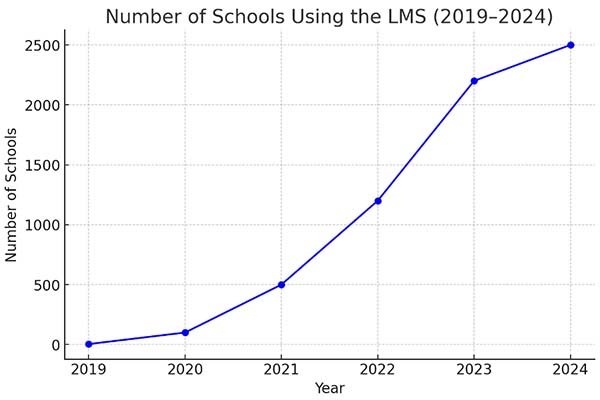
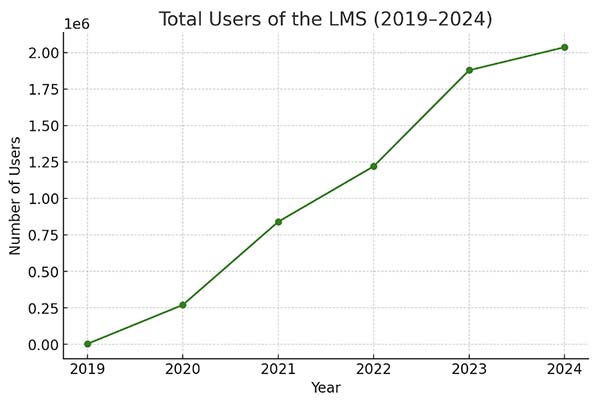
Validated through this national experiment, the platform was eventually rolled out across 2,193 schools by the end of 2023. As shown in Figure 1, the number of schools using the LMS increased from 4 in 2019 to over 2,500 by 2024, reflecting rapid national adoption. Over 2.3 million users, including 91,580 teachers, 1,221,949 students, and 944,162 parents, actively engaged with the system. Figure 2 illustrates the exponential growth in user engagement, with over 3 million combined users expected by the end of 2025. The success of the platform was due to a combination of technological functionality and the ability to automate traditional manual workflows, leading to an estimated 40% reduction in educator administrative burden. The LMS became a digital tool that has been a part of a structural reform, building the base for a more resilient, transparent, and adaptive education system.
Figure 1
Growth in the Number of Schools Participating in the LMS (2019–2024)
Figure 2
Total Number of Active Users (Students, Teachers, Parents) on the LMS (2019–2024)
Key innovations included a chat communication system among all participants in the educational process, real-time performance dashboards for principals, and modules to support digital attendance, analytics, and integration with national systems like AICEN. The LMS has proven indispensable during air-raid disruptions and remote learning periods, enabling seamless asynchronous and synchronous educational experiences. During the conceptual and diagnostic phases (2019–2021), teachers from pilot schools in Kyiv co-designed features and tested usability. Their feedback influenced improvements to functionality, such as adaptive scheduling, modular grading schemes, and support for special education workflows. As a result of its iterative development, the LMS was able to reflect the administrative needs of schools and evolving pedagogical strategies. Teachers could set differentiated learning goals, automate feedback cycles, and use in-platform communication tools to better engage with parents and students. The introduction of student e-diaries, combined with real-time alerts and visual progress dashboards, transformed how families participated in their children’s education. Equally important was the platform’s emphasis on compliance, data protection, and national integration. The LMS received certification under the country’s comprehensive system of information security; it met national data privacy laws and ensured that student information was securely handled. It also received a formal recommendation from the MoES, making it one of the few platforms approved for use in schools across all regions.
In order to ensure equitable implementation, Tatl Technology equipped participating schools with the necessary hardware, distributing over 120 tablets and 15 laptops during the pilot, and developed digital safety protocols. As the war escalated, the platform’s value became even more evident, as it enabled education to continue for internally displaced students and children living under occupation through digital-only formats. Perhaps most importantly, the LMS helped lay the groundwork for Ukraine’s broader digital education strategy. Its integration into Kyiv’s education policy, along with the ability to plug into national systems like AICEN, made it more than just an ordinary LMS—it became the administrative brain of the Ukrainian school system during the crisis. As new modules for AI testing, mental health tracking, and individualized plans were added, the LMS evolved into the nucleus of the full YEP ecosystem, setting a global example for tech-enabled resilience in public education.
Instructional features supported both synchronous and asynchronous learning. Teachers (a) created and distributed assignments, (b) provided feedback, and (c) tracked student progress through dashboards that aggregated academic and engagement data. Parents and caregivers accessed student performance updates, schedules, and communications through dedicated interfaces, supporting transparency and involvement in the learning process.
The tutoring platform was the on-demand academic mentorship and tutoring arm of YEP. It connected students with qualified tutors worldwide, offering services across academic subjects, creative disciplines, and test preparation. The platform operated on a hybrid model, combining certified educators and AI-curated learning materials, to ensure each student received support tailored to their pace and level. This personalization was particularly valuable for displaced learners or those who had fallen behind due to conflict-related interruptions to their schooling. Sessions were conducted via secure video, supported by interactive tools such as shared whiteboards, quizzes, and annotated documents. The tutoring platform also logged engagement and outcomes, providing parents and teachers with insights into progress and areas for further attention. What set the tutoring platform apart was its commitment to accessibility and flexibility. Similar hybrid models that combined real-time interaction and personalized diagnostics have shown high effectiveness in comparative contexts (Lust et al., 2020). Students were able to book sessions on demand or schedule recurring lessons, making it easier for those in temporary housing or living under threat of displacement to maintain continuity in their education. The platform also offered group study options, peer learning communities, and multilingual support to ensure inclusivity for Ukraine’s diverse student population.
Moreover, the tutoring platform played a significant role in preparing students for national and international standardized testing. It offered structured prep paths for Ukrainian National Multi-Subject Test exams (or their replacements), as well as support for global benchmarks, like the Scholastic Assessment Test, International English Language Testing System, and International Baccalaureate programs. With AI assistance, the platform adjusted difficulty levels in real time and offered custom test simulations based on each learner’s historical performance.
From a policy perspective, the tutoring platform complemented the MoES push toward individualized learning and equitable access. While the LMS provided system-wide infrastructure, the tutoring platform addressed the micro-level needs of students, filling learning gaps, reigniting curiosity, and providing mentorship at a time when schools were overburdened and teachers stretched thin. As Ukraine continues to lead innovation in crisis-driven educational technology, the tutoring platform stands as a scalable, exportable model of how tutoring can be democratized through technology.
Recognizing that quality education goes beyond academics, the booking platform for extra curriculum activities filled the critical gap of extracurricular engagement in the YEP ecosystem. It served as a centralized platform for discovering and booking extracurricular activities, ranging from sports and arts to mental wellness and life skills programs. During these crises, many students were isolated from physical enrichment opportunities. The platform allowed parents and caregivers to browse verified programs in their area or online, filtered by age, interests, time, and location. It promoted a balanced lifestyle by integrating extracurricular and academic schedules in the LMS dashboard. The platform also collected participation data that educators used to monitor student well-being and suggest suitable non-academic development pathways. It supported inclusion for children with disabilities and adapted to the unique needs of displaced families.
The booking platform was particularly important in the context of prolonged instability, where school closures and sheltering-in-place limited children’s access to socialization and movement. Through partnerships with local clubs, youth centers, and online activity providers, the platform offered opportunities for children to continue developing critical social-emotional and physical competencies, even in virtual or hybrid formats. Incorporating the platform into the YEP ecosystem also reflected a deeper pedagogical commitment to whole-child development. Research has consistently shown that extracurricular engagement improves academic outcomes, resilience, and long-term life satisfaction. For children affected by trauma, these programs offered recreation and rehabilitation through movement, expression, structure, and peer connection.
From a system-level perspective, the platform supported municipal education departments by providing dashboards that tracked participation rates and identified underserved student groups. Such data informed funding decisions, staffing needs, and community engagement strategies. Schools can also use it to recommend enrichment pathways based on academic performance or emotional health indicators flagged elsewhere in the YEP system. Furthermore, the platform was designed with accessibility and safety in mind. Every program listed on the platform underwent a basic verification check; families rated and reviewed their experiences to ensure transparency. For internally displaced people, the system highlighted mobile-friendly or remote-access activities and included geolocation filters to adapt to shifting environments.
Looking ahead, the booking platform aims to expand its reach by integrating third-party providers such as non-governmental organizations, regional arts councils, and international organizations that support youth development. Plans are underway to incorporate gamified participation tracking, allowing students to earn digital badges for milestones like consistent attendance or skill mastery, adding motivation and a sense of achievement to non-academic growth.
Mental health has become a growing concern for students in Ukraine, especially due to the psychological toll of war and displacement. The YEP ecosystem addressed this need through the integrated combination of AgileBrain and a mental health module, which enabled early detection and intervention for students showing signs of emotional distress.
AgileBrain is an AI-powered diagnostic and adaptive learning engine embedded within the broader YEP educational ecosystem. It functions as a continuous cognitive and behavioral analytics layer that collects and analyzes multidimensional learning data, including engagement patterns, task completion time, response accuracy, interaction frequency, and learning trajectory dynamics. Rather than serving solely as a performance-tracking tool, AgileBrain operates as an early-warning system that identifies deviations from a student’s established academic and behavioral baseline.
Using pattern recognition and predictive analytics, the system detects subtle shifts in concentration, consistency, or motivation that may indicate cognitive overload, stress exposure, or emerging emotional difficulties. These signals are not treated as standalone indicators but are triangulated with contextual data (e.g., attendance patterns, changes in participation, and academic variability). When risk thresholds are reached, the system triggers automated alerts for educators and parents, enabling timely pedagogical adjustment or referral to psychological support services.
Importantly, AgileBrain does not replace human judgment. Instead, it augments teacher and counselor decision-making by providing structured, data-informed insights. In crisis contexts, such as prolonged school disruption or exposure to conflict-related stress, this form of proactive monitoring is particularly significant, as trauma-related cognitive symptoms often manifest first through changes in learning behavior (Perfect et al., 2016). By embedding cognitive diagnostics within the instructional workflow, the system integrates academic resilience and mental health monitoring into a unified educational response framework.
The mental health module was developed with trauma-informed design principles in mind. Questions and feedback prompts were adapted to be non-triggering, age-appropriate, and culturally relevant. For younger students, the module used visual cues such as emoji-based check-ins, while older students wrote journal-style reflections or submitted audio recordings. This flexibility encouraged honesty and emotional literacy while lowering the barrier to expression. Importantly, teachers and administrators were trained to interpret the data with sensitivity. Color-coded dashboards alerted staff to urgent cases while preserving student anonymity. Patterns such as chronic disengagement, anxiety spikes before tests, or signs of isolation triggered early outreach. The system did not diagnose but flagged potential issues, making it a tool for prevention and support, not surveillance. This combination offered daily mood check-ins, anonymous feedback options, and AI-assisted flagging for crisis indicators. Aggregated data allowed schools to identify at-risk groups and allocate mental health resources proactively to maintain the psychological state of the group. It also supported group wellness activities and classroom-level interventions, helping to normalize discussions about mental health and reduce stigma.
Challenges remained, particularly in rural or under-resourced areas where professional psychological services were limited. However, YEP digital-first approach helped bridge that gap by offering scalable tools that did not depend on physical presence. Partnerships with NGOs and mobile counseling units are being explored to expand reach and responsiveness in underserved regions.
Beyond individual impact, the data collected through the module offered valuable macro-level insights. Regional education departments monitored mental health trends across districts, using anonymous data, evaluating the effectiveness of interventions, and informing policy. By embedding mental health into the digital fabric of the school experience, YEP not only supported students coping with immediate trauma but also helped build a base for a more emotionally resilient generation.
An AI-powered diagnostics engine was central to YEP ability to personalize learning. This tool continuously analyzed academic performance, behavior patterns, attendance, and emotional indicators to tailor student learning paths in real time. The system supported a variety of question formats, multimedia inputs, and performance metrics, making it both robust and adaptable across disciplines. Integrated into both the LMS and the tutoring platform, the diagnostics engine empowered data-informed teaching and intervention strategies. The architecture of the engine was designed to be modular and scalable, supporting real-time assessments and asynchronous learning alike. Teachers created or imported assignments into the system, which automatically tagged and categorized questions by skill type, difficulty, and subject alignment. As students engaged, the engine evaluated not only accuracy but time-on-task, attempt frequency, and even emotional signals (such as stress indicators gathered through integrated mental health tools).
This constant feedback loop allowed for the creation of adaptive learning paths, where a student’s progression was no longer linear but dynamically adjusted. For instance, if a learner demonstrated gaps in foundational math concepts, the system recommended a shift to remedial modules within the tutoring platform before returning to grade-level content. This minimized frustration and maximized engagement, especially for students returning after prolonged interruptions or displacement.
The diagnostics engine also played a critical role in ensuring educational equity. Recent studies have supported the transformative potential of AI-based adaptive learning systems in promoting equity and tailoring instruction to individual student needs (Katonane Gyönyörű, 2024; MDPI, 2023). The engine flagged disparities in performance across regions, genders, and socioeconomic backgrounds, providing policymakers with real-time dashboards on achievement gaps. Schools with limited staff benefited from AI-driven alerts that brought attention to students who may otherwise have fallen through the cracks, including those with undiagnosed learning difficulties or emotional barriers to learning.
Privacy and ethical data use were foundational to this engine’s operation. The system complied with Ukraine’s national data protection laws and integrated with certified secure cloud storage systems. Students and parents retained access to their own learning analytics. Looking forward, the AI engine is being trained to identify non-academic factors that impact learning outcomes, such as poor sleep patterns, device-sharing at home, or signs of social withdrawal. By correlating learning outcomes with broader behavioral and environmental data, the AI-powered diagnostics engine could evolve into a student success tool for assessment, prediction, and prevention.
Administrative reports submitted to MoES documented the progressive scaling of YEP LMS from pilot implementation in 2019 to nationwide adoption in 2024. The initial pilot phase (2019–2020) involved four public schools in Kyiv. By the end of 2021, 67.5% of Kyiv’s public schools had adopted the LMS, following municipal regulations mandating electronic gradebooks and digital administrative workflows (MoES, 2021).
Subsequent regional adoption occurred through formal agreements between local education authorities and platform developers. By December 2023, MoES reports indicated that 2,193 educational institutions across multiple regions, including Kyiv, Dnipro, Ternopil, and Ivano-Frankivsk, were actively using the system. Platform usage analytics for 2024 showed further expansion to 2,507 institutions nationwide.
As of the fourth quarter of 2024, administrative system logs indicated active engagement by approximately 2.3 million users, including 91,580 teachers, 1,221,949 students, and 944,162 parents or caregivers. These figures reflected accounts with at least one authenticated login during the reporting period. Growth trends derived from annual reports demonstrated a steady increase in institutional participation and user engagement across successive academic years.
System-generated administrative reports indicated substantial use of core LMS functions, including digital gradebooks, attendance tracking, assignment distribution, and parent-teacher communication tools. Between 2021 and 2023, participating schools reported a cumulative total of over 180 million grade entries, 240 million attendance records, and 95 million parent notifications transmitted through the platform.
Feedback collected through structured administrative surveys and internal MoES evaluations suggested that digitization of routine school processes contributed to measurable reductions in administrative workload. Across pilot and early-adopter schools, reported reductions in teacher time spent on administrative tasks ranged from 30% to 40%, particularly in grading, attendance reporting, and preparing documentation. These estimates were based on self-reported workload comparisons submitted to MoES during the 2019 to 2023 experimental phase.
Administrative records indicated that educator training was a central component of system implementation. Between 2020 and 2024, more than 25,000 teachers completed certified training modules in digital pedagogy, platform operation, and data-informed instructional practices. Training completion rates exceeded 85% among schools participating in the national experiment.
Helpdesk logs and technical support records showed a decline in reported platform-related issues over time, with support requests decreasing by approximately 28% between the first and third years of adoption. This trend corresponded with increased system familiarity and expanded onboarding resources.
MoES and municipal reports documented targeted equity measures accompanying platform rollout. During the pilot phase, participating schools received 120 tablets and 15 laptops in total to support instructional continuity. During the wartime expansion phase (2022–2024), additional hardware allocations prioritized frontline and rural regions. Platform analytics indicated consistent access across desktop and mobile devices, with approximately 46% of user logins occurring via smartphones or tablets during periods of displacement or emergency remote learning.
Low-bandwidth access modes and multilingual interface options were activated across all participating institutions. Administrative monitoring reports noted continued system usage during air-raid interruptions, shelter-in-place conditions, and temporary relocation, with asynchronous access accounting for approximately 62% of total instructional activity during high-disruption periods.
While long-term learning outcomes were beyond the scope of this study, engagement indicators derived from administrative data suggested sustained participation during crisis conditions. Schools participating continuously for at least two academic years reported higher assignment submission rates and more frequent parent logins compared to first-year adopters. Internal MoES summaries estimate a 15% to 20% improvement in student academic persistence, defined as continued participation in instructional activities during emergency disruptions, among schools using the platform compared to pre-deployment baselines.
This study examined the development and early outcomes of a nationally coordinated digital education ecosystem implemented during pandemic and wartime conditions. The findings highlighted several themes relevant to scholarship on crisis education, online learning, and digital public infrastructure.
Unlike many emergency education responses that have relied on fragmented tools or temporary solutions, the YEP ecosystem represented an integrated, system-level approach. By consolidating instructional delivery, administration, tutoring, extracurricular engagement, mental health awareness, and AI-supported diagnostics within a single platform, the ecosystem addressed multiple dimensions of educational continuity simultaneously.
This integration aligned with prior research emphasizing the importance of institutional coherence, governance, and sustained support in K–12 online learning environments. Rather than positioning technology as a standalone intervention, the ecosystem functioned as an infrastructural layer embedded within public education systems.
The platform’s use of analytics and AI-supported diagnostics has illustrated how personalization can be operationalized at scale without fully automating educational decision-making. In line with existing literature, AI tools in this ecosystem functioned primarily as decision-support mechanisms, augmenting educator judgment rather than replacing it.
Equity considerations were central to this design. Mobile-first access, asynchronous learning options, and integrated tutoring services addressed disparities related to geography, displacement, and school interruption. Importantly, personalization was framed as a means to inclusion, supporting learners who might otherwise disengage due to academic gaps or psychosocial stress.
The inclusion of mental health monitoring tools reflected growing recognition that academic continuity alone is insufficient in crisis contexts. The system’s trauma-informed design, emphasis on aggregation rather than diagnosis, and reliance on human interpretation aligned with ethical guidance in both education and public health literature.
While the platform did not replace professional psychological services, it provided early signals that informed preventative interventions and resource allocation. This approach contributed to emerging models of digitally supported well-being in schools, particularly where access to in-person services is constrained.
The case also illustrated the role of public-private collaboration in rapidly deploying national digital infrastructure. Government oversight, regulatory alignment, and data governance structures enabled system-wide adoption, while private-sector development capacity supported technical scalability and iterative improvement. This balance is critical in crisis contexts, where speed, accountability, and sovereignty must coexist.
This study examined the development and implementation of the YEP digital education ecosystem as a nationally coordinated response to prolonged educational disruption caused by the COVID-19 pandemic and the ongoing war in Ukraine. Drawing on administrative data, platform analytics, and policy documentation, the case illustrates how a centralized, modular digital infrastructure can support continuity of schooling, administrative stability, and learner support under conditions of extreme uncertainty.
The findings suggest that the ecosystem’s integrated design, combining a national learning management system, tutoring services, extracurricular coordination, mental health monitoring, and AI-supported diagnostics, enabled rapid scaling and sustained use across diverse educational contexts, including regions affected by displacement, infrastructure damage, and intermittent connectivity. Unlike fragmented or short-term emergency solutions, the platform functioned as a structural component of public education governance, supporting both instructional delivery and system-level coordination during wartime conditions.
Beyond maintaining access to instruction, the ecosystem demonstrates how digital education infrastructure can address broader dimensions of educational resilience. The integration of mental health awareness tools and adaptive learning diagnostics reflects an emerging shift toward whole-child, data-informed approaches to crisis education. These features were implemented within a framework of institutional oversight, regulatory compliance, and ethical safeguards, reinforcing the role of human judgment and professional responsibility in high-stakes educational environments.
From a policy perspective, the case highlights the role of structured public-private partnerships in enabling rapid innovation while preserving national control, data sovereignty, and alignment with public education objectives. Ukraine’s experience suggests that when such partnerships operate within clearly defined regulatory frameworks and are supported by large-scale educator training, they can contribute to both emergency response and longer-term system modernization, even during active conflict.
At the same time, several limitations warrant consideration. While the findings indicate substantial adoption and operational integration, the present study does not assess long-term academic achievement outcomes or psychological impacts at the individual student level. The reliance on administrative and platform-generated data limits causal inference regarding learning gains or mental health effects. In addition, the use of AI-supported diagnostic tools introduces potential concerns related to algorithmic bias, data interpretation, and contextual variability across regions and demographic groups. These considerations underscore the importance of ongoing ethical review and methodological transparency in crisis-driven digital innovation.
Future research should therefore employ longitudinal and comparative designs to evaluate sustained academic performance, student well-being, and equity implications over time. Cross-national comparisons and mixed-methods approaches could further illuminate how similar digital infrastructures function across different governance systems and crisis contexts. Additionally, further investigation is needed to examine the validity, reliability, and fairness of AI-assisted diagnostic mechanisms in educational environments characterized by instability and trauma exposure.
Overall, the YEP case contributes to the growing literature on education in emergencies by documenting a rare example of a nationally coordinated, integrated digital education ecosystem implemented during an active war. It offers empirical insight into how digital public infrastructure can function not only as a temporary substitute for schooling, but as a stabilizing and adaptive foundation for public education under conditions of prolonged crisis.
While this case study provides an in-depth examination of a nationally scaled digital education ecosystem implemented during pandemic and wartime conditions, several limitations should be acknowledged. First, the emergency context precluded the use of randomized control groups or longitudinal experimental designs. Second, platform analytics capture adoption and engagement patterns but do not yet allow for causal inference regarding long-term academic or psychosocial outcomes. Third, the study does not include systematic comparison with non-participating schools or alternative digital platforms.
Future research should incorporate quasi-experimental and longitudinal methods to assess learning outcomes, well-being indicators, and equity impacts over time. Comparative studies across crisis-affected contexts, including post-war and post-displacement settings, would further clarify the transferability and limitations of the model.
The author has professional involvement in the development and scaling of the ecosystem described in this case study. This dual role is acknowledged as a potential source of bias and was addressed through reliance on external institutional documentation (e.g., MoES reports and UNESCO publications) and descriptive reporting of aggregated metrics. Generative AI tools were used only for language editing and clarity (e.g., grammar, concision) and were not used for data analysis, statistical computation, or generation of findings, interpretations, or references. The author remains responsible for the content, analysis, and integrity of the manuscript.
Barbour, M. K., Arnesen, K. T., Hveem, J., Short, C. R., & West, R. E. (2018). K-12 online learning journal articles: Trends from two decades of scholarship. Distance Education, 39(4), 456-475. https://doi.org/10.1080/01587919.2018.1553566
Barbour, M. K., & Reeves, T. C. (2009). The reality of virtual schools: A review of the literature. Computers & Education, 52(2), 402-416. https://doi.org/10.1016/j.compedu.2008.09.009
Borup, J., West, R. E., & Graham, C. R. (2014). The influence of asynchronous video communication on learner social presence: A narrative analysis of four cases. Distance Education, 35(1), 48-63. https://doi.org/10.1080/01587919.2013.870427
Bozkurt, A., & Sharma, R. C. (2020). Emergency remote teaching in a time of global crisis due to CoronaVirus pandemic. Asian Journal of Distance Education, 15(1). https://doi.org/10.5281/zenodo.3778083
Cavanaugh, C. S., Barbour, M. K., & Clark, T. (2009). Research and practice in K-12 online learning: A review of open access literature. The International Review of Research in Open and Distance Learning, 10(1), 1-22. https://doi.org/10.19173/irrodl.v10i1.607
Darling-Hammond, L., Flook, L., Cook-Harvey, C., Barron, B., & Osher, D. (2019). Implications for educational practice of the science of learning and development. Applied Developmental Science, 24(2), 97-140. https://doi.org/10.1080/10888691.2018.1537791
Hodges, C., Moore, S., Lockee, B., Trust, T., & Bond, A. (2020, March 27). The difference between emergency remote teaching and online learning. Educause Review. https://er.educause.edu/articles/2020/3/the-difference-between-emergency-remote-teaching-and-online-learning
HolonIQ. (2021). AI in education: 2030 outlook. Retrieved from https://www.holoniq.com/2030
Katonane Gyönyörű, I. K. (2024). The role of AI based adaptive learning systems in digital education. Journal of Applied Technical and Educational Sciences, 14(2), 1-12. https://doi.org/10.24368/jates380
Lust, M., Tammets, P., & Laanpere, M. (2020). Interactive textbooks in informatics: A case study in Estonia. CEUR workshop proceedings, 2755, (pp. 75-84). http://ceur-ws.org/Vol-2755/paper9.pdf
Lim, C. P., & Graham, C. R. (Eds.). (2021). Blended learning for inclusive and quality higher education in Asia. Springer. https://doi.org/10.1007/978-981-33-4106-7.
Ministry of Education and Science of Ukraine. (2024). National pilot program report on Yedyna school implementation (Order No. 895). Ministry of Education and Science of Ukraine. http://mon.gov.ua/npa/pro-zavershennia-eksperymentu-na-vseukrainskomu-rivni-za-temoiu-vprovadzhennia-suchasnykh-informatsiinykh-tekhnolohii-iedyna-shkola-v-osvitniu-upravlinsku-diialnist-u-berezni-2019-hrudni-2023
Multidisciplinary Digital Publishing Institute. (2023). Adaptive learning using artificial intelligence in e learning: Benefits, challenges, and impact on student outcomes. Behavioral Sciences, 13(12), 1216. https://doi.org/10.3390/educsci13121216
Patrinos, H., Barerra-Osorio, F., & Guaqueta, J. (2022). Public-private partnerships for education: A systematic review. World Bank. https://openknowledge.worldbank.org/server/api/core/bitstreams/91f404d4-95ac-5516-b47b-f76280a709e5/content
Perfect, M. M., Turley, M. R., Carlson, J. S., Yohanna, J., & Saint Gilles, M. P. (2016). School-related outcomes of traumatic event exposure and traumatic stress symptoms in students: A systematic review of research from 1990 to 2015. School Mental Health, 8(1), 7-43. https://doi.org/10.1007/s12310-016-9175-2
Public Broadcasting Service News. (2024, October 31). Frontline schools in Ukraine go underground to protect students against bombs and radiation. https://pbs.org/newshour/world/frontline-schools-in-ukraine-go-underground-to-protect-students-against-bombs-and-radiation
Rice, K. L. (2006). A comprehensive look at distance education in the K-12 context. Journal of Research on Technology in Education, 38(4), 425-448.
Trust, T., & Whalen, J. (2020). Should teachers be trained in emergency remote teaching? Lessons learned from the COVID-19 pandemic. Journal of Technology and Teacher Education, 28(2), 189-199. https://www.learntechlib.org/primary/p/215995/
United Nations Educational, Scientific and Cultural Organization (2020). Global Education Monitoring Report 2020: Inclusion and education — All means all. https://unesdoc.unesco.org/ark:/48223/pf0000373718
United Nations Educational, Scientific and Cultural Organization. (2022). UNESCO and partners deliver laptops to Ukrainian teachers. https://unesco.org/en/articles/ukraine-additional-11000-laptops-provided-students-support-learning-continuity
United Nations Educational, Scientific and Cultural Organization. (2025). Ensuring teaching and learning continues in Ukraine. https://unesco.org/en/emergencies/education/ukraine
Williamson, B., & Eynon, R. (2020). Historical threads, missing links and future directions in AI in education. Learning, Media and Technology, 45(3), 223-235. https://doi.org/10.1080/17439884.2020.1798995
World Health Organization. (2021). Mental health in schools: A manual. https://iris.who.int/handle/10665/347512

A Case Study of the Your Educational Path Digital Education Ecosystem in Crisis Contexts: AI, Mental Health, and Equity in Ukraine by Oleksii Koshevets is licensed under a Creative Commons Attribution 4.0 International License.