Volume 27, Number 3
Chelsie Girard, Misha Balciunas, Kelly Robertson, Hannah Ballantyne, Jennifer-Lynn Fournier, and Robyn Gorham
Laurentian University School of Nursing, Sudbury, Ontario, Canada
The use of technology in healthcare education is rapidly expanding. Undergraduate nursing programs have integrated advanced technologies such as high-fidelity simulation, immersive virtual reality, augmented reality, and holographic simulations to support learning and improve retention in both in-person and distance learning. Meanwhile, little is known about the use of these clinical learning technologies in nurse practitioner education. This integrative review involved a systematic search of five databases: CINAHL, ERIC (ProQuest), MedLine (OVID), Google Scholar, and PubMed. Eleven studies met the inclusion and exclusion criteria and were analyzed for major themes. Five primary themes emerged, including (a) student uptake, (b) student learning, (c) change management, (d) accessibility, and (e) confidence. Findings suggested that integrating advanced clinical learning technologies into nurse practitioner programs should be prioritized. Going forward, focus should turn to establishing nurse practitioner program best practices for integrating clinical learning technologies, budgetary considerations, ongoing evaluation of learning outcomes, and theory development. Work in these areas may support the enhanced use of clinical learning technologies while providing educational institutions, nurse practitioner programs and public funders with the necessary data to inform future planning and further implementation of new technologies.
Keywords: nurse practitioner education, technology, simulation, virtual reality, augmented reality, high fidelity simulation, change management
Technology use within healthcare professional education has advanced quickly with widespread use of applications or apps, clinical calculators, diagnostic tools, and simulation. Clinical learning technologies such as high-fidelity simulation, virtual reality (VR), augmented reality (AR), and holographic simulation support student and professional learning while maintaining active engagement (Carley, 2015). High-fidelity simulation and video medicine simulations replicate real-world clinical scenarios to educate and evaluate learners (Ainslie & Bragdon, 2018). Virtual reality creates an immersive, computer-generated environment, often used for hands-on learning of clinical procedures and management of high-risk scenarios (Kyaw et al., 2019). Augmented reality overlays digital images (objects) in a real-world environment, allowing learners to interact with the object (e.g., simulated patient, fabricated surgical site) and the environment at the same time (Ficarra, 2020). Holographic technologies project interactive holograms into the learner’s space. This technology has most often been used for procedures involving complex spatial maneuvers, such as surgery for congenital heart disease and other procedures involving significant dexterity (D’Aiello et al., 2023).
Clinical education technologies such as virtual simulation, holographic imaging for skill development, immersive VR, and assisted learning via artificial intelligence (AI) have proven successful in undergraduate nursing education (Chang et al., 2022; Hoyt & Hauze, 2023; Jallad, 2024; Medvec et al., 2023; Russell, 2023). They have been shown to (a) support clinical reasoning and decision-making skills; (b) optimize hands-on skills; (c) enhance confidence through simulation in safe, controlled environments; and (d) maintain student engagement (Casler et al., 2024). They have also been particularly useful across various models of distributed learning, given their ability to transcend space and time by supporting learners from a distance (Al-Hatem et al., 2018; Liu & Butzlaff, 2021; May, 2019).
Nurse practitioners (NPs), educated at the graduate level to perform advanced, comprehensive patient care, use a significant amount of technology in clinical practice, including cellular applications, camera-based diagnostic tools, handheld bedside ultrasound, lab analyzers, and others (Shelton & Reimer, 2018). However, little is known about the introduction and use of clinical learning technologies in NP education or continuing education programs. Meanwhile, NP education program accreditors have included assessment of technology use in their program reviews, with tours of simulation and learning labs often included in evaluation frameworks (Canadian Association of Schools of Nursing, 2022).
The purpose of this integrative review was to develop an understanding of the current body of empirical work on clinical and educational technologies used within NP education programs to determine what has been implemented and what is currently known. Findings and the identification of gaps may reveal opportunities to advance the use of clinical education technologies to support safe, engaging, high-quality NP education (Whittemore & Knafl, 2005). The impact on student outcomes, faculty uptake, student uptake, and collective experiences were explored (Chang et al., 2022; Wang et al., 2023). This review was undertaken to answer the following research question: What is currently known about applications and outcomes related to the use of clinical education technologies in graduate-level NP programs?
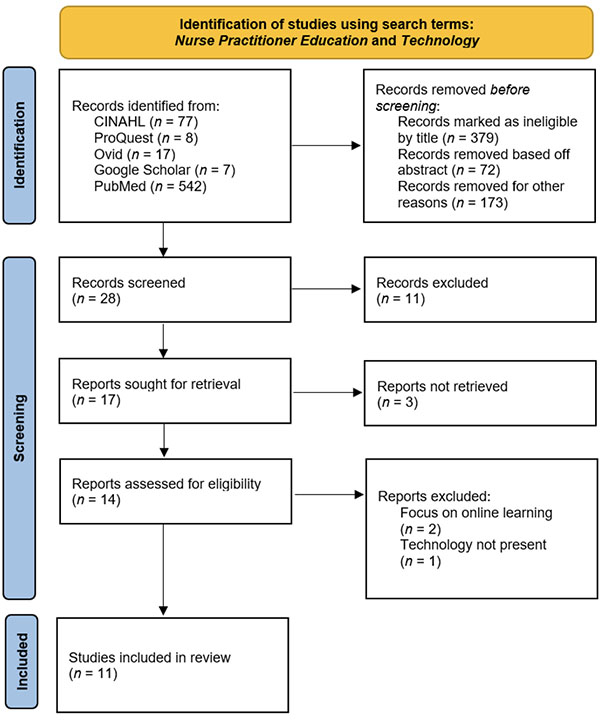
This integrative review used the framework from Whittemore and Knafl (2005) with its five-step process for review: (a) problem definition, (b) literature search, (c) data evaluation, (d) data analysis, and (e) interpretation and thematic presentation. This framework was selected because it offered a comprehensive and systematic method for synthesizing evidence across a variety of study designs, including both experimental and non-experimental research (Whittemore & Knafl, 2005). This flexibility in incorporating findings from studies with diverse study designs and methodologies was ideal for a topic where the literature base was still developing (Whittemore & Knafl, 2005). Additionally, having a structured approach ensured transparency and replicability, increasing the ability to produce meaningful insights for future practice and research (Cronin & George, 2020). The results of the literature search were reported via the preferred reporting items for systematic reviews and meta-analyses (PRISMA). See Figure 1 for details.
Figure 1
Nurse Practitioner Education and Technology PRISMA
A literature search was conducted via CINAHL, ERIC (ProQuest), Medline (OVID), Google Scholar, and PubMed. To gain an overall understanding of the current integration of clinical education technology in NP programs, authors searched for two terms: (a) nurse practitioner education, and (b) technology. The inclusion criteria consisted of articles published in English since 2010 that pertained to NP education and focused on clinical learning technology. The authors determined that literature from qualitative, quantitative, mixed methods research, and literature reviews were appropriate for inclusion, given the limited field of NP-focused work around the topic of interest. Exclusion criteria included literature published in languages other than English, literature published before 2010, and papers focused on technology integrated within undergraduate nursing programs and non-NP graduate programs.
The first literature search was limited to the previous five years and only included work focused on NP education in Canada, given our interest in current use, available technologies, and experience with these to assess the need for funding initiatives, training, and enhanced uptake within our regional NP education programs. This search drew numerous studies focused on undergraduate learners with very few items pertaining to the NP student population. We decided to broaden the search to include articles published from 2010 to present, and to extend the search to all articles rather than restricting to Canadian sources. The updated search parameters yielded 651 articles. The authors used a tiered process that began with a title and abstract review, allowing for the rapid exclusion of irrelevant studies. Before initiating the detailed review, authors reached consensus to exclude literature focused on online learning platforms, virtual lecture delivery, video conferencing, and telehealth systems. Additionally, articles addressing technology for professional development, patient education, and opinion pieces were also excluded. Upon completion of this review, 11 articles were retained for analysis to determine the current state of knowledge around the use of clinical and educational technologies in NP education.
Braun and Clark’s (2006) framework was used to guide our analysis. This framework provided clear guidance for organizing and coding data, identifying overarching themes, clarifying through revision and refining dominant themes (Braun & Clark, 2006). While designed for qualitative analysis, the authors were able to apply it within this review, given the nature of the task at hand.
Two of the four authors were randomly selected to serve as independent reviewers, and each was assigned review of five or six full articles. Each author independently analyzed the articles for specific themes. Using a dual reviewer process enabled collaboration and verification of relevant themes (Stoll et al., 2019). Each independent review validated that the item met inclusion and exclusion criteria and applied the conceptual framework to perform thematic analysis. Once complete, the authors reconvened to share their findings. When inconsistencies occurred during comparison, a third reviewer was brought in to review and clarify identified inconsistencies. This process allowed the authors to ensure clarity and relevance, and to identify valid themes to help guide future opportunities for integrating technology into NP student curricula.
Table 1 summarizes eleven articles and themes that emerged from the analysis. Code words were recorded as each article was read, and once all authors had completed their screening, the following five themes were identified: student uptake, student learning, change management, accessibility, and confidence.
Table 1
Summary of Articles and Thematic Analysis
| Citation | Title | Objective / methodology / participants | Findings / limitations | Theme |
| Anderson, Guido-Sanz, Díaz, Lok, Stuart, Akinnola, & Welch (2021) | Augmented reality in nurse practitioner education: Using a triage scenario to pilot technology usability and effectiveness | Mixed methods exploratory study to gain insight into augmented reality usability | AR can be useful and enjoyable, however requires more technological support | Change management Student learning Student uptake Confidence |
| Casler, Gawlik, & Messenger (2024) | Virtual reality to aid in competency based online nurse practitioner curriculum (VR-NP) | Pilot program for NP health assessment course to use transition to weekly VR simulation to support with increasing competency-based education | Realtime performance feedback, engaging, worthwhile Learning curve for faculty and students regarding software issues | Confidence Student learning Student uptake |
| Elliott, DeCristofaro, & Carpenter (2012) | Blending technology in teaching advanced health assessment in a family nurse practitioner program: Using personal digital assistants in a simulation laboratory | Studied the use of personal handheld devices and high-fidelity simulation in advanced health assessment course | Blended technology was identified as meeting students’ learning needs; difficulty initially with buy in from course coordinators, value was identified once pilot scenarios occurred | Student uptake Change management |
| Lamarche, Park, Fraser, Rich, & MacKenzie (2016) | In the palm of your hand: Normalizing the use of mobile technology for nurse practitioner education and clinical practice | Use of mobile technology among NP students and the role it plays in NP education | Extremely positive reviews from students, including personal use of technology throughout workday and use for information sharing and in practice Negative view remains surrounding mobile technology | Student uptake Change management |
| Lee, Bathish, & Nelson (2024) | Transforming nursing education: developing augmented reality procedural training | Cross-sectional feasibility study to test training graduate students in advanced nursing procedures (lumbar puncture) using AR holographic images | Results were positive for feasibility and acceptance of this technology for training; requires financial commitment, curriculum alignment and student/faculty orientation | Student learning Student uptake Confidence Change management Accessibility |
| Marrocco, Ginzburg, Feder (2019) | Seeing from the eyes of the beholder: A pilot program for learning through reflection in graduate nursing education | Using wearable technology to allow NP students the opportunity to view their patients’ perspective of them throughout a clinical scenario | Students able to refine their interview taking skills and overall saw this as a beneficial and positive experience | Confidence Student uptake Student learning |
| Nelson, Ridgway, Brown, Anthamatten, Hall, McClure (2025). | Interactive simulation for addressing vaccine hesitancy in nurse practitioner education | Implementation and evaluation of AI virtual simulation to enhance students’ communication skills | Overall positive feedback, although technology support required to keep system operating effectively | Student learning Change management |
| Rogers, Reyes, & Yang (2024). | Development of an interactive 3D visualization tutorial for pathophysiology in graduate nursing education | Teaching 3D visualization of COPD disease process, using AR; working with College of Engineering to create the program | Very positive result with enhanced learning, confidence and engagement | Confidence Student learning Student uptake |
| Rudolph, Vaughn, Crego, Hueckel, Kuszajewski, Molloy, Brisson, & Shaw (2017) | Integrating telepresence robots into nursing simulation | Use of a telepresence robot among nursing students and NP students clinical simulation, allowing those completing distance education to engage with remaining cohort | Positive experience to help engage those on campus and via distance learning Established that educators require enhanced learning to operate technology in order to provide successful implementation throughout course | Change management Student learning Accessibility |
| Smith, Jordan, & Li (2022) | Video-based interactive clinical simulation: Preparing nurse practitioner students for clinical | Development and evaluation of a video-based simulation for clinical experience | Resulted in increased confidence and positive feedback from NP students | Confidence |
| Whited, DeClerk, Berber, & Phelan (2019) | An innovative technique to promote understanding of anatomy for nurse practitioner students | Teaching anatomy to NP students using CT based 3D anatomy table and cadaver lab | Confidence and overall knowledge in all categories of pediatric anatomy increased from pretest to posttest Program is expensive | Change management Student learning Confidence |
Five themes emerged from our review of 11 articles, namely student uptake, student learning, change management, accessibility, and confidence. Each theme is discussed below, along with a brief discussion to relate the findings to existing theory. There are gaps in the evidence available to inform implementation and support integration of clinical learning technology in NP education. This underscores a need to address the role of relevant technologies in continuing education to support practicing NPs as lifelong learners.
Student uptake was a dominant theme in seven articles; all highlighted a positive correlation between effective use of technology and skill development among NP students (Anderson et al., 2021; Casler et al., 2024; Elliott et al., 2012; Lamarche et al., 2016; Lee et al., 2024; Marrocco et al., 2019; Rogers et al., 2024). As students already engage with technology in their daily lives, integrating augmented reality and other clinical learning technologies into simulations enhances the realism of scenarios while maintaining a reasonable learning curve and student comfort levels similar to general technology use (Anderson et al., 2021; Lamarche et al., 2016). Using virtual simulation to replicate the patient’s lived experience provided students with a valuable opportunity to exercise assessment and interviewing skills and communication strategies, especially around sensitive topics such as trauma, death and dying, sexual health, forensic care, and critical incidents. This learning will improve patient experience and outcomes in real NP encounters (Lee et al., 2024; Nelson et al., 2025). Meanwhile, several studies reported that NP students appreciated the direct and immediate feedback that AI could provide, reported satisfaction with their learning experience, and indicated they would use AI software for clinical learning in the future (Nelson et al., 2025; Rogers et al., 2024; Smith et al., 2022).
Rogers et al. (2024) found that interactive AR and VR tools support improved learning outcomes and increased motivation for learning compared to a traditional textbook approach to NP education. In Lee et al. (2024), an intervention that allowed NP students to use VR in simulated lumbar puncture also met with positive feedback from the students. The VR served as a safe bridge between the learning of theory and live clinical application. NP students noted that the VR system provided a realistic experience, was easy to use, and created a safe environment to practice motor, procedural, and critical thinking skills without the risk of patient harm (Anderson et al., 2021; Lee et al., 2025; Nelson et al., 2025). In another review of VR simulations, NP students appreciated the opportunity to debrief after difficult scenarios, practice soft skills and communication, and to become better equipped to handle crucial conversations around vaccine hesitancy (Anderson et al., 2021; Nelson et al., 2025; Whited et al., 2019).
The theme of change management encompassed a broad range of suggestions for implementation of clinical education technologies into the standard NP curriculum. Adaptation by students and faculty varied and was context dependent. Rogers et al. (2024) highlighted collaboration between nursing and engineering faculty to create a 3D visualization tool for NP students to view an animation of the development of chronic obstructive pulmonary disease in real time. The authors noted that the iterative design generated greater understanding of the technology in both disciplines. Meanwhile, the partnership required developers to operate the program and to make continual adjustments based on participant feedback (Rogers et al., 2024).
Several studies indicated that when faculty are supported in operating clinical education technology and troubleshooting glitches, program implementation is more efficient, and student satisfaction increases. Supporting faculty in the use of innovative technology in core courses in NP programs will improve competence, enhance the patient experience, and ameliorate better health outcomes (Lee et al., 2024; Rogers et al., 2024; Rudolph et al., 2017).
Technology can transcend borders and space, enable synchronous and asynchronous experiences, and increase accessibility for students. A VR holographic simulation for a clinical encounter or procedure can be conducted in a student’s home, where the interaction can be video recorded for faculty review. Use of this technology across locations also ensures NP exposure to important experiences and patient conditions while decreasing logistics challenges related to on-site facilitation in real time and the need to hire and prepare simulated patients. More generally, the use of technology allows for collaboration between students on campus and those through distance education, ensuring each student is participating in the same clinical scenario and is practicing the same skills regardless of their location or ability to attend in person (Rudolph et al., 2017; Smith et al., 2022). This flexibility and facilitation of curricular continuity and collaboration will be particularly relevant within online distributed, on campus, and hybrid NP programs.
Clinical education technology creates opportunities for NP education programs given its contributions to student learning, flexibility, and its applicability to distributed learning models. Efficiencies related to geographic reach and the lack of need for dedicated spaces may facilitate increased NP program enrollment, ultimately supporting the long-term goal of meeting human resource demands in the health sector (Lee et al., 2024). AR and VR can mitigate challenges associated with limited clinical placements by offering students a wide array of controlled, realistic experiences related to various patient health challenges and clinical procedures (Nelson et al., 2025).
NP students reported that clinical education technology used in simulation supported the development of a more comprehensive skill set, enhanced competency, and a sense of self efficacy during their initial clinical rotations (Nelson et al., 2025; Smith et al., 2022). Early studies reviewed the use of personal handheld devices and mobile technology in NP education and showed that point-of-care technology improved students’ confidence and better prepared them for their NP clinical placements (Elliott et al., 2012; Lamarche et al., 2016). Throughout pretest and posttest surveys with a video-based interactive NP student simulation, average scores increased in all areas of confidence and knowledge acquisition (Smith et al., 2022). Across multiple studies, students reported that using clinical education technology better prepared them for in-person patient interviews, health assessments, and practical skills (Lee et al., 2024; Smith et al., 2022). Despite the long timeframe between the oldest and most recent studies in this review, each consistently showed that NP learners reported increased preparedness for in-person clinical practice when technology was leveraged.
This review did not uncover works presenting theory to support integration or evaluation of clinical education technologies for NPs. However, our current findings align well with Driscoll and Burners’ (2022) constructivist approach to instruction and learning, which emphasized the importance of experience, schemas, collaboration, and complex, realistic and relevant environments. Of note, the inclusion of collaboration was significant as it is an important feature of NP practice within complex systems requiring team-based care. This model also emphasized reflexive practice, a key component in NP student learning and professional practice development.
NP students have acknowledged the benefits of clinical learning technologies within programs. The integration of technologies like AR and VR have supported these learners in building self-confidence, provided a safe and non-judgmental learning environment, and enhanced the knowledge and skill required to understand disease processes and communicate effectively with patients (Anderson et al., 2021; Nelson et al., 2025; Rogers et al., 2024; Rudolph et al., 2017; Whited et al., 2021). Meanwhile, research and best practices related to the introduction, use, and uptake of clinical education technologies in NP education will require further development. NP programs must continue to implement, evaluate, and better understand the extent of the effectiveness, benefits, drawbacks, and challenges for both learners and faculty (Casler et al., 2024; Lee et al., 2024; Whited et al., 2019). While studies have supported the ongoing use of clinical learning technologies in NP education overall, studies have also identified challenges in implementation. For example, inconsistent functionality, difficulty navigating remote platforms, reliance on facilitators during simulations, and instances where the technology was perceived as uncomfortable or distracting were all reported in this review (Anderson et al., 2021; Marrocco, et al., 2019; Rudolph et al., 2017).
None of the publications presented the average cost of integrating clinical education technology into an NP education program. Strategies to address the rapid evolution of technology, the need for necessary updates, new platforms, best practices, and interoperability were also not mentioned. Data regarding current levels of use among NP programs were also not reported. Further work in these areas should be considered, as this information could support funding requests and integration across publicly funded NP programs. This work could also inform future planning related to budgetary allocations for upkeep, uptake, training, and technical support. Ongoing evaluation of student and faculty experiences, as well as student outcomes, should be monitored to inform strategic directions around implementation, quality assurance, and best practice initiatives in NP education.
While there has been limited documentation on implementing clinical learning technologies in NP education, substantial work from undergraduate nursing programs has highlighted their effective use. High fidelity simulation, VR, AR, and holographic imaging have been used at the undergraduate level to enhance students’ confidence, knowledge acquisition, sense of belonging and inclusion, and overall learning experience (Brown et al., 2023; Chang et al., 2022; Hoyt & Hauze, 2023; Jallad, 2024; Liu & Butzlaff, 2021; Medvec et al., 2023; Russell, 2023; Wang et al., 2023). Promising outcomes in undergraduate education suggest a need to explore the potential benefits of integrating similar technologies within graduate NP programs. Universities and other learning centers will need to source, invest in, and support the technology infrastructure, as well as collaborate with the subject matter experts and faculty leaders required to develop new content. Consultation with experts in clinical learning technology from undergraduate nursing implementation would leverage existing professional expertise across nursing faculties.
Multiple findings identified adaptation to change, or lack thereof, as a hindrance to technology integration in NP education (Lamarche et al., 2016; Rudolph et al., 2017). Educational institutions, program leaders, and faculty members are encouraged to assess their effectiveness with technology implementation and, given the rapidly evolving nature of clinical education technology, implement a continuous quality improvement approach to ensure ongoing relevance and suitable application within programs. Close attention must be paid to the optimal balance between use of novel technologies and the corresponding in-person patient experiences, so that maximal student outcomes may be realized (Graves et al., 2023).
This literature review was subject to some limitations. First, the search was limited to peer-reviewed articles published in English, which may have excluded relevant insights from grey literature or from studies published in other languages. Second, the studies varied significantly in design, outcome measures, the timeline over which data were collected, and the type of technology that was assessed, which may have impacted the ability to synthesize findings or make direct comparisons. Finally, while every effort was made to prevent selection bias, it is important to note that the inclusion and interpretation of studies were influenced by the authors’ judgment.
This review project was undertaken to assess knowledge about the current use of advanced clinical learning technology in graduate-level NP programs. Despite some concept-supporting evidence, the current body of work around clinical education technologies in NP education signals room for expansion and future opportunities for implementation, evaluation, and development. Further work should focus on student, faculty, and funding-specific outcomes, including implementation experiences, change management, student and faculty satisfaction, learning outcomes, and budget.
The current literature has demonstrated that the enhanced use of clinical learning technologies such as VR, AR and holographic applications in NP education would improve learning, increase confidence, enhance patient safety, and contribute to better student and patient outcomes. Given the findings and significant benefits, NP program accrediting bodies, university administrators, and regulators who approve NP education programs should request reporting on the uses of these technologies in their evaluation frameworks.
Meanwhile, very little insight was provided into facilitators and barriers related to the uptake and implementation of relevant technologies among NP program faculty. This highlighted a gap in current knowledge necessary for more widespread application. NP program faculty will be a key linkage in successful implementation of technologies that support clinical learning. There is a need for further research, documentation, publication, and dissemination around learning technology pilots, implementations, challenges, and successes within NP education programs. Student feedback and outcomes related metrics should also be sought. As learning technologies advance, equipping NP programs and faculty with guidance on their implementation will be essential for optimizing student learning and contributing to safe and effective patient care.
This review of the current field of work focused on the use of clinical learning technologies in NP education revealed key themes, including student uptake, student learning, change management, accessibility, and confidence. Given solid student uptake and the potential of these technologies to transcend geography in distributed learning models, they must be considered for timely integration into NP education programs. Further work should focus on process and outcome evaluation, cost estimation, planning and management, and public funding related to implementation, support, and updating of technologies. Meanwhile, those who fund NP education should consider ongoing investment in existing and emerging technologies that may be applied to enhance NP student learning and professional competence, ultimately improving patient care over the long term. Integration should be supported with adequate funding to cover technology, equipment, and faculty training and support, which is essential for operationalization in the post-secondary environment.
Ainslie, M., & Bragdon, C. (2018). Telemedicine simulation in online family nurse practitioner education: Clinical competency and technology integration. Journal of the American Association of Nurse Practitioners, 30(8). https://doi.org/10.1097/JXX.0000000000000071
Al-hatem, A.I., Masood, M., & Al-Samarraie, H. (2018). Fostering student nurses’ self-regulated learning with the second life environment: An empirical study. Journal of Information Technology Education: Research, 17, 285-307. https://doi.org/10.28945/4110
Anderson, M., Guido-Sanz, F., Díaz, D. A., Lok, B., Stuart, J., Akinnola, I., & Welch, G. (2021). Augmented reality in nurse practitioner education: Using a triage scenario to pilot technology usability and effectiveness. Clinical Simulation in Nursing, 54, 105-112. https://doi.org/10.1016/j.ecns.2021.01.006
Braun, V., & Clarke, V. (2006). Using thematic analysis in psychology. Qualitative Research in Psychology, 3(2), 77-101. https://doi.org/10.1191/1478088706qp063oa
Brown, K. M., Perretta, J., Miller, G., Gilbert, G., Anderson, M., Horvath, C., Sullivan, N., Jeffers, J., Swoboda, S., Shilkofski, N., Green, D., & Mudd, S. (2023). Deconstructing healthcare silos: Multiplayer virtual reality for interprofessional & intraprofessional education. Journal of Interactive Learning Research, 34(3), 495-517. https://doi.org/10.70725/193236wczyhb
Canadian Association of Schools of Nursing. (2022). Accreditation nurse practitioner program standards and framework. https://www.casn.ca/Assets/CASN/Documents/Accredetation/CASN-Accreditation-NP-Standards_FD_EN.pdf
Carley, A. (2015). Using technology to enhance nurse practitioner student engagement. The Nurse Practitioner, 40(7), 47-54. https://doi.org/10.1097/01.NPR.0000465119.04536.0e
Casler, K., Gawlik, K. S., & Messinger, J. (2024). Virtual reality to aid in competency-based online nurse practitioner curriculum (VR-NP). Journal of Professional Nursing, 55, 125-132. https://doi.org/10.1016/j.profnurs.2024.09.009
Chang, C.-Y., Sung, H.-Y., Guo, J.-L., Chang, B.-Y., & Kuo, F.-R. (2022). Effects of spherical video-based virtual reality on nursing students’ learning performance in childbirth education training. Interactive Learning Environments, 30(3), 400-416. https://doi.org/10.1080/10494820.2019.1661854
Cronin, M., & George, E. (2020). The why and how of the integrative review. Organizational Research Methods, 26(1). https://doi.org/10.1177/1094428120935507
D’Aiello, A., Cabitza, F., Natali, C., Vigano, S., Ferrero, P., Bognoni, L., Pasqualin, G., Giamberti, A., & Chessa, M. (2018). The effect of holographic heart models and mixed reality for anatomy learning in congenital heart disease: An exploratory study. Journal of Medical Systems, 47(64). https://doi.org/10.1007/s10916-023-01959-8
Driscoll, M., & Burner, K. (2022). Psychology of learning of instruction (4th ed.). Pearson.
Elliott, L., DeCristofaro, C., & Carpenter, A. (2012). Blending technology in teaching advanced health assessment in a family nurse practitioner program: Using personal digital assistants in a simulation laboratory. Journal of the American Academy of Nurse Practitioners, 24(9), 536-543. https://doi.org/10.1111/j.1745-7599.2012.00728.x
Ficarra, B. (2021). Virtual reality, augmented reality and mixed reality. In W. Carroll (Ed.), Emerging technologies for nurses: Implications for practice (pp. 87-120). Springer.
Graves, L., Dalgarno, N., Hoorn, R. V., Hastings-Truelove, A., Mulder, J., Kolomitro, K., Kirby, F., & van Wylick, R. (2023). Creating change: Kotter’s change management model in action. Canadian Medical Education Journal, 14(3), 136-139. https://doi.org/10.36834/cmej.76680
Hoyt, H., & Hauze, S. (2023). Nursing education through the lens of immersive simulation: A comparison of student knowledge, skill, and motivation to learn via two-dimensional video versus extended reality. International Journal on E-Learning, 22(2), 129-157. https://doi.org/10.70725/463377yvompo
Jallad, S. T. (2024). The effectiveness of immersive virtual reality applications (human anatomy) on self-directed learning competencies among undergraduate nursing students: A cross-sectional study. Anatomical Sciences Education, 17( 9), 1764-1775. https://doi.org/10.1002/ase.2534
Kyaw, B., Saxena, N., Posadzki, P., Vseteckova, J., Nikolaou, C., George, P., Divakar, U., Masiello, I., Kononowicz, A., Zary, N., & Car, L. (2019). Virtual reality for health professions education: Systematic review and meta-analysis by the digital health education collaboration. Journal of Medical Internet Research, 21(1). https://doi.org/10.2196/12959
Lamarche, K., Park, C., Fraser, S., Rich, M., & MacKenzie, S. (2016). In the palm of your hand: Normalizing the use of mobile technology for nurse practitioner education and clinical practice. Nursing Leadership, 29(3), 120-132. https://doi.org/10.12927/cjnl.2016.24898
Lee, D., Bathish, M. A., & Nelson, J. (2024). Transforming nursing education: Developing augmented reality procedural training. CyberPsychology, Behavior & Social Networking, 27(6), 372-378. https://doi.org/10.1089/cyber.2023.0403
Liu, Y., & Butzlaff, A. (2021). Where’s the germs? The effects of using virtual reality on nursing students’ hospital infection prevention during the COVID-19 pandemic. Journal of Computer Assisted Learning, 37(6), 1622-1628. https://doi.org/10.1111/jcal.12601
May, S. C. (2019). A comparative analysis of student success and perceptions of engagement between face-to-face and online college courses (Publication No. 13811251) [Doctoral dissertation, Lindenwood University]. ProQuest Dissertations & Theses Global. https://www.proquest.com/docview/2202321237?pq-origsite=primo&sourcetype=Dissertations%20&%20Theses
Marrocco, G., Ginzburg, E. & Feder, S. (2019). Seeing from the eyes of the beholder: A pilot program for learning through reflection in graduate nursing education. Nursing Education Perspectives, 40(2), 113-115. https://doi.org/10.1097/01.NEP.0000000000000317
Medvec, B. R., Knight, S. W., & McLaughlin-Grayson, T. (2023). Cultivating leadership competency using virtual reality: DEI and anti-racism. Journal of Interactive Learning Research, 34(3), 475-494. https://doi.org/10.70725/372356fpywxa
Nelson, B., Ridgway, J., Brown, A., Anthamatten, A., Hall, E., & McClure, N. (2025). Interactive simulation for addressing vaccine hesitancy in nurse practitioner education. Clinical Simulation in Nursing, 102. https://doi.org/10.1016/j.ecns.2025.101719
Rogers, J. L., Reyes, A., & Yang, X. (2024). Development of an interactive 3D visualization tutorial for pathophysiology in graduate nursing education. Nurse Educator, 49( 2), E68-E73. https://doi.org/10.1097/NNE.0000000000001496
Rudolph, A., Vaughn, J., Crego, N., Hueckel, R., Kuszajewski, M., Molloy, M., Brisson, R., & Shaw, R. J. (2017). Integrating telepresence robots into nursing simulation. Nurse Educator, 42(2), E1-E4. https://doi.org/10.1097/NNE.0000000000000329
Russell, S. L. (2023). Evaluating a virtual reality simulation-based tool in undergraduate nursing students for impact on accuracy, clinical judgment, fear, and self-confidence when donning, doffing, and disposing of personal protective equipment (Publication No. 30561029) [Graduate dissertation, West Virginia University]. ProQuest Dissertations & Theses Global. https://doi.org/10.33915/etd.11960
Shelton, A., & Reimer, N. (2018). Telehealth wound applications: Barriers, solutions, and future use by nurse practitioners. Online Journal of Nursing Informatics, 22(2). https://www.himss.org/resources/telehealth-wound-applications-barriers-solutions-and-future-use-nurse-practitioners/
Smith, T. S., Jordan, J., & Li, P. (2022). Video-based interactive clinical simulation: Preparing nurse practitioner students for clinical. Journal for Nurse Practitioners, 18(9), 995-998. https://doi.org/10.1016/j.nurpra.2022.07.014
Stoll, C. R. T., Izadi, S., Fowler, S., Green, P., Suls, J., & Colditz, G. A. (2019). The value of a second reviewer for study selection in systematic reviews. Research Synthesis Methods, 10(4), 539-545. https://doi.org/10.1002/jrsm.1369
Wang, C.-Y., Yin, T., Ma, K.-H., Shyu, J.-F., Cheng, C.-P., Wang, Y.-C., Huang, Y.-L., & Chiang, M.-H. (2023). Enhancing anatomy education through cooperative learning: Harnessing virtual reality for effective gross anatomy learning. Journal of Microbiology & Biology Education, 24(3). https://doi.org/10.1128/jmbe.00100-23
Whited, T. M., DeClerk, L., Berber, A., & Phelan, K. D. (2019). An innovative technique to promote understanding of anatomy for nurse practitioner students. Journal of the American Association of Nurse Practitioners, 33(5), 348-352. https://doi.org/10.1097/JXX.0000000000000328
Whittemore, R., & Knafl, K. (2005). The integrative review: Updated methodology. Journal of Advanced Nursing, 52(5), 546-553. https://doi.org/10.1111/j.1365-2648.2005.03621.x

Novel Technologies in Nurse Practitioner Education: An Integrative Review by Chelsie Girard, Misha Balciunas, Kelly Robertson, Hannah Ballantyne, Jennifer-Lynn Fournier, and Robyn Gorham is licensed under a Creative Commons Attribution 4.0 International License.