Volume 27, Number 3
Liu Dong, Victoria L. Lowell, and Chi-Jia Hsieh
Department of Curriculum and Instruction, Purdue University
With the increasing application of learning analytics in online learning communities, network analysis methods have emerged as powerful and efficient tools for deepening our understanding of collaborative learning processes, especially within the community of inquiry (CoI) framework, offering insights that extend beyond the examination of interaction patterns. This systematic review synthesizes findings from 43 empirical studies, with a focus on the application of social and epistemic network analysis methods (SNA and ENA) in CoI research in higher education contexts. Key findings highlight the value of SNA and ENA in investigating interaction patterns, refining CoI theory, examining community formation and evolution, analyzing discourse and knowledge construction, tracing the development of CoI presences, and identifying SNA measures relevant to CoI presences. This review also identifies the current challenges and opportunities in using SNA and ENA, as well as the potential for integrating both methods in future CoI research. By revealing both the strengths and limitations of existing studies, this review offers actionable implications for researchers, educators, and instructional designers aiming to enhance the design and analysis of online learning communities.
Keywords: social network analysis, epistemic network analysis, community of inquiry, systematic review
The community of inquiry (CoI) framework, rooted in collaborative constructivist theory, was introduced to understand the concept of community in online discussions (Garrison et al., 2000). It comprises three core presences: cognitive, social, and teaching presence. Cognitive presence refers to the ability of learners to construct meaning through sustained reflection and discourse (Garrison et al., 2001), and it can be considered an important indicator of critical thinking. Social presence is defined as “the ability of participants in a community of inquiry to project themselves socially and emotionally, as ‘real’ people (i.e., their full personality), through the medium of communication being used” (Garrison et al., 2000, p. 94). Teaching presence, which encompasses the design, facilitation, and direction of cognitive and social processes, is essential in guiding learners through online educational experience (Anderson et al., 2001; Garrison & Arbaugh, 2007). Together, these presences foster deep and meaningful inquiry, transforming online communication into a medium for collaborative knowledge construction (Kozan & Richardson, 2014; Shea & Bidjerano, 2009). Traditional analyses of CoI in online and blended courses rely on surveys (Arbaugh et al., 2008) and quantitative content analysis (e.g., Satar & Akcan, 2018; Wicks et al., 2015). However, these methods are limited by self-reported data and their inability to capture dynamic interactions or the depth of critical thinking. To address these challenges, researchers increasingly adopt network analysis methods, particularly social network analysis (SNA) and epistemic network analysis (ENA), leveraging learning analytics to explore complex interaction patterns in online discourse.
SNA characterizes networked structures in terms of nodes (people, groups, or organizations) and edges (relationships or interactions) that connect them, producing visual representations and mathematical analysis (Wasserman & Faust, 1994), which can help us understand the network data and provide insights into the various roles and groupings in a network (Cela et al., 2015). SNA commonly employs several measures to describe the structure and characteristics of a network, such as centrality, cohesion, density, and centralization. Based on these measures, SNA focuses on the connections between individuals, identifying influential participants, interaction, social dynamics of knowledge construction and creation, and the community’s overall cohesion (Jan et al., 2019).
ENA is a novel analytical method designed to identify, quantify, and compare connections among elements in coded data by representing these relationships as dynamic networks that model patterns of association (Shaffer et al., 2016). The ENA algorithm comprises three fundamental components: units, conversations, and codes. Units refer to the entities whose network connections are being analyzed, such as individuals, concepts, or groups. Conversations are collections of data segments within which ENA models connections between concepts. Codes represent specific concepts whose patterns of association are being examined. The ENA algorithm uses a moving window to construct a network model for each line in the data, showing how codes in the current line are connected to those that occurred previously (Siebert-Evenstone et al., 2017). Furthermore, ENA is a kind of semantic network analysis which focuses more on the developmental trajectory of students’ online discourses, revealing the development of students’ cognitive thinking (Shaffer et al., 2016).
SNA and ENA both fall under the umbrella of network analysis methods, offering complementary insights in online learning: SNA captures the structural dynamics among learners, while ENA reveals how meaning is constructed through discourse. A literature review synthesizing the use of SNA and ENA in CoI studies is crucial for understanding current methodological trends, identifying research gaps, and highlighting innovative approaches. More importantly, such a review informs future researchers by exploring the potential for integrating both methods into future CoI studies.
Jan et al.’s (2019) review of nine studies examining CoI in higher education through SNA revealed two key findings: inconsistent results across studies, and a methodological tendency to combine SNA only with content analysis and statistical methods. Similarly, Elmoazen et al. (2022) noted the use of ENA in several CoI-related studies. However, their review lacked detailed analysis or discussion of these applications. Notably, neither review solely concentrated on CoI research, thereby limiting a deeper understanding of the methodological contributions and practical implications of using SNA and ENA within CoI research in distance learning contexts. Given this gap, a comprehensive and focused review is necessary to better understand how network analysis methods contribute to uncovering the relational and cognitive dynamics of online participation within the CoI. Such an understanding can provide researchers and practitioners with contextualized insights and actionable implications for designing more effective online learning environments and facilitating meaningful asynchronous online discussions (AODs). Therefore, this study was conceived to comprehensively review all existing research on the application of SNA and ENA in higher education within open and distance learning environments and examine the following research questions:
RQ1: What are publication trends, popular publication sources, and presences examined in studies that employ SNA and ENA methods?
RQ2: What are the key research purposes and findings in selected studies?
A literature review is a respected scholarship method for understanding the scope and content of published literature. In this study, we followed the instructions and guidelines based on preferred reporting items for systematic reviews and meta-analyses (PRISMA; Page et al., 2021) to conduct this review.
To locate relevant articles, we searched the following major databases: Web of Science, Scopus, EBSCO, including Education Full Text (H. W. Wilson), Education Source, ERIC, Social Sciences Full Text (H. W. Wilson), and ScienceDirect. The target studies had to be published between January 2010 and December 2024.
Search terms were developed using a set of predefined keywords (Table 1) and applied using Boolean search operators. Each database was searched independently using combinations of these terms. All retrieved records were then imported into Covidence software (https://www.covidence.org/) to facilitate screening and management of the review process.
Table 1
Search Terms for Identifying Community of Inquiry Studies Using SNA and ENA
| Term | Search Terms |
| Community of inquiry | social presence OR teaching presence OR cognitive presence OR learning presence OR communities of inquiry OR community of inquiry OR CoI OR practical inquiry model |
| Higher education | undergraduate OR graduate OR doctoral OR college* OR university |
| Network | network* OR interaction* |
We adopted seven eligibility criteria to guide the screening process of relevant research: (a) studies should have CoI as the foundational framework; (b) studies should be written in English; (c) studies should have full access and be published in peer-reviewed journals or conference proceedings; (d) studies should be conducted in online higher education; (e) the data analyzed in these studies must include AODs, as network analysis methods were employed to capture interaction patterns derived from asynchronous discussion boards; (f) studies should employ SNA or ENA to analyze AODs; and (g) studies should be empirical studies.
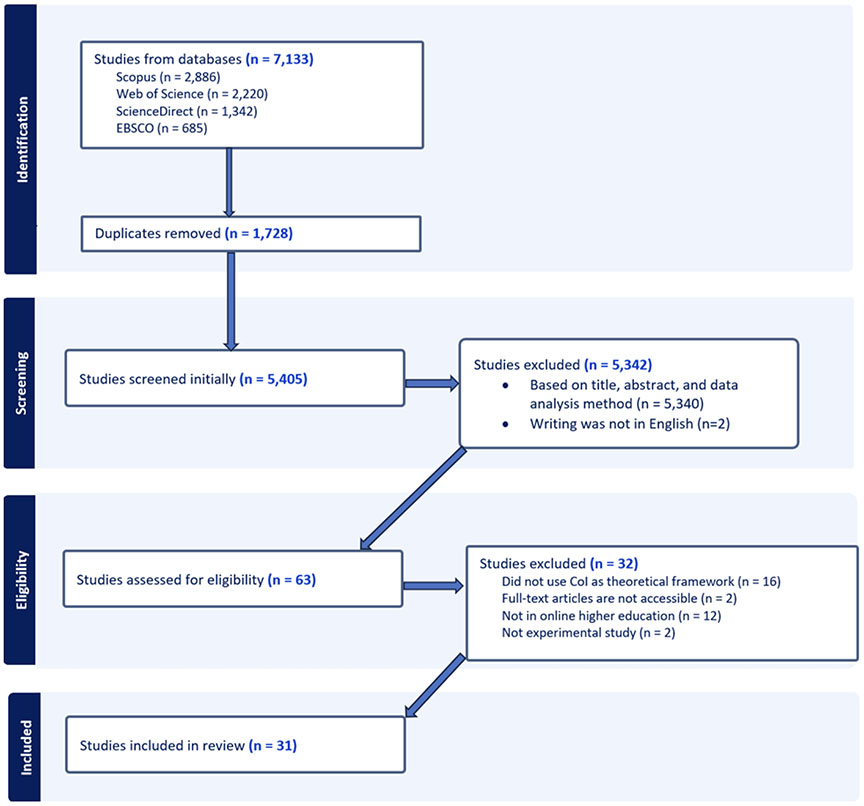
For collecting the articles, we conducted a literature search in four stages: identification, screening, eligibility, and inclusion. We began identification by searching Scopus, Web of Science, ScienceDirect, and EBSCO. This search yielded a total of 7,133 studies. After automatically removing duplicates (n = 1,728) using Covidence, the remaining 5,405 articles were included in the next screening stage. To screen the literature, we primarily excluded articles based on their title, abstract, and data analysis method. To be noted, the primary reason for the large reduction is that our initial search strategy intentionally employed broad search terms across multiple databases to ensure comprehensive coverage of all potentially relevant studies. We also found that two articles were written in a language other than English. Finally, a total of 63 studies were eligible for full-text assessment. Based on the eligibility criteria, 31 studies were included in this review. The detailed data screening process is presented in Figure 1.
Figure 1
Screening Flowchart for Articles Included in This Review
Note. CoI = community of inquiry.
Additionally, given that the application of learning analytics methods has also been predominantly recognized and disseminated through the International Learning Analytics and Knowledge Conference (LAK) and the International Conference on Quantitative Ethnography (ICQE), the proceedings from these conferences were also included in our search to ensure a comprehensive review. Accordingly, we conducted additional searches on Google Scholar, LAK, and ICQE, and hand-searched relevant studies from the reference lists of the 31 studies identified in the screening. These additional procedures yielded 12 relevant conference papers. In total, 43 studies were included in this review.
To code the selected articles, we carefully read, analyzed, and coded each article. They first collected the basic information (publication year, journals and conferences, presences included) from each study to answer RQ1. Then, the coders synthesized the research topics and findings of each study from the abstract, results, discussion, and limitation sections for answering RQ2. To ensure validity and reliability, the coders met each week and discussed the uncertain items until a 100% agreement was reached. The results are introduced and presented in the following section.
Figure 2 presents the distribution of using SNA and ENA methods in journal articles and conference proceedings. The first article using SNA to assess the CoI framework in higher education appeared in 2010, and the first ENA article was published in 2018. In addition, a noticeable increase in articles employing ENA methods was observed in 2024, suggesting a growing recognition and adoption of the ENA approach among researchers. This reveals that the research on using ENA in CoI research is still in its early stage of development. Overall, the combined number of ENA and SNA publications has gradually increased since 2013.
Figure 2
Number of Published Articles Using ENA or SNA Methods, 2010–2024
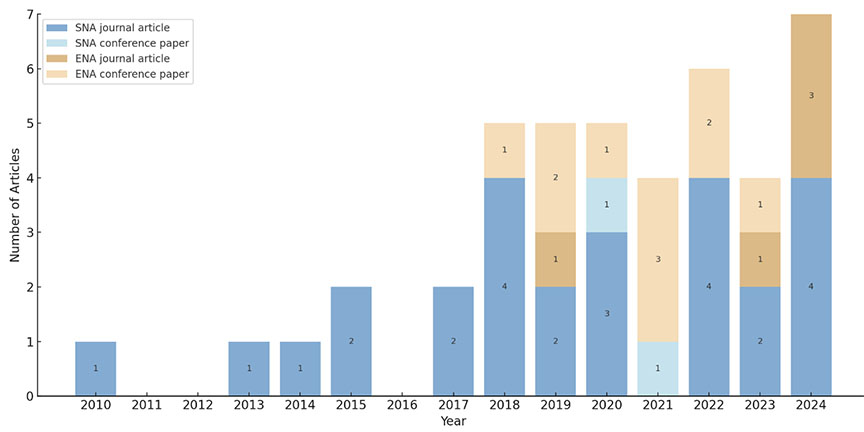
Note. ENA = epistemic network analysis; SNA = social network analysis.
This review identified 26 publication sources, including 5 conference proceedings and 21 journals, ultimately contributing to the 43 studies. Figure 3 presents the most popular publication sources.
Figure 3
Popular Publication Sources of Articles Identified for This Review
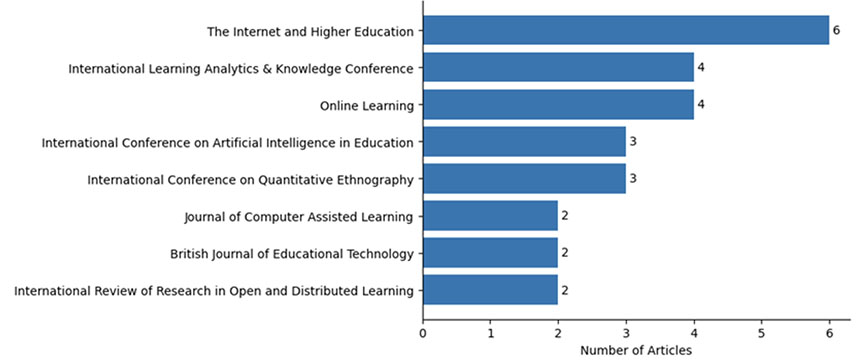
Table 2 provides an overview of the presences investigated using SNA and ENA within all selected studies. Social and cognitive presences were most frequently explored, while teaching presence received less attention. SNA has been more widely used, with studies covering all CoI presences. In contrast, ENA studies have primarily focused on social and cognitive presence, with fewer exploring teaching presence and none addressing learning presence independently. The combination of social and cognitive presence is the most commonly examined across both methods.
Table 2
Distribution of Community of Inquiry Presences and Analysis Methods in Reviewed Articles, 2010–2024
| Presence | SNA | ENA |
| Social | Castellanos-Reyes et al. (2024); Lim (2023); Norz et al. (2023, 2024); Satar & Akcan (2018); Wu et al. (2022); Yen et al. (2022) | Ferreira et al. (2020); Moraes et al. (2021); Rolim, Ferreira Mello, Kovanović, & Gašević (2019); Scianna et al. (2022) |
| Cognitive | Alwafi (2022); Galikyan & Admiraal (2019); Jo et al. (2017); Lim (2024); Oh et al. (2018); Sadaf & Olesova (2020); Sadaf et al. (2024) | Ba et al. (2023, 2024); Farrow et al. (2021); Ferreira Mello et al. (2018); Iqbal et al. (2022) |
| Teaching | Wang & Liu (2020) | |
| Learning | Jimoyiannis & Tsiotakis (2017); Shea et al. (2013) | |
| Social & cognitive | Tirado-Morueta et al. (2015, 2020); Williams-Dobosz et al. (2021) | Fathali (2024); Ferreira et al. (2021, 2022); Ferreira Mello & Gašević (2019); Rolim, Ferreira Mello, Lins, & Gašević (2019) |
| Social & cognitive & teaching | Shea et al. (2010) | Elmoazen et al. (2024) |
| Social & cognitive & teaching & learning | Shea et al. (2014); Wicks et al. (2015) | |
| Not explicitly referring to any specific presence | Eryilmaz et al. (2022); Jan (2018); Jan & Vlachopoulos (2018, 2019); Papanikolaou et al. (2020) |
Note. SNA = social network analysis; ENA = epistemic network analysis.
Network analysis methods can uncover and map the levels of participation and the evolution of interaction patterns among online learners (Saqr & Alamro, 2019). Drawing on Moore’s (1989) framework, the selected studies can be also categorized into: learner-learner interaction (e.g., Sadaf & Olesova et al., 2020; Sadaf et al., 2024), further divided into group and individual level (e.g., Jo et al., 2017; Satar & Akcan, 2018), learner-content interaction (e.g., Alwafi, 2022; Jo et al., 2017; Sadaf & Olesova et al., 2020), and learner-instructor interaction (e.g., Jan, 2018; Lim, 2024; Satar & Akcan et al., 2018; Wang & Liu, 2020). For instance, novice and experienced instructors facilitated discussion board interaction patterns (Lim, 2024), and findings showed that there were no significant differences in students’ cognitive presence based on instructors’ interaction patterns. Additional interaction types, such as learner-system interaction, have also been noted (Jo et al., 2017). These interactions play a pivotal role in shaping the dynamics and outcomes of AODs. Furthermore, interaction can also be explored through various intervention scaffoldings, including structured prompts, role assignments, and scenario-based tasks, which can foster reflective thinking, collaboration, and deeper cognitive engagement (e.g., Lim, 2024; Oh et al., 2018; Sadaf & Olesova, 2020). Moreover, discussion strategy with learning analytics made learners aware of their level and quality of interaction (Alwafi, 2022).
Network analysis methods provide valuable insights for refining the CoI framework. Beyond the traditional three presences, learning presence was introduced as a potential fourth construct, emphasizing learners’ active engagement in self-regulated learning (Shea & Bidjerano, 2010). It highlights self-efficacy and effort regulation as key components of meaningful participation (Shea & Bidjerano, 2010; Shea et al., 2013).
Additionally, ENA has been widely employed to examine the interrelationships between social and cognitive presence, particularly across the phases of cognitive presence and indicators of social presence (Fathali, 2024; Ferreira et al., 2021, 2022; Ferreira Mello & Gašević, 2019; Rolim, Ferreira Mello, Lins, & Gašević, 2019). Main findings have shown that social presence indicators are more strongly associated with the exploration and integration phases of cognitive presence. Specifically, affective indicators of social presence connect more with advanced cognitive phases, such as integration and resolution, whereas interactive indicators are tied to early phases, such as triggering events and exploration (Fathali, 2024; Rolim, Ferreira Mello, Lins, & Gašević, 2019). Moreover, ENA-based studies provide additional insights by revealing comparisons in the connections between social and cognitive presences across different contexts, such as learners’ emerging roles (Elmoazen et al., 2024; Ferreira et al., 2021), performance levels (Fathali, 2024), and experimental conditions, including scaffolding interventions (Rolim, Ferreira Mello, Lins, & Gašević, 2019).
The terms network and community are closely related, as a network is a group of entities joined together to form a community (Jan & Vlachopoulos, 2018). The main aim of community detection is to identify different groups or clusters of nodes within the network that share some similar characteristics. Therefore, researchers aimed to use SNA as an analytics tool for exploring the community formation within CoI. For example, Papanikolaou et al. (2020) explored how SNA metrics was related to CoI presences and pointed out that gamification can facilitate CoI development. Two articles focused on the influence of various learning designs on types of community formation and evolution through SNA (Jan & Vlachopoulos, 2018, 2019). Additionally, researchers found that AOD topics and individual reflections influence community formation (Eryilmaz et al., 2022). Furthermore, students with higher social presence are more likely to contribute to community evolution (Yen et al., 2022).
Another key theme was exploring how students’ collaborative knowledge is constructed through AODs within the CoI framework with the four presences: teaching presence (Shea et al., 2014; Wang & Liu, 2020), learning presence (Shea et al., 2013, 2014), cognitive presence (Shea et al., 2014; Tirado-Morueta et al., 2015) and social presence (Shea et al., 2014; Tirado-Morueta et al., 2015). These studies suggested that the social knowledge construction process can be predicted, measured, and analyzed by students’ network positions (Shea et al., 2014; Tirado-Morueta et al., 2015). Notably, the findings emphasized that knowledge construction is closely related to social, cognitive, and learning presences (Tirado-Morueta et al., 2015), while teaching presence appears to have a relatively limited impact on this process (Shea et al., 2014). Thus, SNA emerges as a valuable method for gaining deeper insights into how knowledge is constructed collaboratively within online or blended learning environments.
SNA has proven effective in capturing the evolution of social presence (Castellanos-Reyes et al., 2024; Wu et al., 2022) and mapping the weekly progression of interactions (Jan, 2018). That is, trajectory tracking can be effectively detected and visualized using SNA. For instance, interaction tends to evolve over time, with the middle of a course identified as the most productive and effective period for students to establish social presence and engage in deep-level learning (Wu et al., 2022).
ENA has proven effective in uncovering discourse patterns and developmental trajectories, with studies examining cognitive presence patterns (Ba et al., 2023, 2024; Farrow et al., 2021; Ferreira Mello et al., 2018; Iqbal et al., 2022), the evolution of social presence (Ferreira et al., 2020; Moraes et al., 2021; Rolim, Ferreira Mello, Kovanović, & Gašević, 2019; Scianna et al., 2022), and temporal changes in the relationship between social and cognitive presences (Fathali, 2024; Rolim, Ferreira Mello, Lins, & Gašević, 2019). These findings highlight the temporal progression of cognitive engagement and the dynamic interconnections among cognitive presence indicators. Trajectory analyses also compared variations across roles in AODs (Elmoazen et al., 2024), learning contexts (remote vs. hybrid; Scianna et al., 2022), coding approaches (Ferreira et al., 2020), and instructional scaffolds (Ferreira Mello et al., 2018; Iqbal et al., 2022).
The efficacy of SNA is to understand the dynamics of online learning within a CoI framework by comparing patterns produced by various SNA measures with those developed using content analyses. Table 3 summarizes the distribution of SNA measures in selected CoI studies.
Table 3
The Distribution of SNA Measures in Community of Inquiry Studies, 2010–2024
| SNA measure | Definition | Studies |
| Node level | ||
| Degree centrality | Number of ties to other nodes in the network. | Castellanos-Reyes et al. (2024); Eryilmaz et al. (2022); Galikyan & Admiraal (2019); Jan (2018); Jimoyiannis & Tsiotakis (2017); Jo et al. (2017); Lim (2023, 2024); Norz et al. (2023, 2024); Oh et al. (2018); Papanikolaou et al. (2020); Sadaf & Olesova (2020); Sadaf et al. (2024); Satar & Akcan (2018); Shea et al. (2013, 2014); Tirado-Morueta et al. (2015, 2020); Wang & Liu (2020); Wicks et al. (2015); Williams-Dobosz et al. (2021); Yen et al. (2022) |
| Closeness centrality | Average shortest path from a given node to all other nodes in the network. | Eryilmaz et al. (2022); Norz et al. (2023, 2024); Papanikolaou et al. (2020); Sadaf et al. (2024); Yen et al. (2022) |
| Betweenness centrality | Number of shortest paths that have to pass to reach a given node. | Eryilmaz et al. (2022); Jo et al. (2017); Norz et al. (2023, 2024); Sadaf et al. (2024); Yen et al. (2022) |
| Eigenvector centrality | Quality and level of how individuals strategically connect to other more active or well-connected members. | Sadaf et al. (2024); Williams-Dobosz et al. (2021); Yen et al. (2022) |
| Dyad level | ||
| Reciprocity | Extent to which two individuals in a network reciprocate each other’s connections. | Castellanos-Reyes et al. (2024); Jan (2018); Jan & Vlachopoulos (2018, 2019); Lim (2023, 2024); Norz et al. (2023); Sadaf et al. (2024) |
| Subgroup and overall network level | ||
| Clique | Small subgroups made of nodes directly connected to one another but loosely connected to the network core. | Jan & Vlachopoulos (2018, 2019); Jimoyiannis & Tsiotakis (2017) |
| Density | Number of connections formed within a network. | Alwafi (2022); Castellanos-Reyes et al. (2024); Jan (2018); Jo et al. (2017); Lim (2023, 2024); Norz et al. (2023); Oh et al. (2018); Sadaf et al. (2024); Satar & Akcan (2018); Tirado-Morueta et al. (2015, 2020); Wang & Liu (2020); Yen et al. (2022) |
| Transitivity | Density of loops of the length of three (triangles) in a network. | Jan (2018); Jan & Vlachopoulos (2018, 2019) |
| Centralization | How tightly interaction within a network is organized around its most focal points. | Jan (2018); Jan & Vlachopoulos (2018, 2019); Jo et al. (2017); Lim (2023, 2024); Sadaf et al. (2024); Satar & Akcan (2018); Tirado-Morueta et al. (2015, 2020) |
| Cohesion | Degree of linkage among participants in the network. | Jimoyiannis & Tsiotakis (2017); Tirado-Morueta et al. (2015, 2020) |
Note. Definitions adapted from Social Network Analysis: Methods and Applications by S. Wasserman and K. Faust, 1994, Cambridge University Press. CoI = community of inquiry.
In summary, studies using SNA focus on three levels of analysis: node, dyad, and subgroup and overall network. At the node level, degree centrality measures were frequently used, followed by closeness centrality, betweenness centrality, and eigenvector centrality. Degree centrality, including indegree and outdegree centrality, serves as a key indicator of participants’ interaction levels and their positional roles within AODs (e.g., Lim, 2023, 2024; Sadaf & Olesova, 2020). High outdegree centrality reflects active participation, while high indegree indicates prestige (e.g., Lim, 2023, 2024). Research shows that students with higher social, cognitive, and learning presence are often central within interaction networks, correlating positively with centrality measures (Shea et al., 2013, 2014; Wicks et al., 2015). For instance, high levels of social presence were observed in contributions of learners who were central to the network (Satar & Akcan, 2018; Shea et al., 2013, 2014). However, SNA measures present contradicting results for teaching presence. Some studies indicate that students with high levels of teaching presence are not always central in the network, suggesting that teaching presence may influence learning differently, possibly through guidance and support rather than direct interaction (Shea et al., 2014). However, an alternative perspective suggests that instructors are key players in the group as central actors (Satar & Akcan, 2018).
At the dyad level, reciprocity measures mutual connections. Novice instructors tend to have higher reciprocity compared to experienced instructors (Lim, 2024), and higher network density is associated with increased reciprocity (Lim, 2023). At the subgroup and overall network level, density and centralization are frequently examined. Density reflects overall connectedness, with higher scores indicating cohesive groups and increased centralization (Lim, 2024; Satar & Akcan, 2018). High centralization suggests interactions revolve around a focal participant (Jo et al., 2017). Research also found that cohesion and density can positively influence social and cognitive presence, with density exerting a stronger effect on social presence (Tirado-Morueta et al., 2020). Overall, these findings highlight the interplay between SNA measures and the CoI framework, demonstrating how network structure influences CoI presences in AODs.
The systematic literature review reported in this paper examined 43 empirical studies to deepen our understanding of how SNA and ENA have been applied in CoI research. The results highlight the relevance of CoI research while illustrating how SNA and ENA function as powerful conceptual and methodological resources for capturing the complexities of online learning processes. However, the majority of the selected studies employed relatively small sample sizes and were conducted over short durations, often lacking a longitudinal perspective (e.g., Galikyan & Admiraal, 2019; Lim, 2024). As a result, the generalizability of their findings is limited, as results are context-bound and specific to the participant groups involved. To enhance the validity and applicability of these findings, future research should aim to replicate studies across diverse educational settings and populations. In addition, some studies only used 2-week or 3-week datasets (e.g., Eryilmaz et al., 2022; Jan & Vlachopoulos, 2018). Therefore, there is also a need for longitudinal studies.
From the theoretical perspective, SNA can be a useful method to validate learning presence as a new construct for the CoI framework (Shea et al., 2013, 2014, Wicks et al., 2015), while ENA effectively examines the interplay between social and cognitive presences across various contexts (e.g., Fathali, 2024; Rolim, Ferreira Mello, Lins, & Gašević, 2019). The resulting insights also invite a refinement of the CoI framework by revealing how cognitive presence develops within specific interaction structures and how social presence influences collective knowledge integration. However, both methods have given limited attention to teaching and learning presences, with ENA yet to explore learning presence. Such findings highlight the potential for reconceptualizing the CoI framework to account for the evolving interplay among its presences and further explore teaching and learning presence in future studies.
From educators’ and instructional designers’ perspectives, integrating SNA and ENA in analyzing AODs provides valuable qualitative and quantitative insights into students’ overall interaction patterns, cognitive engagement and development, and progression of interactions. Such insights enable educators to provide timely feedback and refine course design (e.g., Ferreira et al., 2022). For instance, placing greater emphasis on interactive elements and supporting cognitive development, especially during the exploration and integration phases, can improve learning outcomes (Fathali, 2024). Recognizing these temporal patterns allows instructional designers to align course activities and interventions with high-engagement periods, enhancing the learning experience and self-regulated skills (Galikyan & Admiraal, 2019). There is also a need for instructors to play an active role in facilitating AODs and improving the depth and quality of participation (Wang & Liu, 2020). Therefore, more studies should be conducted to emphasize the importance of learner-to-instructor interaction (Fathali, 2024; Lim, 2024; Satar & Akcan, 2018; Shea et al., 2013; Wang & Liu, 2020). Additionally, network visualizations can demonstrate the impact of discussion prompts, role assignments, and scaffolds: structured prompts and reflective roles lead to more cohesive and interconnected networks, promoting deeper learning (e.g., Lim, 2024; Oh et al., 2018). Researchers could further examine how different instructional interventions shape students’ interaction patterns and cognitive engagement. Such inquiry would enable instructors to identify when and how to provide timely, targeted support to learners in online environments.
Methodologically, both ENA and SNA provide visual representations to capture both individual and group-level dynamics that make complex interactions more interpretable. However, most studies using SNA focus on basic measures, such as centrality, cohesion, and centralization. More measures such as multiplexity, clique, and diameter should also be explored and validated to assess their potential applicability. Studies using ENA have demonstrated its validity to capture the complex interplay between social and cognitive presences or solely explore social presence or cognitive presence by comparing different groups. As a novel approach, ENA has the potential to explore more aspects of CoI research. Furthermore, current CoI literature is characterized by a methodological imbalance, as researchers typically apply SNA or ENA independently rather than in combination. It highlights a methodological gap and presents a promising avenue for future inquiry. Specifically, combining SNA and ENA can provide a more holistic understanding of online learning by capturing both the structural patterns of interaction and the epistemic dimensions of discourse.
The application of SNA and ENA in CoI research addresses many aspects related to the online learning experience. Based on prior results, we point out three research challenges and opportunities essential for future research:
SNA has proven to be an effective technique for analyzing CoI research, which enables the mapping and identification of CoI structures, revealing patterns of interaction, group cohesion, and the impact of instructional design on community formation (Jan & Vlachopoulos, 2018, 2019). However, SNA as a quantitative approach may be challenging to enhance the rigor of research in this area. More qualitative data, such as using student and instructor interviews or other instruments, is essential for future researchers to have a more comprehensive and meaningful interpretation of multiple factors and their effects on knowledge building and interaction patterns (Galikyan & Admiraal, 2019; Jo et al., 2017; Lim, 2024). In addition, the selected studies using SNA in CoI research also revealed that the majority of studies focused on the node-level and overall network level of SNA measures. More attention should be given to the dyad level, as examining the relationships between pairs of individuals provides valuable insights into how individual and small-group interactions contribute to the broader learning experience.
Although ENA enables researchers to move beyond simple frequency counts, capturing the temporal and structural connections between CoI indicators, such as how social and cognitive presences interact over time (Dong et al., 2025), several challenges remain in current research. For instance, effective use of ENA requires a clear theoretical rationale linking code co-occurrences to meaningful constructs; otherwise, interpretations may lack validity (Elmoazen et al., 2022). Therefore, it is essential to ensure the validity of the coding schemes and critically examine whether these themes accurately capture the core dynamics of CoI and the evolving nature of online discourse (Garrison et al., 2006; Garrison & Arbaugh, 2007). Additionally, most ENA studies rely on manual coding of small datasets, limiting scalability and generalizability. The use of automated coding approaches and larger corpora remains limited, although recent advances in machine learning have demonstrated the feasibility of analyzing extensive textual datasets and automating coding procedures (Ba et al., 2023, 2024; Elmoazen et al., 2024). However, the number of studies in CoI research remains insufficient. Most importantly, the interpretive complexity of ENA visualizations presents an additional challenge, particularly for practitioners who lack prior experience with network analytic techniques or who do not have a well-established theoretical framework to guide interpretation. Those challenges point out the need for methodological refinement and broader adoption.
A notable methodological limitation within the current body of CoI research is the predominant use of either SNA or ENA in isolation. The limited integration of these analytical approaches highlights a methodological gap and presents a promising avenue for future inquiry. SNA identifies the roles and positions of individual or group actors within a network but lacks the capacity to analyze the content of discussion posts. Conversely, ENA effectively examines collaborative discourse and the connections among key features of collaborative learning. However, it is limited in its ability to analyze the roles actors assume in collaboration and the social structures that emerge in the learning process (Gašević et al., 2019). The growing use of both methods in CoI-related studies indicates an emerging consensus that single-method approaches may be insufficient to unpack the dynamic nature of online collaborative learning experiences (Swiecki & Shaffer, 2020). Therefore, the integration of both SNA and ENA addresses a critical methodological need by enabling a more holistic understanding of online collaborative learning that captures both the structural properties of learner interaction and the epistemic patterns embedded in discourse (Kaliisa et al., 2022). Moreover, this dual perspective can support the simultaneous examination of social and cognitive connections, offering clearer evidence for how interaction networks shape meaning-making processes (Fan & Dai, 2021; Gašević et al., 2019). Additionally, this combination can inform concrete design decisions, such as identifying collaborative process, optimizing subgroup connectivity, and pinpointing which discourse pathways require instructional scaffolding (Liu et al., 2021). By jointly modeling interaction and discourse, this approach may serve as a more reliable predictor of learning outcomes than either method alone (Swiecki & Shaffer, 2020).
This review synthesizes 43 empirical studies, providing comprehensive insights into the use of SNA and ENA for analyzing AODs within the CoI framework in higher education. Overall, by synthesizing the literature and identifying key findings, this study enhances our understanding of the current use of SNA and ENA in CoI studies and offers valuable guidance for researchers and practitioners. However, several limitations should be noted. First, we only included empirical studies published in journals or conference proceedings, potentially excluding some influential reviews or conceptual papers. Future studies should include those kinds of works to gain a broader perspective on the application of SNA and ENA in CoI studies. Second, this review is restricted to the context of online higher education, so it does not explore the practical implications for other educational settings, such as secondary education or MOOCs. Future research should adopt broader inclusion criteria and diverse educational settings.
The authors used ChatGPT 4o to revise the grammar and proofreading. After using this tool, the authors edited the content as needed and take full responsibility for the publication.
References marked with an asterisk indicate studies included in the review.
*Alwafi, E. M. (2022). Designing an online discussion strategy with learning analytics feedback on the level of cognitive presence and student interaction in an online learning community. Online Learning, 26(1), 80-92. https://doi.org/10.24059/olj.v26i1.3065
Anderson, T., Rourke, L., Garrison, D. R., & Archer, W. (2001). Assessing teaching presence in a computer conferencing context. Journal of Asynchronous Learning Networks, 5(2), 1-17. https://doi.org/10.24059/olj.v5i2.1875
Arbaugh, J. B., Cleveland-Innes, M., Diaz, S. R., Garrison, D. R., Ice, P., Richardson, J. C., & Swan, K. P. (2008). Developing a community of inquiry instrument: Testing a measure of the community of inquiry framework using a multi-institutional sample. The Internet and Higher Education, 11(3-4), 133-136. https://doi.org/10.1016/j.iheduc.2008.06.003
*Ba, S., Hu, X., Stein, D., & Liu, Q. (2023). Assessing cognitive presence in online inquiry‐based discussion through text classification and epistemic network analysis. British Journal of Educational Technology, 54(1), 247-266. https://doi.org/10.1111/bjet.13285
*Ba, S., Hu, X., Stein, D., & Liu, Q. (2024). Anatomizing online collaborative inquiry using directional epistemic network analysis and trajectory tracking. British Journal of Educational Technology, 55(5), 2173-2191. https://doi.org/10.1111/bjet.13441
*Castellanos-Reyes, D., Richardson, J. C., & Maeda, Y. (2024). The evolution of social presence: A longitudinal exploration of the effect of online students’ peer-interactions using social network analysis. The Internet and Higher Education, 61, Article 100939. https://doi.org/10.1016/j.iheduc.2024.100939
Cela, K. L., Sicilia, M. Á., & Sánchez, S. (2015). Social network analysis in e-learning environments: A preliminary systematic review. Educational Psychology Review, 27, 219-246. https://doi.org/10.1007/s10648-014-9276-0
Dong, L., Hsieh, C.-J., Watson, S. L., Yu, J. H., & Lowell, V. L. (2025). Revisiting the interrelationships between social and cognitive presences in asynchronous online courses: Insights from epistemic network analysis. Online Learning, 29(3), 417-444. https://doi.org/10.24059/olj.v29i3.4672
*Elmoazen, R., Saqr, M., Hirsto, L., & Tedre, M. (2024). Capturing temporal pathways of collaborative roles: A multilayered analytical approach using community of inquiry. International Journal of Computer-Supported Collaborative Learning, 20, 41-77. https://doi.org/10.1007/s11412-024-09431-6
Elmoazen, R., Saqr, M., Tedre, M., & Hirsto, L. (2022). A systematic literature review of empirical research on epistemic network analysis in education. IEEE Access, 10, 17330-17348. https://doi.org/10.1109/ACCESS.2022.3149812
*Eryilmaz, E., Thoms, B., & Ahmed, Z. (2022). Cluster analysis in online learning communities: A text mining approach. Communications of the Association for Information Systems, 51(1), Article 32. https://doi.org/10.17705/1CAIS.05132
Fan, O., & Dai, X. (2021). Using a three-layered social-cognitive network analysis framework for understanding online collaborative discussions. Australasian Journal of Educational Technology, 38(1), 164-181. https://doi.org/10.14742/ajet.7166
*Farrow, E., Moore, J., & Gašević, D. (2021). Ordering effects in a role-based scaffolding intervention for asynchronous online discussions. In I. Roll, D. McNamara, S. Sosnovsky, R. Luckin, & V. Dimitrova (Eds.), International Conference on Artificial Intelligence in Education. AIED 2021 (pp. 125-136). Springer International Publishing. https://doi.org/10.1007/978-3-030-78292-4_11
*Fathali, S. (2024). Social and cognitive presence in a community of inquiry: An epistemic network analysis of CALL students’ interactions via NowComment. System, 121, Article 103233. https://doi.org/10.1016/j.system.2024.103233
*Ferreira, M. A. D., Ferreira Mello, R., Kovanović, V., Nascimento, A., Lins, R. D., & Gašević, D. (2022). NASC: Network analytics to uncover socio-cognitive discourse of student roles. In A. F. Wise, R. Martinez-Maldonado, & I. Hilliger (Chairs), LAK22: The 12th International Conference on Learning Analytics and Knowledge (pp. 415-425). ACM. https://doi.org/10.1145/3506860.3506978
*Ferreira, M. A. D., Ferreira Mello, R., Lins, R. D., & Gašević, D. (2021). Analytics of emerging and scripted roles in online discussions: An epistemic network analysis approach. In I. Roll, D. McNamara, S. Sosnovsky, R. Luckin, & V. Dimitrova (Eds.), International Conference on Artificial Intelligence in Education. AIED 2021 (pp. 156-161). Springer. https://doi.org/10.1007/978-3-030-78270-2_28
*Ferreira, M. A. D., Rolim, V., Ferreira Mello, R., Lins, R. D., Chen, G., & Gašević, D. (2020). Towards automatic content analysis of social presence in transcripts of online discussions. In M. Scheffel, V. Kovanović, N. Pinkwart, & K. Verbert (Chairs), LAK20: Proceedings of the Tenth International Conference on Learning Analytics & Knowledge (pp. 141-150). ACM. https://doi.org/10.1145/3375462.3375495
*Ferreira Mello, R., & Gašević, D. (2019). What is the effect of a dominant code in an epistemic network analysis? In B. Eagan, M. Misfeldt, & A. Siebert-Evenstone (Eds.), Advances in Quantitative Ethnography: ICQE 2019 (pp. 66-76). Springer. https://doi.org/10.1007/978-3-030-33232-7_6
*Ferreira Mello, R., Kovanović, V., Gašević, D., & Rolim, V. (2018). Towards combined network and text analytics of student discourse in online discussions. In C. Rosé, R. Martínez-Maldonado, U. Hoppe, R. Luckin, M. Mavrikis, K. Porayska-Pomsta, B. McLaren, & B. du Boulay (Eds.), International Conference on Artificial Intelligence in Education. AIED 2018 (pp. 111-126). Springer. https://doi.org/10.1007/978-3-319-93843-1_9
*Galikyan, I., & Admiraal, W. (2019). Students’ engagement in asynchronous online discussion: The relationship between cognitive presence, learner prominence, and academic performance. The Internet and Higher Education, 43, Article 100692. https://doi.org/10.1016/j.iheduc.2019.100692
Garrison, D. R., Anderson, T., & Archer, W. (2000). Critical inquiry in a text-based environment: Computer conferencing in higher education. The Internet and Higher Education, 2(2-3), 87-105. https://doi.org/10.1016/S1096-7516(00)00016-6
Garrison, D. R., Anderson, T., & Archer, W. (2001). Critical thinking, cognitive presence, and computer conferencing in distance education. American Journal of Distance Education, 15(1), 7-23. https://doi.org/10.1080/08923640109527071
Garrison, D. R., & Arbaugh, J. B. (2007). Researching the community of inquiry framework: Review, issues, and future directions. The Internet and Higher Education, 10(3), 157-172. https://doi.org/10.1016/j.iheduc.2007.04.001
Garrison, D. R., Cleveland-Innes, M., Koole, M., & Kappelman, J. (2006). Revisiting methodological issues in transcript analysis: Negotiated coding and reliability. The Internet and Higher Education, 9(1), 1-8. https://doi.org/10.1016/j.iheduc.2005.11.001
Gašević, D., Joksimović, S., Eagan, B. R., & Shaffer, D. W. (2019). SENS: Network analytics to combine social and cognitive perspectives of collaborative learning. Computers in Human Behavior, 92, 562-577. https://doi.org/10.1016/j.chb.2018.07.003
*Iqbal, S., Swiecki, Z., Joksimović, S., Ferreira Mello, R., Aljohani, N., Ul Hassan, S., & Gašević, D. (2022). Uncovering associations between cognitive presence and speech acts: A network-based approach. In A. F. Wise, R. Martínez-Maldonado, & I. Hilliger (Chairs), LAK22: 12th International Learning Analytics & Knowledge Conference (pp. 315-325). ACM. https://doi.org/10.1145/3506860.3506908
*Jan, S. K. (2018). Identifying online communities of inquiry in higher education using social network analysis. Research in Learning Technology, 26, Article 2064. https://doi.org/10.25304/rlt.v26.2064
*Jan, S. K., & Vlachopoulos, P. (2018). Influence of learning design of the formation of online communities of learning. The International Review of Research in Open and Distributed Learning, 19(4). https://doi.org/10.19173/irrodl.v19i4.3620
*Jan, S. K., & Vlachopoulos, P. (2019). Social network analysis: A framework for identifying communities in higher education online learning. Technology, Knowledge and Learning, 24(4), 621-639. https://doi.org/10.1007/s10758-018-9375-y
Jan, S., Vlachopoulos, P., & Parsell, M. (2019). Social network analysis and online learning communities in higher education: A systematic literature review. Online Learning, 23(1). https://doi.org/10.24059/OLJ.V23I1.1398
*Jimoyiannis, A., & Tsiotakis, P. (2017). Beyond students’ perceptions: Investigating learning presence in an educational blogging community. Journal of Applied Research in Higher Education, 9(1), 129-146. https://doi.org/10.1108/JARHE-06-2015-0046
*Jo, I., Park, Y., & Lee, H. (2017). Three interaction patterns on asynchronous online discussion behaviours: A methodological comparison. Journal of Computer Assisted Learning, 33(2), 106-122. https://doi.org/10.1111/jcal.12168
Kaliisa, R., Rienties, B., Mørch, A. I., & Kluge, A. (2022). Social learning analytics in computer-supported collaborative learning environments: A systematic review of empirical studies. Computers and Education Open, 3, Article 100073. https://doi.org/10.1016/j.caeo.2022.100073
Kozan, K., & Richardson, J. C. (2014). Interrelationships between and among social, teaching, and cognitive presence. The Internet and Higher Education, 21, 68-73. https://doi.org/10.1016/j.iheduc.2013.10.007
*Lim, J. (2023). Exploring the relationships between interaction measures and learning outcomes through social network analysis: The mediating role of social presence. International Journal of Educational Technology in Higher Education, 20(1), Article 14. https://doi.org/10.1186/s41239-023-00384-8
*Lim, J. (2024). Students’ interaction, satisfaction and cognitive presence in online discussions. Educational Technology & Society, 27(1), 35-49. https://www.jstor.org/stable/48754840
Liu, Z., Zhang, N., Peng, X., Liu, S., Yang, Z., Peng, J., Su, Z., & Chen, J. (2021). Exploring the relationship between social interaction, cognitive processing and learning achievements in a MOOC discussion forum. Journal of Educational Computing Research, 60(1), 132-169. https://doi.org/10.1177/07356331211027300
*Moraes, M., Folkestad, J., & McKenna, K. (2021). Using conversation analysis and epistemic network analysis to understand social presence in an asynchronous online discussion. In A. R. Ruis & S. B. Lee (Eds.), Second International Conference on Quantitative Ethnography: Conference proceedings supplement (p. 15-18). International Society for Quantitative Ethnography. https://www.qesoc.org/images/pdf/ICQE20_Proceedings_Supplement_Final_web.pdf
Moore, M. G. (1989). Editorial: Three types of interaction. American Journal of Distance Education, 3(2), 1-7. https://doi.org/10.1080/08923648909526659
*Norz, L.-M., Dornauer, V., Hackl, W. O., & Ammenwerth, E. (2023). Measuring social presence in online-based learning: An exploratory path analysis using log data and social network analysis. The Internet and Higher Education, 56, Article 100894. https://doi.org/10.1016/j.iheduc.2022.100894
*Norz, L.-M., Kaczkó, É., Netzer, M., & Ammenwerth, E. (2024). Quantifying social presence in online-based learning: A statistical and pedagogical analysis of indicators from social network analysis. Online Learning, 28(4), 414-467. https://doi.org/10.24059/olj.v28i4.4134
*Oh, E. G., Huang, W.-H. D., Hedayati Mehdiabadi, A., & Ju, B. (2018). Facilitating critical thinking in asynchronous online discussion: Comparison between peer-and instructor-redirection. Journal of Computing in Higher Education, 30, 489-509. https://doi.org/10.1007/s12528-018-9180-6
Page, M. J., McKenzie, J. E., Bossuyt, P. M., Boutron, I., Hoffmann, T. C., Mulrow, C. D., Shamseer, L., Tetzlaff, J. M., Akl, E. A., Brennan, S. E., Chou, R., Glanville, J., Grimshaw, J. M., Hróbjartsson, A., Lalu, M. M., Li, T., Loder, E. W., Mayo-Wilson, E., McDonald, S., ... Moher, D. (2021). The PRISMA 2020 statement: An updated guideline for reporting systematic reviews. BMJ, 372(71). https://doi.org/10.1136/bmj.n71
*Papanikolaou, K., Tzelepi, M., Moundridou, M., & Petroulis, I. (2020). Employing social network analysis to enhance community learning. In V. Kumar & C. Troussas (Eds.), Intelligent tutoring systems. 16th international conference: ITS 2020 (pp. 342-352). Springer. https://doi.org/10.1007/978-3-030-49663-0_41
*Rolim, V., Ferreira Mello, R., Lins, R. D., & Gašević, D. (2019). A network-based analytic approach to uncovering the relationship between social and cognitive presences in communities of inquiry. The Internet and Higher Education, 42, 53-65. https://doi.org/10.1016/j.iheduc.2019.05.001
*Rolim, V., Ferreira Mello, R., Kovanović, V., & Gašević, D. (2019). Analysing social presence in online discussions through network and text analytics. In IEEE 19th International Conference on Advanced Learning Technologies. ICALT 2019 (pp. 163-167). IEEE. https://doi.org/10.1109/ICALT.2019.00058.
*Sadaf, A., & Olesova, L. (2020). Exploring the relationship between interaction and the structure of questions in online discussions using learning analytics. European Journal of Open, Distance and E-Learning, 23(1), 46-60. https://doi.org/10.2478/eurodl-2020-0004
*Sadaf, A., Olesova, L., & Choi, H. (2024). Empowering learning networks: Insights from social network analysis in inquiry-based discussions. Online Learning, 28(4), 200-227. https://doi.org/10.24059/olj.v28i4.4635
Saqr, M., & Alamro, A. (2019). The role of social network analysis as a learning analytics tool in online problem based learning. BMC Medical Education, 19(1), Article 160. https://doi.org/10.1186/s12909-019-1599-6
*Satar, H. M., & Akcan, S. (2018). Pre-service EFL teachers’ online participation, interaction, and social presence. Language Learning & Technology, 22(1), 157-183. https://dx.doi.org/10125/44586
*Scianna, J., Woodard, M., Galarza, B., Lee, S., Kaliisa, R., & Quesada, H. V. (2022). Community at a distance: Understanding student interactions in course-based online discussion forums. In C. Damşa & A. Barany (Eds.), Advances in Quantitative Ethnography. ICQE 2022 (pp. 270-284). Springer Nature Switzerland. https://doi.org/10.1007/978-3-031-31726-2_19
Shaffer, D. W., Collier, W., & Ruis, A. R. (2016). A tutorial on epistemic network analysis: Analyzing the structure of connections in cognitive, social, and interaction data. Journal of Learning Analytics, 3(3), 9-45. https://doi.org/10.18608/jla.2016.33.3
Shea, P., & Bidjerano, T. (2009). Community of inquiry as a theoretical framework to foster “epistemic engagement” and “cognitive presence” in online education. Computers & Education, 52(3), 543-553. https://doi.org/10.1016/j.compedu.2008.10.007
Shea, P., & Bidjerano, T. (2010). Learning presence: Towards a theory of self-efficacy, self-regulation, and the development of a communities of inquiry in online and blended learning environments. Computers & Education, 55(4), 1721-1731. https://doi.org/10.1016/j.compedu.2010.07.017
*Shea, P., Hayes, S., Uzuner-Smith, S., Gozza-Cohen, M., Vickers, J., & Bidjerano, T. (2014). Reconceptualizing the community of inquiry framework: An exploratory analysis. The Internet and Higher Education, 23, 9-17. https://doi.org/10.1016/j.iheduc.2014.05.002
*Shea, P., Hayes, S., Uzuner Smith, S., Vickers, J., Bidjerano, T., Gozza-Cohen, M., Jian, S.-B., Pickett, A. M., Wilde, J., & Tseng, C.-H. (2013). Online learner self-regulation: Learning presence viewed through quantitative content and social network analysis. The International Review of Research in Open and Distributed Learning, 14(3), 427-461. https://doi.org/10.19173/irrodl.v14i3.1466
*Shea, P., Hayes, S., Vickers, J., Gozza-Cohen, M., Uzuner, S., Mehta, R., Valchova, A., & Rangan, P. (2010). A re-examination of the community of inquiry framework: Social network and content analysis. The Internet and Higher Education, 13(1-2), 10-21. https://doi.org/10.1016/j.iheduc.2009.11.002
Siebert-Evenstone, A. L., Irgens, G. A., Collier, W., Swiecki, Z., Ruis, A. R., & Shaffer, D. W. (2017). In search of conversational grain size: Modeling semantic structure using moving stanza windows. Journal of Learning Analytics, 4(3), 123-139. https://doi.org/10.18608/jla.2017.43.7
Swiecki, Z., & Shaffer, D. W. (2020). iSENS: An integrated approach to combining epistemic and social network analyses. In M. Scheffel, V. Kovanović, N. Pinkwart, & K. Verbert (Chairs), The Tenth International Conference on Learning Analytics & Knowledge (pp. 305-313). ACM. https://doi.org/10.1145/3375462.3375505
*Tirado-Morueta, R., Hernando, Á., & Aguaded, J. I. (2015). The effect of centralization and cohesion on the social construction of knowledge in discussion forums. Interactive Learning Environments, 23(3), 293-316. https://doi.org/10.1080/10494820.2012.745437
*Tirado-Morueta, R., Maraver-López, P., Pérez-Rodríguez, A., & Hernando-Gómez, Á. (2020). Exploring social network structure patterns suitable to the community of inquiry model moderated by the task. Journal of Educational Computing Research, 58(2), 319-342. https://doi.org/10.1177/0735633119845695
*Wang, Y., & Liu, Q. (2020). Effects of online teaching presence on students’ interactions and collaborative knowledge construction. Journal of Computer Assisted Learning, 36(3), 370-382. https://doi.org/10.1111/jcal.12408
Wasserman, S., & Faust, K. (1994). Social network analysis: Methods and applications. Cambridge University Press.
*Wicks, D., Craft, B. B., Lee, D., Lumpe, A., Henrikson, R., Baliram, N., Bian, X., Mehlberg, S., & Wicks, K. (2015). An evaluation of low versus high collaboration in online learning. Online Learning, 19(4), 67-87. https://doi.org/10.24059/olj.v19i4.552
*Williams-Dobosz, D., Azevedo, R. F. L., Jeng, A., Thakkar, V., Bhat, S., Bosch, N., & Perry, M. (2021). A social network analysis of online engagement for college students traditionally underrepresented in STEM. In M. Scheffel, N. Dowell, S. Joksimović, & G. Siemens (Chairs), LAK21: The 11th International Learning Analytics and Knowledge Conference (pp. 207-215). ACM. https://doi.org/10.1145/3448139.3448159
*Wu, Q., Koszalka, T. A., & Niu, Z. (2022). Exploring levels and patterns of social presence in asynchronous online discussions: A longitudinal study. Distance Learning, 19(4), 1-18. https://doi.org/10.1108/DL-05-2023-0001
*Yen, C.-J., Tu, C.-H., Tankari, M., Özkeskin, E. E., Harati, H., & Miller, A. (2022). A predictive study of students’ social presence and their interconnectivities in the social network interaction of online discussion board. Journal of Applied Learning & Teaching, 5(1), 27-39. https://doi.org/10.37074/jalt.2022.5.1.13

A Systematic Review of Using Social and Epistemic Network Analysis Methods in Community of Inquiry Research by Liu Dong, Victoria L. Lowell, and Chi-Jia Hsieh is licensed under a Creative Commons Attribution 4.0 International License.