Volume 27, Number 3
Rong Hua1, Chunmei Yang2*, and Jiawei Chen3
1Faculty of Foreign Language Department, Hainan Normal University, Hainan, China; 2Faculty of Educational Science, Nanjing Normal University, Nanjing, China; 3Faculty of Teacher Education, Chongqing Normal University, Chongqing, China; *Corresponding Author
This study investigates how rural teachers in China experience online professional development (OPD), focusing on the affective, motivational, and structural dimensions of their engagement. Drawing on in-depth interviews with 30 rural primary and secondary school teachers, this study employed sentiment analysis and thematic coding to explore participants’ emotional orientations, sources of motivation, and perceived barriers. While teachers generally expressed positive attitudes toward OPD, their actual experiences revealed notable tensions between optimism and disconnection. Three interrelated findings emerged: (a) a mismatch between favorable attitudes and unsatisfying learning encounters; (b) participation driven more by external mandates than by internalized professional goals; and (c) multiple constraints embedded in training design, institutional policies, sociocultural environments, and digital competence gaps. Based on these insights, the study proposes three conceptual constructs—affective-structural dissonance, controlled engagement, and layered constraint ecology—to explain the complex interplay between emotional readiness and systemic limitations. These findings contribute to the literature on distributed learning by emphasizing the need for motivation-sensitive and context-responsive OPD design, particularly in underserved rural settings.
Keywords: rural teachers, online professional development, motivation, self-determination theory, affective engagement, structural barriers
The accelerated global digitalization of education has positioned online teacher training as a critical vehicle for advancing professional development (UNESCO, 2023). Emerging evidence indicates that teachers’ affective experiences, learning motivation, and barriers encountered in online training environments directly shape online learning outcomes and career trajectories (Darling-Hammond et al., 2017). However, current scholarship predominantly emphasizes technological infrastructure, curriculum design, and assessment mechanisms while insufficiently addressing the affective dimensions, motivational complexities, and situated challenges that teachers face (Bozkurt & Sharma, 2021). This oversight proves particularly consequential in rural contexts, where systemic constraints, including digital resource disparities, inadequate technical support, and unaddressed personalized learning needs, severely compromise training effectiveness (Zhang & Wang, 2022). In such settings, many rural teachers engage in online professional development (OPD) not out of intrinsic aspiration but due to administrative requirements and top-down mandates. This creates a tension between external obligation and internal growth desires, a dynamic that is often overlooked in the current discourse on online teacher training.
Recent theoretical advances reveal dynamic interplays between teachers’ emotional states and motivational configurations in digital learning ecosystems, factors that critically mediate training engagement and pedagogical transfer (Deci & Ryan, 2000; Sun & Rueda, 2012). Self-determination theory (SDT) provides a robust framework for examining this interplay by distinguishing between extrinsic and intrinsic motivation and explaining how institutional pressures can either support or hinder motivation internalization. However, the processes through which rural teachers cultivate sustainable affective engagement, maintain self-regulated motivation, and navigate structural barriers in OPD remain under-explored through systematic qualitative inquiry. This study addresses this critical gap by investigating how rural primary and secondary school teachers in China experience OPD programs, with specific attention to their motivation sources, emotional responses, and contextual challenges. Combining sentiment lexicon analysis with constructivist grounded theory coding, the study explores four key questions:
By unpacking these dynamics, the study aims to illuminate how online teacher development in resource-constrained settings can evolve from compliance-oriented implementation to motivation-sensitive and emotionally supportive practice.
Multiple studies have identified a range of factors influencing its effectiveness, including learner characteristics, platform quality, institutional support, and course design. For instance, Wang et al. (2022) argue that teachers’ psychological traits, learning autonomy, and engagement attitudes significantly affect the quality of online training, especially in western China. Similarly, Kong and Kang (2022) emphasize that the effectiveness of online training is mediated by a combination of teachers’ digital competence, course quality, and environmental conditions. Beyond individual characteristics, the nature of learning experiences also plays a critical role. Kuo et al. (2014) found that learner satisfaction is shaped by the richness of course resources and the extent to which learning methods are autonomous or collaborative. These findings suggest that technical content alone is insufficient; the learning experience must also foster engagement and interaction to support adaptability to online formats.
Collectively, the existing research suggests that the effectiveness of OPD is shaped not only by individual teacher characteristics but also by core online and distance learning (ODL) dimensions such as interaction quality, learner support mechanisms, and course design features.
Despite the substantial body of research that has explored factors influencing online learning, most studies have predominantly focused on preservice teachers (Batmang et al., 2021; Subekti, 2020) or specific subject-area teachers (Gorozidis et al., 2020). Subekti (2020), for example, identified three primary challenges—technological infrastructure, instructor competence, and limited peer interaction—that shaped preservice teachers’ perceptions of online learning. These findings were echoed by Batmang et al. (2021), who highlighted the influence of lecturers’ pedagogical abilities alongside learners’ self-discipline and learning passion as critical determinants of online learning success.
In-service teachers in rural settings, however, remain underrepresented in this body of literature. This imbalance limits our understanding of how ODL systems operate in rural and resource-constrained contexts, where interaction opportunities, learner support, and course design are shaped by markedly different institutional and social conditions. Gorozidis et al. (2020) conducted one of the few studies in this area, exploring how physical education teachers used a Facebook-based network to support their online professional growth. Although innovative, this study remains an exception in a field dominated by studies in urban or higher education contexts.
Recent international studies from resource-constrained contexts suggest that the challenges faced by rural teachers in OPD are not limited to China. Comparative research on teacher autonomy and agency in Brazil and Norway demonstrates that highly centralized accountability systems often restrict teachers’ scope of professional decision-making, resulting in compliance-oriented participation rather than autonomous engagement (Lennert da Silva & Mølstad, 2020). Similarly, studies conducted in rural primary schools in Cambodia reveal that global policy initiatives frequently translate into surface-level participation at the local level, while structural barriers and contextual constraints generate emotional detachment and limited professional agency (Ravet & Mtika, 2024). These findings indicate that policy-driven professional development under constrained conditions may produce formal engagement without corresponding motivational or affective investment. These studies highlight a recurring challenge from an ODL perspective: Policy-driven designs may ensure participation at the surface level yet fail to provide autonomy-supportive interaction structures and learner support systems that sustain meaningful engagement.
Moreover, investigation results indicate that learning experiences, course resources, autonomous or collaborative learning methods, and time availability all influenced the adaptability of rural teachers to distance learning. Yet, these factors, which collectively impact rural teachers’ participation and learning outcomes in rural online training, have not been adequately explored; a holistic analysis that integrates these contextual barriers with teachers’ motivational and emotional responses is lacking.
Despite extensive research on structural and pedagogical aspects of online training, the affective and motivational dynamics shaping rural teachers’ engagement remain under-explored within core ODL concerns. This oversight limits our understanding of how and why rural teachers persist in or disengage from online professional learning experiences.
SDT classifies human motivation into intrinsic motivation, extrinsic motivation, and amotivation (Deci & Ryan, 1985). Central to SDT are three basic psychological needs that shape motivational regulation: autonomy, competence, and relatedness. When these needs are supported, individuals are more likely to internalize external goals and sustain engagement; when frustrated, participation may become compliance-driven or emotionally disengaged. SDT provides a theoretical lens for understanding how online environments support or inhibit motivational development. In ODL contexts, this lens is particularly useful for examining how interaction design, learner support arrangements, and institutional structures shape teachers’ motivational regulation. Studies have shown that intrinsic motivation is closely associated with positive emotional experiences and long-term participation in online learning (Ryan & Deci, 2020). In contrast, extrinsically motivated learners are often driven by grades, completion mandates, or external recognition.
SDT has been widely applied in the field of online learning to examine learner engagement and persistence (Sun & Rueda, 2012). Previous international studies further suggest that teacher agency plays a critical mediating role in how policy-driven professional development initiatives are enacted at the local level. Comparative research indicates that when institutional demands constrain teachers’ autonomy, professional learning is more likely to be experienced as an externally regulated obligation rather than a meaningful developmental opportunity (Lennert da Silva & Mølstad, 2020). Such findings provide an important international theoretical backdrop for understanding rural teachers’ motivation in OPD contexts characterized by limited choice, high accountability, and uneven support structures. In resource-constrained settings, the suppression of autonomy and relatedness may also intensify emotional burdens, leading teachers to rely on personal resilience or informal coping strategies to sustain participation (Haider et al., 2025). These conditions are likely to inhibit the internalization processes central to SDT, resulting in participation driven more by obligation than aspiration.
Recent studies in China have begun to explore how SDT applies to teacher professional development in digital contexts. Zhang and Wang (2022) found that rural teachers frequently rely on external incentives due to high cognitive demands and limited support systems. Similarly, Liang and Ding (2022) emphasized the importance of sustained intrinsic motivation as a condition for effective online learning among rural educators. Yan and Shan (2020) further argued that teacher training in the post-pandemic era must transition from policy-driven compliance to empowerment-based models that address teachers’ internal goals.
Despite growing interest in SDT-based analysis, most studies have focused on students or urban teachers. Few have examined how SDT explains rural teachers’ motivational structures in online learning environments—settings often characterized by low autonomy, weak peer support, and technological challenges. Such conditions may suppress the internalization process central to SDT, leading teachers to participate out of obligation rather than aspiration.
This study adopts SDT as a theoretical framework to explore how rural teachers’ intrinsic and extrinsic motivations interact with their affective experiences and the structural constraints they encounter in OPD.
Previous research has predominantly examined online training effectiveness from the perspectives of learners in higher education or preservice teacher populations, often with a focus on specific subject areas (Batmang et al., 2021; Gorozidis et al., 2020; Subekti, 2020). In-service rural teachers, particularly those working in low-resource school environments, have received comparatively little attention despite being a major target group of the OPD initiatives in many countries. While some studies have identified technological, pedagogical, or institutional barriers faced by rural teachers, they often treat these factors as isolated challenges rather than as interconnected experiences that shape motivation and participation over time.
Moreover, prior studies have often treated structural, pedagogical, and emotional factors as isolated issues rather than as interconnected features of teachers’ ODL experiences. Addressing these gaps requires an integrated ODL perspective that connects design conditions, motivational regulation, and affective experience.
In addition, although sentiment analysis has been applied in online course evaluations, it is still at a preliminary stage in the field of teacher professional development. Most sentiment-related studies rely on large-scale open datasets such as massive open online courses (MOOCs) or student forums, while few incorporate emotion analyses into qualitative interview data with in-service teachers. This limits our understanding of the nuanced emotional trajectories rural teachers experience in digital learning environments. Furthermore, while SDT has been widely used to examine learners’ motivation, there is a lack of research integrating SDT with empirical studies of rural teachers’ online learning engagement, particularly in the context of state-mandated professional development programs. As a result, little is known about how extrinsic obligations and intrinsic aspirations coexist or conflict within the affective and professional lives of these teachers.
To address these gaps, the present study draws on SDT to examine the motivational configurations, emotional experiences, and systemic barriers encountered by rural teachers in China. Combining sentiment lexicon analysis with constructivist grounded theory, the study seeks to offer a theoretically grounded, context-sensitive account of rural teachers’ OPD journeys.
This study employed a mixed-methods design that integrated lexicon-based sentiment analysis to investigate rural teachers’ affective experiences and motivational dynamics in OPD.
This study employed theoretical sampling to select rural primary and secondary school teachers with experience participating in the online National Teacher Training Program. Initial participants were recruited from rural schools across multiple regions to capture variation in teaching contexts and training experiences. As data collection and analysis progressed, subsequent participants were selected based on emerging analytical categories to refine and elaborate key themes.
Sampling continued until theoretical saturation was reached—that is, when additional interviews no longer generated substantively new insights. The final sample consisted of 30 rural primary and secondary school teachers from Shaanxi, Guizhou, Xinjiang, Gansu, and Hainan, representing a diverse range of geographical and institutional contexts.
During data collection, interviews and preliminary coding were conducted concurrently. Two researchers with educational backgrounds engaged in ongoing comparative analysis to identify emerging concepts and themes. As the interviews progressed, the research team observed that additional data primarily reiterated or elaborated existing themes rather than generating substantively new categories. To further confirm this observation, data collection was continued.
Based on the cumulative analysis, the interview data were considered to have sufficiently captured the core experiences and perspectives relevant to the research questions, and theoretical saturation was therefore determined. The final dataset consisted of 1,077 minutes of audio collected from 30 rural primary and secondary school teachers, amounting to approximately 130,000 Chinese characters of qualitative data.
The coding process was facilitated using NVivo 11 software. A bottom-up inductive approach was adopted, involving open coding, axial coding, and selective coding to develop hierarchical nodes (Chen, 2000). To protect participants’ privacy, all participants took part in the study on a voluntary basis and provided informed consent prior to data collection. Personal identifiers were removed, and pseudonyms (e.g., T+ Number) were used in all transcripts and reports. All data were used solely for research purposes and handled in accordance with standard ethical guidelines to ensure confidentiality.
Coding was conducted by a research team of five members, including three doctoral students in educational technology and two senior experts. The coding framework was developed iteratively through training, pilot coding, and two rounds of team discussion based on the research questions. To ensure coding consistency, two interview transcripts were first pilot-coded in NVivo, and discrepancies were discussed to refine coding decisions. Formal coding was then carried out with ongoing memo writing and iterative refinement. Inter-coder reliability was assessed through independent coding and yielded a Cohen’s kappa coefficient of 0.907, indicating high consistency.
To ensure the methodological validity, this study employed the Dalian University of Technology Chinese Sentiment Lexicon (DUTIR), which has been widely used in Chinese text-mining research and demonstrates high inter-annotator reliability (Cohen’s κ > 0.86). DUTIR is particularly suitable for analyzing Chinese interview data, as it incorporates context-sensitive affective expressions commonly used in everyday and professional discourse, thereby reducing semantic bias associated with translation-based lexicons (Xu et al., 2008).
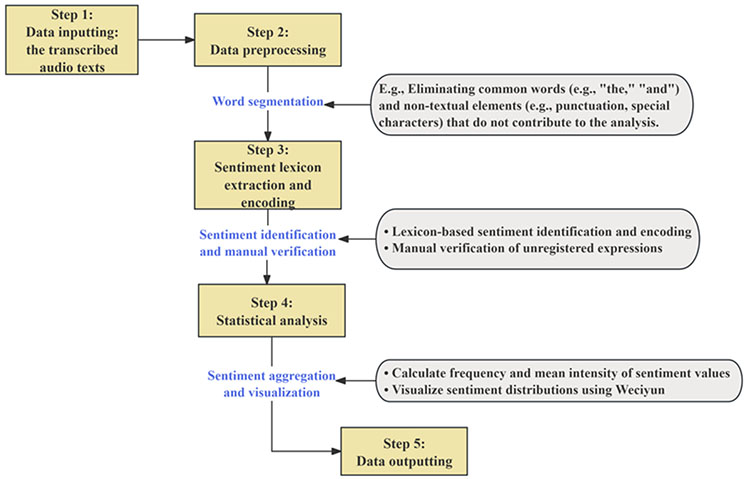
Interview transcripts were first preprocessed through word segmentation, and non-textual elements were removed. Sentiment-bearing words were then identified and encoded based on DUTIR-defined polarity and intensity values, with sentiment scores automatically generated by the lexicon. Colloquial or unregistered expressions frequently used by rural teachers were manually reviewed and supplemented following the same coding principles. Sentiment scores were then aggregated to examine frequency distributions and mean affective intensity. Rather than serving as a standalone analytic technique, sentiment analysis was used to identify overall affective tendencies and to triangulate qualitative themes derived from grounded theory analysis (Pang & Lee, 2008). The detailed implementation process is outlined in Figure 1.
Figure 1
Sentiment Analysis Implementation Process
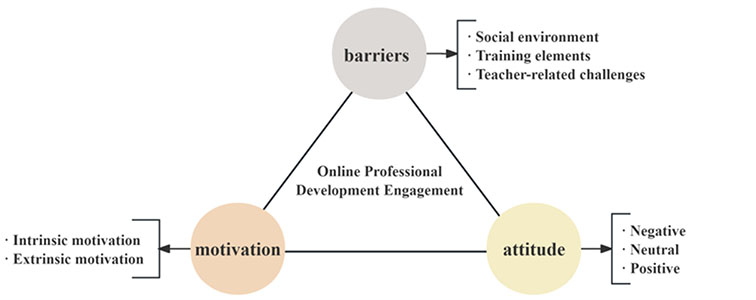
Qualitative data were analyzed using NVivo 11 software, following a grounded theory approach involving open, axial, and selective coding (Chen, 2000). Coding was conducted by a five-member research team comprising three graduate students and two senior experts in educational technology. Prior to formal analysis, all coders received training and collaboratively developed an initial coding framework based on the research questions. Twenty-seven transcripts were first subjected to open coding to generate preliminary categories related to motivation and perceived barriers (Tables 1 and 2), which were then synthesized into higher-order themes through axial coding. Selective coding was subsequently used to integrate core categories into a cohesive analytical framework (Figure 2). Coding consistency was ensured through pilot coding of two transcripts and inter-coder reliability testing, yielding a Cohen’s kappa coefficient of 0.907, indicating high reliability.
Table 1
Rural Teachers’ Online Training Motivations
| Open coding | Reference point | Example quotation | Axial coding | Selective coding | Reference point |
| Task requirements | 32 | “We participated because we were required to by our superiors, like leaders. It is a task.” | External requirements | Extrinsic motivation | 174 |
| Administrative demands | 90 | “Additionally, since I am a school administrator, this learning is indispensable for my role.” | |||
| Career advancement | 19 | “This [the online training] will also be beneficial when undergoing future job title evaluations or promotions.” | External need | ||
| Resource needs | 12 | “Online training lets us watch recorded classes by experts and top teachers, and learn from their demo lessons. These help us improve our teaching ideas and methods.” | |||
| Era-driven | 15 | “Times are changing, and I believe I should keep up with the trends and become a lifelong learner as a teacher, especially in this area.” | |||
| Research demands | 6 | “Every year, our school requires us to submit research topics, but as rural teachers, we lack guidance and experience in this area. Therefore, we want to learn more about how to successfully submit research proposals.” | |||
| Enhance teaching effectiveness | 3 | “On a personal level, improving my knowledge and skills can enhance my future teaching.” | Sense of achievement | Intrinsic motivation | 52 |
| Personal growth | 17 | “It’s been nearly 10 years since I graduated, and to stop learning could hinder my future development.” | |||
| Problem-solving | 13 | “By participating in online training, such as listening to expert teachers’ classes, and comparing these with my own teaching practices, I can continuously improve my methods and address real classroom issues.” | |||
| Passion | 5 | “I feel that my strong interest in teaching fuels my desire to learn more.” | Interest | ||
| Grand vision | 14 | “I aim to acquire management techniques that will enable me to contribute to the mid- to long-term strategic planning for our school’s growth and development.” | Value |
Table 2
Rural Teachers’ Online Training Barriers
| Open coding | Example quotation | Axial coding | Selective coding | Reference point |
| Lack of professional guidance and interaction | “When I had questions, I wanted to find someone to explain where I went wrong, but there was no one available to answer in the online training.” | Supporting training services | Training elements | 184 |
| Practical training on software and hardware | “We often administer exams to students and wanted to use the Baiyi assessment software, but after learning it, we still find it difficult to operate.” | |||
| Lack of supervision | “The online learning atmosphere is not as strong, and there is no supervision, which makes studying more tiring.” | |||
| Lack of communication with other learners | “During online training sessions, you may add other teachers to your contact list, but in most cases, you don’t usually follow up or stay in touch afterward.” | |||
| Lack of evaluation | “When it comes to evaluations, I feel that most of the training sessions I’ve attended didn’t include evaluations.” | |||
| Validity of evaluation criteria | “Being evaluated through a final paper at the end of an online course is quite challenging for me.” | |||
| Lack of practicality | “Some of the content covered may not be particularly applicable to rural teachers, and its practicality is relatively weak.” | Training content and schedule | ||
| Difficult training content | “There is a lot of theoretical content in online courses, which feels somewhat abstract and difficult to understand.” | |||
| Too general | “The downside is that online training is mainly designed for the general audience, not tailored to individual needs.” | |||
| Scheduling conflicts | “The training sessions are scheduled to start at 9 a.m., which coincides with our school’s class time, causing a conflict with our work.” | |||
| Unavailable classroom software/hardware | “Some tools may not be usable due to the school’s hardware limitations.” | School environment | Social environment | 62 |
| Other trivial matters | “Besides teaching, some teachers also handle other roles, such as teaching multiple subjects, managing logistics, overseeing safety, maintaining school websites, and organizing events.” | |||
| Having elderly dependents and children | “For example, during summer training, I was mostly at home. With other family members around, like children, there were quite a lot of distractions.” | Family environment | ||
| Loneliness | “Since online learning is done through a screen, it often lacks the immersive atmosphere of in-person learning. I felt lonely.” | Teachers’ emotional experience | Teacher-related challenges | 89 |
| Guilt | “The requirements for teachers’ self-discipline are low. I felt guilty as I did not learn all the courses. Sometimes, I did other things. Actually, you know, the computer is the learner.” | |||
| Frustration | “At the beginning of the training, when multiple training tasks piled up all at once, I felt extremely frustrated.” | |||
| Lack of basic digital skills | “I really want to learn about multimedia and information technology, but honestly, I feel I’m not very good at these areas.” | Teachers’ digital competence | ||
| Difficulties integrating technology and teaching | “As a rural art teacher, I feel that my ability to integrate modern online resources with art teaching is relatively weak.” |
Figure 2
Analytical Framework for Rural Teachers’ Online Learning Attitudes, Motivations, and Influencing Factors
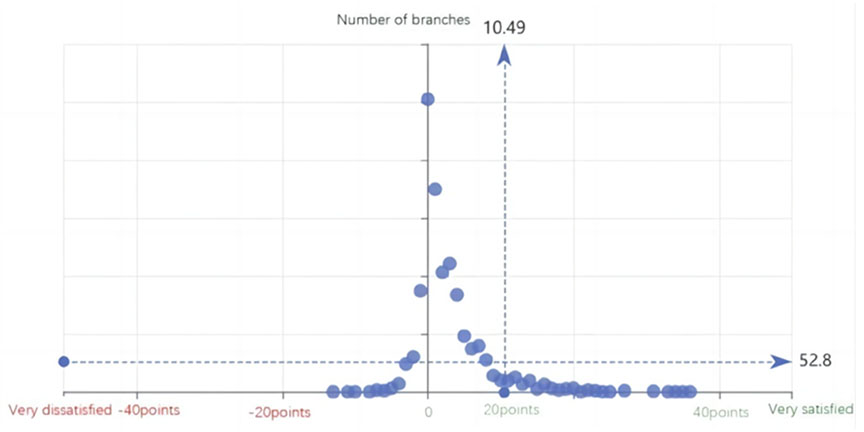
Lexicon-based sentiment analysis revealed that rural teachers’ overall emotional orientation toward OPD was generally positive. Positive sentiment accounted for 45.4% of all coded segments, compared with 27.57% negative and 27.03% neutral sentiment. The mean sentiment score was 10.49 (see Figure 3), exceeding the zero baseline, indicating an overall favorable emotional response to online training (Lin et al., 2008). Frequently occurring positive keywords included “learning,” “improvement,” “gain,” and “satisfaction,” which were later echoed in qualitative accounts describing access to expert resources and perceived opportunities for professional updating, suggesting that participants recognized the convenience and potential for instructional enhancement afforded by the OPD.
Figure 3
Distribution of Emotional Values and Quantities
Despite the generally positive affective orientation, a substantial portion of the interview data expressed dissatisfaction and frustration. Negative sentiment accounted for 27.57% of coded statements, with high-frequency keywords including “lack,” “problems,” and “insufficient.” These terms reflected teachers’ dissatisfaction with training effectiveness, guidance, interaction, time allocation, and practical relevance. This discrepancy between optimistic expectations and suboptimal experiences echoes the aspiration-reality gap identified in technology-mediated professional development (Zheng et al., 2020).
Critically, the negative perceptions reflected in high-frequency keywords such as “lack” and “insufficient” were consistently echoed in qualitative narratives describing deficiencies in training design, interaction opportunities, and institutional arrangements, pointing to limitations in the design and implementation of the online learning system, which is consistent with international findings on rural online education.
This tension indicates a misalignment between teachers’ initial expectations and their actual training experiences. Sentiment analysis revealed a surface-level optimism that coexisted with deeper emotional dissatisfaction, particularly in relation to content relevance, interaction quality, and logistical feasibility, which constrained meaningful engagement with online learning.
Although rural teachers expressed generally positive attitudes toward OPD, their reported experiences revealed notable affective dissonance, suggesting a misalignment between program design and the contextualized needs of rural educators.
Thematic analysis of interview data revealed that rural teachers’ participation in the OPD was predominantly driven by extrinsic motivations, with intrinsic motivation comparatively weak. Extrinsic motivation accounted for 174 coding instances across all 30 participants, compared with 52 instances of intrinsic motivation, indicating a pattern of compliance-oriented rather than autonomous engagement (Table 1).
A large proportion of participants indicated that their involvement in the OPD was due to administrative directives or performance evaluation requirements. For example, one teacher stated, “We are expected to complete these trainings because they’re part of our job assessments.” Others described the training as “an obligatory task assigned by superiors” or emphasized its role in promotion or title evaluation. These comments reflect a compliance-based motivational structure, consistent with SDT’s notion of externally regulated behavior (Deci & Ryan, 2000).
Beyond institutional mandates, participants’ motivations were often linked to access to external resources and professional visibility. Teachers reported learning from model courses, watching expert demonstration lessons, and accessing standardized teaching materials. As one participant noted, “It’s not about interest—it’s about survival. Online training is our only way to learn from experts since we don’t have those resources locally.” These accounts highlight the resource-compensatory role of online training in geographically isolated rural contexts.
In contrast, intrinsically motivated responses were relatively rare and primarily focused on long-term professional growth or addressing instructional challenges. A few participants mentioned their desire to improve teaching effectiveness or keep up with educational trends. For instance, one teacher remarked, “I want to understand how others manage their classrooms so I can refine my own practices.” Another noted, “I enjoy teaching, so I’m curious to learn more—even if it’s outside of requirements.” These voices, however, were significantly less frequent and often overshadowed by externally imposed goals.
The imbalance between external obligation and internal aspiration reflects a low-autonomy motivational ecology in which teachers engage in the OPD not as self-driven professionals but as institutional actors responding to policy pressure. This motivational configuration helps explain why generally positive or neutral affective orientations identified in the sentiment analysis do not translate into sustained or autonomous engagement.
This configuration poses risks for sustained engagement and meaningful learning transfer, as policy-driven, bureaucratic framings of professional development may undermine internalization, reflection, and teacher agency.
Thematic analysis identified three interrelated dimensions of barriers shaping rural teachers’ participation in OPD. These obstacles can be categorized into three overarching dimensions: (a) training-related design and delivery issues, (b) sociocultural and institutional constraints, and (c) individual emotional and digital challenges.
The most frequently cited barriers were related to training content, format, and scheduling (184 coded references). Many teachers reported that online training content was overly theoretical or abstract or insufficiently contextualized. As one teacher put it, “It felt like the courses were designed for urban schools or general audiences, not for the needs of rural teachers like us.” Others emphasized the lack of interactivity and practical application: “Prerecorded videos have no feedback. You just watch and click. That’s it.” In addition, rigid schedules often conflicted with regular teaching hours, leaving teachers unable to fully engage: “Training sessions often take place during our working time, so we either skip them or multitask.”
A second layer of barriers emerged from the sociocultural and institutional environments in which teachers work (62 references). These included insufficient infrastructure in schools, multiple administrative responsibilities, and family-related distractions. One teacher shared, “During summer training, I was home with my children and parents and it was hard to focus at all.” Another noted, “Besides teaching, I also have to manage safety, logistics, and tech support at school.” Such overlapping responsibilities and lack of dedicated time or space for learning made sustained participation difficult.
Finally, teachers described a range of emotional and competence-related challenges (89 references), including feelings of loneliness, guilt, and technological inadequacy. Some teachers expressed frustration at their own digital limitations: “I know I need to learn multimedia tools, but I just don’t know how.” Others reported low emotional engagement due to the impersonal nature of the learning environment: “I felt invisible, like I wasn’t really part of anything.” These experiences align with broader concerns around emotional presence and self-regulation in online learning, particularly in under-supported professional contexts.
Collectively, these barriers constitute a layered constraint ecology in which structural, social, and personal factors interact to suppress meaningful engagement and help explain the neutral and negative affect identified in the sentiment analysis. From an SDT perspective, these ecology constraints are related to autonomy, competence, and relatedness, increasing the risk that OPD participation becomes compliance-oriented rather than growth-oriented (Deci & Ryan, 2000).
While the sentiment analysis indicated rural teachers’ generally positive affective orientation toward OPD, qualitative data revealed a contradiction between teachers’ optimistic expectations and their frustrated training experiences. We conceptualize this tension as affective-structural dissonance, reflecting a misalignment between emotional expectations and the structural conditions of learning, whereby aggregate positive affect conceals deeper frustrations related to training design and institutional arrangements.
This dissonance was most evident in neutral and negative expressions related to training design, relevance, and interactivity. Although OPD was often described as “useful in theory,” it was simultaneously characterized as irrelevant or disconnected from practice, reflecting emotional disengagement and signaling deeper structural misalignments between policy-driven training and teachers’ lived needs in resource-constrained contexts.
This finding echoes Zheng et al.’s (2020) identification of the aspiration-reality gap in technology-mediated professional development, where teachers’ expectations of learning benefits are frequently undercut by insufficient support or contextual misalignment. It also resonates with Borup et al.’s (2020) emphasis on the role of social presence in online learning engagement, something our participants consistently found lacking. Moreover, the sense of technostress, time pressure, and fragmented attention described in our data aligns with Veletsianos’s (2020) critique of OPD under constrained conditions.
As a conceptual contribution, affective-structural dissonance highlights the gap between teachers’ emotional readiness for and institutional capacity of OPD, shifting attention from technological access to the emotional and contextual alignment between training environments and teacher needs, with implications for more motivation-sensitive professional development design.
Findings indicate that rural teachers’ engagement in OPD is largely shaped by externally regulated motives, such as administrative mandates and evaluation requirements, leaving limited space for autonomous interest. As one teacher succinctly stated, “We join these training because we have to—not because we feel inspired.” This helps explain why positive or neutral affect tendencies do not translate into sustained or autonomous engagement.
This pattern further reflects what SDT terms controlled regulation, a form of extrinsic motivation in which behavior is enacted to satisfy external demands or avoid negative consequences rather than to fulfill personally endorsed goals (Deci & Ryan, 2000). Many participants described the OPD as a “task,” a “requirement,” or a “non-negotiable part of appraisal,” underscoring the instrumental role that institutional expectations play in shaping participation.
Controlled engagement eroded teachers’ autonomy, undermining their capacity to internalize learning goals and sustain meaningful participation. Teachers frequently reported having no choice over course content, delivery format, or training schedules. This lack of control restricted their ability to connect the training to their classroom realities or professional identities. Several interviewees admitted to multitasking during sessions or completing requirements superficially, reinforcing the gap between presence and authentic learning. These findings are consistent with prior work (Zhang & Wang, 2022), noting that rural teachers often treat OPD as a compliance-oriented task due to policy saturation and rigid bureaucratic structures. Recent research in China further supports this tendency. Liang and Ding (2022) argued that rural teachers’ online learning remains highly dependent on external supervision and lacks personalized guidance, making internal motivation difficult to sustain. Gorozidis et al. (2020), examining teacher networks from an SDT perspective, also found that online participation driven by external accountability alone failed to generate lasting motivation or community belonging. These challenges are compounded in development-oriented systems where digital training is often standardized, assessment-driven, and unresponsive to local realities (Bozkurt & Sharma, 2021). Furthermore, even when online training environments are accessible, surface-level activity may not reflect authentic engagement. As Martin and Bolliger (2018) emphasize, high enrollment or log-on rates do not equate to emotional or cognitive investment, particularly in contexts where participation is driven by obligation rather than aspiration.
The prevalence of controlled engagement reflects a motivational ecology in which external compliance outweighs internal agency, raising concerns about the sustainability and pedagogical impact of OPD initiatives that achieve high participation without meaningful engagement.
Beyond individual motivation, this study reveals that rural teachers’ participation in OPD is shaped by a layered ecology of structural and emotional constraints. Thematic analysis identified three interrelated levels of barriers: (a) training design and delivery limitations, (b) sociocultural and institutional constraints, and (c) personal emotional and digital challenges. These barriers do not operate in isolation; rather, they interact to form a constraint ecology that suppresses engagement and diminishes learning outcomes.
At the instructional level, teachers cited abstract content, poor interactivity, inflexible schedules, and irrelevant assessment mechanisms as major challenges. These frustrations are consistent with previous findings that online training for rural teachers often lacks contextualization and user-centeredness (Kong & Kang, 2022; Zhang & Wang, 2022). At the sociocultural level, participants reported workload overload, infrastructure shortages, and family-related distractions, challenges that have been shown to significantly affect rural teachers’ ability to engage in online learning (Liang & Ding, 2022). At the personal level, teachers described feelings of guilt, loneliness, and technological inadequacy. These emotional states reflect broader concerns about self-regulation in online learning and the psychological distance that can emerge in low-support environments (Rovai, 2002).
These findings suggest that barriers to the OPD are ecological rather than isolated. From an SDT perspective, this ecology obstructs the satisfaction of autonomy, competence, and relatedness. Accordingly, the neutral and negative affective expressions identified in the sentiment analysis can be understood as emergent outcomes of this layered constraint ecology rather than as isolated emotional reactions.
This layered constraint ecology explains why even motivated rural teachers struggle to sustain meaningful engagement, as accumulating structural, social, and emotional barriers weaken the internalization of professional goals and call for OPD designs that better account for teachers’ learning contexts.
To sum, although this study is situated in the Chinese rural context, the challenges identified are not unique to China. Prior research on rural and resource-constrained OPD in other regions has similarly documented policy-driven participation, limited teacher autonomy, and emotional disengagement (Borup et al., 2020; Bozkurt & Sharma, 2021). Within established ODL frameworks, these challenges have often been discussed in terms of weakened social presence and constrained learner autonomy.
From this perspective, the three conceptual constructs proposed in this study—affective-structural dissonance, controlled engagement, and layered constraint ecology—can be understood as analytical lenses for interpreting how structural conditions, motivational regulation, and affective experiences interact in rural ODL settings across developing contexts. Specifically, affective-structural dissonance deepens discussions of social presence by revealing how emotional expectations remain unmet when institutional and interactional structures fail to support meaningful engagement, while controlled engagement extends debates on learner autonomy by illustrating how externally mandated participation limits the internalization of learning goals despite high levels of formal involvement.
Rather than being context-specific labels, these constructs highlight shared mechanisms that shape teachers’ engagement in OPD under constrained conditions, offering a theoretically grounded framework for interpreting rural ODL challenges beyond the Chinese context.
Using a mixed-methods approach combining sentiment analysis and qualitative interviews, this study found that although rural teachers expressed generally positive attitudes toward OPD, their lived experiences revealed emotional and structural tensions characterized by surface-level optimism, externally driven participation, and multilayered design, institutional, and personal barriers.
This study makes three conceptual contributions. First, affective-structural dissonance captures the misalignment between teachers’ emotional readiness and the institutional conditions of OPD. Second, controlled engagement describes participation driven primarily by external mandates rather than internalized motivation. Third, layered constraint ecology explains how interconnected pedagogical, sociocultural, and emotional barriers jointly suppress sustained engagement. Together, these constructs extend ODL frameworks by highlighting the interaction of affect, motivation, and structure in rural professional development.
From a practical perspective, these findings suggest that rural-appropriate OPD systems should move beyond a narrow focus on access and content provision. Design efforts need to account for the emotional and contextual compatibility of learning environments. Specifically, OPD initiatives should support teachers’ autonomy through greater choice and flexibility, enhance competence through context-sensitive content and guidance, and foster relatedness through meaningful interaction and social presence. At the policy level, this implies a shift away from purely compliance-driven participation toward more developmental and teacher-centered approaches. Platform designers are encouraged to integrate interactional and affective affordances rather than relying solely on standardized delivery models. Teacher educators, in turn, play a critical role in supporting the internalization of professional learning goals and helping teachers connect online training with their professional identities.
Several limitations should be acknowledged. This study is situated within the Chinese rural context, which may constrain the generalizability of the findings to other national or institutional settings. In addition, the cross-sectional nature of the data limits insight into how teachers’ motivations and emotional experiences evolve over time. Future research could address these limitations by adopting longitudinal designs, conducting cross-context or cross-national comparisons, and examining how targeted design interventions may reduce affective-structural dissonance and foster more autonomous forms of engagement.
Future research should further build on the conceptual framework proposed in this study. Longitudinal studies are needed to examine how rural teachers’ affective experiences and motivational regulation evolve over time in OPD contexts. Comparative research across different rural or resource-constrained settings may help assess the transferability of the proposed constructs, including affective-structural dissonance, controlled engagement, and layered constraint ecology. In addition, design-based research could explore how targeted interventions in platform design, instructional support, or policy arrangements may reduce affective-structural dissonance and foster more autonomous and sustained forms of teacher engagement.
Batmang, B., Sultan, M., Azis, A., & Gunawan, F. (2021). Perceptions of pre-service teachers on online learning during the COVID-19 pandemic. International Journal of Education in Mathematics, Science and Technology, 9(3), 449-461. https://doi.org/10.46328/ijemst.1595
Borup, J., Graham, C. R., West, R. E., Archambault, L., & Spring, K. J. (2020). Academic communities of engagement: An expansive lens for examining support structures in blended and online learning. Educational Technology Research and Development, 68, 807-832. https://doi.org/10.1007/s11423-020-09744-x
Bozkurt, A., & Sharma, R. C. (2021). On the verge of a new renaissance: Care and empathy oriented, human-centered pandemic pedagogy. Asian Journal of Distance Education, 16(1), i-vii. https://www.asianjde.com/ojs/index.php/AsianJDE/article/view/576
Chen, X. (2000). Research methods and social science research. Educational Science Publishing House.
Darling-Hammond, L., Hyler, M. E., & Gardner, M. (2017). Effective teacher professional development. Learning Policy Institute. https://doi.org/10.54300/122.311
Deci, E. L., & Ryan, R. M. (1985). The general causality orientations scale: Self-determination in personality. Journal of Research in Personality, 19(2), 109-134. https://doi.org/10.1016/0092-6566(85)90023-6
Deci, E. L., & Ryan, R. M. (2000). The “what” and “why” of goal pursuits: Human needs and the self-determination of behavior. Psychological Inquiry, 11(4), 227-268. https://doi.org/10.1207/S15327965PLI1104_01
Gorozidis, G. S., Tzioumakis, Y. S., Krommidas, C., & Papaioannou, A. G. (2020). Facebook group PETCoN (Physical Education Teacher Collaborative Network). An innovative approach to PE teacher in-service training: A self-determination theory perspective. Teaching and Teacher Education, 96, Article 103184. https://doi.org/10.1016/j.tate.2020.103184
Haider, S., Moin, L., & Haider, H. (2025). Sustaining professional competence in resource-constrained contexts: Perspectives of university teachers in Balochistan. Journal of Political Stability Archive, 3(4), 612-628. https://doi.org/10.63468/jpsa.3.4.37
Kong, X., & Kang, H. (2022). Research on influencing factors and strategies for the effectiveness of remote training for rural teachers: An analysis based on grounded theory. Educational Academic Monthly, 363(10), 106-112.
Kuo, Y.-C., Walker, A. E., Schroder, K. E. E., & Belland, B. R. (2014). Interaction, Internet self-efficacy, and self-regulated learning as predictors of student satisfaction in online education courses. The Internet and Higher Education, 20, 35-50. https://doi.org/10.1016/j.iheduc.2013.10.001
Lennert da Silva, A. L., & Mølstad, C. E. (2020). Teacher autonomy and teacher agency: A comparative study in Brazilian and Norwegian lower secondary education. The Curriculum Journal, 31(1), 115-131. https://doi.org/10.1002/curj.3
Liang, L., & Ding, S. (2022). Research on the construction of a learning support system for rural teachers’ online open courses based on the “U-G-S” tripartite collaboration. Digital Education, 8(1), 54-60.
Lin, Y. M., Lin, G. Y., & Laffey, J. M. (2008). Building a social and motivational framework for understanding satisfaction in online learning. Journal of Educational Computing Research, 38(1), 1-27. https://doi.org/10.2190/EC.38.1.a
Martin, F., & Bolliger, D. U. (2018). Engagement matters: Student perceptions on the importance of engagement strategies in the online learning environment. Online Learning, 22(1), 205-222. https://doi.org/10.24059/olj.v22i1.1092
Pang, B., & Lee, L. (2008). Opinion mining and sentiment analysis. Now Publishers Inc.
Ravet, J., & Mtika, P. (2024). Educational inclusion in resource-constrained contexts: A study of rural primary schools in Cambodia. International Journal of Inclusive Education, 28(1), 16-37. https://doi.org/10.1080/13603116.2021.1916104
Rovai, A. P. (2002). Building sense of community at a distance. The International Review of Research in Open and Distributed Learning, 3(1). https://doi.org/10.19173/irrodl.v3i1.79
Ryan, R. M., & Deci, E. L. (2020). Intrinsic and extrinsic motivation from a self-determination theory perspective: Definitions, theory, practices, and future directions. Contemporary Educational Psychology, 61, Article 101860. https://doi.org/10.1016/j.cedpsych.2020.101860
Subekti, A. S. (2020). COVID-19-triggered online learning implementation: Pre-service English teachers’ beliefs. Journal of English Language, Literature, and Teaching, 4(3), Article 3. https://doi.org/10.31002/metathesis.v4i3.2591
Sun, J. C. Y., & Rueda, R. (2012). Situational interest, computer self‐efficacy and self‐regulation: Their impact on student engagement in distance education. British Journal of Educational Technology, 43(2), 191-204. https://doi.org/10.1111/j.1467-8535.2010.01157.x
UNESCO. (2023). Global education monitoring report 2023: Technology in education: A tool on whose terms? https://unesdoc.unesco.org/ark:/48223/pf0000385723
Veletsianos, G. (2020). Learning online: The student experience. Johns Hopkins University Press. https://muse.jhu.edu/book/73824
Wang, G., Li, J., & Lai, C. (2022). A meta-analysis of factors influencing the quality of online teacher training in China. Distance Education Journal, 40(4), 82-91.
Xu, L., Lin, H., & Zhao, J. (2008). Construction and analysis of an emotional corpus. Journal of Chinese Information Processing, 01, 116-122. https://doi.org/10.3969/j.issn.1003-0077.2008.01.019
Yan, H., & Shan, J. (2020). From training to empowerment: Blueprint construction for teacher professional development in the post-pandemic era. E-Learning Research, 41(6), 13-19.
Zhang, W., & Wang, Y. (2022). Digital divide and rural teachers’ online professional development: Challenges and coping strategies. Journal of Educational Technology & Society, 25(3), 109-123.
Zheng, B., Lin, C. H., & Kwon, J. B. (2020). The impact of learner-, instructor-, and course-level factors on online learning. Computers & Education, 150, Article 103851. https://doi.org/10.1016/j.compedu.2020.103851

Between Obligation and Aspiration: Motivation, Emotions, and Systemic Barriers in Online Professional Development for Rural Teachers by Rong Hua, Chunmei Yang, and Jiawei Chen is licensed under a Creative Commons Attribution 4.0 International License.