Volume 27, Number 3
Burak Tomak and Ayşe Yılmaz Virlan
Marmara University, Istanbul, Turkiye
During the COVID-19 pandemic, various institutions took measures to prevent the spread of the virus. Educational institutions contributed to these efforts by shifting from face-to-face to online learning. One such approach was blended learning, which served as a transitional model between the two. Blended learning has become an integral part of higher education, particularly in English as a foreign language (EFL) instruction. This study investigated Turkish EFL learners’ perceptions of blended learning by comparing two different student cohorts from 2021–2022 and 2024–2025 using a cross-sectional research design. Data were collected through classroom observations and semi-structured interviews with 24 students in total. Although more than 75% of the students acknowledged the flexibility and accessibility of blended learning, persistent concerns remained regarding engagement, socialization, and assessment integrity in online settings. Over time, there has been a slight increase in student acceptance of blended learning, particularly in the areas of autonomous learning and digital literacy. However, many students still expressed a preference for face-to-face instruction, especially for productive skills like speaking and collaborative activities. The study contributed to the growing body of literature by offering a comparative perspective on the challenges and advantages of blended learning in EFL education and providing recommendations for optimizing its effectiveness.
Keywords: blended learning, cross-sectional research, digital maturity, EFL learners, learner autonomy, student engagement
Around the world, the outbreak of the COVID-19 pandemic affected educational institutions who responded with measures much like those in sectors such as health, tourism, and industry. Their first action was to turn to online education and cover all lessons online. In time, some schools started to convert their online education into blended learning, which required both teachers and students to do their lessons online as well as face-to-face. This often meant organizing classes in both real and virtual settings on separate days of the week. What has followed can be considered the transition phase from pandemic (quarantine) life to normal life, with most universities integrating blended learning into their curricula.
Bonk and Graham (2006) described blended learning as the combination of online and face-to-face learning experiences, often leveraging digital tools to facilitate instruction and assessment. Blended instruction has become a trend in education to give students the advantages of each method, as it can also improve learning outcomes by providing personalized learning opportunities and increasing student engagement. Despite extensive research on blended learning, longitudinal cross-cohort analyses remain scarce, leaving open questions about how evolving digital maturity has shaped learner perceptions.
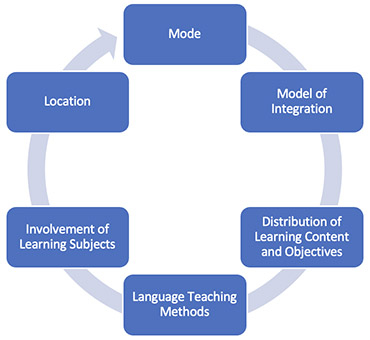
Neumeier (2005) reported that there were six parameters to design an effective blending learning environment: (a) mode (face-to-face or computer-assisted learning); (b) model of integration (optional or compulsory activities); (c) distribution of learning content and objectives; (d) language teaching methods online materials, online tutors, and face-to-face teachers; (e) involvement of learning subjects (types of interaction); and (f) location (physical space). Figure 1 illustrates these parameters.
Figure 1
Parameters of an Effective Design for Blended Learning Environments
This model was comprehensive enough to help us better understand why and how blending learning was adopted in a certain educational institution. This study was conducted in an institution that considered these aspects when blended learning was formally adopted in the 2021–2022 academic year.
Grounded in cognitive load theory (CLT), digital literacy maturity can be considered a factor that helps reduce extraneous cognitive load in blended learning environments. When students become more familiar with learning management systems (LMS) and digital tools, they have fewer resources for germane processing and thus reduce the cognitive load, namely the mental effort that directly promotes learning (Sweller et al., 2019). In such conditions, studies have found that it is critical to cut extraneous load and match intrinsic load with learners’ background knowledge for proper design (Mayer, 2002). Within EFL settings, such digital literacy maturity is likely to manifest as more efficient task execution and more positive perceptions of blended learning over time, particularly when instructional materials are structured to lower unnecessary technical complexity. From a constructivist perspective, students learn best through the active construction of meaning, synthesizing earlier knowledge, and working on genuine tasks (Machumu & Zhu, 2017). Awareness of digital media mitigates cognitive load and prompts collaborative and self-regulated learning for deeper insights. CLT imposes design restrictions, with constructivist theory focusing on learner autonomy that develops an understanding of perceptions with growing maturity on digital literacy.
Many studies have explained why educators applied blended learning in their language classes. One of the most important reasons is that it integrates technology such as educational videos and tools with traditional classroom procedures, which makes learning more attractive for students. Several studies have shown blended learning as more effective than face-to-face or online instruction (Bernard et al., 2014; Brodersen & Melluzzo, 2017). The instructor and technology have a great impact on students’ satisfaction with online learning, and students have expressed satisfaction with blended learning when used for their English language competency (Suwantarathip, 2019).
There are many other advantages of blended learning, which can foster the development of students’ critical and reflective thinking, along with the flexibility due to the successful combination of both in-class instructions and online lessons (Hirata & Hirata, 2008). Such studies have shown that blended learning contributed positively to the development of foreign language learners' linguistic competence.
Hung (2015) claimed that blended learning enabled students to foster their listening, speaking, and reading comprehension skills, and the degree of learner autonomy improved both their speaking and pronunciation skills. For example, Faridi et al. (2020) claimed that students who took lessons using a hybrid model had better writing scores than a control group who took lessons with a traditional approach because of the effective use of technological platforms and active roles, easy feedback, increased student participation, and peer assessment. However, the influence of blended learning on the linguistic skills of learners in various contexts has differed. Hence, this study aimed to discover more about its effects on the skills development of Turkish learners of English.
Many studies have indicated that students hold positive attitudes toward blended learning, and it has also been linked to increased motivation and learner autonomy. Alias et al. (2012) confirmed that hybrid learning environments encouraged interaction and collaboration, leading to greater motivation, self-confidence, and responsibility. Additionally, Doncheva (2015) underscored the benefits of flexibility and self-directed learning, allowing students to progress at their own pace. Similarly, Hirata and Hirata (2008) mentioned that online materials and interactive feedback increased language acquisition. However, the overwhelming majority of works emphasized the short-term effectiveness of blended learning which left a gap for long-term attitude change, which was addressed by this study.
Blended learning offers cognitive advantages but also has gaps that provoke dissatisfaction for students. One of the critical issues is reduced socialization with teachers (Redfern & Naughton, 2002) and with peers (Bernard et al., 2014). Similarly, Ja’ashan (2015) noted that students sometimes viewed it as a waste of time, prone to academic dishonesty, and socially isolating. Gascoigne and Parnell (2013) also noted that students missed the regular face-to-face interactions, especially critical during language learning. Dixon et al. (2021) observed that student performance was not significantly different in traditional and technologically enhanced learning environments. These findings highlighted that even if blended learning provided convenience, it did not necessarily replace the interactivity and the organization of conventional learning environments.
The blended learning literature is extensive, but few studies have compared student perceptions longitudinally. Our study was significant as it compared two cohorts and explored the development of perceptions with digital maturity, a rarely documented variable in the context of EFL environments. Different from earlier studies with single groups or short-term studies, this cross-section study explored whether students’ attitudes changed as they had more exposure to blended learning over time.
By examining students’ evolving perspectives, this study has contributed to the ongoing discussion on best practices for blended learning implementation in language education. Findings from this research have provided insights into how blended learning can be designed more effectively to enhance engagement, skill development, and assessment integrity in EFL contexts.
This study investigated the evolving perceptions of Turkish EFL learners regarding blended learning by comparing two different student cohorts from 2021–2022 and 2024–2025. The research examined how attitudes toward engagement, socialization, and skill development changed over time. The current study addressed the gap through its longitudinal cross-cohort design, allowing us to examine how digital literacy maturity shaped perceptions over time—a perspective largely absent in current EFL literature.
The following research questions guided this study.
This study employed a cross-sectional research design to examine Turkish EFL learners’ perspectives on blended learning at a state university in Istanbul, Turkey. This study allowed for a comparative analysis of the perceptions of learners over time while the main instruction was carried out in blended learning environments. This system was firstly applied in the 2021–2022 academic year. In Turkish higher education, blended learning was formally integrated into preparatory English programs as part of pandemic-era curricular adaptations regulated by the Council of Higher Education in Turkey. The last implementation was in 2024–2025 because then schools were allowed to return to fully face-to-face education for 2025–2026 academic year. The courses followed a weekly blended schedule combining synchronous online and face-to-face sessions. For example, a typical week included two face-to-face sessions and two asynchronous online sessions. Listening and grammar were taught online with asynchronous materials, and speaking and writing took place face-to-face for immediate interaction and confirmation. Pair-work activities were used for face-to-face classes, and online classes used individual practice with multimedia and automated feedback. Participation required physical attendance at the face-to-face classes, and online participation was encouraged with the use of cameras and structured prompts such as breakout activities.
The study was conducted in the School of Foreign Languages in one of the state universities located in Istanbul, where a blended learning system was formally implemented between 2021 and 2025. The initial study involved 12 participants, all enrolled in preparatory English courses, while the updated study incorporated an additional 12 students, allowing for a more comprehensive evaluation. Table 1 provides demographic details of both cohorts.
Table 1
Participants’ Demographic Information
| Cohort | Sex (M/F) | Age range | High school type | Department | Prep year in high school? | Previous blended learning experience |
| 2021–2022 | 6M/6F | 18–21 years | Anatolian / Science / Social Science | Engineering, Medicine, Economics | 2 had a prep year | none |
| 2024–2025 | 7M/5F | 18–20 years | Anatolian / Science / Private | Engineering, Medicine, Business | 3 had a prep year | 1 student |
The participants were selected through purposive sampling, ensuring a diverse representation of students from different academic disciplines. They were also asked whether they had a prep year in which they got intensive language classes in their high school and whether they had any familiarity with blended learning beforehand. This approach aimed to capture a broad range of student experiences while maintaining consistency in data collection. In both phases, all students were informed of the study’s purpose and asked for their consent; ethical clearance was obtained from the university’s research ethics committee. To ensure confidentiality, student names were anonymized, and all recorded data were securely stored with restricted access.
In both phases, data were collected using semi-structured interviews and classroom observations. This methodological consistency allowed for direct comparisons between the two cohorts. We interviewed each participant in Turkish and made sure that they could express themselves freely. The interviews were conducted online via Zoom, lasted approximately 45 minutes, and were recorded for transcription. The same set of questions was used across both cohorts to maintain consistency and allow for direct comparison.
The researchers conducted classroom observations, noting attendance patterns, engagement levels, and participation in both face-to-face and online lessons over the course of a full semester. These observations provided additional qualitative insights into how students adapted to the blended learning format. The observations focused on four key criteria: (a) frequency of participation in online and face-to-face sessions, (b) use of digital tools during online classes, (c) interaction levels with peers and instructors, and (d) perceived engagement based on instructor feedback. A structured observation checklist was used to ensure consistency across observations.
Qualitative data were analyzed using thematic analysis through NVivo software. A combination of inductive and deductive coding was employed. Initially, an open coding approach was applied, allowing themes to emerge naturally from the data. This was followed by axial coding, in which themes were refined and categorized based on their relevance to engagement, assessment, and skill development in blended learning environments. A chi-square test was also conducted to identify any significant difference in students' perceived satisfaction. To distinguish between cohorts, students from 2024–2025 were numbered from S13 onward.
To answer the first research question, a chi-square test was conducted to examine whether there was a significant difference in student perceptions of blended learning satisfaction between the 2021–2022 and 2024–2025 cohorts. Perceived satisfaction categories were derived from interview responses and observation notes, then coded dichotomously (satisfied / not satisfied) for chi-square analysis. As seen in Table 2, the results showed no statistically significant difference in terms of satisfaction between the two groups, χ2 (df = 1) = 1.54, p = 0.214.
Table 2
Results of Chi-square Test
| Variable | 2021–2022 Cohort (n = 12) | 2024–2025 Cohort (n = 12) | Total (N = 24) | χ2 | p value |
| Satisfied (Yes) | 5 (41.6%) | 9 (75.0%) | 14 (58.3%) | 1.54 | 0.214 |
| Not Satisfied (No) | 7 (58.3%) | 3 (25.0%) | 10 (41.6%) |
Although the 2024–2025 cohort reported a higher satisfaction rate (75.0%) compared to the 2021–2022 cohort (41.6%), the difference was not significant, likely due to the small sample size and variability within groups.
As for the second research question, we investigated the perceived effectiveness of blended learning over time. Table 3 presents a comparison of students’ responses regarding the efficiency of blended learning.
Table 3
Comparison of Students’ Perceptions of Blended Learning Efficiency
| Cohort | Efficient (%) | Partially efficient (%) | Not efficient (%) |
| 2021–2022 | 2 (16.7%) | 2 (16.7%) | 8 (66.6%) |
| 2024–2025 | 3 (25%) | 6 (50%) | 3 (25%) |
While more students in 2024–2025 recognized some benefits of blended learning, the majority still expressed concerns about the lack of a real learning environment, limited social interaction, and concentration challenges in online sessions. One student stated that “it was no good for us not to have an attendance obligation in our face-to-face lessons as I could not socialize with my friends” (S5, 2021–2022). Another participant from the new cohort expressed a similar concern, saying “online lessons feel detached; I can’t engage with my classmates or the instructor in the same way” (S18, 2024–2025).
To better understand the results, we also examined student responses in detail (see Table 4) based on whether they found blended learning efficient, along with reasons for their evaluations, as well as the positive and negative aspects.
Table 4
The Efficiency of Blended Learning Across Two Cohorts
| Participant | Efficient? | Reason | Positive aspect | Negative aspect |
| S1 | No | Lack of discipline | Easy access | Concentration problems |
| S2 | No | Lack of stability | No transportation waste | Lack of socializing |
| S3 | No | No real learning environment | Convenience | Lack of discipline |
| S4 | No | Lack of discipline | Easy access | No real learning environment |
| S5 | Partially Yes | Active grammar teaching | No transportation waste | No cameras on, lack of socializing |
| S6 | No | Lack of stability | No transportation waste | Technical problems |
| S7 | No | Lack of discipline | More personal time | Isolation, concentration issues |
| S8 | Yes | Easy tracking | Comfort, access | Lack of real learning environment |
| S9 | Yes | Socializing face-to-face | No transportation waste | Concentration problems |
| S10 | No | Lack of discipline, focus issues | Easy access | Lack of attendance enforcement |
| S11 | No | Lack of engagement, real learning environment | No transportation waste | No active participation |
| S12 | Partially Yes | Intensive lessons | No time/money waste | Lack of discipline, participation |
| S13 | Partially Yes | No waste of time for transportation | No waste of time for transportation | Concentration problems |
| S14 | Partially Yes | 1 day off advantage | No waste of time for transportation | Less participation, lack of socializing |
| S15 | Yes | More personal time | No waste of time for transportation | Concentration problems, lack of discipline |
| S16 | Partially Yes | Wise use of technology | Easy access | No real learning environment, lack of discipline |
| S17 | No | Lack of real learning environment | No waste of time for transportation | Less participation, lack of socializing |
| S18 | Yes | 1 day off advantage | No waste of time for transportation | Technical problems |
| S19 | Partially Yes | Some flexibility | More personal time | Lack of real learning environment, concentration problems |
| S20 | Partially Yes | Variety in methods | Comfort, access | Lack of real learning environment |
| S21 | Partially Yes | Real-life preparation | No waste of time for transportation | Concentration problems |
| S22 | No | Lack of discipline, focus issues | Easy access | Lack of attendance enforcement |
| S23 | No | Lack of engagement, real learning environment | No waste of time for transportation | No active participation |
| S24 | Yes | More time for self-study, easy teacher control | No waste of time and money | Lack of discipline, less participation |
Among the positive aspects, the most frequently mentioned benefit was no transportation waste, cited by 10 students (41.7%) across both cohorts. This was followed by easy access, reported by six students (25%), and more personal time, which was valued by four students (16.7%). Some students also appreciated the ability to study independently, with more time for self-study and easy teacher control each noted by two students (8.3%). As one student from the latest cohort stated, “I didn’t like online learning at first, but I now realize that it saves me a lot of time” (S13, 2024–2025), reflecting an increased appreciation for time management benefits.
However, negative aspects remained dominant, with concentration problems being the most frequently reported issue, mentioned by seven students (29.2%). This was followed by lack of discipline (six students, 25%) and lack of a real learning environment (six students, 25%). Social engagement challenges were also apparent, with lack of socializing noted by four students (16.7%), and technical problems cited by three students (12.5%). One student stated that “even though I like the flexibility, I still find it hard to focus during online lessons” (S19, 2024-2025).
Students expressed mixed opinions about the efficiency of blended learning (see Table 5). While some appreciated the flexibility and accessibility it provided, others found it difficult to maintain engagement and follow the lesson structure.
Table 5
Variables That Affect the Efficiency of Blended Learning
| Participant | Flow of lessons | Teacher motivation | Contact with teachers | Feedback efficiency | Material preference | Digital resource satisfaction |
| S1 | Split | Low | More in face-to-face | Low in online | Face-to-face | ✓ |
| S2 | Split | Low | More in face-to-face | Low in online | Face-to-face (better for writing) | ✓ |
| S3 | Split | Low | Smooth | Efficient for attentive students | Mixed preference | ✓ |
| S4 | Split | Improved with tech use | More in face-to-face | Easy | Hardcopy preferred | ✓ |
| S5 | Good | Low | More in face-to-face | Low in online | Sufficient | ✓ |
| S6 | Good | Normal | More in face-to-face | Low in online | Face-to-face | ✓ |
| S7 | Split | Low | More in face-to-face | Low in online | Sufficient | ✓ |
| S8 | Split | Low | Easy | Efficient for attentive students | Hardcopy preferred | (Technical issues) |
| S9 | Normal-fast online | Low | More in face-to-face | Low in online | Face-to-face | ✓ |
| S10 | Split | Low | Limited | Low in online | Sufficient | ✓ |
| S11 | Good | Low | More in face-to-face | Low in online | Sufficient | ✓ |
| S12 | Split | Low | Easy | More efficient in face-to-face | Sufficient | ✓ |
| S13 | Good | Positive | More in face-to-face | Low in online | Face-to-face | ✓ |
| S14 | Split | Positive | More in face-to-face | Low in online | Electronic preferred | ✓ |
| S15 | Good | Positive | Smooth | More efficient in face-to-face | Hardcopy preferred | ✓ |
| S16 | Split | Low | More in face-to-face | Low in online | Hardcopy preferred | ✓ |
| S17 | Split | Low | More in face-to-face | Low in online | Sufficient | ✓ |
| S18 | Good | Normal | More in face-to-face | Low in online | Softcopy preferred | ✓ |
| S19 | Good | Positive | More in face-to-face | More efficient | Mixed preference | ✓ |
| S20 | Split | Low | Easy | Satisfactory | Hardcopy preferred | (Technical issues) |
| S21 | Split | Low | More in face-to-face | Low in online | Sufficient | ✓ |
| S22 | Split | Low | More in face-to-face | Low in online | Softcopy preferred | ✓ |
| S23 | Split | Low | Easy | More efficient in face-to-face | Sufficient | ✓ |
| S24 | Split | Low | More in face-to-face | More efficient | Electronic preferred | ✓ |
Several participants noted that the division between face-to-face and online lessons disrupted the flow, making it hard to integrate what was learned in each setting. According to Table 5, 15 students (62.5%) found the lesson flow to be fragmented (split), while nine students (37.5%) described it as smooth (good). One student described feeling lost when transitioning between the two, stating that “when I missed the face-to-face lesson, I felt lost in the online session because they were meant to be a continuation of each other” (S22, 2024–2025). Another pointed out the difference in pacing, explaining that “lessons were covered slowly in face-to-face sessions, but the pace significantly increased in online lessons, making it difficult to adjust” (S4, 2021–2022). A few students, however, found the structure manageable and believed that consistent attendance was key to making the system work effectively. According to S6 (2021–2022):
The flow was good. As long as they attend both the face-to-face lessons and online lessons regularly, they can keep up. However, if they miss the face-to-face lessons at the beginning of the week, they will not benefit from the online sessions.
Most participants noted that teachers found it difficult to keep themselves motivated, owing to inattentive students, especially when it came to online classes in which cameras were not on, thus fostering an unengaged atmosphere. One student emphasized that
The ones who can increase the motivation of the teachers are students themselves. Unfortunately, my classmates did not attend regularly. They just turned off their cameras in online sessions, so there was no real classroom environment, which lowered the efficiency of the lessons and negatively affected teachers’ motivation. (S21, 2024–2025)
Despite this, some students acknowledged teachers’ efforts to adapt to the new system. S4 (2021–2022) commented that “the low attendance and lack of participation in lessons discouraged teachers, but this also pushed them to improve their methods. They had to adapt to new technologies and find ways to make lessons more engaging.”
Communication with instructors emerged as another challenge. A total of 17 students (70.8%) reported that they had better contact with teachers in face-to-face settings, while four students (16.7%) found online communication manageable (easy), and two students (8.3%) described their interaction with instructors as smooth. However, others found communication to be inadequate, especially during online sessions where instant feedback was not always available. One student expressed frustration over the lack of accessibility, stating that “in traditional schooling, it was easy to approach teachers whenever we had a question. Yet, in blended learning, communication was more challenging. In online lessons, asking a question was difficult, and responses lacked the immediacy of face-to-face feedback” (S22, 2024–2025).
The efficiency of feedback in blended learning was another concern. A total of 15 students (62.5%) stated that feedback was ineffective in online lessons, while five students (20.8%) found it more efficient in face-to-face settings. A smaller percentage (three students, 12.5%) noted that feedback was efficient for attentive students, and just one student (4.2%) rated it as satisfactory. As S3 (2021–2022) explained, “there were no contact problems for students who attended both face-to-face and online lessons regularly. However, those who were inconsistent in attendance had trouble keeping in touch with the instructor.”
The selection of materials used in blended learning was generally well received. Most students agreed that both printed and digital materials were effective, though preferences varied. Six students (25%) favored face-to-face materials, five students (20.8%) preferred hardcopy materials, while three students (12.5%) opted for softcopy versions. Another seven students (29.2%) considered the available materials sufficient, and one (4.2%) found electronic materials preferable. Digital assignments were considered beneficial for reinforcing concepts covered in lessons. However, a few students pointed out occasional technical difficulties that interfered with accessing digital resources. Even so, despite some challenges, digital materials were generally perceived as beneficial for learning.
Apart from these variables affecting the efficiency of blended learning, there were other variables on which participants elaborated. Table 6 provides insight into the students’ perspectives on the efficiency of blended learning overall.
Table 6
Additional Variables That Affect the Efficiency of Blended Learning
| Category | Findings | Percentage (n) |
| Learning environment | No real learning environment | 75% (18 students) |
| Evaluation criteria | Unfair/Susceptible to cheating | 58.3% (14 students) |
| Prefer face-to-face evaluation | 41.7% (10 students) | |
| Self-evaluation | Some improvement (speaking, writing skills) | 83.3% (20 students) |
| No significant improvement | 16.7% (4 students) | |
| Self-studying | More free time and materials for study | 66.7% (16 students) |
| Did not engage in additional studying | 33.3% (8 students) | |
| Learner autonomy | More responsibility for self-learning | 70.8% (17 students) |
| Found it stressful/difficult | 29.2% (7 students) |
As can be seen in Table 6, many participants raised concerns about the fairness of evaluation methods, with a majority believing that assessments were unreliable in an online setting. As one student explained, “in online exams, it is hard to know if everyone follows the rules, which makes it feel unfair” (S17, 2024–2025). Another added that “I found online evaluations unreliable, and I believe face-to-face exams should be mandatory” (S18, 2024–2025).
Regarding self-studying habits, most students reported having more time to study independently, while others admitted they were not motivated to engage in additional study. A student highlighted that “I had more time to study on my own, which helped reinforce what I learned in class” (S14, 2024–2025), whereas another remarked, “I did not feel motivated to study outside of class because I was not used to the format” (S5, 2021–2022). Finally, when discussing learner autonomy, most students reported taking on more responsibility for their learning, particularly in managing online sessions. Some students found this beneficial, while others described it as stressful.
To answer our third research question, we asked which specific skills students felt they developed with the blended learning applied in their school. The results are shown in Table 7.
Table 7
Skills Improved with Blended Learning
| Skill category | 2021–2022 percentage (n) | 2024–2025 percentage (n) |
| Speaking | 75% (9 students) | 66.7% (8 students) |
| Writing | 50% (6 students) | 50% (6 students) |
| Listening | 50% (6 students) | 41.7% (5 students) |
| Grammar | 25% (3 students) | 25% (3 students) |
| Reading | 0% (0 students) | 8.3% (1 student) |
The comparative analysis of the two cohorts indicated a slight decline in the percentage of students reporting improvement in speaking skills, from 75% in 2021–2022 to 66.7% in 2024–2025. Writing skills, on the other hand, remained consistent, with 50% of students in both cohorts reporting improvement. Listening skills saw a decrease from 50% to 41.7%, while grammar skills remained stable at 25%. A slight increase in reading skills was noted, with 8.3% of students in 2024–2025 mentioning improvement; no students from the earlier cohort highlighted reading as an area of progress.
One student reflected on their development, stating that “I noticed an improvement in my speaking and writing, but I struggled more with grammar compared to traditional learning” (S15, 2024–2025). Another student pointed out that “listening was harder to improve because online sessions made it difficult to stay focused” (S18, 2024–2025). This suggested that while blended learning supports speaking and writing development, challenges remain in maintaining engagement for skills like listening and grammar.
Table 8
Students’ Preferences for Developing Various Skills
| Skill | Face-to-Face (2021–2022) | Face-to-Face (2024–2025) | Online (2021–2022) | Online (2024–2025) |
| Grammar | 50% (6 students) | 75% (9 students) | 50% (6 students) | 25% (3 students) |
| Vocabulary | 42% (5 students) | 58% (7 students) | 58% (7 students) | 42% (5 students) |
| Reading | 58% (7 students) | 50% (6 students) | 42% (5 students) | 50% (6 students) |
| Writing | 75% (9 students) | 83% (10 students) | 25% (3 students) | 17% (2 students) |
| Listening | 42% (5 students) | 33% (4 students) | 58% (7 students) | 67% (8 students) |
| Speaking | 83% (10 students) | 92% (11 students) | 17% (2 students) | 8% (1 student) |
The results from Table 8 suggested that students increasingly favored face-to-face instruction for grammar (75%), writing (83%), and speaking (92%) in 2024–2025 compared to previous years. Grammar instruction, which was equally divided between online and face-to-face preferences in the earlier cohort, was seen in 2024–2025 as more effectively taught in a physical classroom. One student explained that “we can only ask grammar questions immediately in face-to-face lessons, but in online lessons, we cannot interrupt the teacher” (S7, 2021–2022).
Vocabulary instruction preferences increased, with 58% preferring face-to-face instruction in 2024–2025, an increase from 42% in the earlier cohort. As one student noted, “to learn vocabulary is within the responsibility of the students, so it does not matter whether it is online or face-to-face. We can have it online with applications that make it even easier” (S10, 2021–2022).
Reading instruction preferences remained relatively stable, with a small decline in face-to-face preference. One participant admitted that “I did not read the texts assigned in online lessons, while I felt responsible in face-to-face lessons” (S9, 2021–2022). However, others argued that online reading allowed them to concentrate better at home without distractions.
Listening instruction saw a shift toward online learning, rising from 58% to 67%. A student explained that “listening is better at home with headphones and no distractions” (S13, 2024–2025), whereas another claimed, “I concentrate better in class; listening depends on focus” (S6, 2021–2022).
Writing and speaking remained the most favored skills for face-to-face instruction in both cohorts, with 83% and 92% in the first and second cohorts respectively. One student highlighted the benefit of instant feedback in writing, stating that “it is much more beneficial when we get immediate feedback from the teacher” (S17, 2024–2025). For speaking, nearly all students agreed that real-time interaction was essential. “Speaking is more beneficial in face-to-face lessons because of the instant feedback from the teacher. There is a huge difference between talking to a screen and a real person” (S1, 2021–2022). Another emphasized the importance of body language, adding that “gestures and mimics are essential in speaking and can only be noticed in face-to-face conversations” (S14, 2024–2025).
To address the fourth research question, we conducted systematic classroom observations with checklists to examine systematic engagement and interaction in face-to-face and online classrooms throughout a complete semester. These observations focused on participation frequency, digital tool usage, peer and instructor interaction, and perceived engagement, revealing both challenges and advantages of blended learning.
Inconsistent class attendance during live sessions was among the most important challenges we observed. In online settings, even where students participated in sessions, engagement was still limited because they kept cameras turned off and made very minimal contributions in terms of conversation. Interaction rates among students and instructors were lower in online courses compared to classroom learning and produced a weaker classroom community.
On the other hand, certain advantages of blended learning were observed. The flexibility of online components allowed students to access course materials at their convenience, reducing logistical constraints. Some students also felt more comfortable participating in discussions through digital platforms rather than speaking in traditional classroom settings. Additionally, the availability of asynchronous resources enabled students to revisit content, potentially supporting comprehension and retention.
This cross-sectional study aimed to evaluate the efficiency of blended learning by analyzing two different student cohorts from 2021–2022 and 2024–2025. While several studies report rather positive effects of blended learning on engagement and achievement, our findings indicated cohort- and skill-dependent variations: as students’ digital literacy increased, engagement and acceptance shifted in patterned ways. This may have stemmed from institutional policies and infrastructural factors affecting online delivery, yet, it highlighted the role of program design and contextual adaptation in explaining the mixed results observed.
Our findings indicated persistent dissatisfaction with blended learning, although there was evidence of a gradual increase in acceptance over time. It was observed that the more linguistically capable students in the 2024–2025 cohort were better able to adjust to the system and benefit from its flexibility and potential for self-paced learning. However, some students struggled to keep up, particularly in online settings where they had fewer direct interactions with teaching staff. These findings aligned with other research suggesting that blended learning is more suited to higher-level learners (Doncheva, 2015; Gascoigne & Parnell, 2013).
The most common advantage of blended learning was the time gained and cost reduced through online learning. The downside, though, was the lack of responsibility and organization in online classes, which made students more easily distracted. This issue was also present in the 2024–2025 group, though students indicated they had stronger self-regulation than in the previous cohort (Hubackova & Semradova, 2016).
The second issue raised by participants was the split course progression with both face-to-face and online classes. Participants who did not attend face-to-face classes were unable to integrate knowledge in both modes. It seems that the 2024-2025 cohort managed better using an appropriate coping strategy, but learning was not consistent. According to previous studies, student participation and program design significantly influenced the effectiveness of blended learning (Hrastinski, 2019).
Teacher engagement and enthusiasm influenced students’ attitudes towards blended learning. Students in both cohorts frequently reported that the teachers were less engaged during online classes due to decreased learner participation. The 2024–2025 cohort observed more use of digital technology and interactive approaches by teachers, which can be explained by learning and adaptation at the institutional level. Nevertheless, student interaction remained low in online sessions, leading to an ongoing issue of decreased instructor enthusiasm. These findings emphasized the importance of establishing interactive and participatory strategies in online learning environments (Akkoyunlu & Soylu, 2006). From a constructivist perspective, little interaction in online sessions undermines the collaborative processes essential for language development. To address engagement issues, students recommended several strategies, surprisingly including requiring cameras to be on (while they themselves preferred to leave them turned off) during online lessons, integrating interactive activities, and using structured participation incentives. These insights aligned with previous research that advocated for more structured and engaging blended learning implementations (Akkoyunlu & Soylu, 2006).
The validity of assessment was the primary concern for both cohorts. Students complained that online testing was uneven and susceptible to cheating. The 2024–2025 cohort, being more familiar with LMS, was more aware of these issues and called for stricter regulations to ensure fairness. Mistrust of online testing was in alignment with previous results warning against vulnerabilities of cheating in remote testing contexts (Ja’ashan, 2015). This highlighted the importance of aligning assessment design with integrity-focused open and distributed learning (ODL) frameworks to ensure validity.
Despite all, the 2024–2025 cohort expressed a greater appreciation for the autonomy and flexibility of blended learning. They indicated that they felt more responsible for their own learning, particularly in terms of time management and self-study habits. This was supported by research suggesting that blended learning can foster learner autonomy if appropriately scaffolded (Lalima & Dangwal, 2017), and lead to better individualized learning opportunities (Castro, 2019). However, some students were still intimidated by the extra burden and indicated that additional guidance and support mechanisms were needed. Thus, it was clear that more guidance and instructions be provided by teachers for learners to better keep track of what they should do in their own studies. In other words, they should be given the chance to create their own products under the guidance of the teacher, considering constructivist theory. Li (2016) confirmed that a blended learning environment guided by the theory of constructivism had a positive effect on learners’ growth. Similarly, Machumu and Zhu (2017) asserted that there was a significant positive correlation between students’ conceptions of constructivist learning and their engagement in blended learning environments.
In terms of skill development, the patterns revealed in this study aligned with CLT and constructivist principles, emphasizing real-time interaction for speaking and writing. In that sense, the findings supported constructivist perspectives on active meaning-making while refining CLT applications by showing how digital literacy maturity mitigates extraneous load over time.
Finally, the study focused on the cohort-maturity effect to explain temporal shifts in blended learning perceptions, contributing a novel lens to EFL blended learning research. The quality of blended learning depends on structured interaction, intensified interaction, and fair evaluation; as students get used to it, institutions must change their methods of implementation to marry flexibility and quality.
Our results highlighted the need for more complex blended learning programs that take into account the various requirements of various language proficiency levels. They specifically fit with common trends seen in blended EFL and ODL contexts and resonated with global trends in ODL, where similar challenges of engagement, modality integration, and assessment integrity have been reported. Building on this alignment, we offer three generalizable design principles to direct future blended programs: (a) the use of modality with skill so that each mode’s strengths (online or face-to-face) match up with the skill in question; (b) the development of structured interactional routines that encourage activity and discourage passive online activity; and (c) the creation of integrity-based assessments that respect academic integrity but also support variable learning spaces, which will contribute to refining CLT and constructivist applications in blended EFL contexts.
Beyond its practical implications, the study also advanced theoretical understanding of blended learning. By integrating CLT and constructivist perspectives to explain how digital literacy maturity influenced students’ acceptance of blended learning over time, the study showed that as learners’ digital competence increased, cognitive load was reduced while opportunities for active meaning-making expanded. By taking this double-theoretical approach, deeper understandings of relationships and interaction patterns between skill and modality can be obtained, thus extending previous research on blended EFL contexts.
This study was conducted in a single institution with a small sample size, which limited the generalizability of our findings. Although including two independent cohorts provided a comparative viewpoint, the study was limited to the preparatory English classes at a Turkish state institution. Future studies could build on these findings by incorporating a more varied participant pool from different institutions and educational environments. Furthermore, this study focused solely on student perceptions, with no input from teachers. Given that teacher engagement and instructional strategies are critical to blended learning effectiveness, future research ought to examine the experiences of teachers to gain a more comprehensive picture of blended learning dynamics.
Akkoyunlu, B., & Soylu-Yılmaz, M. (2006). A study on students’ views on blended learning environment. Turkish Online Journal of Distance Education, 7(3), 43-56.
Alias, A. A., Manan, N. A. A., Yusof, J., & Pandian, A. (2012). The use of Facebook as language learning strategy (LLS) training tool on college students’ LLS use and academic writing performance. Procedia - Social and Behavioral Sciences, 67, 36-48. https://doi.org/10.1016/j.sbspro.2012.11.305
Bernard, R. M., Borokhovski, E., Schmid, R. F., Tamim, R. M., & Abrami, P. C. (2014). A meta-analysis of blended learning and technology use in higher education: From the general to the applied. Journal of Computing in Higher Education, 26(1). 87-122. https://doi.org/10.1007/s12528-013-9077-3
Bonk, C. J., & Graham, C. R. (2006). The handbook of blended learning. Pfeiffer.
Brodersen, R. M., & Melluzzo, D. (2017). Summary of research on online and blended learning programs that offer differentiated learning options. Regional Educational Laboratory Central, 1-22. Retrieved from https://files.eric.ed.gov/fulltext/ED572935.pdf
Castro, R. (2019). Blended learning in higher education: Trends and capabilities. Education and Information Technologies, 24, 2523-2546. https://doi.org/10.1007/s10639-019-09886-3
Dixon, T., Christison, M., Dixon, D. H., & Palmer, A. S. (2021). A meta‐analysis of hybrid language instruction and call for future research. The Modern Language Journal, 105(4), 792-809. https://doi.org/10.1111/modl.12732
Doncheva, L. (2015). An implementation of a hybrid form of education in foreign language acquisition. Activities in Physical Education & Sport, 5(2), 244-247. Retrieved from https://fsprm.mk/wp-content/uploads/2022/03/Pages-from-APES-2-2015-28.pdf
Faridi, A., Saleh, M., & Fitriati, S. W. (2020). The effect of hybrid task-based language teaching and critical thinking on writing performance in Indonesia. The New Educational Review, 61(3), 109-118. https://doi.org/10.15804/tner.2020.61.3.09
Gascoigne, C., & Parnell, J. (2013). Hybrid language instruction: A case study in beginning French. The French Review, 87(2), 141-154. https://doi.org/10.1353/tfr.2013.0269
Hirata, Y., & Hirata, Y. (2008). Japanese students’ attitudes towards hybrid learning. In J. Fong, R. Kwan & F. L. Wang (Eds.), Hybrid learning and education: Lecture notes in computer science (Vol. 5169). International Conference on Hybrid Learning, Springer.
Hrastinski, S. (2019). What do we mean by blended learning? TechTrends, 63, 564-659. https://doi.org/10.1007/s11528-019-00375-5
Hubackova, S., & Semradova, I. (2016). Evaluation of blended learning. Procedia - Social and Behavioral Sciences, 217, 551-557. https://doi.org/10.1016/j.sbspro.2016.02.044
Hung, H. T. (2015). Flipping the classroom for English language learners to foster active learning, Computer Assisted Language Learning, 28(1), 81-96. https://doi.org/10.1080/09588221.2014.967701
Ja’ashan, M. M. N. H. (2015). Perceptions and attitudes towards blended learning for English courses: A case study of students at University of Bisha. English Language Teaching, 8(9), 40-50. http://dx.doi.org/10.5539/elt.v8n9p40
Lalima, & Dangwal, K. L. (2017). Blended learning: an innovative approach. Universal Journal of Educational Research, 5(1), 129-136. https://doi.org/10.13189/ujer.2017.050116
Li, X. (2016). A blended learning model of English teaching methodology course guided by constructivism. International Journal of Continuing Engineering Education and Life-Long Learning, 27(1-2), 101-110.
Machumu, H. & Zhu, C. (2017). The relationship between student conceptions of constructivist learning and their engagement in constructivist based blended learning environments. International Journal of Learning Technology, 12(3), 253-272. https://doi.org/10.1504/IJLT.2017.088408
Mayer, R. E. (2002). Multimedia learning. In B. H. Ross (Ed.), The psychology of learning and motivation (Vol. 41, pp. 85-139). Academic Press. https://doi.org/10.1016/S0079-7421(02)80005-6
Neumeier, P. (2005). A closer look at blended learning: Parameters for designing a blended learning environment for language teaching and learning. ReCALL, 17(2), 163-178. https://doi.org/10.1017/S0958344005000224
Redfern, S. & Naughton, N. (2002). Collaborative virtual environments to support communication and community in ınternet-based distance education. Journal of Information Technology Education, 1(3), 210-220. https://doi.org/10.28945/356
Suwantarathip, O. (2019). Predictors of students’ satisfaction with a hybrid English course. Turkish Online Journal of Distance Education, 20(1), 115-130. https://doi.org/10.17718/tojde.522427
Sweller, J., Ayres, P., & Kalyuga, S. (2019). Cognitive load theory (2nd ed.). Springer.

Blended Learning in a Post-Pandemic Context: A Cross-Sectional Study on Turkish EFL Learners' Perspectives by Burak Tomak and Ayşe Yılmaz Virlan is licensed under a Creative Commons Attribution 4.0 International License.