Volume 27, Number 1
Walton Wider1,2,3,4, Abidah Saad5*, Nor Asiah Mahmood6, Suhaida Ishak7, Muhammad Ridzuan Abdul Aziz8, Changhe Wu1, Hao Wu1, and Jem Cloyd M. Tanucan9
1Faculty of Business and Communications, INTI International University, Nilai, Malaysia; 2Department of Applied Economic Sciences, Wekerle Sándor Üzleti Főiskola, Budapest, Hungary; 3Faculty of Management, Shinawatra University, Pathum Thani, Thailand; 4Department of Economics, Management, and Law, International Institute of Management and Business, Minsk, Belarus; 5Faculty of Business and Management, University Teknologi MARA, Kedah Branch, Kampus Sungai Petani, Malaysia; 6College of Business Administration, Prince Sultan University, Riyadh, Saudi Arabia; 7Faculty of Business, Information & Human Sciences, Infrastructure University Kuala Lumpur, Kajang, Malaysia; 8Faculty of Business and Management, Universiti Teknologi MARA, Selangor Branch, Puncak Alam Campus, Malaysia; 9School of Education, Norfolk State University, Norfolk, United States; *Corresponding Author
Digital literacy is central to collaborative teaching in technology-mediated environments, particularly open and distributed learning. Guided by the Community of Inquiry and TPACK (Technological Pedagogical Content Knowledge) frameworks, this systematic review examines how digital literacy enables educators to codesign instruction, sustain interaction, and support reflective practice while addressing structural and contextual barriers. Following PRISMA 2020, comprehensive searches in Scopus and the Web of Science identified 32 peer-reviewed articles published in 2024. Thematic synthesis produced three strands: (a) integration of digital literacy in education, highlighting links to teaching presence, professional development, and instructional design; (b) digital literacy in response to educational challenges, demonstrating its role in resilience, equity, and socio-emotional support across remote and hybrid contexts; and (c) advancing learning through digital competencies, detailing gains in collaboration, critical inquiry, and innovative use of augmented reality, virtual reality, data analytics, and emerging AI tools alongside ethical considerations. Evidence indicates that digital literacy functions as a pedagogical capacity rather than solely a technical skill and yields the strongest outcomes when aligned with institutional culture, curriculum design, and continuous professional learning. Policy recommendations include sustained investment in equitable infrastructure, structured capacity building aligned with UNESCO’s Digital Literacy Global Framework and ICT (Information and Communication Technology) Competency Framework for Teachers, and explicit attention to ethics and inclusion. Future research should adopt longitudinal and comparative designs to trace the impact on educator identity, collaboration, and learner outcomes.
Keywords: digital literacy, collaborative teaching, systematic review, Community of Inquiry, TPACK, open and distributed learning, educational policy
Rapid advancements in digital technology have profoundly reshaped the educational landscape, particularly in collaborative teaching practices (Rahimi & Oh, 2024). In contemporary higher education, digital tools and platforms have become essential for promoting communication, innovation, and active participation among educators and learners (Zorko, 2024; Zou et al., 2025). Collaborative teaching, which involves educators working together to design, implement, and assess instructional activities, increasingly depends on digital environments that enable co-construction of knowledge and continuous professional development (Ramos et al., 2022).
Despite the widespread adoption of technology, many educators continue to face challenges in effectively integrating digital literacy into collaborative teaching. Insufficient digital competence, unequal access to technological infrastructure, and limited institutional support hinder educators from maximizing the pedagogical potential of digital platforms (Irwandi, 2023; Jony & Sultana, 2023). In addition, variations in digital proficiency across educational levels and geographic regions contribute to inconsistent implementation of technology-mediated teaching (Nuhu et al., 2021; Oliiar & Fomin, 2022). Existing professional development programs often focus on technical skills rather than the pedagogical, ethical, and reflective aspects of digital engagement, which are essential for collaborative and innovative instruction (Çetinkaya, 2024; Kwiatkowska & Wiśniewska-Nogaj, 2022).
The COVID-19 pandemic intensified the demand for digital competence as institutions rapidly transitioned to remote and hybrid learning models (Alqahtani, 2024). This shift exposed disparities in technological readiness and pedagogical adaptability, emphasizing digital literacy as a key determinant of educational resilience, equity, and continuity (Blau et al., 2020; Perifanou et al., 2021). While prior studies have highlighted the importance of digital literacy in facilitating collaborative learning and reflective practice, few studies have systematically synthesized how established digital competence frameworks can inform effective collaborative teaching within open and distributed learning environments (Haryaka et al., 2025; Huachara-Martinez et al., 2023).
This study addresses this gap by examining how digital literacy functions in both a pedagogical and a collaborative capacity that empowers educators to design inclusive, interactive, and sustainable learning environments. Drawing on the Community of Inquiry and TPACK (Technological Pedagogical and Content Knowledge) frameworks, this review explores how digital literacy enhances collaboration, communication, and reflective practice in technology-enhanced education. The findings aim to contribute to theory and practice by guiding educators, policymakers, and researchers to strengthen professional collaboration in digital contexts.
The Community of Inquiry (CoI) framework proposed by Garrison et al. (2001) explains that meaningful learning in online and blended environments results from the interaction of three interdependent elements: cognitive, social, and teaching presence. Digital literacy supports this presence by allowing educators to design and manage interactive environments (teaching presence), engage learners in inquiry and reflection (cognitive presence), and foster authentic communication and collaboration (social presence). Empirical research confirms the applicability of CoI across disciplines and learning contexts, demonstrating that its presence is essential for developing engagement and achieving higher-order learning outcomes (Cleveland-Innes, 2019; Micsky & Foels, 2019; Swan, 2019). In particular, teaching presence has been linked to student satisfaction and instructional quality in remote and emergency online learning (Patwardhan et al., 2020). More recent developments have introduced the concept of learning presence, which incorporates self-regulation and digital competence as critical elements that influence cognitive engagement (Wertz, 2022). Together, these findings suggest that digital literacy strengthens educators’ ability to create learning communities characterized by critical thinking, collaboration, and shared knowledge construction (Purwandari et al., 2022).
The TPACK framework developed by Mishra and Koehler (2006) complements CoI by emphasizing the integration of technological, pedagogical, and content knowledge for effective digital instruction. Digital literacy serves as the foundation for this integration, enabling educators to align digital tools with pedagogical strategies and curricular goals. Teachers with higher digital literacy competencies are better equipped to select and adapt digital technologies to enhance their instructional quality and collaboration (Barjestesh et al., 2025). This process is closely related to the teaching presence and instructional design principles derived from the CoI model (Richardson et al., 2012).
Together, CoI and TPACK provide a robust theoretical foundation for understanding digital literacy as both a pedagogical and an ethical construct that promotes collaboration in distributed learning environments. These frameworks have been successfully applied in teacher education programs to encourage reflective practices, professional discourse, and collaboration in technology-rich settings (Papanikolaou et al., 2014). TPACK also guides curriculum development that integrates digital literacy into teaching, fostering critical thinking, creativity, communication, and collaboration between educators and students (Jordan et al., 2025). Both models align with global initiatives such as UNESCO’s Digital Literacy Global Framework (DLGF) and the ICT (Information and Communication Technology) Competency Framework for Teachers (ICT-CFT), which emphasize inclusivity, accessibility, and responsible technology use in education (Asagar, 2025; Choudhary, 2024). The integration of these theoretical and policy perspectives underscores the ethical dimension of digital literacy as a driver of digital citizenship, equity, and empowerment in education (Raza & Akhter, 2024).
According to Law et al. (2018), digital literacy is the ability to access, manage, understand, integrate, communicate, evaluate, and create information safely and appropriately using digital technologies for employment, decent work, and entrepreneurship. This definition captures its multidimensional character, encompassing the technical, cognitive, and socio-emotional competencies required for effective participation in digital environments (Tinmaz et al., 2023). Ng (2012) expanded on this by identifying three interrelated dimensions—technical, cognitive, and socio-emotional—that enable individuals to use and create digital content meaningfully and ethically. These competencies are not limited to operational skills but extend to reflective practice, collaboration, and ethical engagement with digital tools (Rodríguez-García et al., 2022).
Zhao et al. (2021) contextualized digital literacy and digital competence within the transformation from industrial and information-based economies to knowledge societies. They argue that digital competence distinguishes the knowledge society by emphasizing the application of digital tools for generating and using knowledge, rather than for merely accessing information. The COVID-19 pandemic further accelerated this shift, making digital competence essential for sustaining teaching and learning across educational levels. Within this framework, digital competence is defined as the confident, critical, and responsible use of digital technologies in communication, learning, and work (Sánchez-Canut et al., 2023).
Although digital literacy and competence are conceptually related, they differ in their focus. Digital literacy emphasizes understanding and interpreting digital information, whereas digital competence extends to critical awareness, lifelong learning, and practical applications. These concepts are operationalized in the European Digital Competence Framework and Spain’s Common Digital Competence Framework for Teachers, which identifies 21 specific competencies and proficiency levels for assessment and training (Mattar et al., 2022). UNESCO’s global digital literacy framework complements these efforts by establishing internationally recognized benchmarks that align digital competencies with broader educational and socioeconomic goals (Gabriel et al., 2022; Jung et al., 2024).
Empirical research has consistently demonstrated that digital competence contributes to effective collaboration, critical thinking, and innovation in higher education (Männistö et al., 2020; Ohle-Peters et al., 2024). Studies integrating cooperative learning and flipped classroom models report significant improvements in preservice teachers’ digital literacy, pedagogical competence, and 21st-century skills (Aslan, 2022). Similarly, structured environments such as Future Classroom Labs promote digital competence through guided collaboration, provided sustained teacher support is available (Lazareva & Tømte, 2024).
Digital literacy also underpins open and distributed learning systems by enhancing equity, learner autonomy, and reflective engagement (Huachara-Martinez et al., 2023). Within these contexts, digital literacy acts as both an enabler of collaboration and a determinant of instructional quality. However, these challenges persist. Variations in digital proficiency, inadequate access to technology, and limited institutional investment continue to restrict educators’ ability to effectively integrate digital literacy (Irwandi, 2023; Jony & Sultana, 2023). Furthermore, ongoing technological evolution requires educators to continually update their competencies to maintain relevance and pedagogical quality (Nuhu et al., 2021; Oliiar & Fomin, 2022).
Institutions that integrate digital literacy into professional development frameworks have reported stronger collaboration and improved educational outcomes (Lora et al., 2021; Perifanou et al., 2021). Structured training programs not only enhance educators’ technical capabilities but also cultivate ethical awareness and reflective practice. In the post-pandemic context, digital literacy is increasingly recognized as a pedagogical capacity rather than merely a technical skill. This enables educators to design inclusive learning environments that emphasize engagement, creativity, and communication (Azzahro et al., 2023; Darmaji et al., 2023; Ervianti et al., 2023). Nevertheless, disparities in professional training and access to it remain significant, especially in vocational and secondary education settings (Adeleye et al., 2024; Qiu et al., 2024). Addressing these inequities requires targeted interventions that integrate both technical and collaborative competencies to build inclusive participatory learning ecosystems (Karroum & Elshaiekh, 2023).
This systematic review synthesizes recent studies that examine the intersection of digital literacy and collaborative teaching across secondary, vocational, and higher education contexts. Anchored in the CoI and TPACK frameworks, digital literacy is conceptualized as both a pedagogical and technological foundation for effective collaboration, communication, and reflective teaching within open and distributed learning (ODL) environments.
The CoI framework provides analytical perspectives on how cognitive, social, and teaching presence are strengthened through digital literacy. These presences serve as lenses for examining how educators codesign learning activities, sustain engagement, and facilitate dialogue in distributed contexts. The TPACK framework complements this approach by demonstrating how technological, pedagogical, and content knowledge interact to shape effective digital instruction. Together, these frameworks explain how digital literacy enables educators to align technology with pedagogical goals, thereby enhancing collaboration and instruction quality.
This review includes studies published in recent years that address digital literacy in post-pandemic educational contexts. The pandemic has accelerated digital adoption and highlighted the urgent need for inclusive, resilient, and sustainable teaching practices. Therefore, this review focuses on evidence illustrating how digital literacy enhances adaptability, innovation, and collaboration among educators operating in technology-mediated environments.
The findings are expected to inform educators, policymakers, and researchers by providing evidence-based strategies to strengthen digital literacy training and collaborative teaching practices consistent with the CoI and TPACK principles. The review advances the theoretical and practical understanding of how digital literacy underpins professional growth, collaborative engagement, and pedagogical innovation in contemporary education. It also contributes to global conversations on teacher readiness and equity in technology-enhanced learning, reinforcing the importance of digital competence as a foundation for lifelong learning and educational transformation.
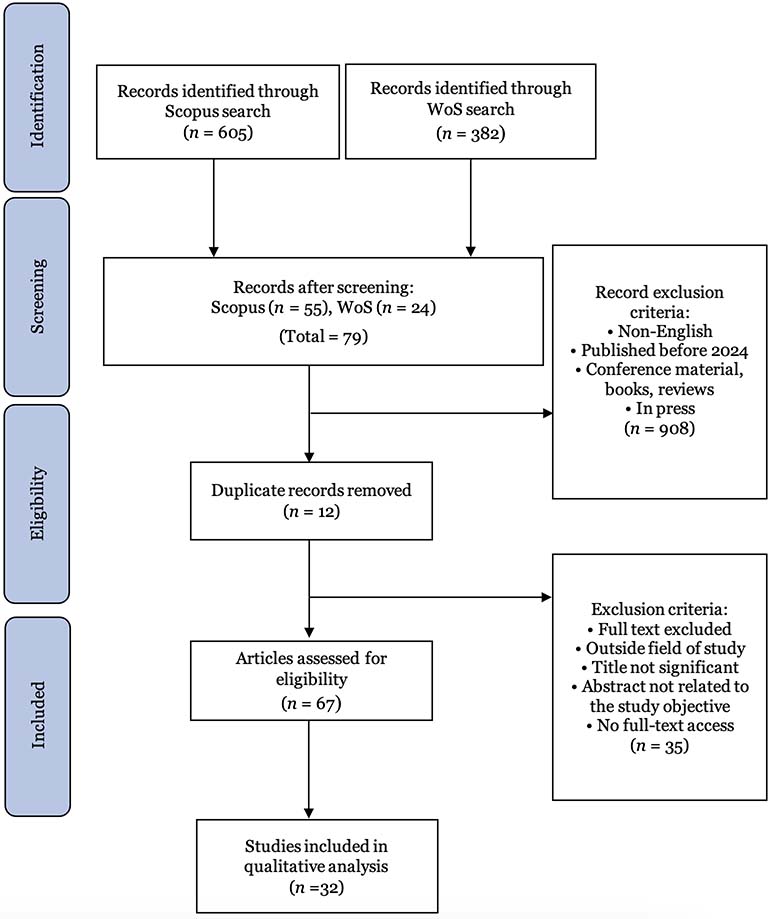
This study followed the PRISMA 2020 guidelines for systematic reviews to ensure methodological transparency and reproducibility (Figure 1). In the identification phase, comprehensive search strings derived from key concepts related to digital literacy and collaborative teaching were developed. Keywords and their synonyms were expanded through the use of dictionaries, thesauri, and prior literature on technology-enhanced learning and ODL.
Two major databases, Scopus and Web of Science (WoS), were selected because of their wide coverage of peer-reviewed educational research. Finalized search strings (Table 1) were applied to both databases in January 2025. To capture the most current post-pandemic developments, the review included studies published from 2024 onward, a period marked by significant transitions to online and hybrid teaching. Pre-2024 literature was excluded because earlier works predated the rapid technological and pedagogical transformations catalyzed by the COVID-19 pandemic. The initial search yielded 987 publications relevant to digital literacy and collaborative teaching.
Figure 1
Flow Diagram of the Proposed Search Study
Note. WoS = Web of Science.
Table 1
Search Strings Used for Scopus and Web of Science (WoS)
| Database | Search string |
| Scopus | TITLE-ABS-KEY ((“Digital Literacy” OR “Computer Proficiency”) AND (“online teach*” OR (collab* AND teach*))) |
| WoS | (“Digital Literacy” OR “Computer Proficiency”) AND (“online teach*” OR (collab* AND teach*)) |
The screening stage aimed to refine the dataset to include only those studies that aligned with the research objectives. During this phase, duplicate records were removed, and the titles, abstracts, and keywords of the remaining articles were carefully assessed for their relevance to digital literacy and collaborative teaching. Of the 987 initially retrieved records, 908 were excluded because they did not meet the predefined inclusion criteria. Studies were retained if they satisfied the following conditions: written in English, published from 2024 onward, categorized as peer-reviewed journal articles, and available in their final published versions. Non-journal sources, including books, book chapters, reviews, meta-analyses, and conference proceedings, were excluded to ensure the inclusion of empirical and up-to-date evidence. Following the removal of duplicates and ineligible records, 79 studies proceeded to the eligibility stage.
During the eligibility phase, the titles, abstracts, and full texts of the remaining publications were critically reviewed to ensure alignment with the study’s conceptual focus. This evaluation followed the principles of both the CoI and TPACK frameworks, emphasizing research that addressed cognitive, social, and teaching presence, or technological-pedagogical integration within collaborative contexts.
Of the 79 studies screened, 32 met the inclusion criteria (Table 2). The excluded articles were out of scope, lacked empirical grounding, or did not provide sufficient detail for the analysis. Several publications were excluded owing to restricted access to the full text, which is essential for reliable synthesis and interpretation.
Table 2
Number and Details of Primary Studies Database
| No. | Author(s) (Year) | Title | Journal | Scopus | WoS |
| 1 | Sohel et al. (2024) | E-Learning Experience of Indigenous Rural Communities in the Face of COVID-19 Crisis in Chittagong Hills Tracts Region, Bangladesh: A Qualitative Investigation | International Journal of Community Well-Being | ✓ | |
| 2 | López-Meri et al. (2024) | Digital Competencies in Verifying Fake News: Assessing the Knowledge and Abilities of Journalism Students | Societies | ✓ | ✓ |
| 3 | Deiniatur et al. (2024) | English Teachers’ Beliefs and Practices in Integrating Digital Literacy in the Language Classroom | International Journal of Evaluation and Research in Education | ✓ | |
| 4 | Kee et al. (2024) | An Empirical Study on Immersive Technology in Synchronous Hybrid Learning in Design Education | International Journal of Technology and Design Education | ✓ | |
| 5 | Zhang et al. (2024) | Digital Literacy Competence, Digital Literacy Practices and Teacher Identity Among Pre-Service Teachers | Journal of Education for Teaching | ✓ | |
| 6 | Nevrelova et al. (2024) | Enhancing Digital Literacy in Primary Education Through Augmented Reality | Frontiers in Education | ✓ | ✓ |
| 7 | Rasdiana et al. (2024) | Mediation of Digital Literacy in Investigating the Effect of School Culture on Teacher Performance: Implication for Educational Policy | Journal of Infrastructure, Policy and Development | ✓ | |
| 8 | Deiniatur & Cahyono (2024) | Digital Literacy Practices of Novice English as a Foreign Language Teacher in Writing Research Articles for Publication | Journal of Education and Learning | ✓ | |
| 9 | Kurniawan (2024) | Enhancing 21st-Century Writing Skills Through a Reflective Collaborative Learning Model Based on Critical Thinking | Pakistan Journal of Life and Social Sciences | ✓ | |
| 10 | Achruh et al. (2024) | Challenges and Opportunities of Artificial Intelligence Adoption in Islamic Education in Indonesian Higher Education Institutions | International Journal of Learning, Teaching and Educational Research | ✓ | |
| 11 | Xu & Tan (2024) | Beyond Words: L2 Writing Teachers’ Visual Conceptualizations of ChatGPT in Teaching and Learning | Journal of Second Language Writing | ✓ | ✓ |
| 12 | Tangkish et al. (2024) | Digital Mind and Human Consciousness: Integration of Digital Technology in Shaping Learning Experiences | Perspektivy Nauki i Obrazovania | ✓ | |
| 13 | Molina-Torres (2024) | Flipped Classroom to Teach Digital Skills During COVID-19 | Journal of Technology and Science Education | ✓ | |
| 14 | Nash (2024) | Critical Inquiry in (and About) Media Environments: Examining an Asset-Based Digital Literacy Curriculum | Journal of Literacy Research | ✓ | |
| 15 | Folabit & Jita (2024) | Are Academics Adapting to Students’ Technology Learning Preferences? A South African Study of Teaching Identities | Issues in Educational Research | ✓ | ✓ |
| 16 | Kumalasari et al. (2024) | Comparative Analysis of Generation Z’s Digital History Literacy in History Education Majors on Java Island: A Study of History Digital Literacy | Journal of Education and E-Learning Research | ✓ | |
| 17 | Zakariya et al. (2024) | Affordances and Constraints of a Blended Learning Course: Experience of Pre-Service Teachers in an African Context | Humanities and Social Sciences Communications | ✓ | ✓ |
| 18 | Bergstrom (2024) | “I Thought It Was an Accident”: Digital Literacy and MLL Use of Collaborative Writing Software in Post-Secondary Composition Classes | Computer-Assisted Language Learning Electronic Journal | ✓ | |
| 19 | Fathali et al. (2024) | Digital Literacy and EFL Teachers’ Anxiety with Teaching Online via Virtual Classroom Software | The JALT CALL Journal | ✓ | |
| 20 | Hasanah et al. (2024) | Exploring the Correlation of Self-Perception on the Use of Digital Literacy in Learning | International Journal of Evaluation and Research in Education | ✓ | |
| 21 | Bruckhaus et al. (2024) | Evaluation of Students’ Digital Literacy Through an Immersive University—High School Collaboration | Frontiers in Education | ✓ | |
| 22 | Momdjian et al. (2024) | A Comparison of Perceptions of Digital Competences of Schoolteachers to School Leaders in Lebanon | Social Sciences and Humanities Open | ✓ | |
| 23 | Cabaron (2024) | Exploring the Impact of Digital Literacy on the Self-Efficacy of Maritime Education Faculty | International Journal of Advanced and Applied Sciences | ✓ | ✓ |
| 24 | Mhlongo et al. (2024) | Mathematics Teachers’ Experiences of Using Online Teaching Resources for Professional Learning in a Context of Disadvantage | International Journal of Learning, Teaching and Educational Research | ✓ | |
| 25 | Li & Zhang (2024) | Embedding Digital Literacies in the Language Teacher Education Curriculum: Pre-Service and In-Service Teachers’ Perspectives | CALICO Journal | ✓ | |
| 26 | Alqahtani (2024) | Nurse Educators and Faculty Members Challenges Towards Online Teaching During COVID-19 Pandemic Crisis: A Qualitative Descriptive Study | Nursing Open | ✓ | ✓ |
| 27 | Kiryakova & Kozhuharova (2024) | The Digital Competences Necessary for the Successful Pedagogical Practice of Teachers in the Digital Age | Education Sciences | ✓ | ✓ |
| 28 | Dabengwa et al. (2024) | Exploring Digital Competences in Zimbabwean Secondary Schools Using a Multimodal View: A Hermeneutical Phenomenography Study | Cogent Education | ✓ | ✓ |
| 29 | van Staden & Lotz-Sisitka (2024) | E-Learning as a Mediating Tool to Support Interactive Professional Learning of Teacher Educators | Interactive Learning Environments | ✓ | |
| 30 | Kurniawati et al. (2024) | A Case Study of Millennial English Teachers’ Awareness of Digital Media in EFL Classrooms | Studies in Media and Communication | ✓ | |
| 31 | Brante et al. (2024) | Eight-Year-Olds Engaging in Guided Information Searches with iPads: Dimensions of Reading Competence | International Journal of Child—Computer Interaction | ✓ | |
| 32 | Dharmayanti et al. (2024) | Digital Literacy Competence for Scientific Writing: Students’ Perceptions and Skills | Journal of Language Teaching and Research | ✓ |
Note. WoS = Web of Science.
The data synthesis phase employed an integrative thematic analysis approach that combined qualitative coding with descriptive synthesis to identify emerging themes and subthemes. Each of the 32 included studies was systematically examined to extract information on the research objectives, methodologies, and findings related to digital literacy, collaborative teaching, and ODL principles. The analysis was guided by the CoI and TPACK frameworks, ensuring that the derived themes captured both the pedagogical and technological dimensions of collaboration.
The coding process was conducted over several stages. The first stage involved familiarization with each study to identify recurring concepts associated with digital literacy and collaboration. Thematic categorization was carried out, where the data were organized into subthemes aligned with the three presences of the CoI framework—cognitive, social, and teaching—as well as the intersections of technological, pedagogical, and content knowledge emphasized in the TPACK framework. In the refinement and integration stage, overlapping themes were merged and discrepancies were resolved through collective author discussions to achieve conceptual coherence.
To ensure transparency and rigor, a reflective audit log was maintained throughout the process to record coding decisions, interpretations, and emerging insights. An expert validation phase was subsequently conducted to strengthen the reliability and domain validity of the thematic analysis. Three academic experts with more than 5 years of experience in educational technology and social sciences independently reviewed the thematic structure and assessed its clarity, consistency, and conceptual alignment. Their feedback informed minor revisions that enhanced the thematic and interpretive depth.
This rigorous synthesis process enabled the identification of the central research question guiding the review: How does digital literacy support and enhance collaborative teaching practices in ODL environments? The final themes were interpreted through the lens of the CoI and TPACK frameworks to illustrate how digital literacy facilitates interaction, pedagogical innovation, and reflective collaboration among educators in technology-rich educational settings.
A synthesis of 32 studies identified three overarching themes that illustrate how digital literacy supports collaborative teaching and learning within the context of ODL: (a) integration of digital literacy in education, (b) digital literacy in response to educational challenges, and (c) advancing learning through digital competencies. Each theme aligns with the CoI and TPACK frameworks’ theoretical principles. The findings demonstrate that digital literacy enhances communication, collaboration, and pedagogical innovation, but they also reveal the structural and contextual challenges that hinder its full potential.
The integration of digital literacy into educational practices significantly influences teachers’ professional development, instructional design, and collaborative engagement. Consistent with the teaching presence in the CoI framework, teachers with higher digital literacy are more capable of managing and facilitating interactive learning environments. Deiniatur et al. (2024) reported that English as a foreign language (EFL) teachers with strong behavioral and control beliefs regarding technology demonstrated greater creativity, communication, and critical thinking in their instructional practices. Similarly, Zhang et al. (2024) found that preservice teachers with strong digital communication and collaboration competencies exhibited higher professional confidence and pedagogical effectiveness. These results are consistent with the TPACK framework, in which the integration of technological and pedagogical knowledge enhances teachers’ capacity to deliver meaningful and engaging instructions.
Despite its benefits, digital literacy integration remains uneven across educational contexts. Mhlongo et al. (2024) and Dabengwa et al. (2024) found that inadequate infrastructure, poor connectivity, and limited technical support continued to impede effective digital adoption in South African and Zimbabwean schools, particularly in rural areas. These challenges highlight the persistence of the digital divide, the need for systemic investment in ICT resources, and ongoing professional training.
Simultaneously, digital literacy contributes to social presence in the CoI model by promoting collaboration and shared learning among educators. Li and Zhang (2024) showed that embedding digital tasks in teacher education programs strengthened communication and creativity among preservice teachers. Zakariya et al. (2024) found that blended learning courses encouraged collaborative work and personalized learning through shared digital platforms despite technical constraints. Kurniawati et al. (2024) added that millennial English teachers effectively used digital tools in classroom instruction but required continuous training to sustain innovation. These studies affirm that digital literacy, when supported by institutional resources and policies, fosters innovation and cooperation and improves teaching outcomes.
The second theme highlights the role of digital literacy as an adaptive mechanism in addressing systemic challenges in education, particularly during the COVID-19 pandemic and the subsequent shift toward remote and hybrid instruction (Alqahtani, 2024). Sohel et al. (2024) examined the experiences of Indigenous students in Bangladesh and reported that limited device ownership, poor Internet connectivity, and low technical literacy severely constrained online participation. These findings reflect broader issues of inequality within ODL environments, highlighting the importance of inclusive strategies that bridge socio-technical divides.
Institutional culture also influences the success of digital integration. Rasdiana et al. (2024) found that supportive and collaborative school environments enhanced teacher performance and digital literacy, whereas rigid institutional structures restricted innovation. Similarly, Molina-Torres (2024) observed that flipped learning methodologies, when implemented through digital platforms such as Moodle, improved digital competence and teaching quality. These findings align with the teaching presence dimension of CoI, emphasizing that pedagogical design and institutional support are central to effective online collaboration.
The socio-emotional dimension of digital literacy has also emerged as a significant factor that influences teaching resilience. Fathali et al. (2024) found that teachers with higher digital literacy experienced lower levels of anxiety in managing online instruction. Teachers who lacked sufficient technical proficiency reported stress and diminished confidence, which reflected the need for targeted professional development. Folabit and Jita (2024) similarly highlighted the evolving nature of teacher identity in digital contexts where educators are required to align their practices with students’ technological expectations.
From a broader perspective, digital literacy enhances social and cognitive presence by fostering collaboration and reflective practices. Van Staden and Lotz-Sisitka (2024) found that e-learning tools in teacher education supported transformative collaboration, whereas Momdjian et al. (2024) revealed discrepancies between teachers’ and administrators’ perceptions of digital competence. Teachers demonstrated stronger practical application of digital tools, whereas institutional leaders required further training to promote systemic digital literacy. These results reaffirm the importance of the alignment between institutional vision, teacher capacity, and learner support in sustaining collaborative ODL ecosystems.
The final theme illustrates how digital competencies advance pedagogical innovation, critical thinking, and interactive learning (Kiryakova & Kozhuharova, 2024). López-Meri et al. (2024) reported that digital literacy enhanced students’ ability to detect misinformation and develop fact-checking skills, while Dharmayanti et al. (2024) found that students demonstrated proficiency in information evaluation and critical thinking but required improvement in creativity and collaboration. These studies support the cognitive presence dimension of CoI, in which digital competence facilitates inquiry, reflection, and knowledge construction.
Emerging technologies have transformed the nature of collaborative and experiential learning (Bruckhaus et al., 2024). Kee et al. (2024) and Nevrelova et al. (2024) showed that augmented and virtual reality (AR/VR) applications increased learner engagement, motivation, and teamwork. These findings align with the TPACK framework, which posits that integrating technological tools with sound pedagogical strategies can enhance authentic learning experiences. Similarly, Kurniawan (2024) demonstrated that collaborative learning models grounded in critical thinking improved students’ writing and digital literacy skills, preparing them for future professional demands. Xu and Tan (2024) further emphasized the emerging potential of artificial intelligence tools, such as ChatGPT, in developing critical digital literacy among teachers of writing, although they noted challenges in integrating these tools effectively into curricula.
At the institutional level, Cabaron (2024) observed that digital training initiatives for maritime faculty members improved teaching confidence and instructional effectiveness, while Hasanah et al. (2024) found moderate digital literacy among Indonesian teachers with evident need for data and communication skills. Brante et al. (2024) identified similar competency gaps among younger learners who were adept at navigation but struggled to evaluate digital information sources. These findings underscore the necessity for structured digital literacy programs that address differentiated needs across learner groups and professional levels.
The growing use of artificial intelligence in education further illustrates opportunities and ethical concerns. Achruh et al. (2024) reported that while AI can enhance personalization and efficiency in Islamic education, it also raises the issues of digital inequality and data ethics. Bergstrom (2024) added that unfamiliarity with digital writing platforms may hinder effective collaboration and accessibility, reinforcing the importance of digital readiness and inclusive design. These studies highlight that while digital competencies are essential for advancing learning, their effective application requires a balanced approach that considers ethical, cultural, and contextual factors.
The synthesis of findings highlights that advancing digital literacy within ODL requires coherent integration of policy reform, pedagogical innovation, and empirical inquiry. The interaction between the CoI and TPACK frameworks provides a strong theoretical foundation to guide these developments. Both frameworks emphasize that meaningful learning in distributed environments emerges when digital literacy enables educators to create cognitively engaging, socially connected, and pedagogically coherent content (Aslan et al., 2025). The implications derived from this analysis can inform institutional policy, educational practices, and future research on advancing digital literacy.
At the policy level, the review stresses the importance of national and institutional strategies that embed digital literacy within broader educational reform agendas. Governments and higher education institutions should ensure sustained investment in ICT infrastructure, particularly in rural and underserved regions, where digital inequities remain the most severe (Welesilassie & Gerencheal, 2025). Equitable access to digital tools and resources must be regarded as a central element of educational justice, ensuring that all teachers and learners can fully participate in ODL ecosystems. Policies should also require continuous professional development in digital literacy guided by UNESCO’s DLGF and ICT-CFT. Additionally, incorporating ethical and socio-emotional competencies into digital education policies is essential to prepare educators for challenges associated with online safety, data privacy, and responsible use of emerging technologies (Jordan et al., 2025).
From a practical perspective, educational leaders and practitioners should develop capacity-building programs that strengthen both their technological proficiency and pedagogical adaptability. The TPACK framework can serve as a foundation for modular training programs that connect technical knowledge with effective teaching strategies and subject content (Aslan et al., 2025). Professional learning communities, peer mentoring, and collaborative teaching initiatives can nurture a culture of innovation and shared practice. Institutions should also promote reflective teaching practices that emphasize the cognitive, social, and teaching presence described in the CoI model (Anderson & Dron, 2011). Integrating digital literacy into curriculum design and assessment processes will further equip educators to foster critical thinking, creativity, and collaboration among learners (Niswah & Dewi, 2024; Suriani et al., 2024).
Inclusive pedagogical approaches must also account for learners’ varied technological experiences and emotional well-being. Embedding socio-emotional dimensions in digital learning environments can reduce anxiety related to technological adaptation and strengthen learners’ confidence in online collaborations. Such practices ensure that digital literacy development moves beyond functional competence to embrace the human and relational aspects of education (Pramusti et al., 2024).
These findings also point to several important directions for future research. Longitudinal studies are needed to examine how digital literacy training shapes teachers’ professional identity, instructional design, and long-term engagement with ODL (Fazilla et al., 2022). Comparative studies across educational systems and cultural contexts can offer valuable insights into how institutional readiness and national policies influence digital literacy outcomes (Welesilassie & Gerencheal, 2025). Further research should explore the integration of AI, data analytics, and immersive technologies within the CoI and TPACK frameworks to understand how these tools transform cognitive and social presence in online learning (Yuliardi et al., 2024). Finally, studies using mixed-method designs that combine bibliometric, qualitative, and experimental approaches can provide stronger evidence of the theoretical connections linking digital literacy, collaboration, and learning effectiveness.
This systematic review has examined how digital literacy supports and enhances collaborative teaching across diverse educational contexts. Guided by the CoI and TPACK frameworks, this study addressed the persistent challenge of effectively integrating digital literacy into collaborative pedagogical practices. Using the PRISMA 2020 protocol, data were systematically retrieved from the Scopus and WoS databases, resulting in 32 peer-reviewed studies that met the inclusion criteria. These studies were analyzed thematically to identify key trends, theoretical intersections, and implications for educational policy and practice.
The review revealed three main findings. First, digital literacy strengthens teaching and social and cognitive presence by enabling educators to codesign instructional activities, engage in reflective dialogue, and sustain meaningful interactions in digital environments. Second, it functions as an adaptive mechanism that supports instructional resilience and pedagogical innovation during times of disruption such as the COVID-19 pandemic. However, disparities in access to technology, uneven skill development, and limited institutional support continue to constrain their potential. Third, developing advanced digital competencies, such as information evaluation, data literacy, and the ability to use collaborative tools, enhances innovation, critical thinking, and learner engagement. However, creativity and ethical practices remain areas requiring further attention.
This synthesis demonstrates that digital literacy should be viewed as a pedagogical capacity rather than a purely technical skill. Its transformative impact is most evident when technological integration aligns with the institutional culture, professional learning, and curriculum design. However, fragmented implementation and socio-technical inequities continue to impede sustainable progress in collaborative teaching.
At the policy level, the findings underscore the importance of sustained investment in equitable infrastructure, accessible digital platforms, and continuous professional development aligned with international frameworks such as UNESCO’s DLGF and ICT-CFT. At institutional and pedagogical levels, digital literacy should be embedded within teacher training programs that emphasize the interrelationship between technological, pedagogical, and content knowledge. Establishing professional learning communities, peer mentoring initiatives, and reflective teaching practices can help to cultivate a collaborative and innovative digital learning culture.
Future research should employ longitudinal and comparative designs to examine how digital literacy development influences educators’ professional growth, collaborative engagement, and student outcomes. Further inquiry into the integration of artificial intelligence, data analytics, and immersive technologies within CoI- and TPACK-informed frameworks will deepen our understanding of how these emerging tools shape teaching, social, and cognitive interactions in digital education.
In conclusion, digital literacy serves as the foundation for effective and equitable collaborative teaching. When supported by coherent policies, robust professional learning, and accessible technological infrastructure, it enables educators to design innovative, inclusive, and reflective learning environments. Therefore, strengthening digital literacy is both an educational necessity and a strategic pathway toward building sustainable, learner-centered, and future-ready education systems.
Achruh, A., Rapi, M., Rusdi, M., & Idris, R. (2024). Challenges and opportunities of artificial intelligence adoption in Islamic education in Indonesian higher education institutions. International Journal of Learning, Teaching and Educational Research, 23(11), 423-443. https://doi.org/10.26803/ijlter.23.11.22
Adeleye, O., Eden, C., & Adeniyi, I. (2024). Educational technology and the digital divide: A conceptual framework for technical literacy inclusion. International Journal of Science and Research Archive, 12(1), 150-156. https://doi.org/10.30574/ijsra.2024.12.1.0405
Alqahtani, F. (2024). Nurse educators and faculty members’ challenges towards online teaching during COVID-19 pandemic crisis: A qualitative descriptive study. Nursing Open, 11(11), Article e70062. https://doi.org/10.1002/nop2.70062
Anderson, T., & Dron, J. (2011). Three generations of distance education pedagogy. International Review of Research in Open and Distributed Learning, 12(3), 80-97. https://doi.org/10.19173/irrodl.v12i3.890
Asagar, M. S. (2025). Digital competence in education: A comparative analysis of frameworks and conceptual foundations. Synergy: International Journal of Multidisciplinary Studies, 2(1), 9-23. http://doi.org/10.2139/ssrn.5172207
Aslan, S. (2022). Using cooperative learning and the flipped classroom model with prospective teachers to increase digital literacy self-efficacy, technopedagogical education, and 21st-century skills competence. International Journal of Progressive Education, 18(3), 121-137. https://doi.org/10.29329/ijpe.2022.439.9
Aslan, S., Alanoğlu, M., & Karabatak, S. (2025). Enhancing 21st-century teaching competencies: The key role of digital literacy in connecting pre-service teachers’ TPACK. Information Development. Advance online publication. https://doi.org/10.1177/02666669251315841
Azzahro, F., Norra, B., & Achmad, C. (2023). The relationship of digital literacy ability with students’ cognitive learning outcomes. Jurnal BIOEDUIN: Program Studi Pendidikan Biologi, 13(1), 29-35. https://doi.org/10.15575/bioeduin.v13i1.24364
Barjestesh, H., Vijayaratnam, P., Sabzevari, M., Fatehi Rad, N., Rabani, K., & Manoochehrzadeh, M. (2025). Digital literacy of Iranian English as a foreign language (EFL) teachers: Teaching experience in focus. Forum for Linguistic Studies, 7(1), 163-171. https://doi.org/10.30564/fls.v7i1.7244
Bergstrom, T. (2024). “I thought it was an accident”: Digital literacy and MLL use of collaborative writing software in post-secondary composition classes. Computer-Assisted Language Learning Electronic Journal, 25(1), 185-200. https://callej.org/index.php/journal/article/view/98
Blau, I., Shamir-Inbal, T., & Avdiel, O. (2020). How does the pedagogical design of a technology-enhanced collaborative academic course promote digital literacies, self-regulation, and perceived learning of students? Internet and Higher Education, 45, Article 100722. https://doi.org/10.1016/j.iheduc.2019.100722
Brante, E. W., Walldén, R., & Ridell, K. (2024). Eight-year-olds engaging in guided information searches with iPads: Dimensions of reading competence. International Journal of Child—Computer Interaction, 40, Article 100658. https://doi.org/10.1016/j.ijcci.2024.100658
Bruckhaus, A. A., Bennett, A., Brawer-Cohen, M., Sinclair, M., Ramirez-De La Cruz, G., Ragusa, G., & Duncan, D. (2024). Evaluation of students’ digital literacy through an immersive university—high school collaboration. Frontiers in Education, 9, Article 1429893. https://doi.org/10.3389/feduc.2024.1429893
Cabaron, R. R. (2024). Exploring the impact of digital literacy on the self-efficacy of maritime education faculty. International Journal of Advanced and Applied Sciences, 11(7), 176-181. https://doi.org/10.21833/ijaas.2024.07.019
Çetinkaya, S. (2024). Field experience and digital technology-based literacy instruction. International Journal of Educational Research Review, 9(2), 77-92. https://doi.org/10.24331/ijere.1404019
Choudhary, H. (2024). Building bridges to digital inclusion: Implications for curriculum development of digital literacy training programs. International Journal of Technology Enhanced Learning, 16(3), 282-296. https://doi.org/10.1504/IJTEL.2024.139706
Cleveland-Innes, M. (2019). The community of inquiry theoretical framework: Designing collaborative online and blended learning. In H. Beetham & R. Sharpe (Eds.), Rethinking pedagogy for a digital age (3rd ed., pp. 85-102). Routledge. https://doi.org/10.4324/9781351252805
Dabengwa, I. M., Moyo, S., Ncube, S., Gashirai, T. B., Makaza, D., Makoni, P., Pasipamire, N., Chademana, G. K., Mafoti, M., Mapfumo, S., & Mandaza, D. (2024). Exploring digital competences in Zimbabwean secondary schools using a multimodal view: A hermeneutical phenomenography study. Cogent Education, 11(1), Article 2387911. https://doi.org/10.1080/2331186X.2024.2387911
Darmaji, D., Astalini, A., Kurniawan, D., Nursulistiyo, E., Perdana, R., & Prameswari, N. (2023). The role of digital literacy and generic skills on student physics learning outcomes. Jurnal Pendidikan Sains Indonesia, 11(4), 794-807. https://doi.org/10.24815/jpsi.v11i4.30560
Deiniatur, M., & Cahyono, B. Y. (2024). Digital literacy practices of novice English as a foreign language teacher in writing research articles for publication. Journal of Education and Learning, 18(1), 165-172. https://doi.org/10.11591/edulearn.v18i1.20899
Deiniatur, M., Cahyono, B. Y., Ivone, F. M., & Prayogo, J. A. (2024). English teachers’ beliefs and practices in integrating digital literacy in the language classroom. International Journal of Evaluation and Research in Education, 13(2), 1242-1251. https://doi.org/10.11591/ijere.v13i2.25733
Dharmayanti, P. A. P., Padmadewi, N. N., Utami, I. G. A. L. P., & Suarcaya, P. (2024). Digital literacy competence for scientific writing: Students’ perceptions and skills. Journal of Language Teaching and Research, 15(5), 1550-1560. https://doi.org/10.17507/jltr.1505.16
Ervianti, E., Sampelolo, R., & Pratama, M. (2023). The influence of digital literacy on student learning. Klasikal: Journal of Education, Language Teaching and Science, 5(2), 358-365. https://doi.org/10.52208/klasikal.v5i2.878
Fathali, S., Emadi, A., & Jebeli, S. L. (2024). Digital literacy and EFL teachers’ anxiety with teaching online via virtual classroom software. The JALT CALL Journal, 20(2), 1-21. https://doi.org/10.29140/jaltcall.v20n2.1154
Fazilla, S., Yus, A., & Muthmainnah, M. (2022). Digital literacy and TPACK’s impact on preservice elementary teachers’ ability to develop science learning tools. Profesi Pendidikan Dasar, 9(1), 71-80. https://doi.org/10.23917/ppd.v7i1.9652
Folabit, N. L., & Jita, L. C. (2024). Are academics adapting to students’ technology learning preferences? A South African study of teaching identities. Issues in Educational Research, 34(4), 1241-1259. https://www.iier.org.au/iier34/folabit.pdf
Gabriel, F., Marrone, R., Van Sebille, Y., Kovanovic, V., & de Laat, M. (2022). Digital education strategies around the world: Practices and policies. Irish Educational Studies, 41(1), 85-106. https://doi.org/10.1080/03323315.2021.2022513
Garrison, D. R., Anderson, T., & Archer, W. (2001). Critical thinking, cognitive presence, and computer conferencing in distance education. American Journal of Distance Education, 15(1), 7-23. https://doi.org/10.1080/08923640109527071
Haryaka, U., Razak, N. K., Rachman, F., Tung, K. Y., & Judijanto, L. (2025). Integrating digital literacy, critical thinking, and collaborative learning: Addressing contemporary challenges in 21st-century education. Journal of Hunan University Natural Sciences, 52(3), 101-112. https://doi.org/10.55463/issn.1674-2974.52.3.9
Hasanah, U., Santoso, A., Pratiwi, Y., & Farid, M. (2024). Exploring the correlation of self-perception on the use of digital literacy in learning. International Journal of Evaluation and Research in Education, 13(6), 4354-4364. https://doi.org/10.11591/ijere.v13i6.27114
Huachara-Martinez, E., Erazo-Moreno, M. M., Paz-Checa, D. P., Chomba-Sung, S. D. R., & Nina-Cuchillo, J. (2023). Digital competencies in collaborative learning of students in a public university in Lima. Journal of Higher Education Theory and Practice, 23(15), 121-129. https://doi.org/10.33423/jhetp.v23i15.6413
Irwandi, I. (2023). Enhancing digital literacy through English language teaching: A needs analysis for English students at Muhammadiyah University of Mataram. Jurnal Ilmiah Mandala Education, 9(3), 2055-2060. https://doi.org/10.58258/jime.v9i3.5782
Jony, M., & Sultana, S. (2023). Parents’ perception towards online education. International Journal of Educational Innovation and Research, 2(2), 151-166. https://doi.org/10.31949/ijeir.v2i2.5039
Jordan, A., Julianto, A., & Firmansyah, M. A. (2025). Integrating digital literacy into curriculum design: A framework for 21st-century learning. Journal of Technology, Education & Teaching (J-TECH), 1(2), 79-85. https://doi.org/10.62734/jtech.v1i2.418
Jung, J., Choi, S., & Fanguy, M. (2024). Exploring teachers’ digital literacy experiences. International Review of Research in Open and Distributed Learning, 25(2), 41-59. https://doi.org/10.19173/irrodl.v25i2.7572
Karroum, S., & Elshaiekh, N. (2023). Digital transformation in education: Discovering the barriers that prevent teachers from adopting emerging technologies. In Proceedings of the 2023 24th International Arab Conference on Information Technology (ACIT) (pp. 166-170). IEEE. https://doi.org/10.1109/ACIT58888.2023.10453908
Kee, T., Zhang, H., & King, R. B. (2024). An empirical study on immersive technology in synchronous hybrid learning in design education. International Journal of Technology and Design Education, 34(3), 1243-1273. https://doi.org/10.1007/s10798-023-09855-5
Kiryakova, G., & Kozhuharova, D. (2024). The digital competences necessary for the successful pedagogical practice of teachers in the digital age. Education Sciences, 14(5), Article 507. https://doi.org/10.3390/educsci14050507
Kumalasari, D., Purwanta, H., & Aw, S. (2024). Comparative analysis of Generation Z’s digital history literacy in history education majors on Java Island: A study of history digital literacy. Journal of Education and E-Learning Research, 11(1), 90-96. https://doi.org/10.20448/jeelr.v11i1.5342
Kurniawan, K. (2024). Enhancing 21st-century writing skills through a reflective collaborative learning model based on critical thinking. Pakistan Journal of Life and Social Sciences, 22(2), 12393-12400. https://doi.org/10.57239/PJLSS-2024-22.2.00886
Kurniawati, N., Mayuni, I., & Lustyantie, N. (2024). A case study of millennial English teachers’ awareness of digital media in EFL classrooms. Studies in Media and Communication, 12(1), 286-297. https://doi.org/10.11114/smc.v12i1.6670
Kwiatkowska, W., & Wiśniewska-Nogaj, L. (2022). Digital skills and online collaborative learning: The study report. Electronic Journal of E-Learning, 20(5), 510-522. https://doi.org/10.34190/eje1.20.5.2412
Law, N., Woo, D., & Wong, G. (2018). A global framework of reference on digital literacy skills for indicator 4.4.2 (UNESCO Institute for Statistics [UIS] information paper no. 51). UNESCO. https://unesdoc.unesco.org/ark:/48223/pf0000265403
Lazareva, A., & Tømte, C. E. (2024). Flexible learning spaces as an arena for developing professional digital competence through small group collaboration. Teachers and Teaching, 30(4), 489-508. https://doi.org/10.1080/13540602.2024.2308893
Li, M., & Zhang, M. (2024). Embedding digital literacies in the language teacher education curriculum: Pre-service and in-service teachers’ perspectives. CALICO Journal, 41(3), 273-296. https://doi.org/10.1558/cj.25987
López-Meri, A., Doménech-Fabregat, H., & Marcos-García, S. (2024). Digital competencies in verifying fake news: Assessing the knowledge and abilities of journalism students. Societies, 14(5), Article 66. https://doi.org/10.3390/soc14050066
Lora, J., López-Bravo, C., & Mosquera-Pérez, C. (2021). Virtual learning tools in higher education: EDIEDPAT, an interactive platform for urban heritage teaching. In EDULEARN21 Proceedings (pp. 8104-8112). IATED Digital Library. https://doi.org/10.21125/edulearn.2021.1642
Männistö, M., Mikkonen, K., Kuivila, H. M., Koskinen, C., Koivula, M., Sjögren, T., & Kääriäinen, M. (2020). Health and social care educators’ competence in digital collaborative learning: A cross-sectional survey. SAGE Open, 10(4). https://doi.org/10.1177/2158244020962780
Mattar, J., Santos, C. C., & Cuque, L. M. (2022). Analysis and comparison of international digital competence frameworks for education. Education Sciences, 12(12), Article 932. https://doi.org/10.3390/educsci12120932
Mhlongo, S., Ndlovu, M., & Chirinda, B. (2024). Mathematics teachers’ experiences of using online teaching resources for professional learning in a context of disadvantage. International Journal of Learning, Teaching and Educational Research, 23(10), 27-44. https://doi.org/10.26803/ijlter.23.10.2
Micsky, T., & Foels, L. (2019). Community of inquiry (CoI): A framework for social work distance educators. Journal of Teaching in Social Work, 39(4-5), 293-307. https://doi.org/10.1080/08841233.2019.1642976
Mishra, P., & Koehler, M. J. (2006). Technological pedagogical content knowledge: A framework for teacher knowledge. Teachers College Record, 108(6), 1017-1054. https://psycnet.apa.org/doi/10.1111/j.1467-9620.2006.00684.x
Molina-Torres, M. P. (2024). Flipped classroom to teach digital skills during COVID-19. Journal of Technology and Science Education, 14(1), 158-168. https://doi.org/10.3926/jotse.2256
Momdjian, L., Manegre, M., & Gutiérrez-Colón, M. (2024). A comparison of perceptions of digital competences of schoolteachers to school leaders in Lebanon. Social Sciences and Humanities Open, 10, Article 100937. https://doi.org/10.1016/j.ssah0.2024.100937
Nash, B. (2024). Critical inquiry in (and about) media environments: Examining an asset-based digital literacy curriculum. Journal of Literacy Research, 56(2), 133-156. https://doi.org/10.1177/1086296X241244700
Nevrelova, N., Korenova, L., Lavicza, Z., Bruzkova, N., & Schmid, A. (2024). Enhancing digital literacy in primary education through augmented reality. Frontiers in Education, 9, Article 1390491. https://doi.org/10.3389/feduc.2024.1390491
Ng, W. (2012). Can we teach digital natives digital literacy? Computers & Education, 59(3), 1065-1078. https://doi.org/10.1016/j.compedu.2012.04.016
Niswah, P. U., & Dewi, N. R. (2024). Development of e-worksheet with the TPACK approach to train students’ digital literacy and higher order thinking skills. Jurnal Penelitian Pendidikan IPA, 10(6), 3473-3485. https://doi.org/10.29303/jppipa.v10i6.4850
Nuhu, K., Abdulfatai, D., & Onojah, A. (2021). Undergraduate awareness and perception on the use of digital collaborative tools in facilitating learning in selected universities within the Ilorin metropolis. Indonesian Journal of Educational Research and Technology, 1(3), 95-104. https://doi.org/10.17509/ijert.v1i3.38735
Ohle-Peters, A., Ludewig, U., & McElvany, N. (2024). Can we foster pre-service teachers’ competences for digital collaboration? Frontiers in Education, 9, Article 1455074. https://doi.org/10.3389/feduc.2024.1455074
Oliiar, M., & Fomin, K. (2022). Blended learning as a means of future primary school teacher professional development. Mountain School of Ukrainian Carpaty, (26), 90-94. https://doi.org/10.15330/msuc.2022.26.90-94
Papanikolaou, K., Gouli, E., & Makri, K. (2014). Designing pre-service teacher training based on a combination of TPACK and communities of inquiry. Procedia—Social and Behavioral Sciences, 116, 3437-3442. https://doi.org/10.1016/j.sbspro.2014.01.779
Patwardhan, V., Rao, S., & Prabhu, N. (2020). Community of Inquiry (CoI) framework and course design as predictors of satisfaction in emergency remote teaching: Perspectives of hospitality management students. Journal of E-Learning and Knowledge Society, 16(4), 94-103. https://doi.org/10.20368/1971-8829/1135315
Perifanou, M., Economides, A., & Tzafilkou, K. (2021). Teachers’ digital skills readiness during COVID-19 pandemic. International Journal of Emerging Technologies in Learning (iJET), 16(8), 238-251. https://doi.org/10.3991/ijet.v16i08.21011
Pramusti, R. A., Ulum, B., & Kumalasani, M. P. (2024). Digital literacy transformation of learners with special needs through TPACK approach in IPAS learning in elementary school. Journal of Learning Improvement and Lesson Study, 4(2), 58-68. https://doi.org/10.24036/jlils.v4i2.122
Purwandari, E. P., Junus, K., & Santoso, H. B. (2022). Exploring e-learning community of inquiry framework for engineering education. International Journal of Instruction, 15(1), 619-632. https://e-iji.net/ats/index.php/pub/article/view/465
Qiu, Y., Li, L., & Wang, X. (2024). Quantitative analysis digital literacy of secondary and higher vocational school students in the digital economy background: Preliminary empirical research based on 181 samples from Zhejiang, China. INTI Journal, 2024(5). https://doi.org/10.61453/intij.202405
Rahimi, R. A., & Oh, G. S. (2024). Rethinking the role of educators in the 21st century: Navigating globalization, technology, and pandemics. Journal of Marketing Analytics, 12(2), 182-197. https://doi.org/10.1057/s41270-024-00303-4
Ramos, J. L., Cattaneo, A. A., de Jong, F. P., & Espadeiro, R. G. (2022). Pedagogical models for the facilitation of teacher professional development via video-supported collaborative learning. A review of the state of the art. Journal of Research on Technology in Education, 54(5), 695-718. https://doi.org/10.1080/15391523.2021.1911720
Rasdiana, R., Mauludin, I., Yahya, A., Putri, D. E., Machrus, M. A., Marbun, M., Sholikhah, A., Sinusi, N. S., Fathonah, S., Salmayda, S., Pawartani, T., & Ridwan, A. (2024). Mediation of digital literacy in investigating the effect of school culture on teacher performance: Implication for educational policy. Journal of Infrastructure, Policy and Development, 8(12), Article 9117. https://doi.org/10.24294/jipd.v8i12.9117
Raza, T., & Akhter, N. (2024). Harnessing ICT resources: Empowering educators and enhancing student skills through teacher training programs. Journal of Asian Development Studies, 13(4), 673-688. https://doi.org/10.62345/jads.2024.13.4.55
Richardson, J. C., Arbaugh, J. B., Cleveland-Innes, M., Ice, P., Swan, K. P., & Garrison, D. R. (2012). Using the Community of Inquiry framework to inform effective instructional design. In L. Moller & J. B. Huett (Eds.), The next generation of distance education: Unconstrained learning (pp. 97-125). Springer. https://doi.org/10.1007/978-1-4614-1785-9_7
Rodríguez-García, A. M., Cardoso-Pulido, M. J., De la Cruz-Campos, J. C., & Martínez-Heredia, N. (2022). Communicating and collaborating with others through digital competence: A self-perception study based on teacher trainees’ gender. Education Sciences, 12(8), Article 534. https://doi.org/10.3390/educsci12080534
Sánchez-Canut, S., Usart-Rodríguez, M., Grimalt-Álvaro, C., Martínez-Requejo, S., & Lores-Gómez, B. (2023). Professional digital competence: Definition, frameworks, measurement, and gender differences: A systematic literature review. Human Behavior and Emerging Technologies, 2023(1), Article 8897227. https://doi.org/10.1155/2023/8897227
Sohel, M. S., Sifullah, M. K., Hossain, B., Hossain, M. A., Sarker, M. F. H., Hossain, I., Hossain, M. E., & Uddin, M. R. (2024). E-learning experience of Indigenous rural communities in the face of COVID-19 crisis in Chittagong Hills Tracts Region, Bangladesh: A qualitative investigation. International Journal of Community Well-Being, 7(2), 291-314. https://doi.org/10.1007/s42413-024-00207-2
Suriani, A., Sukma, E., Chandra, C., & Dasa Putri, L. (2024). TPACK-integrated learning media assisted by Appypie to improve the literacy skills of elementary school teacher education (ESTE) students. Jurnal Inovasi Pendidikan dan Pembelajaran Sekolah Dasar, 8(1). https://doi.org/10.24036/jippsd.v8i1.128990
Swan, K. (2019). Social construction of knowledge and the community of inquiry framework. In I. Jung (Ed.), Open and distance education theory revisited: Implications for the digital era (pp. 57-65). Springer Singapore. https://doi.org/10.1007/978-981-13-7740-2_7
Tangkish, N., Tumashbay, T., Shaldarbekova, A., Rakhimshikova, M., Aripzhan, G., & Yerbota, A. (2024). Digital mind and human consciousness: Integration of digital technology in shaping learning experiences. Perspektivy Nauki i Obrazovania, 69(3), 58-75. https://doi.org/10.32744/pse.2024.3.4
Tinmaz, H., Fanea-Ivanovici, M., & Baber, H. (2023). A snapshot of digital literacy. Library Hi Tech News, 40(1), 20-23. https://doi.org/10.1108/LHTN-12-2021-0095
van Staden, W., & Lotz-Sisitka, H. (2024). E-learning as a mediating tool to support interactive professional learning of teacher educators. Interactive Learning Environments, 32(7), 3226-3239. https://doi.org/10.1080/10494820.2023.2170423
Welesilassie, M. W., & Gerencheal, B. (2025). Digital language instruction in Ethiopian high schools: Digital literacy, utilization, and challenges. European Journal of Interactive Multimedia and Education, 6(1), Article e02501. https://doi.org/10.30935/ejimed/15722
Wertz, R. E. (2022). Learning presence within the Community of Inquiry framework: An alternative measurement survey for a four-factor model. The Internet and Higher Education, 52, Article 100832. https://doi.org/10.1016/j.iheduc.2021.100832
Xu, W., & Tan, X. (2024). Beyond words: L2 writing teachers’ visual conceptualizations of ChatGPT in teaching and learning. Journal of Second Language Writing, 64, Article 101110. https://doi.org/10.1016/j.jslw.2024.101110
Yuliardi, R., Kusumah, Y. S., Nurjanah, N., Juandi, D., & Said Husain, S. K. (2024). The relationship between information literacy, learning space and TPACK on prospective teachers’ digital mathematics literacy. JRAMathEdu (Journal of Research and Advances in Mathematics Education), 9(3), 144-163. https://doi.org/10.23917/jramathedu.v9i3.5361
Zakariya, Y. F., Danlami, K. B., & Shogbesan, Y. O. (2024). Affordances and constraints of a blended learning course: Experience of pre-service teachers in an African context. Humanities and Social Sciences Communications, 11(1), Article 1596. https://doi.org/10.1057/s41599-024-04136-5
Zhang, S., Gu, M. M., Sun, W., & Jin, T. (2024). Digital literacy competence, digital literacy practices and teacher identity among pre-service teachers. Journal of Education for Teaching, 50(3), 464-478. https://doi.org/10.1080/02607476.2023.2283426
Zhao, Y., Llorente, A. M. P., & Gómez, M. C. S. (2021). Digital competence in higher education research: A systematic literature review. Computers & Education, 168, Article 104212. https://doi.org/10.1016/j.compedu.2021.104212
Zorko, T. (2024). Digital transformation through cooperative learning. Švietimas: Politika, Vadyba, Kokybė/Education Policy, Management and Quality, 16(1), 69-79. https://doi.org/10.48127/spvk-epmq/24.16.69
Zou, Y., Kuek, F., Feng, W., & Cheng, X. (2025). Digital learning in the 21st century: Trends, challenges, and innovations in technology integration. Frontiers in Education, 10, Article 1562391. https://doi.org/10.3389/feduc.2025.1562391

Digital Literacy in Enhancing Collaborative Teaching: A Systematic Review by Walton Wider, Abidah Saad, Nor Asiah Mahmood, Suhaida Ishak, Muhammad Ridzuan Abdul Aziz, Changhe Wu, Hao Wu, and Jem Cloyd M. Tanucan is licensed under a Creative Commons Attribution 4.0 International License.