Volume 27, Number 1
Yuyun Alfasius Tobondo
Universitas Kristen Tentena, Indonesia
This study analyzed the role of open and distance education (ODE) in reducing the educational gap in Indonesia, particularly between urban and rural areas. The research method was a literature review that collected and analyzed various articles and reports related to ODE in Indonesia and other developing countries. The findings indicated that ODE had great potential to enhance access to education in remote areas; however, this potential has been constrained by uneven technological infrastructure, lack of teacher training, and educational policies that are not yet inclusive. This study recommended improvements in policies to support the development of digital infrastructure and continuous teacher training. Practical recommendations include providing subsidies for devices and Internet access for students in rural areas. While ODE has provided solutions to similar educational gaps in other developing countries, such as India and Nigeria, the implementation of more inclusive policies and enhanced teaching capacity is necessary to optimize its benefits in Indonesia.
Keywords: educational access, educational policies, digital literacy, distance education, technological infrastructure
Open and distance education (ODE) is an educational model that allows students to access learning without the need to be physically present in a classroom. It offers significant flexibility, as students can engage in the learning process anytime and anywhere, provided they have access to the necessary technological devices, such as computers or smartphones. ODE typically uses information and communication technology to deliver educational content, enabling students from various social backgrounds to access education, even if they live in remote locations or do not have the time to participate in traditional formal education.
In Indonesia, ODE has developed rapidly in recent decades, with universities such as Universitas Terbuka (UT) playing a crucial role in providing access to higher education for students from various regions, particularly in rural areas where educational facilities are limited. ODE has become a primary solution in bridging the educational gap, offering learning opportunities to those previously hindered by physical, social, or economic constraints.
However, despite ODE offering greater opportunities for educational access, significant challenges remain, particularly regarding the disparity in education quality between urban and rural areas, technological limitations, and the preparedness of teachers to manage online learning. Therefore, research on ODE is essential to understand how this system can be more effective in addressing the educational gap in Indonesia.
In Indonesia, the educational gap between urban and rural areas is striking. According to data from Kurnia et al. (2023), children living in rural areas often face limited access to quality educational facilities, including a shortage of trained teachers and adequate learning resources. In urban areas, students tend to have better access to technology, a more modern curriculum, and higher-quality educators. For example, in Indonesia, 70% of students attending school in urban areas have regular access to the Internet, while in rural areas, only about 35% have stable access to such services (Fagbamigbe et al., 2021). This data suggests that, although ODE offers great potential to reach students in rural areas, limited access to digital infrastructure remains a major barrier that needs to be addressed.
This gap is also reflected in health, where higher rates of illness in rural areas, such as diarrhea, affect student attendance and concentration in school (Fagbamigbe et al., 2021). Additionally, economic factors in rural areas often limit parents’ ability to support their children’s education, both in terms of tuition fees and access to devices necessary for participating in distance learning.
The phenomenon of the educational gap between urban and rural areas is not unique to Indonesia. In other developing countries such as India and Nigeria, this gap is also quite evident. In India, more than 60% of the rural population lacks adequate access to technology for distance education, while in Nigeria, many students in remote areas are unable to access online learning materials due to internet limitations (United Nations Educational, Scientific and Cultural Organization [UNESCO], 2022; World Bank, 2021). This highlights that, although ODE offers significant potential, disparities in digital infrastructure and teaching quality remain key challenges that need to be addressed.
This study aimed to provide an original contribution by identifying the main challenges faced by Indonesia in implementing ODE as a tool to reduce the educational gap. One of the key contributions of this research is to offer policy recommendations that support the development of more equitable digital infrastructure and enhance teachers’ competencies in managing distance learning. These recommendations also emphasize the importance of policies that target vulnerable groups, such as students in rural areas, while considering the economic, social, and health factors that affect their access to quality education.
Several studies have shown that the proper implementation of technology can enhance the effectiveness of ODE. For example, the use of learning management system (LMS) platforms such as Moodle and Google Classroom has proven effective in increasing student engagement in distance learning (Salwa, 2021). In Indonesia, Universitas Terbuka (UT) has utilized LMS to support students in remote areas, although challenges related to limited infrastructure persist (Heryanto, 2021). A study by Heryanto (2021) also indicated that the use of educational technologies such as LMS can improve learning outcomes when supported by adequate training for both teachers and students.
However, the effectiveness of this technology is highly dependent on the readiness of digital infrastructure and teaching competencies. For instance, in some areas, even though there is access to LMS, Rahmi Rivalina (2013) suggested that many teachers were not skilled in using the technology optimally. Therefore, policies supporting digital training for both teachers and students are crucial.
The success of ODE not only relies on the technology used but also on supportive policies and appropriate pedagogical approaches. As noted by Savitri et al. (2023), educational policies that focus solely on providing technology platforms without considering the readiness of the entire educational ecosystem, such as teacher training and infrastructure development, have often been ineffective. Therefore, a holistic approach that combines inclusive policies, technology development, and adaptive teaching methods is necessary to ensure the success of ODE.
In Indonesia, although the government launched the Merdeka Belajar policy aimed at decentralizing the education system and facilitating technology-based learning, the implementation of this policy has remained limited to certain regions only (Irhamsyah, 2023). This policy did not place sufficient emphasis on strengthening technological infrastructure in remote areas, as well as providing digital training for both teachers and students to ensure equitable access to education.
This study analyzed the role of ODE in addressing the educational gap in Indonesia, particularly in rural areas. The main focus of this research was to explore the challenges and opportunities present in the implementation of ODE, considering factors such as technology readiness, teacher competencies, and policies that support distance learning. With an evidence-based approach, this study also aimed to provide policy recommendations that support the development of ODE as a tool to enhance equitable and inclusive access to education across Indonesia.
Overall, while ODE holds great potential in expanding access to education in Indonesia, significant challenges still remain, particularly regarding the technology gap and varied levels of teaching competence. This study identified that the success of ODE depends heavily on the readiness of digital infrastructure, the quality of teaching, and policies that support distance learning in an inclusive and sustainable manner. Therefore, more integrated policies are needed, encompassing the development of technological infrastructure, digital training for teachers, and strengthening support for students from diverse social and economic backgrounds.
This study conducted a literature review to identify and analyze previous research relevant to the topic of ODE and the educational gap between urban and rural areas in Indonesia. The literature review collected and synthesized articles, policy reports, and scientific studies focused on the implementation of ODE in Indonesia and other developing countries. This approach allowed the author to examine the factors that have influenced the success or failure of ODE and to identify gaps in existing research that need to be addressed.
Data collection was conducted by accessing and analyzing various journal articles, research reports, and academic publications discussing ODE, particularly those related to Indonesia. The search process examined leading academic databases such as Google Scholar, Scopus, and ERIC. Relevant articles on ODE and the education gap were selected based on keywords related to the topic, such as open and distance education, Open and Distance Education, online learning, education gap, and rural-urban education inequality.
Articles included in this study were those published in indexed journals (e.g., Scopus, Web of Science) that directly addressed ODE, educational gaps in Indonesia or other developing countries, and the challenges and solutions in implementing ODE. Articles that were not relevant to the topic of ODE, lacked empirical data, or provided only superficial analysis were excluded. As well, articles that did not use clear or reliable methodologies were excluded from the literature review.
This study used narrative-based qualitative analysis. Selected articles were examined to identify key findings related to the implementation of ODE, including aspects of policy, technology, pedagogy, and the challenges faced. The main focus of this analysis was to understand how ODE can reduce the educational gap between urban and rural areas and to provide policy recommendations that can enhance its effectiveness.
Once analyzed, the collected data was synthesized to explore patterns and consistent findings in previous research. These findings were categorized into several key themes, including:
This study also evaluated the limitations in previous research, such as the lack of studies addressing the long-term impact of ODE on students’ academic achievements and social mobility, as well as limitations in understanding the integration of educational policies with technological infrastructure.
Based on the analysis of various studies relevant to the topic of ODE in Indonesia, several key findings were identified, which can be explained across different themes. These themes included (a) educational access, (b) quality of learning, (c) technological infrastructure, (d) educational policies, and (e) challenges faced by various stakeholders in the implementation of ODE.
One of the key findings was the educational access gap between urban and rural areas in Indonesia. According to Kurnia et al. (2023), students in urban areas have had better access to quality educational facilities, including technological infrastructure and trained teachers. On the other hand, rural areas have faced limitations in terms of access to technology and adequate educational resources. According to Fagbamigbe et al. (2021), approximately 70% of students in major cities in Indonesia had regular access to the Internet, while only about 35% in rural areas had reliable Internet access. While ODE can offer greater learning opportunities in remote areas, digital infrastructure constraints remain a significant barrier to its implementation.
Additionally, although ODE can reduce the educational gap, limited access to digital devices, such as computers or smartphones, has long been a major challenge in rural areas. Savitri et al. (2023) noted that current policies did not fully accommodate the needs of students in areas with limited access to technological devices and the Internet, resulting in disparities in the quality of education students received.
The quality of online learning was also a key concern in this study. Heryanto (2021) found that the quality of online learning is uneven, especially in rural areas. Although various LMS platforms have been used to support online learning, many students and teachers lack the skills to manage these technologies optimally. This has led to low student engagement in learning activities and inadequate academic achievement. Rahmi Rivalina (2013) showed that while LMS platforms like Moodle and Google Classroom can improve access and student engagement, the lack of training and technical support for teachers in rural areas has hindered effective implementation.
Moreover, a study by Tsara Ayuninggati et al. (2023) found that one of the biggest challenges in distance learning is the low motivation and engagement of students, which was particularly noticeable among students from lower economic backgrounds. The lack of direct interaction with instructors and classmates made students feel isolated, which impacted their understanding of the material. Therefore, their study emphasized the importance of more interactive technologies, such as the use of blended learning, which combines online and face-to-face learning to improve quality and engagement in education.
Technological infrastructure is one of the key determinants of the success of ODE. Research by Mizal et al. (2021) revealed that uneven infrastructure is the biggest barrier to the implementation of ODE in Indonesia. While some major cities have adequate digital infrastructure, many in rural areas still face difficulties accessing high-speed Internet. In addition, the limited availability of digital devices for students poses another challenge that exacerbates the inequality in distance education. Research by Savitri et al. (2023) showed that more than 50% of students in rural areas relied on outdated devices to access online learning materials, which affected the quality of their learning experience.
The availability of technology has also affected the quality of teaching. Heryanto (2021) indicated that many teachers were not trained in using online platforms optimally, so despite the availability of technology, its effectiveness was hindered by a lack of training and understanding of how technology can support pedagogy. Therefore, this study emphasized the importance of enhancing teacher capacity, especially in managing online learning, to improve the quality of education delivered through ODE.
Educational policies that support the implementation of ODE are crucial for the success of this model. Research by Jusas et al. (2021) highlighted the importance of policies that cover all aspects of education, including the development of technological infrastructure, teacher training, and support for students from disadvantaged economic backgrounds. Although the Indonesian government has launched the Merdeka Belajar policy, aimed at introducing flexibility in education and strengthening technology-based learning, this policy has not yet been fully implemented across Indonesia, especially in rural areas (Irhamsyah, 2023).
More inclusive policies, which address infrastructure inequalities and ensure equitable access to technology, are essential for supporting the success of ODE. For example, policies that provide subsidies for technological devices or Internet access for financially disadvantaged students would greatly help reduce the access gap and ensure more equitable education (Savitri et al., 2023).
Overall, the findings of this study indicated that while ODE has great potential to reduce the educational gap in Indonesia, many challenges remain. The technology access gap between urban and rural areas, the low quality of online learning, and uneven digital infrastructure emerged as the biggest barriers to be addressed. Furthermore, the digital readiness of teachers and policies that support inclusive and sustainable distance learning are crucial to ensuring the success of ODE.
This study emphasized the need for more comprehensive policies that not only focus on providing technology platforms but also on developing equitable infrastructure and improving teaching capacity to support online learning. Additionally, the role of more interactive technologies and the use of blended learning models can enhance the quality of distance education in Indonesia, especially for students in remote areas who face access limitations.
As part of the synthesis of research findings, Table 1 presents a summary of the key findings from various articles relevant to the topic of ODE and the educational gap in Indonesia. This table provides a clear overview of the various studies that have been conducted, including the challenges and opportunities in the implementation of ODE in Indonesia, particularly in rural areas. Each study offered a different perspective on the factors that influence the effectiveness of ODE, such as the quality of learning, educational policies, and technological infrastructure.
Table 1
Summary of Findings From Literature Review
| Research title | Citation | Research focus | Key findings | Research limitations |
| Implementation of Home Learning Policy During COVID-19 | Ministry of Education Indonesia (2020) | Online education policy during the COVID-19 pandemic | The policy worked well despite challenges related to signal issues and varying student engagement | Limited to one location and does not cover all policies in Indonesia |
| Development and Validation of Online Classroom Learning Environment Inventory | Rahayu et al. (2021) | Developed and validated an instrument to assess student readiness for online learning | The instrument was valid for assessing access, interaction, and faculty support affecting student readiness | Did not account for Internet infrastructure in rural areas |
| Mind the Gap: What Explains the Rural-Nonrural Inequality in Education? | Fagbamigbe et al. (2021) | Educational inequality between rural and urban areas | Educational inequality higher in rural areas, influenced by economic and health factors | Does not directly link to distance education |
| Models for Administration to Ensure the Successful Implementation of Distance Learning | Jusas et al. (2021) | Administrative models for successful ODE implementation | The importance of strategic planning and infrastructure development to support ODE implementation | Did not cover policies and technology in depth |
| Growth and Collaboration in Massive Open Online Courses: A Bibliometric Analysis | Wahid et al. (2020) | Collaboration in MOOCs and its impact on open education | MOOCs have grown rapidly and can expand access to education, but quality challenges persist | Focused more on MOOCs, not on localized ODE implementation in Indonesia |
| Economic Zones and Local Income Inequality | Hornok & Raeskyesa (2023) | The impact of economic zones on income inequality and educational access | Economic zones exacerbate income inequality, affecting education | Did not investigate direct effects on ODE implementation in rural areas |
| The Role of Open and Distance Education in Bridging the Learning Gap | Belawati et al. (2020) | The role of ODE in reducing the educational gap | ODE provides broader access but is limited by infrastructure in remote areas | Did not fully integrate educational policies supporting ODE |
| Economic Inequality and Access to Education: Rural vs. Urban | Kurnia et al. (2023) | Educational gap between rural and urban areas in Indonesia | Educational access more limited in rural areas, influenced by economic and infrastructure factors | Did not discuss ODE implementation specifically |
Table 1 illustrates several key findings from studies relevant to the implementation of ODE in Indonesia. By analyzing various aspects such as policies, infrastructure, technology, and teaching quality, it can be seen that although ODE has great potential in reducing the educational gap, there are still significant challenges that must be addressed. Therefore, more integrated policy recommendations that focus on infrastructure development and teacher training are necessary to ensure the success of ODE in Indonesia.
This study analyzed the role of ODE in bridging the educational gap in Indonesia, particularly between urban and rural areas. Based on findings from the literature, several important aspects needed to be analyzed, namely (a) educational access, (b) the quality of online learning, (c) technological infrastructure, (d) educational policies, and (e) the challenges and opportunities faced in implementing ODE. In this discussion, each research question will be addressed by linking the key findings to the literature presented earlier.
Based on the findings from the research by Fagbamigbe et al. (2021) and Kurnia et al. (2023), the main challenge faced in implementing ODE in Indonesia is the unequal distribution of technological infrastructure between urban and rural areas. Students in urban areas tend to have better access to technology and quality educational facilities, while those in rural areas often struggle to access high-speed Internet; some areas lack adequate Internet access altogether. According to Fagbamigbe et al. (2021), as few as 35% of students in rural areas have stable Internet access, while in urban areas, this rate is over 70%.
In addition, the quality of teaching is also a major challenge in implementing ODE. Heryanto (2021) showed that many teachers in rural areas were not trained in using online learning technologies such as LMS. The result was low-quality interaction between students and teachers, which greatly hampered the distance learning process. Isolated students with insufficient motivation often experience difficulties in understanding the material (Savitri et al., 2023).
Another challenge faced when implementing ODE is related to existing policies. Many educational policies do not fully accommodate the needs of students in remote areas. Research by Jusas et al. (2021) showed that more integrated policies, which included aspects of infrastructure development and teacher training, were essential to improving the effectiveness of ODE. The Merdeka Belajar policy launched by the Indonesian government, although focused on distance learning, has not been able to reach all regions of Indonesia equally, especially areas with limited access to technology (Irhamsyah, 2023).
The success of ODE in reducing the educational gap in Indonesia depends on several factors, the most significant of which are technological infrastructure, teaching quality, and supportive policies. According to Mizal et al. (2021) and Heryanto (2021), the success of ODE relied heavily on the readiness of digital infrastructure, particularly stable Internet access and adequate technological devices. In urban areas, such infrastructure has been sufficient to support the implementation of ODE, but in rural areas, this remains a major barrier.
In addition, teacher competence in managing online learning is also a crucial factor in determining the success of ODE. According to Rahmi Rivalina (2013) and Tsara Ayuninggati et al. (2023), teachers trained in using educational technology enhanced student engagement in the learning process and achieved better academic outcomes. On the other hand, teachers with less training in educational technology faced difficulties designing and delivering material effectively on online platforms, which ultimately reduced the quality of learning.
Policy factors are also important. The Indonesian government, through the Merdeka Belajar policy, has made efforts to support the development of distance education (Irhamsyah, 2023). However, as shown by Savitri et al. (2023) and Jusas et al. (2021), this policy has not fully addressed the access inequalities between urban and rural areas. Therefore, to ensure the success of ODE, more inclusive educational policies that focus on infrastructure development and digital training for teachers are essential.
ODE has great potential in reducing the educational gap between urban and rural areas. According to Belawati et al. (2020), ODE provided an opportunity for students in remote areas to access education that may not be conventionally available in their regions. By using technology, ODE can reach students in rural areas who were previously isolated from the traditional education system. However, for ODE to be truly effective in bridging this gap, supportive policies and the development of equitable infrastructure are required. Kurnia et al. (2023) indicated that the government must address the inequality in access to technology and the Internet in rural areas. One solution is to provide subsidies for technological devices and Internet access for students in areas with limited access. Additionally, teacher training in the use of educational technology should also be an integral part of educational policies to ensure that the quality of teaching is maintained even in an online learning environment.
The findings of this study have provided a deeper understanding of the challenges and factors affecting the effectiveness of ODE in reducing the educational gap in Indonesia. This research showed that, while ODE has the potential to improve access to education in remote areas, significant challenges related to infrastructure, teaching quality, and existing policies must be addressed to achieve this goal. Therefore, this study has not only provided a clear picture of the existing issues but also offers policy recommendations that could help optimize ODE.
This research has contributed to the field of education by introducing a new perspective on the challenges and opportunities faced in the implementation of ODE in Indonesia. The main contribution of this study is providing more integrated policy recommendations that can support the development of technological infrastructure and teacher training in rural areas. This study has also enriched the literature on distance education by bringing together various factors influencing the success of ODE implementation, including policies, technology, and teaching quality.
This study has emphasized the importance of developing more inclusive and equitable policies to support the implementation of ODE across Indonesia. Policies that include providing better access to technology in rural areas, digital training for teachers, and strengthening educational infrastructure should be prioritized. Additionally, this study has highlighted the need for continuous evaluation of existing policies to ensure that ODE can effectively reduce the educational gap.
However, this study had several limitations. One was the lack of available data on the implementation of ODE in specific areas, particularly those not covered by existing research. Furthermore, this study relied on secondary literature, meaning that empirical data obtained from surveys or direct interviews with students and teachers in rural areas was not fully considered. Further research involving primary data would be valuable to gain a deeper understanding of the effectiveness of ODE in the field.
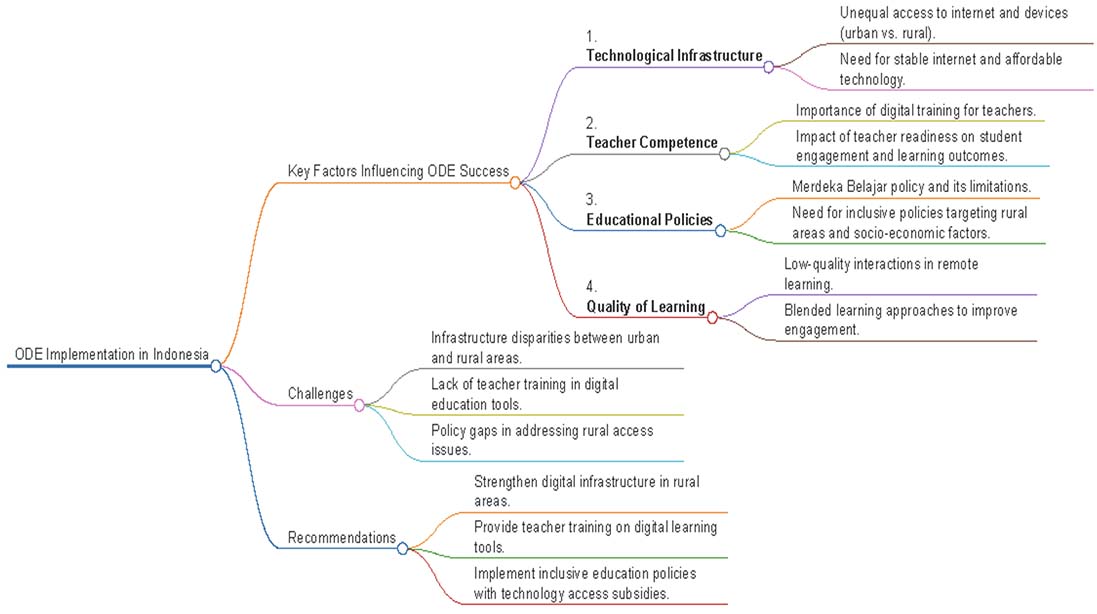
Figure 1 provides a visual representation of the key factors influencing the successful implementation of ODE in Indonesia. It illustrates how various aspects, such as technological infrastructure, teacher competence, educational policies, and the quality of learning, all interact within the context of ODE. The challenges to be faced and recommendations needed to enhance the effectiveness of ODE in Indonesia are also clearly reflected in this diagram.
Figure 1
Visualization of the Factors Influencing the Implementation of ODE in Indonesia
Figure 1 clearly shows the relationships among factors that influence the success of ODE, including the uneven infrastructure between urban and rural areas, as well as the importance of teacher training and supportive educational policies. By understanding these factors, stakeholders can more easily design policies that can improve the implementation of ODE across Indonesia. This image emphasizes the importance of a holistic approach that integrates infrastructure, policies, and teaching to achieve more equitable and quality educational outcomes.
This study analyzed the role of ODE in reducing the educational gap in Indonesia, focusing on the differences between urban and rural areas. The main findings of this research showed that ODE has great potential to address the educational access gap, particularly for students in rural or underserved areas. However, the effectiveness of ODE in achieving this goal is still hindered by several challenges, including unequal technological infrastructure, limited teacher training, and uneven educational policies. Although ODE can improve access to education, improvements in learning quality, the provision of adequate technology, and the development of teaching capacity are necessary to achieve optimal results.
These findings make a significant contribution to the field of education by clarifying the relationships among policy, technology, and pedagogy in the context of distance education. This research highlighted the importance of strong infrastructure support and ongoing teacher training as key factors for the success of ODE. Additionally, the study emphasized that inclusive policies focused on reducing socio-economic inequality, such as providing device and Internet access subsidies, can play an important role in maximizing ODE’s potential as a tool for reducing the educational gap in Indonesia.
The findings of this study aligned with the community of inquiry (CoI) model, which emphasizes the importance of interaction between three key elements in online learning: teaching, cognition, and social community (Martin, Wu, Wan, & Xie, 2022). In the context of ODE, the quality of interaction between students and instructors, as well as student engagement in the learning community, is crucial to supporting the success of distance learning. However, this study also challenges several assumptions in the CoI theory, particularly regarding the readiness of infrastructure and the digital competencies of teachers in rural areas. The lack of equitable access to technology hinders the formation of an effective learning community, which should be an integral part of the ODE model.
This research opens opportunities for further studies in several specific areas. First, further research on student experiences in online learning is essential. A qualitative study exploring the perceptions and challenges faced by students in rural areas will provide deeper insights into how ODE can be optimized to improve student engagement and learning outcomes. Second, research on the impact of digital literacy training for teachers and students is needed to evaluate whether such training can enhance the effectiveness of online learning and reduce educational access gaps.
Based on the findings of this study, several practical policy recommendations can be proposed. First, the government needs to provide subsidies or Internet access assistance to students in remote areas who lack adequate connectivity. Similar policies have been established in other developing countries, such as India, where the government provides internet subsidies and digital devices to students from low-income families to ensure more equitable access to education (UNESCO, 2022). Furthermore, the government and educational institutions should prioritize training for teachers in the use of educational technology, particularly to manage effective online learning. This training should include both technical skills and pedagogies that support distance learning.
In the implementation of ODE, socio-economic factors and cultural context significantly influence the success of the program. Students in rural areas often face socio-economic challenges, such as financial limitations and health issues, which hinder their access to education. Therefore, policies supporting ODE should consider not only technological aspects but also the socio-economic and cultural factors that affect students’ lives. For example, the introduction of programs that support low-income families, such as subsidies for purchasing digital devices, could help address existing socio-economic barriers.
The importance of stakeholder involvement, including the government, educational institutions, the private sector, and the community, in the implementation of ODE cannot be overstated. Collaboration among these parties is necessary to ensure that ODE operates effectively and equitably across Indonesia. For example, collaboration between the government and technology companies to provide affordable digital devices for students could accelerate the equalization of educational access. Additionally, community and parental involvement in supporting their children’s learning is also crucial to creating an environment that fosters the success of ODE.
In conclusion, it is important to remember that ODE is not just an alternative form of education but also an urgent need to reduce the educational gap in Indonesia. It is critical that the government and other stakeholders take immediate action by implementing more inclusive policies, improving digital infrastructure, and providing adequate training for teachers. Only through a holistic and sustainable approach can ODE achieve its goal of reducing the educational gap between urban and rural areas and improving the quality of education for all students in Indonesia.
Belawati, T., Daryanto, S., & Sumitro, T. (2020). The role of open and distance education in bridging the learning gap in Indonesia. Distance Education, 41(3), 341-358. https://doi.org/10.1080/01587919.2020.1770872
Fagbamigbe, A. F., Oyinlola, F. F., Morakinyo, O. M., Adebowale, A. S., Fagbamigbe, O. S., & Uthman, A. O. (2021). Mind the gap: what explains the rural-nonrural inequality in diarrhoea among under-five children in low and medium-income countries? A decomposition analysis. BMC Public Health, 21(1), 575. https://doi.org/10.1186/s12889-021-10615-0
Heryanto, O. (2021). The utilization of information technology as a learning medium for teachers in distance education (PJJ) during COVID-19. Avant Garde, 9(2), 1371-1380. https://doi.org/10.36080/ag.v9i2.1371
Hornok, Cecília & Raeskyesa, Dewa Gede Sidan. (2023). Economic zones and local income inequality: Evidence from Indonesia. The Journal of Economic Inequality, 22, 1-32. https://doi.org/10.1007/s10888-023-09581-x
Irhamsyah, T. (2023). General policy on the implementation of merdeka belajar. Jurnal At-Tabayyun. Retrieved from https://api.semanticscholar.org/CorpusID:267131840
Jusas, Vacius & Butkienė, Rita & Venčkauskas, Algimantas & Burbaite, Renata & Gudoniene, Daina & Grigaliunas, Sarunas & Andone, Diana. (2021). Models for administration to ensure the successful transition to distance learning during the pandemic. Sustainability, 13. https://doi.org/10.3390/su13094751
Kurnia, A., Sari, R., & Dewi, M. P. (2023). Literacy data on urban vs. rural education gap in Indonesia. International Journal of Education and Practice, 14(2), 102-115. https://doi.org/10.24956/ijep.14.2.2023
Martin, Florence & Wu, Tong & Wan, Liyong & Xie, Kui. (2022). A meta-analysis on the community of inquiry presences and learning outcomes in online and blended learning environments. Online Learning, 26, 325-359. https://doi.org/10.24059/olj.v26i1.2604
Ministry of Education Indonesia. (2020). Policy report on learning from home during the COVID-19 pandemic. Retrieved September 30, 2025, from https://www.kemdikbud.go.id/main/
Mizal, B., Basith, R. I., & Tathahira, T. (2021). Critical thinking through distance learning: An analysis of Indonesian Open University. International Journal of Education, Language, and Religion, 3(1), 25-38. https://doi.org/10.35308/ijelr.v3i1.3667
Rahayu, W., Putra, M. D. K., Faturochman, Meiliasari, Sulaeman, E., & Koul, R. B. (2022). Development and validation of Online Classroom Learning Environment Inventory (OCLEI): The case of Indonesia during the COVID-19 pandemic. Learning Environments Research, 25(1), 97-113. https://doi.org/10.1007/s10984-021-09352-3
Rahmi Rivalina, R. R. (2013). Why open and distance education (PTJJ)? Jurnal Teknodik, 1(1), 93-107. https://doi.org/10.32550/teknodik.v0i0.93
Salwa, A. (2021). Adaptation of the UT online tutorial learning model during the Covid-19 emergency learning period. Jurnal Pendidikan Terbuka Dan Jarak Jauh. https://doi.org/10.33830/ptjj.v21i1.1159.2020
Savitri, E. N., Amaliap, A. V., Listiaji, P., Atunnisa, R., & Fibriana, F. (2023). Virtual experiments of DNA isolation and hybridoma techniques to improve students’ critical thinking ability. Biosaintifika Journal of Biology & Biology Education, 15(1), 15-26. https://doi.org/10.15294/biosaintifika.v15i1.43847
Tsara Ayuninggati, R. R., Sihotang, S. V., Mustopa, M. I., & Wahyuningsih, W. (2023). Research on students' extracurricular interest in music during remote learning in the 4.0 era. Jurnal Mentari Manajemen Pendidikan Dan Teknologi Informasi. https://doi.org/10.33050/mentari.v1i2.245
United Nations Educational, Scientific and Cultural Organization. (2022). The impact of digital learning in education: Global trends and lessons learned. United Nations Educational, Scientific and Cultural Organization. Retrieved September 30, 2025, from https://www.unesco.org/en/digital-learning-impact
Wahid, R., Ahmi, A., & Alam, A. F. (2020). Growth and collaboration in massive open online courses: A bibliometric analysis. The International Review of Research in Open and Distributed Learning, 21(4), 292-322. https://doi.org/10.19173/irrodl.v21i4.4693
World Bank. (2021). The role of education technology in addressing education gaps in developing countries. Retrieved September 30, 2025, from https://www.worldbank.org/en/topic/edutech

The Role of Open and Distance Education in Reducing the Educational Gap in Indonesia by Yuyun Alfasius Tobondo is licensed under a Creative Commons Attribution 4.0 International License.