Volume 26, Number 4
Weiyi Li
College of Chinese & Asean Arts, School of Music and Dance, Chengdu University, Cheng Du, China
Professionalism in opera singing depends on the quality of education. This study examines the teaching of opera singing online via master classes and seminars. Based on the present findings, master classes are effective in improving the voice technically and range-wise, whereas seminars are effective in helping opera singers achieve emotionality. These instructional methods were compared in terms of content variety, balance between theoretical and practical components, and their effect on performance artistry and technical skills. Those learning to sing opera through master classes reported experiencing improvements in memory (24%) and problem-solving (22%). Students who attended the online seminars reported improvements in concentration (28%) and memory (26%). Challenges include limited control over assignments, attendance, and assessment. This study highlights effective tools for online opera training, with potential for future comparisons of methods in developing vocal and instrumental skills.
Keywords: cognitive abilities, content variety, distance education, expression, vocal range
To produce a stable and beautiful operatic sound, vocalists must possess a deep understanding of the piece they are reproducing. Opera’s aesthetic revolves around emotional expressivity, which demands a certain level of skill from the vocalist (Aaberg, 2023). Given the growing variety of digital learning technologies, it becomes increasingly important to identify which solutions are most effective in opera skills development.
In China, opera is of particular importance as a tool for preserving vocal and theatrical traditions. Learning the art of operatic singing implies mastering the vocal technique and adapting one’s voice to different pieces of music. Vocal artists should also know how the music they reproduce was created and under what historical circumstances it came to life (Almqvist & Werner, 2024; Silas et al., 2024). A common approach to teaching opera singers in China involves using traditional music to explore the distinctive features of the national culture. The integration of artistic elements into opera singing teaching practice is typical of the Chinese education, but other educational systems in the world also apply this approach to teaching, as it allows for the realization of a theatrical performance (Joseph & Lennox, 2021; Y. Li, 2024). When educating operatic artists, the emphasis should be placed on phonetics, breathing, and singing technique (de Villiers & Gillmer, 2024). With Chinese opera, special attention is paid to pronunciation, which also has its own intonation that is different from the existing melodic line (Wang, 2024b). Because Chinese opera combines singing, dramatic acting, acrobatics, and martial arts, the teaching process also focuses on unveiling the vocalist’s individuality and potential (Chang, 2022).
The integration of online platforms into opera singing education is not yet a standardized practice; however, it offers significant potential for implementing distance learning aimed at enhancing professional competencies (Crisosto-Alarcón et al., 2025). The advantage of distance learning in the context of operatic training lies in its capacity to provide an individualized approach to information processing and to engage instructors from various countries. This facilitates the development of professional skills through exposure to diverse pedagogical approaches and performance techniques of vocal coaches and opera singers. Although distance learning predominantly emphasizes independent study, it allows for the repeated review of educational materials and critical analysis of vocal performance, thereby contributing to higher levels of professional mastery (Liming & Sartjinpong, 2025). Online master classes and workshops may focus on a single skill (e.g., breath control or articulation) that supports the in-depth remediation of specific gaps in operatic performance (Y. Li, 2024).
Even though operatic training requires careful preparation, it can be implemented using a distance approach. An advantage of online learning is that it allows students to learn the art of singing regardless of their location (Nikolai et al., 2023). In these conditions, teacher–student communication depends on the level of technological organization. The choice of digital technology affects the ability to conduct high-quality seminars and master classes, the format of which makes it difficult to introduce musical accompaniment for students to use while learning (Chen, 2023; Longlong & Luen, 2023). Distance education is associated with the use of video to deliver content; hence, an interactive system that will transmit high-quality sound must be selected (Cuervo et al., 2023). Surely, some digital devices allow for singing with accompaniment and even enable vocalists to tailor the accompaniment to their skill level (Shu, 2023). Today’s students resort to online master classes and seminars because they break up the monotony of learning, improving engagement (P.-P. Li & Wang, 2023).
The academic relevance of digital vocal master classes and seminars lies in their capacity to support the professional development of musicians. This is largely attributable to the abundance and accessibility of educational materials available in the digital space (Fan et al., 2025). Master classes and seminars often adopt nontraditional formats for delivering content that tend to engage students and foster motivation for participation. These educational formats promote the continuous expansion of musical horizons by introducing updated approaches to vocal performance (Ilxomovna, 2025). They also contribute to a broader understanding of practical techniques for melodic interpretation across various musical styles. Through such instructional methods, students are encouraged to cultivate independence beyond the confines of conventional academic curricula (Yuhan & Sartjinpong, 2025).
Challenges in exploring the specifics of operatic training stem from the lack of a clearly defined connection between the potential of vocal master classes and seminars and their practical implementation. Although these formats hold considerable promise and align with emerging models of vocal education, more attention must be paid to the current opportunities for online opera training. In particular, focus should be placed on vocal projection and the acoustic refinement of timbre—elements that are often overlooked in the design of distance learning courses. One of the central difficulties of remote instruction is the absence of a coherent strategy for monitoring task completion, which can negatively impact the quality of vocal training. Additionally, distance learning presents limitations in assessing a singer’s technical execution, especially in areas such as body engagement and the establishment of proper breath support. These limitations may be addressed through the selection of targeted instructional methodologies designed to meet specific objectives for developing an operatic voice.
The initial focus of the theoretical inquiry was to identify the factors that contribute to the enhancement of operatic singing and to explore the potential of achieving these improvements through the use of digital tools. The practical application of digital technologies in vocal training can be realized through the selection of specific repertoire, the use of automated analysis tools, and the progressive performance of compositions with a focus on individual musical fragments. The online curriculum must be theoretically justified and incorporate instructions prepared by competent teachers. The development of vocal skills is facilitated through the continuous refinement of practical abilities. An understanding of the technical and physiological aspects of singing shapes the accumulation of performance experience. This integrated approach enables students to internalize the nuances of each musical piece, thereby enhancing the overall quality of their performance (Jansson & Balsnes, 2021). In synchronous online education, teachers must first deal with any technical problems that may arise when establishing a dialogue with their students and then address the cultural dimension of the curriculum to improve musical cultural literacy and attract a geographically distinct audience. Instruction should be oriented toward the integration of intercultural dimensions, particularly through the selection of musical repertoire and the inclusion of diverse genres. This approach enables the development not only of the technical aspects of operatic singing but also of expressive performance, which is often shaped by the traditional and cultural characteristics inherent in individual compositions (Løkke Jakobsen et al., 2023). Opera teaching specifically begins with the establishment of a theoretical foundation (an understanding of the principles of breath support, singing within specific vocal registers, the execution of musical ornamentation, and the coordination between breath control and sound production techniques). When training opera singers, it is important to eliminate students’ dependence on subjective perception and to cultivate performance skills that are based on multidimensionality. This can be achieved by using existing online courses as a foundational framework for instruction (Luo & Leung, 2022).
Further analysis was aimed at determining the format of remote learning of opera singing and possible advantages. Digital technologies make learning more flexible and imaginative, serving as effective tools for developing vocal skills (Biasutti et al., 2022). Digital technologies enhance the flexibility and creativity of the learning process, enabling more effective planning of the educational curriculum and facilitating the identification of tools for developing vocal skills. The online format allows for the adoption of the Feldenkrais method (i.e., learning through movement), which was reported to increase awareness of singing and enhance practice. The Feldenkrais Method is associated with the use of hand, body, and head movements during vocal performance, which contribute to achieving greater expressiveness. The process of self-discovery provides individualized benefits for vocal performance (Paparo, 2022). The traditional system of education transformed during the COVID-19 pandemic, with many learners moving online. Music educators shifted to using online applications (apps) to teach music theory and instruments. Muyu is but one example of such an app; it promotes collaborative learning and student engagement through prerecorded videos, effectively motivating users to improve their music knowledge. The practical use of the app is associated with the facilitation of collaborative learning and the engagement of students using prerecorded video materials (Ng et al., 2022). Encouraging students to write songs can help them understand the various components of music and explore the depth of their creativity. This approach allows for the development of improvisation techniques (Wang, 2024a).
The next group of scientific works is aimed at evaluating the advantages of online learning for developing students’ cognitive abilities. Online courses that provide opportunities to complete a large number of assignments have the potential to carry out the same function that educators have, encouraging learners to nurture their own thinking skills. The practical component of the learning process can be implemented through students’ completion of a substantial number of online tasks. Increasing students’ self-efficacy contributes to the formation of musical habits (Vaizman & Harpaz, 2023). Emergency remote learning encompasses the process of interaction between instructional teams and is aimed at automating the educational process. This is facilitated by interactive music applications that enable the analysis of students’ singing and provide corresponding feedback and recommendations. This approach enables learners to focus on individual elements of a vocal performance that make it exude grace and subtlety, be it vocal color or delivery (Rucsanda et al., 2021). Distance learning can also facilitate personal growth: online vocalists have been reported to gain greater confidence when training independently (Smith et al., 2022).
The literature analysis also focused on potential challenges arising from the implementation of distance learning formats in operatic singing instruction. Vocal training in an online environment may present specific difficulties, often associated with insufficient digital preparedness and the lack of effective pedagogical strategies. In particular, the most pressing issues are linked to suboptimal sound quality, which hinders the perception of nuanced vocal details. Technical problems with the software employed can negatively affect student motivation and limit the possibility of synchronous musical performance (Ngobeni, 2024). Furthermore, the challenges of remote music education may stem from a shortage of educational resources and specialized music software, which complicates classroom management and diminishes the quality of information assimilation (Wang, 2025).
The review of published studies revealed a predominant focus on the general characteristics of distance learning with a lack of detailed rationale for the implementation of specialized online seminars and master classes. The application of online approaches to opera singing instruction has been addressed only superficially, with limited attention to the practical techniques involved, and it has been primarily oriented toward teaching theoretical content. Existing research tends to emphasize general music education through remote modalities rather than the specifics of operatic training. Enhancing the practical relevance of such studies requires a substantiated exploration of methods for achieving high-quality operatic performance through online seminars and vocal training courses.
The online learning format, favored by modern vocal performers, is transforming the conventional method of vocal training. The growing popularity of online singing master classes and seminars is associated with the use of atypical approaches to teaching and learning that allow vocalists to discover and showcase their individuality. When it comes to opera music, the uniqueness of one’s performance is important, for the personal interpretation of the piece by a vocalist distinguishes one composition from another, and it allows vocalists to represent a certain culture. In operas, the plot is sometimes based on adequately presented historical events, requiring the vocalist to possess skills at the higher end of the spectrum of expertise. Hence, online singing courses must be constructed with special care, for opera music is filled with various artistic flourishes that add to the expressiveness of the vocal performance, and vocalists have to study all or nearly all of them to be able to deliver competitive, high-quality performances. This study aims to investigate the effectiveness of online singing master classes and seminars. The objectives of the study were (a) to identify specific factors that contribute to a high-quality operatic performance and whether online master classes and seminars can help in developing thereof, (b) to compare the strengths of specific master classes (Juilliard Extension, the Royal College of Music) and online seminars (Living Opera, Angel’s Music Academy) designed for opera singers, (c) to measure the cognitive abilities of individuals exposed to online master classes and seminars, and (d) to identify potential problems that students may face when learning how to sing opera via online master classes and seminars.
The study consisted of three stages: (a) identifying which direction to take in developing opera singing skills, (b) comparing different master classes and seminars for online opera singers in terms of effectiveness, and (3) carrying out an 8-week intervention and examining its effect on the cognitive skills of novice opera singers. The first stage entailed analyzing a total of 200 opera performances to establish which aspects of opera singing must be covered in online training. The analysis of operatic performances involved an examination of both the acoustic and technical features of singing, as well as stylistic characteristics. Particular attention was given to evaluating the performative and theatrical delivery techniques employed by professional vocalists during live presentations. This approach focused on assessing the consistency and flexibility of vocal production, exploring subtle nuances and intonation, and investigating the relationship between breath control techniques and pitch accuracy. Such a methodology enabled a more precise understanding of operatic forms and the expressive emphases used by performers to achieve individualized and emotive interpretations.
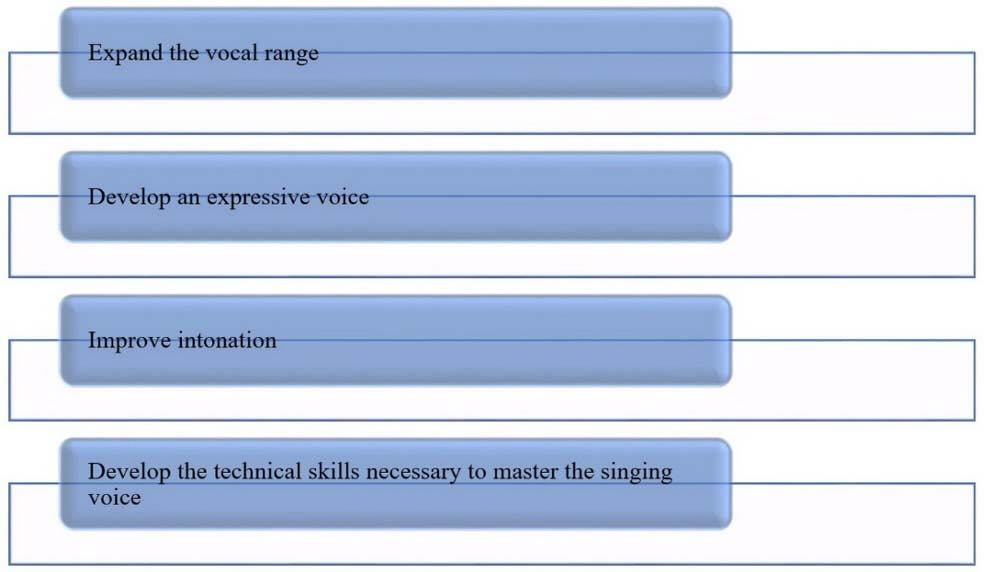
Special emphasis during the analysis was placed on the use of unconventional vocal techniques that contributed to shifts in the stylistic rendering of musical compositions. The identification of common evaluative criteria guided the selection of the most influential features, which were subsequently incorporated into the study. The analysis of operatic performances included both video evaluation and spectrographic analysis conducted using Praat software, version 6.4.31 (Boersma & Weenink, 2025). Praat enabled a detailed acoustic analysis, including frequency distribution of melodic lines, assessment of resonance characteristics, and examination of dynamic and intensity parameters in vocal execution. In addition, we analyzed the content of more than 100 master classes and seminars, as well as student feedback. Master classes selected for the analysis are available in the 2024 catalogs offered by Juilliard Extension and the Royal College of Music, whereas the chosen seminars are part of the 2024 series of online courses released by Living Opera and Angel’s Music Academy. All materials are publicly available. The analysis encompassed an evaluation of thematic content, its comprehensiveness, alignment with university curricula in operatic vocal training, the potential for offering individualized instructional approaches, and the balance between theoretical and practical components within the course structure. The content analysis revealed four elements that online master classes and seminars for novice opera singers should focus on: (a) expanding the vocal range, (b) developing an expressive voice, (c) improving intonation, and (d) developing the technical skills necessary to master the singing voice (see Figure 1).
Figure 1
Four principles for developing opera singing skills
Source: Developed by the authors
The core principles behind an excellent vocal performance in opera singing were obtained using the Mann-Whitney U test and Cliff’s delta (δ). The U statistic reflects the relationship between two independent samples. The test requires that values from the two populations do not correlate with each other to ensure that no patterns will occur when a random variable increases or decreases (Almqvist & Werner, 2024). The Mann-Whitney U test does not assume a normal distribution; therefore, the emphasis in the analysis was placed on the ordinal values of the selected criteria. This nonparametric coefficient enabled the identification of the relative prominence of certain criteria over others through a rank-based comparison of master classes and online seminars. The calculations were conducted at a significance level of α = 0.05. Cliff’s delta is a nonparametric effect size estimate that assesses the difference between two observations without using the standard deviation (Zeng, 2023). The calculation of Cliff’s delta primarily involves the assessment of sample size, which reflects the effect size of specific criteria in relation to the development of operatic singing skills, depending on the selected course or master class. Cliff’s delta represents a nonparametric measure of effect size, accounting for asymmetric distributions associated with the distinctive characteristics of various instructional methods. A value of 0 indicates no difference between groups; a value of 1 signifies that the influence of the first type of instruction dominates over the second, while a value of –1 indicates the opposite—that the second type of instruction has a stronger influence than the first.
Overall, the significance of vocal criteria for high-quality operatic performance was assessed through an analytical approach that involved the examination of operatic works to identify relevant evaluation criteria, as well as the study of master classes and online seminars aimed at implementing these criteria. The analysis of operatic performances was based on video recordings and live broadcasts, which allowed for an assessment not only of vocal quality but also of performers’ stage behavior. The selection of evaluation criteria was guided by impact on intonational accuracy and expressive delivery—elements that enhance audience engagement.
As previously outlined, the analysis of master classes and online seminars focused on the thematic content and pedagogical strategies employed. The primary assessment was carried out by the authors of the study; however, in examining the specific features of the instructional formats, student feedback from those who had completed the training was also taken into account. To this end, over 400 reviews were collected, with particular attention given to well-reasoned responses containing concrete examples and direct feedback from the organizers of the master classes and online seminars.
A linear rating scale ranging from 1 (negative) to 5 (positive) was employed. Evaluations were assigned by the authors based on three criteria: the importance of a given vocal parameter for operatic development, the extent to which it can be cultivated through master classes and online seminars, and the content of student feedback. The resulting data were aggregated to obtain mean values and subjected to Mann-Whitney U tests and Cliff’s δ calculations. To minimize bias, measures were taken to ensure objectivity, including the use of standardized evaluation criteria (e.g., vocal range development, expressive sensitivity, vocal intonation, and technical vocal control) and a rigorous analysis of the instructional content. Each author independently rated the data based on comparative review analysis, enabling cross-validation of the results and ensuring their reliability.
The second stage entailed analyzing the selected seminars and master classes with respect to the four aspects of opera singing established in the first step. Methods for developing the skills needed for an excellent operatic performance were chosen from the traditional repertoire and were used by online instructors throughout the selected classes. The selection of criteria for evaluating effectiveness was also informed by the elements used in sampling online seminars and master classes for inclusion in the study. The chosen effectiveness indicators encompassed both pedagogical aspects (such as lesson variety and the balance between theoretical and practical content) and vocal dimensions (including artistic expression and vocal technique). These indicators were selected to assess the impact of master classes and online seminars on the development of professional competencies. The effect of an online master class or seminar was quantified using the following formula (Equation 1) (Lowery, 2023):
| V = xs. | (1) |
where s represents the standard deviation of the variable from its accepted norm, and x is conditional significance.
The coefficient of variation is employed to compare the ratio of a specific indicator to a predefined reference value. In this context, the standard deviation of a given parameter from the mean value was taken into account. The application of the coefficient of variation enabled an assessment of the degree of alignment between the analyzed training program and the effectiveness criteria, with a focus on the prominence of specific indicators within the study.
For a more compelling argument, the Mann-Whitney U statistic was additionally calculated. The Mann-Whitney U test was conducted to compare overall program effectiveness (as determined by the mean effectiveness score) with each individual quality criterion of the master classes and online seminars, including lesson diversity, content richness (theoretical and practical materials), potential for achieving artistic expressiveness, and the development of technical skills. Table 2 presents the average Mann-Whitney U values, calculated with measures taken to minimize potential errors.
Independent experts carried out the evaluation of master class and online seminar effectiveness—15 vocal pedagogy instructors—who had access to the materials and directly observed participant sessions. These experts were recruited from prominent Chinese institutions (Central Conservatory of Music, Wuhan Conservatory of Music, Sichuan Conservatory of Music) as well as European institutions (Universität Mozarteum Salzburg, Royal Academy of Music, Hochschule für Musik, und Theater München). Importantly, the invited experts had no involvement in the design or delivery of the evaluated master classes and seminars, which helped eliminate potential conflicts of interest or bias toward any particular instructional program.
A standardized 5-point Likert scale (ranging from 1 to 5) was used to assess the effectiveness of each program according to clearly defined criteria: diversity of lessons, richness of theoretical and practical content, potential for achieving artistic expressiveness, and development of technical skills. These standardized criteria were readily identifiable based on the program structure, thus minimizing the risk of subjective interpretation. Communication with the independent experts was conducted via WeChat, version 8.0.44 (Tencent Holdings Limited, 2023).
The 8-week intervention involved exposing four groups of learners to the selected seminars and master classes. Learners in groups 1 and 2 participated in Juilliard Extension’s and Royal College of Music’s online classes, whereas learners in groups 3 and 4 took online seminars from Living Opera and Angel’s Music Academy, respectively. The chosen materials follow the underlying principles of excellent operatic performance outlined in Figure 1 and help learners meet the vocal requirements to perform opera music. After the intervention ended, the impact of online instructional methods on the acquisition of cognitive skills was assessed. Data for master class groups and online seminar groups were obtained separately. Effectiveness was assessed based on the respondents’ development of cognitive skills aimed at achieving high-quality performance through enhanced neural activity. The evaluation of cognitive skills focused on their influence on the comprehension of operatic performance processes, depending on the instructional approach selected by the students. All calculations were done using the Mann-Whitney U test and Cliff’s δ.
Thus, the assessment of students’ cognitive abilities was conducted through observational methods by independent experts who had previously participated in the second stage of the study. The evaluation criteria included students’ approaches to task interpretation, attentional stability, response patterns to assignments, and execution strategies. In addition, standardized indicators such as information processing speed, memory retention, and self-regulation were taken into account. The level of cognitive skill development was assessed across all respondents who received instruction through master classes and seminars. This assessment involved providing a general evaluation to students who were taught via master classes and those who engaged in online seminar-based learning, without further subgroup differentiation.
In addition, participants were asked about the challenges they had encountered during the intervention period. For this, an open survey was administered, in which respondents were asked to name and describe a specific problem related to learning via online master classes and seminars. Students were required to either agree with the stated issue or refute it. The use of Cronbach’s alpha coefficient enabled the assessment of the internal consistency of all student responses, aimed at eliminating internal contradictions. The resulting Cronbach’s alpha value of 0.78 confirmed the validity and reliability of the collected responses. Responses were collected via WeChat within 1 day.
A total of 216 respondents with vocal singing skills but no experience with opera participated in the intervention. The study population included instrumental musicians, singers specializing in genres other than opera, teachers, and choreographers recruited via ads on Douyin (i.e., the Chinese short video app). Individuals responding to the recruitment efforts were asked to sing different pieces of vocal music from the repertoire proposed by the researchers to determine their level of vocal music skill. Those eligible were divided into four groups of 54 participants; the groups were then randomly assigned to receive one of the four online instructions. The age of the respondents ranged from 19 to 24 years.
All calculations were done in Microsoft Excel. This program allowed us to maintain the sequence of the selected criteria while splitting the collected data into groups.
This study follows the ethical guidelines prepared by the Norwegian National Committee for Research Ethics in Science and Technology (2024). The content of this paper is original and has not been published previously. All information taken from other sources as part of the theoretical framework has been inserted with proper citation.
Opera singing is the sole focus of the current study. Future research should include other genres of vocal music to assess the effectiveness of online seminars and master classes within a broader area of application.
Compared to other vocal genres, opera is a complex yet exceptionally beautiful art form that is both technically and physically demanding. The content analysis of multiple master classes and seminars revealed that when teaching novice opera singers online, it is best to focus on the following (Table 1): a person’s vocal range, expressivity of the vocal performance, accuracy of intonation, and technical capabilities of the voice. The calculations were conducted using the Mann-Whitney U test and Cliff’s δ.
Table 1
The benefits of using master classes and online seminars for opera skills development
| Effects | Master classes | Online seminars | Difference between instructional methods | ||||||
| M | SD | Mdn | M | SD | Mdn | U | δ | p | |
| Vocal range expansion | 8.71 | 2.43 | 9 | 6.15 | 1.20 | 6 | 167 | 0.316 | 0.003a |
| Emotional expressivity | 7.20 | 1.38 | 8 | 7.56 | 1.50 | 8 | 132 | 0.221 | 0.211 |
| Intonation development | 7.59 | 1.82 | 8 | 7.34 | 1.46 | 8 | 141 | 0.203 | 0.213 |
| Technical mastery of the voice | 8.76 | 2.47 | 9 | 4.0 | 0.98 | 4 | 185 | 0.319 | 0.002a |
a Represents values that do not correlate at p > 0.05.
A wide vocal range is important for opera singers since the ability to comfortably produce a broad span of notes without straining one’s voice affects the quality of the operatic sound. When expanding their vocal range, singers should focus on maintaining the purity and beauty of the reproduced sound. The challenge is that opera pieces tend to weave high and low notes together, and vocalists are expected to seamlessly move between them. Hence, the vocal routine should additionally enhance the voice’s strength and timbre. This can be achieved through vibrato singing exercises.
An expressive voice is a way to express the emotional depth of opera music. Expressive singing is the ability to reproduce vocally different emotive qualities of the vocal music piece or set the emotional tone of the passage by manipulating one’s tone of voice. A touching, captivating performance requires the inclusion of appropriate melodic embellishments and ornamentation.
Intonation in opera singing is the ability to use the rising and falling vocal pitch and sound combinations to convey the personality and intentions of the character or to emphasize the importance of the scene. Accurate intonation contributes to the purity of the reproduced sound and proper coordination. Only intonation allows singers to convey the essence of the operatic work.
Opera repertoire demands technical mastery. To build a solid technical foundation, vocalists should adopt various techniques and vocal exercises that will improve their breath control and articulation.
A comparison of distance master classes and online seminars based on the authors’ analysis of their content, topics used, content of classes, and analysis of feedback from students who attended these training formats showed that online master classes allowed learners to greatly improve their vocal potential and technique through demonstrations. Online seminars, on the other hand, focused more on explaining theory. The present study assessed the potential of online seminars and master classes to cultivate opera singing skills. Numerical values were obtained using the coefficient of variation. The results are presented in Table 2.
Table 2
Effectiveness of online master classes versus online seminars for novice opera singers
| Programs | Content variety | Theory / practice balance | Performance artistry | Technical skills | Mean effectiveness | Mann-Whitney U | p |
| Master classes | |||||||
| Juilliard Extension | 0.92 | 0.93 | 0.91 | 0.92 | 0.92 | 131 | 0.127 |
| Royal College of Music | 0.87 | 0.89 | 0.91 | 0.89 | 0.89 | 134 | 0.135 |
| Seminars | |||||||
| Living Opera | 0.83 | 0.74 | 0.95 | 0.79 | 0.82 | 120 | 0.936 |
| Angel’s Music Academy | 0.89 | 0.88 | 0.93 | 0.87 | 0.89 | 132 | 0.129 |
Based on the responses of independent experts, it was established that Living Opera offered seminars that focused more on the artistry of an operatic performance rather than a singer’s technical arsenal. The proposed series of eight lectures prepared listeners for participation in an opera performance. The training process involved learning how to overcome the fear of performing in front of other people and achieve psychological stability, choosing one’s repertoire, developing a unique interpretation of operatic pieces, and learning how to conduct auditions. Experts established that the lectures were oversaturated with theoretical knowledge that did not allow learners to develop performance-related skills and that the lessons were largely identical in terms of content.
The expert ratings used for the coefficient of variation showed Angel’s Music Academy seminars were geared toward helping singers work on their technique. More specifically, the proposed video course helped students hone both the technical and artistic skills of vocal performance while informing them about the distinct ways of aesthetic expression in the operatic stage performance. In addition, the course allowed those who took it to focus on studying the breadth of the vocal score and the specifics of their own timbre. The way in which the content was presented contributed to the development of critical thinking.
Juilliard Extension’s master classes were all-encompassing and well-balanced experiences; not only did they help learners work on their technique and ear, but the combination of theory and practice led to a better understanding of different singing techniques. Diversity in the curriculum allowed singers to select and expand their musical repertoire according to their technical and creative capabilities. The same was true for the Royal College of Music’s master classes. Led by experienced operatic artists, the master classes taught approaches to opera as a performance and ways of conducting oneself while on stage. The results are presented in Table 3, based on calculations using the Mann-Whitney U test and Cliff’s δ.
Table 3
Cognitive abilities after exposure to different instructional methods
| Cognitive ability | Master classes | Seminars | Difference | ||||||||
| % of respondents | M | SD | Mdn | % of respondents | M | SD | Mdn | U | δ | p | |
| Memory | 24 | 8.65 | 2.40 | 9 | 26 | 8.69 | 2.41 | 9 | 147 | 0.305 | 0.214 |
| Concentration | 18 | 8.22 | 8.13 | 9 | 28 | 8.72 | 2.42 | 9 | 127 | 0.291 | 0.196 |
| Problem-solving | 22 | 8.61 | 2.37 | 9 | 11 | 6.64 | 1.82 | 6 | 183 | 0.372 | 0.004a |
| Ability to replicate unfamiliar music after hearing the piece | 17 | 7.91 | 2.01 | 8 | 13 | 7.21 | 1.95 | 7 | 124 | 0.361 | 0.08 |
| Thinking | 19 | 8.56 | 2.31 | 9 | 22 | 8.61 | 2.38 | 9 | 125 | 0.284 | 0.195 |
a Represents values that do not correlate at p > 0.05.
Learning through online seminars and learning through online master classes yielded different results in the cognitive department (the modality effect), as shown in Table 3. The observation of students showed exposure to master classes facilitated the development of memory, problem-solving skills, and thinking. The singers’ memory was reinforced as a result of applying the newly acquired knowledge and skills in a practical context. A better memory enabled students to adapt to the operatic repertoire and find solutions to specific problems, such as complex fragments and transitions between pitches, which was related to the students’ ability to reproduce a fragment of a musical work, allowing up to two intonation or structural errors. At the same time, students were able to interpret the opera work a day after listening. By developing their thinking skills, participants improved their ability to interpret the operatic piece and increase the quality of the operatic performance. Advanced thinking skills implied students’ ability to engage in music-theoretical analysis, including the examination of musical texture. This was also reflected in cognitive flexibility, which enabled the adoption of innovative approaches to musical performance and the interpretation of musical imagery.
In contrast to master classes, seminars placed greater emphasis on theory. Exposure to online seminars fostered the development of concentration, memory, and thinking, with development of concentration being the result of the constant repetition of the learning material. The development of attentional concentration was facilitated through repeated exposure to learning materials, which enabled students to focus on previously studied elements. This improvement was reflected in learners’ accurate performance of complex musical passages, ability to shift efficiently between different musical tasks, and reduction in number of errors during the repetition of musical pieces. Teacher support played a crucial role in the development of these cognitive abilities.
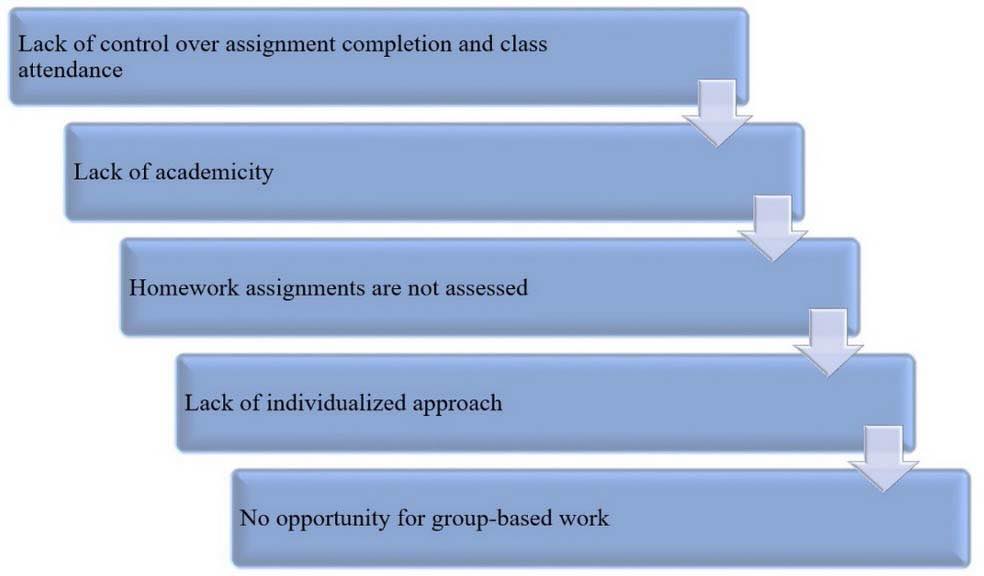
Aside from the benefits the given modalities provide, learning via online seminars and master classes comes with its challenges, as shown by an open survey via WeChat (see Figure 2).
Figure 2
Challenges faced by respondents when learning opera singing skills through online seminars and master classes
Source: Developed by the authors
According to the respondents, the main problems of learning via online master classes and seminars were related to the lack of academicity. To achieve higher results, students had to be independent and work on their technique without anyone’s help. The lack of control over assignment completion and class attendance hindered the development of accurate vocal techniques. Such conditions required students to be psychologically prepared to spend time independently figuring out individual components of their singing technique.
Online courses are widely adopted as an alternative means of teaching music. An innovative format of content delivery that integrates a variety of educational resources related to the art of singing and instructions guiding one toward discovering their own performance style has been associated with higher achievement (G. Li, 2024). Singers develop their vocal skills through practice and accumulate experience in a manner that requires an understanding of the technical and physiological dimensions of singing. This approach allows vocalists to “feel” the piece and exploit this auditory and theoretical knowledge to improve the quality of the performance (Jansson et al., 2024). Previous research has explored the possibility of developing vocal skills in a manner that focuses on individual parameters, such as breathing, expressiveness, and performance style. The present study has looked into ways of achieving an expressive performance in opera specifically. The basic recommendation involves building a wide vocal range, working on expressivity and intonation, and improving the technical skills necessary to control the vocal apparatus. Unlike previous studies, this work examined which instructional method (i.e., online master class and online seminar) is best for helping students throughout this journey.
The Internet provides consumers with the proper means to improve their learning while removing the potential limitations that can otherwise hinder their progress. The online courseware is usually prerecorded and/or presented through online simulation in virtual classrooms. When it comes to music education, the effectiveness of this content delivery method depends on which tool is used for audio processing, as teachers have to accurately transmit the tone and timbre of the vocal music piece for students to understand and correct their mistakes as vocal performers (Rui, 2024). Digital technologies are effective and accessible tools for teaching and learning music that allow for better knowledge assimilation, higher engagement, and the development of creative skills. With their help, teachers can save on musical resources while enhancing the vocal abilities of their students (Rexhepi et al., 2024). Online courses require the use of instructional design tools and assessments; however, the course material embedded in the online course must be tailored to individual student capabilities. Audio content must be preprocessed with MIDI to improve the depth and quality of learning. More specifically, a well-constructed MIDI dataset can help teachers improve students’ music literacy, as reported in previous research (Shi, 2024). Previous research has explored the effectiveness of innovative technologies in music teaching. The findings suggest combining theory and practice as a means of achieving better results. This study considered the possibility of using certain master classes (Juilliard Extension: https://www.juilliard.edu/stage-beyond/juilliard-extension; Royal College of Music: https://www.rcm.ac.uk/) and online seminars (Living Opera: https://www.livingopera.org/for-singers; Angel’s Music Academy: https://angelsmusicacademy.com/) to develop opera singing skills. The effectiveness of each was tested with respect to content variety, balance, and effect on performance artistry and technical skills.
For the beauty of the singing voice to be unveiled, the teaching-learning process requires clear contextualization (Lim et al., 2024), and if the learning takes place online, the instructor should address the dimension of nonverbal communication to help learners understand the subtleties of stagecraft. Role-playing exercises, for example, are good for increasing students’ confidence, leading to a greater sense of autonomy and a higher level of professionalism (Urbaniak & Mitchell, 2024). In published studies, analyses have primarily focused on the development of vocal skills related to the refinement of vocal performance. In contrast, this article emphasizes the development of cognitive skills associated with intentional operatic interpretation and the potential for achieving greater expressive nuance in vocal delivery.
Online learning can stimulate conventional content delivery, but it also allows for the incorporation of innovative ideas. In an online environment, the key to effective vocal training is to maintain a certain level of academicity with different teaching strategies. It is also important to keep learners motivated throughout the online course, which requires the use of specific design choices (Q. Li et al., 2024). Listening to music can be instrumental in developing musical skills. Through systematic reflection on music practices, active listeners can improve their knowledge and achieve autonomy (Esteve-Faubel et al., 2024).
Previous research has outlined the advantages of online learning, but the details of educational approaches have not been specified. This study focused on two delivery modalities (i.e., master classes and online seminars) and their effectiveness in developing the foundational abilities necessary to sing opera, and it informs us about their effect on cognitive skills and the potential challenges associated with developing opera singing skills through master classes and online seminars.
The present findings suggest that individuals with prior vocal knowledge and skills can potentially use online seminars and master classes to learn the art of opera singing. The conducted analysis of the specifics of master classes and online seminars showed that master classes were found to be effective in expanding vocal range, teaching the technical skills needed to master the voice, and developing singing intonation. Seminars, on the other hand, can help vocalists achieve an emotional operatic performance and improve intonation. Master classes held by Juilliard Extension were superior to those from the Royal College of Music in terms of balance between the theoretical and practical material (V = 0.93) and content variety (V = 0.92). Master classes in general were found to be more helpful than online seminars for learners working out the operatic technique. The advantage of master classes lies in their capacity to provide individualized vocal training, allowing for consideration of the singer’s physiological characteristics and enabling vocal adjustments in a remote format. This is facilitated through the provision of vocal demonstrations by the instructor, which enables real-time observation and analysis of vocal technique and dynamics. In contrast, seminars are predominantly oriented toward theoretical instruction, which limits students’ exposure to the practical techniques essential for operatic performance. As regards online seminars, courses from Angel’s Music Academy were considered better due to a more balanced and meaningful content mix (V = 0.88).
Through observations, experts established that respondents who participated in master classes were able to develop their memory (24%), a skill that enables vocalists to construct a more thoughtful approach to operatic performance. This was associated with the analysis and assimilation of a substantial amount of practical information, which was subsequently applied during vocal performance. Online seminars were good for concentration (28%) but less effective at enhancing students’ ability to perform unfamiliar compositions (13%). The results obtained were attributed to the lack of mechanisms for reinforcing the theoretical content during the seminar itself.
The significance of this study lies in its exploration of the effectiveness of distance education methods for teaching opera singing. Future research can assess the possibilities of using master classes and online seminars to teach a cohort of schoolchildren to sing opera.
Aaberg, M. (2023). Virtual teaching in the applied string studio during the COVID-19 pandemic. String Research Journal, 13(1), 51-71. https://doi.org/10.1177/19484992221121759
Almqvist, C. F., & Werner, A. (2024). Maintaining and challenging conservative teaching and learning culture in conservatories: The need for holistic pedagogy in educational fields of tension. Research Studies in Music Education, 46(2), 257-270. https://doi.org/10.1177/1321103X231187766
Biasutti, M., Antonini Philippe, R., & Schiavio, A. (2022). Assessing teachers’ perspectives on giving music lessons remotely during the COVID-19 lockdown period. Musicae Scientiae, 26(3), 585-603. https://doi.org/10.1177/1029864921996033
Boersma, P., & Weenink, D. (2025). Praat (Version [6.4.31]) [Computer software]. Softonic. https://praat.en.softonic.com/
Chang, Z. (2022). The use of online vocal training programs as a means to develop creative thinking and vocal prowess. Interactive Learning Environments, 31(10), 7214-7225. https://doi.org/10.1080/10494820.2022.2064514
Chen, Y. (2023). On the development of vocal music literature courses in colleges and universities: Taking Chinese art songs as an example. International Journal of Education and Humanities, 7(2), 174-177. https://doi.org/10.54097/ijeh.v7i2.5572
Crisosto-Alarcón, J., Maldonado-Delgado, P., & Rivas-Campos, M. (2025). Conceptual metaphors about voice in the teacher-student interaction system during Western classical singing lessons. Journal of Voice. Advance online publication. https://doi.org/10.1016/j.jvoice.2025.02.021
Cuervo, L., Bonastre, C., Camilli, C., Arroyo, D., & García, D. (2023). Digital competences in teacher training and music education via service learning: A mixed-method research project. Education Sciences, 13(5), Article 459. https://doi.org/10.3390/educsci13050459
de Villiers, A. C., & Gillmer, R. (2024). An assessment framework for contemporary commercial music (CCM) in higher education. Journal of Applied Research in Higher Education, 16(4), 977-987. https://doi.org/10.1108/JARHE-11-2022-0337
Esteve-Faubel, J. M., Botella-Quirant, M. T., & Esteve-Faubel, R. P. (2024). Use of animated stories to improve music education practices of trainee primary school teachers in Spain. British Journal of Music Education, 41(1), 87-102. https://doi.org/10.1017/S0265051723000244
Fan, X., Chen, R., Zheng, J., & Hu, Y. (2025). Research on the teaching value and promotion of virtual simulation platform for digital human vocal music education. Frontiers in Interdisciplinary Educational Methodology, 2(2), 108-123. https://doi.org/10.71465/2tmpra62
Ilxomovna, A. C. (2025). Methodology for improving academic singing performance skills for music education students. International Journal of Pedagogics, 5(1), 63-65. https://doi.org/10.37547/ijp/Volume05Issue01-18
Jansson, D., & Balsnes, A. H. (2021). Choral conducting education: The lifelong entanglement of competence, identity and meaning. Research Studies in Music Education, 43(3), 347-365. https://doi.org/10.1177/1321103X19863184
Jansson, D., Døving, E., & Balsnes, A. H. (2024). Serious musicking: Choral pedagogy in “low-threshold” choirs. Music Education Research, 26(4), 417-431. https://doi.org/10.1080/14613808.2024.2365722
Joseph, D., & Lennox, L. (2021). Twists, turns and thrills during COVID-19: Music teaching and practice in Australia. Music Education Research, 23(2), 241-255. https://doi.org/10.1080/14613808.2021.1906852
Li, P.-P., & Wang, B. (2023). Artificial intelligence in music education. International Journal of Human–Computer Interaction, 40(16), 4183-4192. https://doi.org/10.1080/10447318.2023.2209984
Li, Q., Tian, Z., Li, Z., Han, J., Zhang, Z., & Zhang, Y. (2024). Enhancing the online learning experience of performing arts students in the post-pandemic era: A large-scale empirical study in Hong Kong. Sage Open, 14(2). https://doi.org/10.1177/21582440241243185
Li, G. (2024). Internet of Things and cloud computing integration of opera elements into vocal singing teaching practice exploration. EAI Endorsed Transactions on Scalable Information Systems, 11(1), 1-10. https://doi.org/10.4108/eetsis.4233
Li, Y. (2024). How does the music that students listen to affect their level of musical literacy? Comparative analysis of Chinese students’ musical literacy formed with modern online technologies in the context of music and non-music academic majors. Interactive Learning Environments, 32(8), 4688-4702. https://doi.org/10.1080/10494820.2023.2205895
Lim, E. H. C, Kan, R. Y. P, & Seng, N. S.-R. (2024). Courage to create: A new music education degree in instrumental and vocal teaching. Education Sciences, 14(3), Article 315. https://doi.org/10.3390/educsci14030315
Liming, T., & Sartjinpong, N. (2025). The current situation of speech level singing method in the popular singing major at Xinghai Conservatory of Music, Guangzhou City. Journal of Buddhist Education and Research (JBER), 11(2), 590-598. https://so06.tci-thaijo.org/index.php/jber/article/view/283892
Løkke Jakobsen, M., Hebert, D. G., & Ørngreen, R. (2023). Synchronous online instrumental music teaching in cross-cultural learning contexts. International Journal of Music Education, 43(2), 288-309. https://doi.org/10.1177/02557614231201916
Longlong, C., & Luen, L. C. (2023). New trend in online pedagogy for college vocal music education in the digital era. International Journal of Academic Research in Progressive Education and Development, 12(4), 923-931. https://ijarped.com/index.php/journal/article/view/852
Lowery, C. L. (2023). The role of education in the public and its problems: A Deweyan perspective on political literacy. Education and Culture, 39(1), 3-34. https://muse.jhu.edu/pub/60/article/923156/
Luo, Y., & Leung, B.-W. (2022). Proposing an assessment framework for Cantonese operatic singing after reviewing the current practices in Hong Kong and Guangdong, China. Music Education Research, 25(1), 102-117. https://doi.org/10.1080/14613808.2022.2156490
Ng, D. T. K., Ng, E. H. L., & Chu, S. K. W. (2022). Engaging students in creative music making with musical instrument application in an online flipped classroom. Education and information Technologies, 27(1), 45-64. https://doi.org/10.1007/s10639-021-10568-2
Ngobeni, N. C. (2024). Investigating virtual teaching experiences: Perspectives of undergraduate student teachers in singing and choral techniques. International Journal of Learning, Teaching and Educational Research, 23(2), 184-202. https://doi.org/10.26803/ijlter.23.2.9
Nikolai, H., Kisiel, M., & Peng, Y. (2023). Vocal education in the context of intercultural communication: Experience of teaching Chinese students. International Journal of Chinese Education, 12(1). https://doi.org/10.1177/2212585X231169741
The Norwegian National Committee for Research Ethics in Science and Technology. (2024, November 13). Guidelines for research ethics in science and technology. https://www.forskningsetikk.no/en/guidelines/science-and-technology/guidelines-for-research-ethics-in-science-and-technology/
Paparo, S. A. (2022). Singing with awareness: A phenomenology of singers’ experience with the Feldenkrais method. Research Studies in Music Education, 44(3), 541-553. https://doi.org/10.1177/1321103X211020642
Rexhepi, F. G., Breznica, R. K., & Rexhepi, B. R. (2024). Evaluating the effectiveness of using digital technologies in music education. Journal of Educational Technology Development and Exchange, 17(1), 273-289. https://doi.org/10.18785/jetde.1701.16
Rucsanda, M. D., Belibou, A., & Cazan, A. M. (2021). Students’ attitudes toward online music education during the COVID 19 lockdown. Frontiers in Psychology, 12, Article 753785. https://doi.org/10.3389/fpsyg.2021.753785
Rui, Y. (2024). Simulation of e-learning in vocal network teaching experience system based on intelligent Internet of things technology. Entertainment Computing, 50, Article 100711. https://doi.org/10.1016/j.entcom.2024.100711
Shi, W. (2024). Diversified teaching strategies for ethnic instrumental music courses in colleges and universities in the information age. Applied Mathematics and Nonlinear Sciences, 9(1), 1-24. https://doi.org/10.2478/amns-2024-1126
Shu, L. (2023). Voice recognition and video vocal music teaching based on 5G wireless sensing technology. International Journal of System Assurance Engineering and Management. Advance online publication. https://doi.org/10.1007/s13198-023-02132-7
Silas, S., Müllensiefen, D., & Kopiez, R. (2024). Singing ability assessment: Development and validation of a singing test based on item response theory and a general open-source software environment for singing data. Behavior Research Methods, 56(5), 4358-4384. https://doi.org/10.3758/s13428-023-02188-0
Smith, A. M., Kleinerman, K., & Cohen, A. J. (2022). Singing lessons as a path to well-being in later life. Psychology of Music, 50(3), 911-932. https://doi.org/10.1177/03057356211030992
Tencent Holdings Limited. (2023). WeChat (Version [8.0.44]) [Mobile application]. https://www.wechat.com/
Urbaniak, O., & Mitchell, H. F. (2024). “Imagine you’re in the Opera House ...”: Learning nonverbal communication for the concert stage. Music Education Research, 26(2), 112-126. https://doi.org/10.1080/14613808.2024.2319581
Vaizman, T., & Harpaz, G. (2023). Retuning music teaching: Online music tutorials preferences as predictors of amateur musicians’ music self-efficacy in informal music learning. Research Studies in Music Education, 45(2), 397-414. https://doi.org/10.1177/1321103X221100066
Wang, Y. (2024a). Vocal creativity: Analyzing students song making processes in blended learning. Interactive Learning Environments, 32(5), 2196-2206. https://doi.org/10.1080/10494820.2022.2141267
Wang, Y. (2024b). Vocal education in higher educational institutions in China: Student motivation and creativity. Interactive Learning Environments, 32(3), 813-823. https://doi.org/10.1080/10494820.2022.2098778
Wang, Y. (2025). Challenges in music education in Chinese colleges and universities. Journal of the Knowledge Economy, 16(2), 7934-7958. https://doi.org/10.1007/s13132-024-02191-6
Yuhan, F., & Sartjinpong, N. (2025). Research on the current situation of Chinese popular vocal music major by interview at Shenyang Conservatory of Music. Journal of Buddhist Education and Research (JBER), 11(2), 580-589. https://so06.tci-thaijo.org/index.php/jber/article/view/283891
Zeng, C. (2023). How to cultivate practice-oriented talents in higher vocational music teaching. Contemporary Education and Teaching Research, 4(1), 26-29. https://doi.org/10.47852/bonviewCETR2023040107

Online Learning and Opera: The Rise in Digital Vocal Master Classes and Workshops by Weiyi Li is licensed under a Creative Commons Attribution 4.0 International License.