Volume 26, Number 3
Adem Özkan1, İsak Çevik2, Esin Saylan3, and Ünal Çakıroğlu3
1Independent Researcher; 1Agri Ibrahim Cecen University; 3Trabzon University
With the rapid evolution of online learning, driven by technological advancements and the global transition to distance education during the COVID-19 pandemic, the demand for effective instructional design models has become increasingly critical. This study conducted a systematic mapping analysis of instructional design models tailored for online learning environments to offer a comprehensive classification and evaluation of these models. The analysis delved into the theoretical underpinnings, practical applications, and implications for educators and instructional designers. Models were categorized based on instructional conditions, desired learning outcomes, and theoretical-methodological frameworks, and thus provided a structured approach to understanding their relevance and effectiveness. The findings underscored a paradigm shift from traditional, content-centric frameworks toward adaptive, learner-centered designs that emphasize motivation, social interaction, personalization, and technological integration. Additionally, this study offered practical recommendations for selecting and implementing models that align with the dynamic needs of learners and supported future advancements in instructional design, to foster innovation and effective learning in diverse educational contexts.
Keywords: online learning, instructional design models, systematic review, educational technology
Online learning environments have significantly contributed to the rapid rise of distance education, a trend further accelerated by the widespread integration of Internet technologies in education and the transformative impact of the COVID-19 pandemic. The increasing importance and continuous growth of this educational approach have led to the emergence of various expressions, such as e-learning, online education, blended learning, distance education, Web-based learning, and computer-assisted learning. While these expressions emphasize the versatility of online learning, they have also contributed to its conceptual ambiguity. To clarify this, Clark and Mayer (2016) defined online learning as a form of instruction delivered through digital devices to support learning. This definition highlighted the essential role of online learning in modern education and the need for effective instructional design models to optimize its implementation.
As instruction migrates from conventional media to computer-based media, designing online instruction should consider the science of learning, the science of instruction, and the science of assessment (Mayer, 2019). While designing online learning, instructional design and development garners special attention, considering changes in pedagogy, the learning environment, types and levels of courses, student interaction, and course management (Ali, 2003; Carliner, 2004). A pedagogically effective instructional design model for online learning is essential for the development and delivery of engaging online learning environments, otherwise, students will get lost or lose interest. They may not know where to start, what to do, when to communicate, or how to learn. They may be distressed and adrift in poorly designed online learning environments (Chen, 2016).
Instructional design (ID) is fundamentally the systematic planning of the teaching process using a systems approach. According to Smith and Ragan (2004), it integrates learning and teaching principles into instructional planning, encompassing materials, activities, resources, and assessments. The ultimate goal of instructional design is to enhance and optimize the teaching-learning process. Reigeluth (1983) highlighted the importance of identifying effective methods to achieve desired learning outcomes. ID provides frameworks to align teaching methods with goals. Understanding it requires exploring its theoretical foundations, which have supported its practical application. ID theory has offered guidance to improve learning, emphasizing design principles tailored to different contexts (Reigeluth, 2016).
Prominent ID models include Analysis, Design, Development, Implementation, and Evaluation (ADDIE), Dick and Carey, Assure, Kemp, the Kirkpatrick model, Gerlach-Ely, and Seels and Glasgow model (Şimşek, 2016), each offering unique approaches to instructional processes. Branch and Merrill (2012) noted that these models share common traits, such as being learner-centered, goal-oriented, empirical, and emphasizing teamwork, all aimed at achieving measurable outcomes. In the context of online learning, instructional design must adapt to address the unique challenges and opportunities presented by virtual environments, making it crucial to apply design principles effectively for engaging digital learning experiences.
Research has highlighted several key concerns in online learning, including insufficient interaction among students, teachers, and content (Falowo, 2007; Li, 2009), lack of feedback (Falowo, 2007), limited administrative support (Bonk, 2001), inadequate student support services (Falowo, 2007; Galusha, 1997), and ineffective technology use (Falowo, 2007). To address the structural and pedagogical challenges of online learning, instructional design must be specifically adapted to meet its unique demands. Poorly designed online environments can lead to student confusion regarding communication and engagement, resulting in disengagement and reduced interaction (Chen, 2016).
The success of online education programs is closely linked to the application of instructional design principles that cater to specific needs. Therefore, it is essential to adopt ID approaches that fulfill the pedagogical requirements of online education, creating sustainable and engaging learning experiences. Identifying and addressing these challenges proactively, while leveraging new technologies, can minimize issues in the design, implementation, and evaluation of online learning environments, ultimately leading to more effective educational experiences (Chen, 2016; Palloff & Pratt, 2007).
In online teaching contexts, models such as the National Media model, Syracuse model, as well as Gagne-Briggs and Wagner models (Dijkstra et al., 2012) have been more frequently used due to their relevance. However, the structural and pedagogical differences between traditional and online education have necessitated models specifically designed for online learning. Chen (2016) emphasized the importance of effective pedagogical design models for successful online learning environments. Literature reviews have revealed a scarcity of models tailored to online education (Alonso et al., 2005; Chen, 2016; Çınar, 2012; Roblyer, 2015; Siragusa et al., 2007; van Merriënboer & Kirschner, 2018). While these models generally aimed to enhance online learning quality and guide course development, they often overlooked critical elements like student-teacher interaction.
Notable models have included the successive approximation model (SAM; Jung et al. 2019), which simplifies the ADDIE model into three iterative phases: preparation, iterative design, and iterative development, focusing on continuous feedback. The four-component instructional design model (4C/ID) by van Merriënboer and Kirschner (2018) broke down complex skills into four essential components, facilitating effective skill development.
Instructional design has been fundamentally grounded in two theoretical approaches: the systematic approach and the constructivist approach. The systematic approach viewed instruction as a process with predetermined outcomes, where teaching and learning strategies were designed to achieve specific goals. The constructivist approach emphasized preparing resources and learning processes in real-world contexts, to promote social and experiential learning without strict adherence to predetermined steps (Fardanesh, 2006). Factors such as teacher-centered versus student-centered approaches, the type of educational setting (e.g., school vs. vocational training), the nature of the products being developed (e.g., materials or systems), and the methods employed (e.g., traditional or online education) have been considered.
Numerous instructional design models have been proposed, with several studies comparing and classifying these models: Andrews and Goodson (1980) compared 40 instructional design models across 14 different characteristics, while Edmonds et al. (1994) analyzed several models based on six core features. Beyond studies that explored models according to specific characteristics, there have also been works that categorized ID models into groups, such as Gustafson and Branch (2002) who organized models into three major categories.
As online education expands, refining the models is essential for ensuring effectiveness, engagement, and accessibility while addressing pedagogical and technological concerns. Rapid technological advancements have reshaped online education, introducing tools such as learning analytics, artificial intelligence (AI), and virtual classrooms, which also pose new challenges in maintaining engagement and interactivity. The COVID-19 pandemic accelerated the shift to online learning and highlighted the need for flexible designs that incorporate technological innovations alongside pedagogical strategies supporting self-regulated learning and effective communication. While Abuhassna and Alnawajha (2023) provided a general classification of instructional design models, their work lacked a specific focus on online learning environments. Similarly, Spatioti et al. (2022) examined the ADDIE model but did not deeply explore online dynamics.
Instructors in online settings often face challenges in identifying suitable models to guide their planning and teaching processes (Abuhassna & Alnawajha, 2023). This study presented a classification of online instructional design models intended to assist instructors in selecting the most appropriate model for their specific needs. This research was significant as it identified models aligned with the unique requirements of online education and contributed to the existing literature. Unlike previous classification studies, this research categorized instructional design models based on their relevance to instructional situations specific to online learning environments.
To organize the findings systematically, we used Reigeluth’s (2016) framework as a roadmap for our research questions. Within this framework, the situational dimension of ID theory consisted of instructional conditions and desired outcomes. Instructional conditions involve the learning environment and materials designed to meet learners’ needs (Gagne et al., 2005), and guide the selection of methods to achieve instructional goals (Anderson & Krathwohl, 2001). According to Reigeluth (2016), desired outcomes included effectiveness, efficiency, and appeal—effectiveness measured goal achievement, efficiency assessed resource use, and appeal reflected learner enjoyment. This study addressed these gaps among various ID theories by examining theoretical models and their practical applications. By categorizing models for online contexts and focusing on their application, our intent was to offer a new approach to online instructional design. Thus, this study addressed the following research questions.
This research aimed to systematically organize knowledge of online ID and enhance understanding of suitable models for online learning environments. The findings offer practical guidance for instructors and designers, while also informing future research, ultimately contributing to the effective design and implementation of online learning environments.
The systematic mapping approach has been used to categorize instructional design models specifically created for online learning environments. Systematic mapping reviews have been increasingly recognized as effective methods for organizing a research area, outlining the breadth of available evidence, and pinpointing gaps in the existing literature (James et al., 2016). In this context, systematic mapping has facilitated the exploration of online instructional design models across a wide spectrum, allowing for the simultaneous evaluation of their theoretical foundations and practical applications. Our mapping review consisted of three key methodological steps.
The inclusion criteria were defined prior to conducting the literature search. Only peer-reviewed full articles written in English, offering a framework for instructional design in online learning, were considered. An iterative scoping process as well as consultation within the author group were conducted to develop the search strategy and identify appropriate search terms relevant to the research question. The following search terms were used: (a) instructional design; (b) online learning; (c) instructional systems; (d) distance learning; (e) instructional design with online learning or distance education or e-learning; (f) instructional design models with online learning or distance education or e-learning; (g) instructional models with online learning or distance education or e-learning; (h) instructional systems with online learning or distance education or e-learning; and (i) systematic mapping.
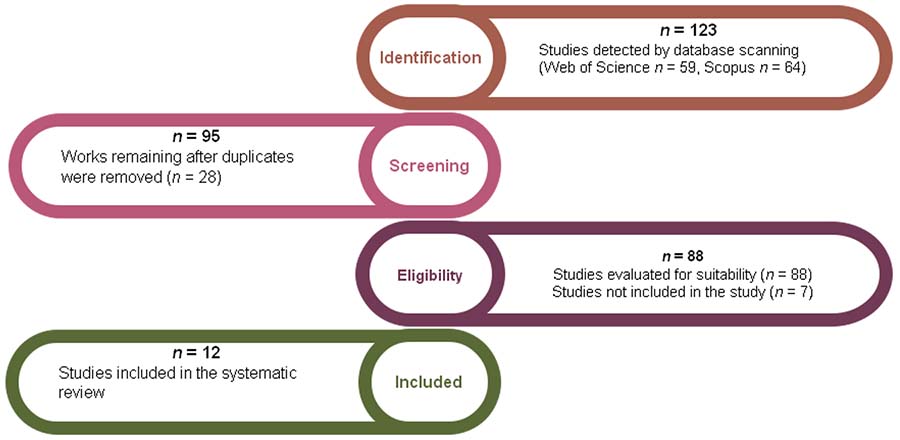
The literature search was performed in the Web of Science and Scopus electronic databases. Additionally, reference lists from the included studies were reviewed during data extraction to identify any relevant studies missed by the electronic searches. The electronic database search covered the period from 2002 to 2024, while the screening of reference lists continued until the end of January 2024. The studies retrieved were imported into Mendeley reference management software, cataloged with key bibliographic information, and exported to an Excel database. An exhaustive search of all relevant publications was conducted following guidelines based on preferred reporting items for systematic reviews and meta-analyses (PRISMA; Liberati et al., 2009; Moher et al., 2015) as depicted in Figure 1.
Figure 1
An Overview of the Search Protocol Following the PRISMA Guidelines
In the PRISMA flowchart presented in Figure 1, during the initial identification phase, two different databases (Web of Science and Scopus) were searched, resulting in a total of 123 studies. The distribution of the studies was as follows: 59 from Web of Science and 64 from Scopus. During the screening phase, duplicate studies were removed, and after eliminating 28 duplicates, 95 studies remained for evaluation. This process was carried out to prevent the inclusion of the same study multiple times.
The article selection process was carefully structured, with clear exclusion criteria and an evaluation procedure to ensure that only relevant and high-quality studies were included. Initially, only full-text, peer-reviewed articles published in English journals were considered for inclusion. Conference proceedings, book chapters, reports, and publications that consisted solely of abstracts were excluded from the review. Additionally, studies that did not provide full-text access were excluded, ensuring that only articles with comprehensive details were considered. The defined time restrictions were applied during the selection process. The evaluation was carried out independently by three researchers, each assessing the articles based on the predefined criteria. In cases where there was disagreement among researchers, a fourth researcher’s opinion was sought to ensure consensus.
After evaluating a total of 95 studies, 7 were excluded because they did not meet the eligibility criteria. As one of the main selection criteria was that the studies must either propose, classify, or analyze an instructional design model within the context of online learning, articles that focused on general pedagogical approaches or face-to-face education models were excluded. These were deemed irrelevant to the specific focus of the review, resulting in the exclusion of 76 studies.
Finally, 12 studies were selected for inclusion in the systematic mapping process (Appendix 1). These studies were deemed to meet the eligibility criteria and were relevant to the research questions. The eligibility criteria were carefully designed to maintain the focus of the review and ensure that it was conducted systematically, drawing on the highest quality studies that were most aligned with the objectives of the research.
This section presents a comprehensive analysis of the findings derived from the systematic mapping of instructional design models within online learning environments. The primary aim of the findings was to address the research questions, elucidating how these models aligned with instructional conditions, desired outcomes, and theoretical trends. Through an in-depth examination of selected models, the findings revealed critical shifts in instructional design paradigms—from rigid, content-driven approaches to adaptive, learner-centered frameworks that prioritize engagement, interaction, and technological integration.
By systematically categorizing and evaluating these models, the findings contributed to a nuanced understanding of the evolving dynamics in online education. This analysis not only highlighted the theoretical underpinnings of each model but also their practical applications, enabling educators and instructional designers to better address the challenges unique to digital learning environments. Furthermore, these insights formed a foundation for advancing theoretical discourse and informing the development of more effective and responsive instructional strategies.
This section provides an overview of various online instructional design models identified through systematic mapping analysis. These models have been developed to meet the diverse needs of online learning environments and offer clear frameworks for effective teaching and learning. Each model was grounded in distinct instructional conditions and theoretical foundations, addressing key elements of the online learning process, such as fostering student engagement and ensuring the efficient use of technology and resources. Our analysis demonstrated how these models used various strategies to enhance learning experiences and meet the evolving needs of modern learners.
The unit-module-topic (U-M-T) approach by Simonson and Schlosser (2004) reviewed best practices in distance education and presented an easy-to-implement framework. It divided a course into units, modules, and topics, each linked to organizational, assessment, content, and teaching guidelines. Similarly, Alonso et al.’s (2005) e-learning instructional design model emphasized individualized learning, guiding educators to create environments that allowed students to progress at their own pace. This model aimed to foster effective learning environments and included seven phases: (a) analysis, (b) design, (c) development, (d) implementation, (e) execution, (f) evaluation, and (g) review.
The T5 model by Salter et al. (2004), which adopted a collaborative-constructivist approach, was intended to help instructors design online courses by incorporating feedback and interaction to encourage active learning. Likewise, the Instructional Design for Online Learning (IDOL) model (Siragusa et al., 2007) included analysis, strategy, development, and evaluation phases, with a focus on developing effective e-learning environments based on surveys of students and teachers. The e-learning system model emphasized the interaction among pedagogy, technology, teaching, and learning, highlighting the importance of feedback and the effective use of technology to enhance learning outcomes (Chen & Chuang, 2008).
The Instructional Design for Electronic Learning (IDEL) model by Zimnas et al. (2009), based on the ADDIE framework, supported educators in creating and managing online courses, focusing on technology and resource reuse to improve both effectiveness and efficiency. The Rapid Instructional Design (RID) model by Kuciapski (2015), in turn, sought to minimize costs and time in developing e-learning courses, promoting resource efficiency while maintaining quality. The E-Learning Engagement Design (ELED) model by Czerkawski and Lyman (2016) was drawn from a comprehensive literature review to enhance student engagement and improve learning performance, linking student engagement directly to effective outcomes.
Models such as Identify, Choose, Create, Engage, Evaluate (ICCEE) by Chen (2016) provided guidance for creating online courseware, emphasizing student engagement and motivation. The Predict, Observe, Explain, Evaluate (POEE) model by Al Mamun et al. (2020), rooted in constructivist learning theories, presented a strategy for self-regulated learning in online environments, with evaluation as a key component. The e-neuroanatomy learning conceptual framework (eNEUROANAT-CF) model by Javaid et al. (2021) offered principles for neuroanatomy e-learning, focusing on cognitive load, motivation, and active learning to improve student comprehension. Lastly, the 6P4C (the 6P's: the participants (learners), platforms used for teaching/learning, a well-developed teaching plan, safe spaces for intellectual play, engaging and inclusive presentations and regular checking of the pulse of learners and the tools being used; 4C's; deliberate fostering of civility, communication, collaboration and community-building) model offered support to nurse educators, addressing communication and interaction issues in e-learning while tackling challenges in collaborative learning and socialization (Byrne, 2023).
It has been observed that the analysis of the online instructional design models provides valuable insights and practical guidance for course designers, educators, and instructional developers. Each model, with its unique approach and theoretical foundation, offers effective tools and strategies for crafting engaging and successful online learning experiences. Together, these models have contributed to the continuous improvement of online education by addressing various critical aspects of the learning process. This section presents the findings regarding the instructional conditions that each of the online teaching design models examined above is based on, within specific contextual situations. The answers to the research questions are detailed systematically, focusing on each model’s instructional conditions, desired outcomes, theoretical foundations, and trends over the years.
Figure 2 provides a systematic overview of the key components emphasized in various instructional design models, focusing on teaching conditions such as (a) learning, (b) learner, (c) pedagogy, (d) organization, (e) tools/materials, (f) teacher, and (g) learning environment. These elements play a significant role in shaping the design of each model.
Figure 2
Instructional Conditions Underlying Selected ID Models
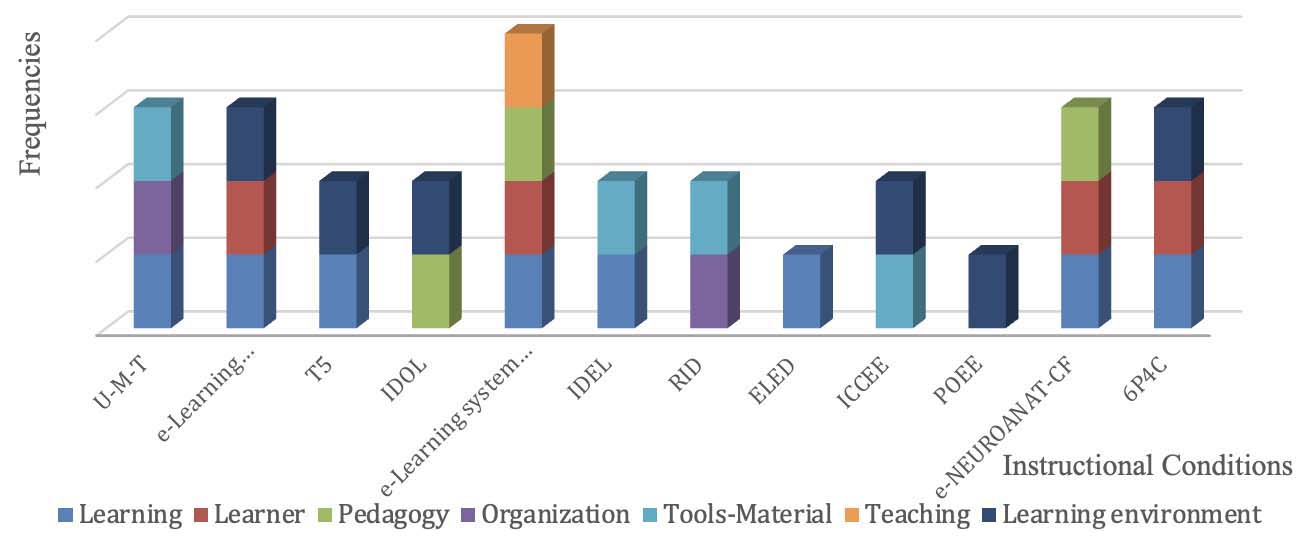
Upon reviewing the data, it was clear that many of the models had adopted a learner-centered approach, placing particular emphasis on the learner and the learning process. Models such as the e-learning instructional design model, e-learning system model, e-NEUROANAT-CF, and 6P4C were particularly notable for prioritizing these two fundamental dimensions. Moreover, some models placed a stronger focus on pedagogical and organizational conditions. For instance, the U-M-T, IDOL, e-learning system, RID, and e-NEUROANAT-CF models highlighted these aspects more prominently, while other models did not prioritize them. In terms of tools and materials, the U-M-T, IDEL, RID, and ICCEE models emphasized the importance of these components in the teaching process. Similarly, the e-learning instructional design, IDOL, T5, ICCEE, POEE, and 6P4C models underscored the significance of the learning environment, recognizing its critical role in e-learning. Lastly, the e-learning system model stood out with its comprehensive approach, integrating multiple teaching conditions into its design. This model advocated for a multidimensional perspective in e-learning, addressing various aspects of the instructional process.
Overall, the analysis of the instructional design models, including the Unit-Module-Topic (U-M-T), e-learning, Tasks, Tools, Tutorials, Topics, Teamwork (T5), IDOL, and others, highlighted a diverse range of approaches and emphases on various teaching conditions. While many models focused on the learner and learning process, others emphasized pedagogical, organizational, and material conditions, underscoring the importance of a comprehensive and multidimensional approach in designing effective e-learning environments. Collectively, these models offered valuable insights for creating engaging and efficient online learning experiences.
As presented in Figure 3, all models except RID, ICCEE, POEE, and 6P4C focused on the dimension of effectiveness. Additionally, the e-learning instructional design, IDEL, and RID models emphasized the dimension of efficiency. On the other hand, the dimension of appeal was the focal point of the ICCEE, e-NEUROANAT-CF, and 6P4C models. The desired outcomes that the ID models focused on are depicted in Figure 3.
Figure 3
The Desired Outcomes Targeted by Selected ID Models
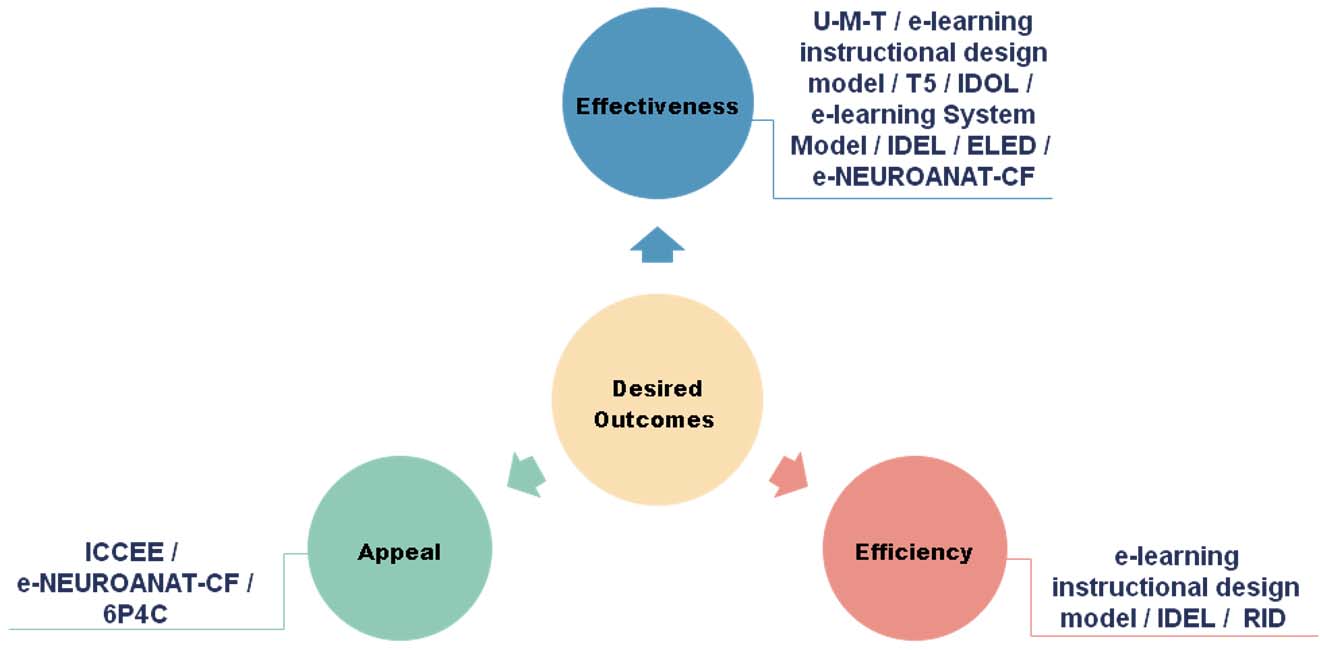
Overall, it can be observed that each model prioritized one or more dimensions differently. In particular, the e-learning instructional design, IDEL, and RID models adopted a multidimensional approach, addressing both effectiveness and efficiency, while the e-NEUROANAT-CF model combined effectiveness and appeal. In contrast, other models offered a more specialized structure by focusing on specific objectives.
As shown in Figure 4, models developed since 2004 have focused on various areas, such as design, presentation, participation, and interaction within the learning and teaching processes. Early models (U-M-T, e-learning instructional design, T5, and e-learning system) primarily concentrated on course design, e-course development, and delivery. However, later models showed both a broader and deeper focus. Models developed after 2020 not only prioritized instructional design but also emphasized learner-centered approaches and pedagogical-psychological aspects like motivation, social learning, and contextualization. For instance, the e-NEUROANAT-CF model addressed cognitive overload, motivation, social learning, feedback, and active learning, offering a comprehensive perspective. Similarly, the 6P4C model focused on interaction, aligning with modern learning approaches.
Some models, such as IDEL, focused on course development and delivery, while RID emphasized time and cost, and ICCEE and POEE highlighted participation, course development, and interaction. The e-NEUROANAT-CF model, with its broad scope, sought to enhance both instructional design and the learning experience, reflecting a shift from content-centered to more holistic learning approaches in e-learning models. The trends focused on by ID models over the years are shown in Figure 4.
Figure 4
Trends ID Models Have Focused on Over the Years
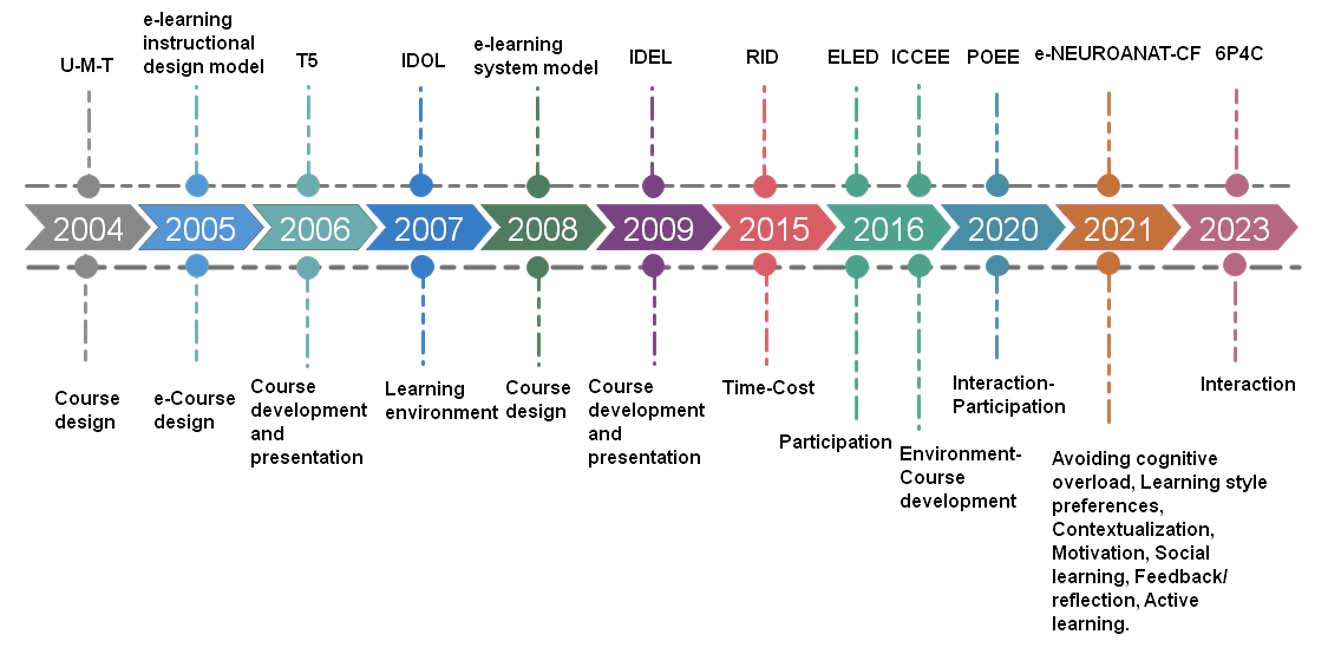
Overall, the data suggested that instructional design models have become more complex and learner-focused over time. Early models concentrated on design and content, while later models placed greater emphasis on aspects like motivation, participation, and social learning.
An examination of Figure 5 reveals that since 2004, a more systematic approach to e-learning design has been adopted, leading to the development of significant models based on various theoretical and methodological perspectives. This reflects the rapid rise in the significance of e-learning technologies and applications in both academic and practical domains. In the development of these models, methods like literature reviews and content analysis have been commonly used (e.g., U-M-T, RID, ELEC, ICCEE). Additionally, learning theories, collaborative-constructivist approaches, and frameworks such as interaction and feedback have been foundational in shaping these models, showcasing the integration of both theoretical and empirical strategies in e-learning design.
Figure 5
The Theories and Methods Behind Selected ID Models
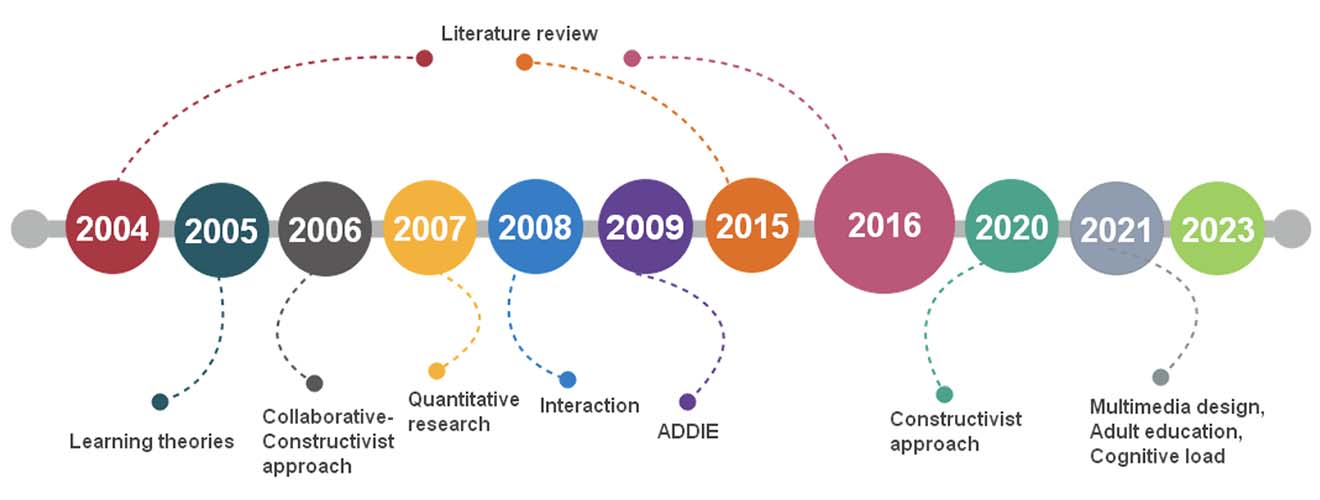
Over the years, instructional design models have evolved, drawing on various theories and methods. Initially rooted in behaviorist approaches, the models have shifted towards constructivist and learner-centered frameworks, integrating social learning, motivation, and cognitive theories. These theoretical foundations have shaped how each model structures and implements learning experiences, reflecting an ongoing adaptation to new research and trends in education.
An examination of how instructional design models have evolved based on teaching conditions revealed that the e-learning system model stood out for addressing many of these conditions, focusing on both the learner and the environmental and pedagogical aspects of the teaching process. This provides a balanced and flexible structure for instructional processes. Models like T5, IDEL, and RID, which focused on specific conditions such as learner needs, pedagogical structures, or material use, enabled the development of customized solutions. However, this focus may risk neglecting other influencing factors in the learning process. While many models emphasized learning and learning environment conditions, the roles of organization and teachers have been less prominent in some models, suggesting that technology has often taken precedence over human factors in online learning design. The rapid expansion of online learning has made the design of learning environments a critical component. Increased attention to these conditions in models like the e-learning instructional design model, T5, and IDOL supported this trend.
Overall, each model prioritized one or more desired outcomes. Notably, models such as the e-learning system model adopted a multidimensional approach, addressing effectiveness, efficiency, and engagement. In contrast, other models focused on specific objectives, offering more specialized structures. This diversity provides flexibility in selecting instructional design models for various learning and teaching contexts. The findings suggested that instructional design models have become more complex and user-centered over time. Early models focused on design and content development, while later models emphasized learner-centered aspects like motivation, engagement, and social learning, indicating an evolution in response to changing needs in e-learning processes.
The methods used in developing these models showed that a wide range of paradigms have been adopted in e-learning design. For instance, the U-M-T (Simonson & Schlosser, 2004) model was based on literature review within a general framework, while the e-learning instructional design model (Alonso et al., 2005) was directly linked to learning theories. The POEE (Al Mamun et al., 2020) model was built on a constructivist approach, reflecting the increasing emphasis on student-centered learning in recent years. The e-NEUROANAT-CF (Javaid et al., 2021) model represented a multidisciplinary approach, combining multimedia design, adult education, and cognitive load theory to address contemporary learning needs. The 6P4C model (Byrne, 2023) emphasized the continuity of innovative approaches.
The findings indicate that online learning design has integrated various disciplines and is continually evolving. Both theoretical models and practical applications have played a significant role in this process. In particular, constructivist and interaction-based approaches became more dominant after the 2010s, reflecting contemporary e-learning design progresses with a student-centered, technology-supported, and active participation-driven approach.
The development of instructional design models has been influenced by changing priorities and evolving pedagogical approaches over time. The theoretical evaluations that have emerged in this process have undoubtedly contributed to the evolution of instructional designs. For instance, Clark and Mayer (2003) emphasized the importance of e-learning tools for effective learning outcomes. Jonassen (2004) highlighted learner-centered environments for better learning. Vygotsky’s (1978) theory stressed the teacher’s role in guiding collaborative learning. Hattie and Timperley (2007) showed the importance of feedback in learning outcomes. Bates (2014) focused on time and cost efficiency in instructional design. Hrastinski (2009) demonstrated that increased engagement improved learning outcomes. Mayer’s (2024) cognitive load theory stressed the need for engaging, interactive learning materials.
Previous review studies on instructional design have predominantly focused on general pedagogical models or traditional educational settings, with limited consideration of the distinct challenges and dynamics of online learning environments (Abuhassna & Alnawajha, 2023; Spatioti et al., 2022). These studies often provided broad categorizations or examined widely recognized frameworks, such as ADDIE, without adequately addressing their adaptation to the complex requirements of virtual learning spaces.
Reigeluth’s ID theory emphasized the importance of considering the conditions of instruction, such as learner characteristics, task characteristics, and environmental characteristics, when designing effective instructional strategies (Bannan-Ritland, 2008; Tennyson, 2010). This aligned with the findings from our review, which suggested that instructional design models have become more complex and user-centered over time, shifting from a focus on design and content development to emphasizing learner-centered aspects like motivation, engagement, and social learning (Kulkarni et al., 2013; Majid & Stapa, 2017; Wang et al., 2022). Our study distinguished itself by systematically mapping instructional design models specifically developed for online leaerning and thus integrated contemporary technological advancements and pedagogical trends. Grounded in Reigeluth’s (2016) instructional design theory, it has presented a nuanced classification that accounted for instructional conditions and desired outcomes unique to digital environments. Furthermore, this research not only evaluated theoretical foundations but also incorporated innovative practices, including learner-centered designs, cognitive load management strategies, and mechanisms for fostering social interaction. By addressing these gaps in innovative practices, this study has contributed a comprehensive, practice-oriented framework aligned with the evolving demands of modern online education.
The e-learning system model, which addressed multiple teaching conditions and focused on both the learner and the environmental as well as pedagogical aspects of the teaching process, reflected Reigeluth’s emphasis on considering the conditions of instruction (Warburton & Perry, 2020). In contrast, models like T5, IDEL, and RID, which focused on specific conditions such as learner needs, pedagogical structures, or material use, aligned with Reigeluth’s (2016) idea of designing instructional strategies based on the specific conditions of the learning environment (Bliuc & Ellis, 2017).
Reigeluth’s theory (2016) also highlighted the importance of considering the desired outcomes of instruction, as reflected in our findings that each instructional design model prioritized one or more desired outcomes (Bliuc & Ellis 2017). The e-learning system model’s multidimensional approach, which addressed effectiveness, efficiency, and engagement, aligned with Reigeluth’s emphasis on considering multiple outcomes (Warburton & Perry, 2022).
The increased attention to learning and learning environment conditions in models like e-learning instructional design, T5, and IDOL supported Reigeluth’s (2016) notion that the design of learning environments is a critical component in the digital age (Bliuc & Ellis, 2017; Surahman et al., 2019; Warburton & Perry, 2022). However, our finding that the roles of organization and teachers are less prominent in some models suggested that technology has often taken precedence over human factors, which may not be fully aligned with Reigeluth’s emphasis on considering all aspects of the instructional conditions (Adnan & Anwar, 2020).
The diversity of methods used in the development of instructional design models, including constructivist and interaction-based approaches, reflected Reigeluth’s (2016) view that instructional design should be informed by a variety of theoretical perspectives and empirical evidence (Ayumba, 2023; Dennick, 2016; Roh, 2015). Staying current with theoretical approaches and integrating new technological advancements, as suggested by the findings, aligned with Reigeluth’s emphasis on the continuous evolution of instructional design theory and practice (Kirkwood, 2014).
The findings from the review largely aligned with Reigeluth’s ID theory (2016), particularly the importance of considering the conditions of instruction, desired outcomes, and need for a multifaceted and evidence-based approach to instructional design. However, the findings also suggested that the role of human factors in online learning design may be an area that requires further attention in the context of Reigeluth’s theory.
In summary, this study examined the diversity and evolution of instructional design models over time, offering a longitudinal perspective rarely explored in prior reviews. By analyzing both foundational and contemporary approaches, it highlighted developmental trajectories and their implications for online learning contexts. Key factors such as (a) learning theories, (b) instructional tools, (c) organizational structures, (d) interaction strategies, and (e) learner motivation were critically evaluated to provide a holistic understanding of instructional design. Moreover, the study integrated emerging pedagogical innovations, such as constructivist strategies, social learning mechanisms, and multimedia-enhanced designs, reflecting the current state and future directions of the field. In doing so, it advanced beyond earlier works, offering a forward-looking and multifaceted perspective on instructional design for online learning environments.
This study’s limitations included the scope of the literature reviewed, data source constraints, and the issue of generalization. The analyzed models may not represent all online instructional design models, and some lesser-known or non-English models may have been missed. The methods used (i.e., literature review and content analysis) were dependent on keywords and database coverage, so results may vary with different search terms or databases. Technological advancements might also impact the relevance of the findings as new models emerge. Additionally, while systematic mapping was used, model categorization may have involved subjective interpretation. A more detailed model comparison would require a different methodology. Recognizing these limitations is essential for accurate interpretation and to guide future research.
Future studies could consider rapid changes in technology and the diverse learning needs of students to examine the design of new models integrated with innovative technologies such as artificial intelligence, augmented reality, and virtual reality. Additionally, exploring the impact of existing models across different disciplines could expand the application areas of these models. For example, studies focused on science, social sciences, or vocational education could provide a more comprehensive evaluation of the models. Furthermore, longitudinal studies examining the long-term effects of online instructional design models on learning outcomes could be conducted. Such research would make valuable contributions to assessing the sustainability and retention of learning. Future research has the potential to bring new perspectives to the field of online instructional design from both theoretical and practical standpoints.
Abuhassna, H., & Alnawajha, S. (2023). Instructional design made easy! Instructional design models, categories, frameworks, educational context, and recommendations for future work. European Journal of Investigation in Health, Psychology and Education, 13(4), 715-735. https://doi.org/10.3390/ejihpe13040054
Adnan, M., & Anwar, K. (2020). Online learning amid the COVID-19 pandemic: Students' perspectives. Journal of Pedagogical Sociology and Psychology, 2(1), 45-51. https://doi.org/10.33902/JPSP.2020261309
Ali, A. (2003). Instructional design and online instruction. TechTrends, 47(5), 42-45. https://doi.org/10.1007/BF02763205
Alonso, F., López, G., Manrique, D., & Viñes, J. M. (2005). An instructional model for Web‐based e‐learning education with a blended learning process approach. British Journal of Educational Technology, 36(2), 217-235. https://doi.org/10.1111/j.1467-8535.2005.00454.x
Al Mamun, M. A., Lawrie, G., & Wright, T. (2020). Instructional design of scaffolded online learning modules for self-directed and inquiry-based learning environments. Computers & Education, 144, 103695. https://doi.org/10.1016/j.compedu.2019.103695
Anderson, L. W., & Krathwohl, D. R. (2001). A taxonomy for learning, teaching, and assessing: A revision of Bloom’s taxonomy of educational objectives. Addison Wesley Longman.
Andrews, D. H., & Goodson, L. A. (1980). A comparative analysis of models of instructional design. Journal of Instructional Development, 3(4), 2-16. https://doi.org/10.1007/BF02904348
Ayumba, E. M. (2023). Medical Semiology Teaching Based on Intelligent eLearning. In Caring is Sharing—Exploiting the Value in Data for Health and Innovation (pp. 482-483). IOS Press. https://doi.org/10.3233/shti230181
Bannan-Ritland, B. (2008). Teacher design research: An emerging paradigm for teachers professional development. In A. E. Kelly, R. A. Lesh, & J. Baek (Eds.), Handbook of design research methods in education: Innovations in science, technology, mathematics and engineering. Mahway, NJ: Taylor & Francis
Bates, T. (2014). A short history of educational technology. https://tonybates.wpengine.com/2014/12/10/a-short-history-of-educational-technology/
Bliuc, A. M., & Ellis, A. (2017). High-quality learning in. Self and Social Identity in Educational Contexts, 211. https://doi.org/10.4324/9781315746913
Bonk, C. (2001). Online teaching in an online world. http://www.publicationshare.com/docs/faculty_survey_report.pdf
Branch, R., & Merrill, M. D. (2012). Characteristics of instructional design models. In R. A. Reiser & J. V. Dempsey (Eds.), Trends and issues in instructional design and technology (pp. 8-16). Prentice Hall.
Byrne, M. (2023). The 6P4C model: An instructional design conceptual model for delivery of e-learning. Journal of Professional Nursing, 45, 1-7. https://doi.org/10.1016/j.profnurs.2022.11.006
Carliner, S. (2004). An overview of online learning (2nd ed.). HRD Press.
Chen, L. L. (2016). A model for effective online instructional design. Literacy Information and Computer Education Journal, 6(2), 2303-2308. https://doi.org/10.20533/licej.2040.2589.2016.0304
Chen, K. C., & Chuang, K. W. (2008). Building an e-learning system model with implications for research and Instructional use. World Academy of Science, Engineering and Technology, 40, 479-481. https://www.researchgate.net/publication/293315764_Building_an_e-Learning_system_model_with_implications_for_research_and_instructional_use
Clark R. C., & Mayer R. E. (2003). e-Learning and the science of instruction. Jossey-Bass.
Clark, R. C., & Mayer, R. E. (2016). e-Learning and the science of instruction (4th ed.). Wiley. https://doi.org/10.1002/9781119239086
Çınar, M. (2012). Examining the design process for Web-based courses: An example of formative research [Doctoral dissertation, Hacettepe University, Ankara].
Czerkawski, B. C., & Lyman, E. W. (2016). An instructional design framework for fostering student engagement in online learning environments. TechTrends, 60, 532-539. https://doi.org/10.1007/s11528-016-0110-z
Dennick, R. (2016). Constructivism: reflections on twenty five years teaching the constructivist approach in medical education. International journal of medical education, 7, 200. https://doi.org/10.5116/ijme.5763.de11
Dijkstra, S., Schott, F., Seel, N. M., & Tennyson, R. D. (2012). Instructional Design: International Perspectives: Volume I: Theory, Research, and Models: volume 1: Solving Instructional Design Problems. Routledge. https://doi.org/10.4324/9780203052778
Edmonds, G. S., Branch, R. C., & Mukherjee, P. (1994). A conceptual framework for comparing instructional design models. Educational Technology Research and Development, 42(4), 55-72. https://doi.org/10.1007/BF02298055
Falowo, R. O. (2007). Factors impeding implementation of Web-based distance learning. AACE Journal, 15(3), 315-338. https://www.researchgate.net/publication/228982721_Factors_impeding_implementation_of_web-based_distance_learning
Fardanesh, H. (2006). A classification of constructivist instructional design models based on learning and teaching approaches (ED491713). ERIC. https://eric.ed.gov/?id=ED491713
Gagne, R. M., Wager, W. W., Golas, K. C., Keller, J. M., & Russell, J. D. (2005). Principles of instructional design. Wiley. https://doi.org/10.1002/pfi.4140440211
Galusha, J. M. (1997). Barriers to learning in distance education. Interpersonel Computing and Technology, 5(3-4), 6-14. https://eric.ed.gov/?id=ED416377
Gustafson K. L., & Branch R. M. (2002). What is instructional design. In R. A. Reiser & J. V. Dempsey (Eds.), Trends and issues in instructional design and technology (pp. 16-25). Prentice Hall.
Hattie, J., & Timperley, H. (2007). The power of feedback. Review of Educational Research, 77(1), 81-112. https://doi.org/10.3102/003465430298487
Hrastinski, S. (2009). A theory of online learning as online participation. Computers & Education, 52(1), 78-82. https://doi.org/10.1016/j.compedu.2008.06.009
James, K. L., Randall, N. P., & Haddaway, N. R. (2016). A methodology for systematic mapping in environmental sciences. Environmental Evidence, 5, 7. https://doi.org/10.1186/s13750-016-0059-6
Javaid, M. A., Schellekens, H., Cryan, J. F., & Toulouse, A. (2021). eNEUROANAT-CF: A conceptual instructional design framework for neuroanatomy e-learning tools. Medical Science Educator, 31, 777-785. https://doi.org/10.1007/s40670-020-01149-y
Jonassen, D. H. (2004). Learning to solve problems: An instructional design guide. Pfeiffer/Jossey-Bass.
Jung H, Kim Y, Lee H, Shin Y. (2019). Advanced instructional design for successive E-learning: based on the Successive Approximation Model (SAM). International Journal on E-Learning, 18(2), 191-204. https://www.researchgate.net/publication/331829482_Advanced_Instructional_Design_for_Successive_E-Learning_Based_on_the_Successive_Approximation_Model_SAM
Kirkwood, A. (2014). Teaching and learning with technology in higher education: blended and distance education needs ‘joined-up thinking’rather than technological determinism. Open Learning: The Journal of Open, Distance and e-Learning, 29(3), 206-221. https://doi.org/10.1080/02680513.2015.1009884
Kuciapski, M. (2015). Effective management of e-learning projects with limited resources supported by the integration of rapid instructional design concept. E-MENTOR, 4(61), 45-54. https://www.doi.org/10.15219/em61.1204
Kulkarni, C., Wei, K. P., Le, H., Chia, D., Papadopoulos, K., Cheng, J.,... & Klemmer, S. R. (2013). Peer and self assessment in massive online classes. ACM Transactions on Computer-Human Interaction (TOCHI), 20(6), 1-31. https://doi.org/10.1145/250505
Li, X. (2009). Review of distance education used in higher education in China. Asian Journal of Distance Education, 7(2), 22-27.
Liberati, A., Altman, D. G., Tetzlaff, J., Mulrow, C., Gøtzsche, P. C., Ioannidis, J. P., Clarke, M., Devereaux, P. J., Kleijnen, J., & Moher, D. (2009). The PRISMA statement for reporting systematic reviews and meta-analyses of studies that evaluate health care interventions: Explanation and elaboration. Annals of Internal Medicine, 151(4), W-65. https://doi.org/10.7326/0003-4819-151-4-200908180-00136
Majid, A. H. A., & Stapa, S. H. (2017). The use of scaffolding technique via Facebook in improving descriptive writing among ESL learners. 3L, Language, Linguistics, Literature, 23(4). http://doi.org/10.17576/3L-2017-2304-07
Mayer, R. E. (2019). Thirty years of research on online learning. Applied Cognitive Psychology, 33(2), 152-159. https://doi.org/10.1002/acp.3482
Mayer, R. E. (2024). The past, present, and future of the cognitive theory of multimedia learning. Educational Psychology Review, 36(1), 8. https://doi.org/10.1007/s10648-023-09842-1
Moher, D., Shamseer, L., Clarke, M., Ghersi, D., Liberati, A., Petticrew, M., Shekelle, P., Stewart, L. A., & Prisma-P Group. (2015). Preferred reporting items for systematic review and meta-analysis protocols (PRISMA-P): 2015 statement. Systematic Reviews, 4, 1-9. https://doi.org/10.1186/2046-4053-4-1
Palloff, R. M., & Pratt, K. (2007). Online learning communities in perspective. In R. Luppicini (Ed.), Online learning communities (pp. 3-15). IAP, Charlotte, N.C.
Reigeluth, C. M. (1983). Instructional design: What is it and why is it. In C. M. Reigeluth (Ed.), Instructional-design theories and models: An overview of their current status (pp. 3-36). Erlbaum.
Reigeluth, C. M. (2016). Instructional theory and technology for the new paradigm of education. In B. H. Khan & M. Ally (Eds.), International handbook of e-learning: Theoretical perspectives and research (Vol. 1, pp. 79-92). Taylor & Francis. https://doi.org/10.4324/9781315760933.
Roblyer, M. D. (2015). Introduction to systematic instructional design for traditional, online, and blended environments. Pearson Education.
Roh, S. Z. (2015). Structural relationships of adult e-learners' teaching presence, self-efficacy toward e-learning, and learning satisfaction: Focused on the mediating effect of learning presence and learning flow. International Information Institute (Tokyo). Information, 18(6(B)), 2759. https://www.proquest.com/openview/115793ef7b6571d30c903eb2f2a08fae/1?cbl=936334&pq-origsite=gscholar
Salter, D., Richards, L., & Carey, T. (2004). The ‘T5’design model: An instructional model and learning environment to support the integration of online and campus‐based courses. Educational Media International, 41(3), 207-218. https://doi.org/10.1080/09523980410001680824
Simonson, M., & Schlosser, C. (2004). We need a plan: An instructional design approach for distance education courses. Distance Learning, 1(4), 29. https://nsuworks.nova.edu/fse_facarticles/171?utm_source=nsuworks.nova.edu%2Ffse_facarticles%2F171&utm_medium=PDF&utm_campaign=PDFCoverPages
Siragusa, L., Dixon, K. C., & Dixon, R. (2007). Designing quality e-learning environments in higher education. Proceedings of ASCILITE Singapore (pp. 923-935). https://citeseerx.ist.psu.edu/document?repid=rep1&type=pdf&doi=0277fc6e2b090ed378bb72471dee5afab728a5f7
Smith, P. L., & Ragan, T. J. (2004). Instructional design. John Wiley & Sons.
Spatioti, A. G., Kazanidis, I., & Pange, J. (2022). A comparative study of the ADDIE instructional design model in distance education. Information, 13(9), 402. https://doi.org/10.3390/info13090402
Surahman, E. (2019). Integrated mobile learning system (imoles) sebagai upaya mewujudkan masyarakat pebelajar unggul era digital [Integrated mobile learning system (imoles) as an effort to create an excellent learning society in the digital era]. Kajian Dan Riset Dalam Teknologi Pembelajaran, 5(2), 50-56. https://journal2.um.ac.id/index.php/jinotep/article/view/6905
Şimşek, A. (2016). Öğretim tasarımı ve modelleri [Instructional design models]. K. Çağıltay & Y. Göktaş. (Ed.). Öğretim teknolojilerinin temelleri: Teoriler, araştırmalar, eğilimler [Fundamentals of instructional technologies: Theories, research, trends] (s. 105-122). Ankara: Pegem Akademi Yayıncılık.
Tennyson, R. D. (2010). Historical reflection on learning theories and instructional design. Contemporary educational technology, 1(1), 1-16. https://dergipark.org.tr/en/download/article-file/252114
van Merriënboer, J. J., & Kirschner, P. A. (2018). 4C/ID in the context of instructional design and the learning sciences. In F. Fischer, C. E. Hmelo-Silver, S. R. Goldman, & P. Reimann (Eds.), International handbook ofthe learning sciences (pp. 169-179). Routledge. https://doi.org/10.4324/9781315617572
Voet, M., Gielen, M., Boelens, R., & De Wever, B. (2018). Using feedback requests to actively involve assessees in peer assessment: effects on the assessor’s feedback content and assessee’s agreement with feedback. European Journal of Psychology of Education, 33, 145-164. https://doi.org/10.1007/s10212-017-0345-x
Vygotsky, L. S. (1978). Mind in society: The development of higher psychological processes (Vol. 86). Harvard University Press.
Wang, C., Mirzaei, T., Xu, T., & Lin, H. (2022). How learner engagement impacts non-formal online learning outcomes through value co-creation: An empirical analysis. International Journal of Educational Technology in Higher Education, 19(1), 32. https://doi.org/10.1186/s41239-022-00341-x
Warburton, S., & Perry, M. (2022). Design for Balance: Addressing Challenges of Safety, Privacy and Identity Management in Online and Hybridised Learning and Teaching Spaces. In Hybrid Learning Spaces (pp. 287-307). Cham: Springer International Publishing. https://doi.org/10.1007/978-3-030-88520-5_16
Zimnas, A., Kleftouris, D., & Valkanos, N. (2009). IDEL: A simple instructional design tool for e-learning. World Academy of Science, Engineering and Technology, 49, 366-372. https://citeseerx.ist.psu.edu/document?repid=rep1&type=pdf&doi=1c98fa37916a7319ea82f4393cd15c43e095e985
| Source | Online ID Model | Instructional conditions | Desired outcomes |
| Al Mamun, M. A., Lawrie, G., & Wright, T. (2020). Instructional design of scaffolded online learning modules for self-directed and inquiry-based learning environments. | POEE | Learning environment | |
| Alonso, F., López, G., Manrique, D., & Viñes, J. M. (2005). An instructional model for Web‐based e‐learning education with a blended learning process approach. | e-Learning instructional design model | Learning Learner Learning environment | Effectiveness Efficiency |
| Byrne, M. (2023). The 6P4C model: An instructional design conceptual model for delivery of e-learning. | 6P4C | Learning Learner Learning environment | Appeal |
| Chen, K. C. & Chuang, K. W. (2008). Building an e-learning system model with implications for research and instructional use. | e-Learning system model | Learning Learner Pedagogy Teaching | Effectiveness |
| Chen, L. L. (2016). A model for effective online instructional design. | ICCEE | Tools/Material Learning environment | Appeal |
| Czerkawski, B. C., & Lyman, E. W. (2016). An instructional design framework for fostering student engagement in online learning environments. | ELED | Learning | Effectiveness |
| Javaid, M. A., Schellekens, H., Cryan, J. F., & Toulouse, A. (2021). eNEUROANAT-CF: A conceptual instructional design framework for neuroanatomy e-learning tools. | eNEUROANAT-CF | Learning Learner Pedagogy | Appeal Effectiveness |
| Kuciapski, M. (2015). Effective management of e-learning projects with limited resources supported by the integration of rapid instructional design concept. | RID | Organization Tools/Material | Efficiency |
| Salter, D., Richards, L., & Carey, T. (2004). The ‘T5’design model: An instructional model and learning environment to support the integration of online and campus‐based courses. | T5 | Learning Learning environment | Effectiveness |
| Simonson, M., & Schlosser, C. (2004). We need a plan: An instructional design approach for distance education courses. | U-M-T | Learning Organization Tools/Material | Effectiveness |
| Siragusa, L., Dixon, K. C., & Dixon, R. (2007). Designing quality e-learning environments in higher education. | IDOL | Pedagogy Learning environment | Effectiveness |
| Zimnas, A., Kleftouris, D., & Valkanos, N. (2009). IDEL: A simple instructional design tool for e-learning. | IDEL | Learning Tools/Material | Effectiveness Efficiency |

The Past and Present of Instructional Design in Online Learning: Trends and Emerging Directions by Adem Özkan, İsak Çevik, Esin Saylan, and Ünal Çakıroğlu is licensed under a Creative Commons Attribution 4.0 International License.