Volume 26, Number 3
Caitlin Watt1, Govind Krishnamoorthy1,2, Sabrina Ong1, and Bronwyn Rees3
1School of Psychology and Wellbeing, University of Southern Queensland, Ipswich Queensland, Australia; 2Manna Institute, Center for Health Research, University of Southern Queensland, Ipswich Queensland, Australia; 3Young Minds Psychology, Ipswich, Queensland, Australia
This study evaluates the feasibility and impact of the Open Online Course (OOC) aimed at enhancing teachers’ trauma-informed care practices during the onset of the COVID-19 pandemic. Educators from two public primary schools in Queensland, Australia, completed the course. Twenty-six educators were interviewed about their experience of the OOC. Thematic analysis revealed the feasibility of the OOC was influenced by participants’ ability to navigate the digital divide and allocate time for learning. The impact of the OOC was reflected in reports of the adoption of trauma-sensitive classroom management techniques amongst participants. The findings highlight that sustaining OOC-based teacher education on trauma-informed practice requires long-term access, integration of trauma-informed strategies, and ongoing support for hyflex and blended learning models. Findings are mapped onto a trauma-informed education framework and inform recommendations for future OOC design and delivery in post-pandemic educational settings.
Keywords: open online courses, trauma-informed practice, implementation, teacher education, thematic analysis
The COVID-19 pandemic disrupted global education, forcing school closures and remote learning, which impacted children’s academic, social, and emotional development, heightening stress and anxiety (Rao & Fisher, 2021). Several students even experienced acute stress disorders due to the prolonged isolation and disruptions to daily routines (Acosta et al., 2021). Additionally, physical distancing and mask wearing further hindered social interactions, intensifying feelings of separation (Kaim et al., 2023). These disruptions underscore the critical need for trauma-informed educational practices to address the heightened emotional and psychological challenges faced by students during and after the pandemic.
Trauma-informed care, as outlined by the Substance Abuse and Mental Health Services Administration (SAMHSA, n.d.), is based on six principles: safety; trust; peer support; collaboration; empowerment; and cultural, historical, and gender sensitivity. These principles are designed to create an environment where individuals feel secure, understood, and supported. Safety refers to the physical and emotional security provided to individuals, ensuring that the environment is non-threatening and predictable. Trustworthiness and transparency emphasize the importance of clear, consistent, and open communication, fostering a sense of reliability and integrity within the organization. Peer support involves leveraging relationships among individuals with shared experiences to promote recovery and support. Collaboration and mutuality focus on equal partnerships, reducing power imbalances between staff and clients and encouraging shared decision making. Empowerment and choice prioritize the strengths of individuals, offering opportunities for them to make choices and take active roles in their care. Finally, cultural, historical, and gender issues acknowledge and address the unique cultural, historical, and gender contexts that influence individuals’ experiences and needs (SAMHSA, n.d.).
Trauma-informed pedagogy integrates these principles into educational settings, focusing on practices such as building strong teacher—student relationships, providing predictable routines, and designing instruction that is sensitive to the diverse needs of students (Brunzell et al., 2018). These practices have been operationalized in programs such as the Healthy Environments and Response to Trauma in Schools (HEARTS; Dorado et al., 2016), the Berry Street Education Model (BSEM, 2019), and the Trauma-Informed Behaviour Support (TIBS; Ayre & Krishnamoorthy, 2020) program. The HEARTS program emphasizes creating trauma-informed, safe, and supportive school environments through prevention and intervention strategies, focusing on building resilience and fostering emotional well-being among students and staff (Dorado et al., 2016). Similarly, the Berry Street Education Mode provides practical frameworks for trauma-informed teaching, highlighting strategies to enhance student engagement, emotional regulation, and academic readiness in diverse educational contexts (Brunzell et al., 2018).
Trauma-informed pedagogy extends beyond individual classroom strategies to encompass a holistic approach that recognizes the interconnectedness of students’ emotional well-being, social dynamics, and academic performance. For example, the TIBS framework advocates for multitiered supports that address not only immediate classroom needs but also systemic factors that influence student outcomes, such as cultural responsiveness and community collaboration (Bellamy et al., 2022). Through this lens, trauma-informed pedagogy becomes a bridge to equity-focused education, addressing the unique and intersecting needs of diverse learners. Pilot studies of the TIBS program in Australian schools, particularly among First Nations students, have demonstrated improvements in academic outcomes and increased trauma-informed practices among educators (Krishnamoorthy et al., 2024; Schimke et al., 2022). Similar approaches have been adopted in tertiary education, where trauma-informed strategies have been embedded into nursing and social work training programs, emphasizing the need for self-care, resilience, and cultural competence (Carello & Butler, 2015). In vocational education, trauma-informed pedagogy has been used to support adult learners from marginalized backgrounds, fostering empowerment and employability (Skiba, 2020; Gavin et al., 2024). These examples highlight the versatility of trauma-informed frameworks across diverse educational contexts. These findings highlight the potential for trauma-informed practices to mitigate the negative effects of the pandemic on students and suggest a pathway for future educational interventions.
The COVID-19 pandemic accelerated the adoption of online teacher education, with virtual professional learning communities and microcredentials efficiently enabling collaboration and skill development (Heap et al., 2020; Terlich et al., 2024). Time management and technical issues limit the effectiveness of digital platforms, underscoring the need for ongoing support in trauma-informed education. Self-paced online courses offer additional benefits, such as the ability for educators to learn at their own pace and on their own schedule (Shaffer et al., 2015). Such courses have been found to be effective when used in combination with in-personal training and other digital training resources. Hybrid-flexible training models—referred to as hyflex—involve participants choosing between attending in-person sessions, participating in live online webinars, or engaging with self-paced modules (Beatty, 2019). This adaptability not only accommodates diverse schedules but also supports equitable access to professional development, particularly for educators balancing work and caregiving responsibilities (Kyei-Blankson et al., 2014). The impact of self-paced courses and hyflex approaches on actual classroom practices remains under-researched (Bowyer at al., 2023; Etchells et al., 2021). This gap in the literature suggests that more empirical studies are needed to assess the effectiveness of self-paced online courses in promoting trauma-informed teaching strategies.
Digital technologies offer significant opportunities to build trauma-informed practice capabilities in educators, though research on their use in K-12 teacher professional development remains limited. Open Online Courses (OOCs) represent a scalable solution, providing high-quality training accessible to educators regardless of location (Lay et al., 2020). However, challenges such as the digital divide, high dropout rates, and the need for culturally responsive content must be addressed to maximize their effectiveness (Shankar et al., 2021). These challenges underscore the importance of integrating SAMHSA’s six principles into OOCs to ensure that the training is not only accessible but also relevant and supportive of educators’ well-being. Addressing these challenges could enhance the efficacy of OOCs and contribute to more widespread adoption of trauma-informed practices in schools.
Designing OOCs for trauma-informed practice training requires careful consideration. Such courses must not only impart knowledge about trauma and its effects but also cultivate the empathy, compassion, and self-awareness necessary for effectively implementing trauma-informed practices (Carello & Butler, 2015; Collier et al., 2022a). Despite these challenges, the potential benefits of using OOCs for trauma-informed practice training are compelling. As educators continue to navigate the psychological impact of the pandemic on students, equipping them with the necessary knowledge and skills is paramount. The scalability and accessibility of OOCs make them a promising tool for achieving this goal, especially in a context where traditional training methods may be less feasible.
Given the limited research on the impact of online trauma-informed practices, the present study seeks to evaluate the experience, influence, and acceptability of the Trauma-Informed Behaviour Support (TIBS) program, an OOC developed by Dr Kay Ayre and Dr Govind Krishnamoorthy, at two public primary schools in Queensland, Australia. A qualitative approach was employed to understand the effect of TIBS training on teachers’ knowledge, attitudes, and pedagogical practices. This study specifically aims to answer the following research questions:
This study employed a qualitative research approach to explore the impact of the TIBS program at two primary schools in Queensland, Australia. The asynchronous TIBS program aimed to enhance educators’ trauma-informed practices during COVID-19, with support from a “program champion”—a teacher who collaborated with program developers to facilitate the implementation. The qualitative design was chosen for its ability to capture the multifaceted experiences of educators as they navigated the complex educational demands during the pandemic.
The TIBS program offered trauma-informed training through four asynchronous online modules (Krishnamoorthy & Ayre, 2021; Table 1), each taking 60 to 90 minutes, with pandemic-related supplementary content. Participants completed the training within three months.
Table 1
Modules and Supplementary Materials for the Trauma-Informed Behaviour Support Program’s Open Online Course
| Module title | Description of module content | Description of COVID-19 supplementary materials |
| Module 1: Understand and Empathize | The module introduces educators to the influence of social determinants and mental health on learning and school functioning. The module provides educators with strategies to understand and respond to basic needs, as well as needs for physical and psychological safety. | Supplementary content (Module: Care) highlights how pandemics have disproportional impacts on marginalized students and their families—with restrictions compounding pre-existing structural inequalities. |
| Module 2: Prevent and Contain | The module introduces educators to the impacts of trauma on brain development and physical arousal. A framework known as the window of tolerance is investigated in relation to managing escalated behaviours. | This section (Module: Calm) provides guidance on the role of health-related anxiety and pandemic-related restrictions on the learning and well-being of students. Guidance is also provided on managing the teacher’s own arousal in response to the pandemic, and its impact on attuning to student mental states. |
| Module 3: Connect and Validate | This module emphasizes the necessity of establishing trust and rapport with vulnerable students. Ideas on the influence of trauma on the experience and responsiveness of positive reinforcement are discussed. | The supplemental content (Module: Connect) provides in this module focuses on the impact of increased stress on students and teachers during the pandemic, and its role in amplifying pre-existing relational vulnerabilities in student—teacher relationships. |
| Module 4: Teach and Reinforce | Educators are introduced to the specific impacts of exposure to traumatic experience on attention, motivation, executive functioning, mood, and engagement. Whole-of-school and classroom-based accommodations for academic and social-emotional learning are introduced. | This section (Module: Coach and Collaborate) introduces teachers to the impact of health messaging during a pandemic and its impact on students with learning difficulties. |
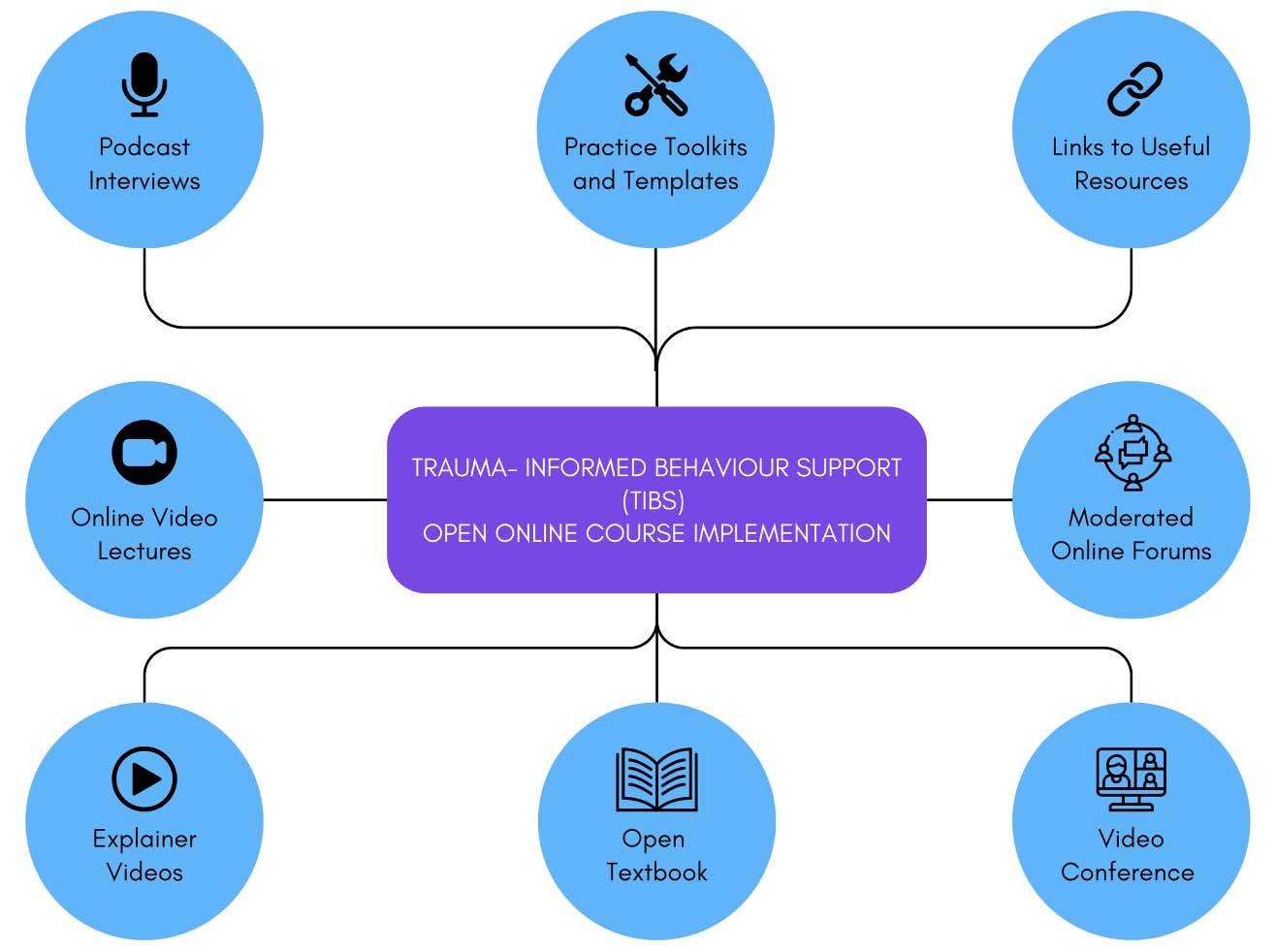
Figure 1 depicts the pedagogical elements and implementation strategies of the TIBS OOC. The course content, which included multimedia elements such as podcasts, toolkits, video lectures, and forums, provided theoretical and practical tools for trauma-informed practices. These components were designed to support implementing these practices in educational settings. For instance, podcast interviews with experts offered insights into trauma-informed education, while practice toolkits provided step-by-step guides for applying these strategies in schools. Online video lectures and explainer videos clarified key concepts, making them accessible and engaging for participants. The course also featured an open textbook that served as the primary reading material, along with video conference support meetings to facilitate real-time discussions and collaborative learning among participants.
Figure 1
Pedagogical Elements and Implementation Strategies of the Trauma-Informed Behaviour Support Program’s Open Online Course
The study was conducted at two public primary schools in Queensland’s West Moreton region, each serving over 1,000 students from Prep (with students typically aged 4 years) to Year 6 (with students aged 11 years) and employing more than 60 teaching staff. Both schools had an Index of Community Socio-Educational Advantage value of 937, below the average school value of 1000, indicating lower educational advantage compared with the national average. The student populations faced significant challenges, with over half of the families in the bottom socio-economic quartile and 52% of students speaking a language other than English at home. These socio-economic factors contributed to developmental vulnerabilities among the students, prompting the schools to implement wide-ranging behavioural interventions to address the social-emotional needs of their students.
The COVID-19 pandemic significantly disrupted education systems worldwide, necessitating a rapid shift to remote learning. In Australia, prolonged school closures risked long-term educational disengagement and persistent disadvantage for vulnerable students (Drane et al., 2020). In early 2020, the first wave of COVID-19 led to the lockdowns and closure of schools across Australia, marking the beginning of a rapid and, for many, chaotic transition to remote learning. Teachers were suddenly tasked with designing and delivering lessons online, often with minimal preparation time and inadequate digital infrastructure. By mid-2020, during the time of the OOC being disseminated, many educators reported high levels of stress and burnout, as the demands and the uncertainty surrounding the pandemic continued. The chronic nature of the disruptions led to a “COVID hangover,” where the lingering effects of the pandemic—including anxiety, decreased student engagement, and challenges in maintaining academic progress (Drane et al., 2020). The educators completed the OOC between March and May 2020. The return to in-person learning in late 2020 and early 2021 did not fully alleviate these issues, as both students and staff struggled to readjust to the classroom environment after months of remote interaction.
The research was conducted following approval from the the University of Southern Queensland (USQ) Human Research Committee (application ID: H21REA031). In-depth interviews were conducted by student researchers with the educators of the participating schools. Online interviews were conducted, and video recorded via the teleconferencing software Microsoft Teams. Interview lengths varied between approximately 30 to 60 minutes, averaging 37 minutes. Upon completion of the interview, each participant was offered to have their transcript sent for review; however, all participants declined. It is important to note that the program developers were not involved in the interviews. The questions were based on trauma-informed education and practices, and the educator’s experience with asynchronous online courses. The appendix details the questions posed to participants to guide the semi-structured interviews. Participation in the program evaluation was voluntary. After completing the course, participants were invited via email to schedule an interview to discuss their experience of the OOC.
Study participants included 26 female primary school educators from the public system. While both male and female educators were invited to participate in the study, only female educators chose to participate in the research. Twenty-two participants held a bachelor’s degree, while four held a Master of Education. The average participant age was 45, with the youngest being 26 years and oldest being 58 years. Teaching experience was diverse, with an average of 11 years working with children and 12 years in the profession. In-depth interviews were conducted with the educators participating in the OOC in June 2020. To ensure that participants had fully completed the course, we used an online analytics platform to track their progress before they were invited to participate in the interviews. Participants were given the option to review their transcripts, but all declined.
Semi-structured interviews used employed as the primary qualitative measurement tool, allowing participants to elaborate on their responses. The interview questions, provided in Appendix A, were designed to explore educators’ experiences with trauma-informed education and the OOC. Interviews commenced with open-ended questions, allowing a balance between planned conversation and deviation toward impromptu points of relevance and specific beliefs of participants (Chafouleas et al., 2019; Shernoff et al., 2017). Supplementary probes were used as required to uncover valuable insights. Interviews were recorded for transcription. Transcriptions were generated using automatic speech recognition function and subsequently reviewed for accuracy by the researchers.
The analysis of the interviews was conducted by student researchers completing the research as part of post-graduate course requirements. To ensure rigour in coding, each student researcher completed coding of the data independently first, followed by a process of working together to develop the final themes and codes. The student researchers were supervised by the lead researchers. Recognizing the inherent power dynamics in the supervisor-student researcher-participant relationship, both the student researchers and supervisor maintained a reflexive stance by documenting our thoughts and decisions in a reflexive journal and engaging in discussions periodically as a team. Discussions of experiences working in and with schools, personal experiences of the educational system and reflections on the impact of COVID-19 informed the reflexive acknowledge in the analysis of the interview data.
Thematic analysis methodology (Braun & Clarke, 2020) was employed to identify common themes. This approach includes five steps: becoming familiar with the data; generating codes; constructing themes; reviewing, defining, and naming themes; and producing the report (Braun et al., 2018). Interviews were uploaded to a secure automatic speech recognition application, where captions were reviewed. Themes were aligned with the research questions. Two coding cycles were conducted: initial coding to interpret commonalities and pattern coding to highlight key themes.
Table 2 displays the four overarching themes that emerged from the analysis: the feasibility of the OOC; trauma-informed pedagogical affordances; impact on instructional practice; and sustaining OOC-based teacher education on trauma-informed practice (see Table 2). These themes reflect both the benefits and the challenges of using OOCs for teacher education during the COVID-19 pandemic. The findings also underscore the complexities of applying trauma-informed practices in schools with a high number of students facing complex psychosocial needs, especially amid the demands and restrictions imposed by the pandemic.
Table 2
Themes and Sub-Themes of Using Open Online Courses (OOCs) for Teacher Education
| Theme | Description | Sub-themes |
| Feasibility of the OOC | The viability of OOCs for teacher education during the pandemic |
|
| Trauma-informed pedagogical affordances | Trauma-informed care considerations in the design and implementation of the OOCs |
|
| Impact on instructional practice | The benefits and drawbacks of technology-mediated learning for implementing trauma-informed practice |
|
| Sustaining OOC-based teacher education on trauma-informed practice | Requirements for long-term access to OOC and integration of trauma-induced practice acquired through OOCs |
|
While teachers recognized the potential of the TIBS OOC to enhance trauma-informed practices, their engagement with the course was affected by their access to technology, their home life demands, and course accessibility.
Teachers reported a significant digital divide among students, families, and even themselves. One teacher remarked, “We had to think outside the box with our lessons. Most families couldn’t afford the latest gadgets, and some kids had never even used a computer before.”
This sentiment was echoed by another participant who noted, “Many of my students didn’t have their own computers or reliable Internet. Some were trying to work on laptops that just didn’t cut it.” Teachers, too, faced challenges adapting to the new technology demands. As one teacher shared, “Honestly, a lot of us were struggling as much as the kids with the tech. Some of us didn’t even know how to set up a Teams meeting, and, well, the Internet was often pretty patchy.” Technical issues often took more time than teaching as one participant noted, “There were days when I spent more time fixing tech problems than actually teaching. It felt like we were always playing catch-up.”
Despite these hurdles, many teachers praised the course’s accessibility and multimedia resources, including videos, podcasts, and practical toolkits. “I liked that the course moved smoothly from one video to the next, and it was helpful that they previewed what was coming up, whether it was a reading or a podcast,” one teacher said, adding, “The podcasts were great—I could listen on my morning walks or while doing [other tasks].”
The pandemic significantly affected participants’ ability to engage with the OOC, particularly for those balancing professional and caregiving responsibilities. All participants were women and mothers, and the disproportionate burden of caregiving during COVID-19 impacted their capacity to focus on the course. One participant explained, “I was juggling teaching my own kids, helping out with online classes, and caring for my elderly dad. I just didn’t have the energy left to sit down and study.” Another teacher shared,
Caring for my family was my top priority. With my husband working long hours at home and my kids home from school, I felt like I was in survival mode ... the course was something I’d try to squeeze in whenever I could.
The intersection of professional and personal responsibilities meant the course often took a backseat to more immediate concerns. This experience highlights the need for professional development opportunities that are not only flexible but also sensitive to the unique challenges faced by educators during times of crisis.
Trauma-informed pedagogical strategies in online courses are increasingly recognized as essential for effectively teaching sensitive topics. Learning about trauma can evoke emotional responses, creating barriers to learning, especially in online environments where interaction is limited.
Videos presenting real-life scenarios through dramatic enactments helped bring the content to life, making it more relatable for teachers. One participant noted, “The videos where the presenters shared their stories made everything more relatable and helped me see how I could apply these strategies with my students.” However, the emotionally charged content sometimes stirred up difficult feelings, as one teacher shared, “I found myself reflecting on my students and feeling a sense of grief for what they might be dealing with at home.”
The course addressed these emotional aspects by providing regular reminders about available support, such as school counsellors and external mental health resources. “There were moments when the content hit close to home, but having the option to stop and talk to the school counsellor was helpful,” one participant explained. This support was crucial for educators dealing with their own trauma or pandemic-related stress, although some expressed a desire for face-to-face discussions to process their reactions. Many teachers also found the course unexpectedly beneficial for personal growth. As one teacher reflected, “Some of the topics really resonated with my own experiences. I realized that some of the strategies we’re taught for students could actually help me deal with my own stress.”
The peer support networks fostered through the OOC were particularly valuable during the pandemic, providing teachers with the necessary support to navigate the rapidly changing educational landscape. Participants appreciated the online forums and weekly Teams meetings, where they could discuss the course and share experiences. One teacher remarked, “I found it helpful to connect with other teachers and brainstorm how to apply what we were learning in our classrooms.”
These discussions extended beyond course content, offering a space to share personal challenges related to the pandemic. As one participant put it, “The forums and Teams meetings weren’t just about the course. It was comforting to know I wasn’t the only one struggling.”
For teachers with family members at higher risk during the pandemic, these peer support networks provided a sense of understanding and solidarity. “My kids have respiratory conditions, and I was really anxious about everything. It helped to hear from another teacher in a similar situation,” one participant shared. The collaborative atmosphere fostered resilience among educators, enabling them to support one another in both professional and personal capacities.
The OOC provided educators with a range of evidence-based strategies for managing virtual classrooms. The supplementary modules guided educators on the use of these strategies in line with trauma-informed care principles, as well as accommodating for the constraints and impacts of the pandemic.
Teachers found proactive strategies, such as setting clear routines and incorporating regular breaks, particularly beneficial. One teacher noted, “I found the idea of setting clear, consistent routines in the virtual classroom useful. It gave the students a sense of stability.” Others appreciated the emphasis on mindful communication, with one participant saying, “Simple things like slowing down, using encouraging language, and being mindful of tone made a big difference.”
However, some teachers felt the course could have provided more guidance on challenging situations. One teacher explained, “The strategies were a great start, but sometimes I wasn’t sure if I was doing enough to support my students emotionally while also meeting curriculum demands.” This comment reflects the tension between academic requirements and social-emotional support, particularly in the online setting. The reduced capacity to attune to children’s emotional states online made this balance even more challenging. As one participant noted, “It was hard to gauge how the kids were feeling or how engaged they were. Sometimes it felt like I was missing the subtle cues I’d pick up on in a physical classroom.”
Intersectionality, which refers to how various social identities (such as race, class, disability, and gender) intersect to create unique experiences of discrimination or privilege, became increasingly relevant during this period. The pandemic highlighted the intersectional challenges faced by students from diverse backgrounds, particularly those with disabilities or other learning needs. Educators became more aware of the multiple, intersecting challenges their students faced. One teacher observed, “It became clear that some students are struggling not just because of the schoolwork, but because they’re dealing with other things at home.”
The shift to online learning provided educators with a window into their students’ home lives, revealing the stressors many children faced. As one teacher reflected, “Seeing students in their home environments was confronting. It highlighted why trauma-informed practices are so necessary.” While the OOC did not explicitly address intersectionality, educators applied trauma-informed practices to better understand and respond to these complexities.
OOC-based teacher education on trauma-informed practice requires an integrated approach that addresses the interconnected challenges faced by the entire school community, recognizing that both student and teacher well-being are linked.
Educators recognized that challenges at home, in the community, and at school shape students’ experiences. One participant noted, “Understanding that students are dealing with challenges at home, in their neighbourhoods, and within the school itself has made me rethink how we approach education.” The pandemic further highlighted the interconnectedness of these factors, revealing how stressors in one area can ripple through others, affecting both students and educators. “COVID-19 has shown how interconnected everything is. The stress from home, the lack of resources, and even our own mental health as teachers all affects our students,” one teacher explained.
Participants expressed a desire for future courses to continue offering flexible training options, combining in-person sessions with online modules, including live Teams meetings. “Having different ways to access the training was really helpful,” one teacher said, adding, “The ability to choose how and when to engage with the content made it easier to fit the training into my schedule.” This flexibility was seen as vital for managing the demands of busy schedules while enhancing engagement with the content. As one participant noted, “With all the challenges we’ve faced during COVID-19, having different ways to access the training was crucial. I hope we continue to have these options.”
This study aimed to evaluate the impact of the TIBS OOC as a professional development tool for educators during the COVID-19 pandemic. Designed to address the heightened stressors faced by students and teachers, the OOC sought to equip educators with the knowledge and skills necessary to implement trauma-informed practices in virtual classrooms. The findings contribute to the broader discourse on trauma-informed education, highlighting the importance of flexibility in delivering such training during times of crisis. The research focused on three primary questions: the feasibility of delivering the OOC during the pandemic, the identification of beneficial and challenging pedagogical elements within the course, and the overall impact of the OOC on instructional practices.
The feasibility of implementing the TIBS OOC as a teacher education tool during the pandemic was influenced by several factors, both challenging and advantageous. The rapid transition to online learning presented challenges such as limited technology access, poor Internet, and varied digital competence among educators (Chisadza et al., 2021). These challenges were particularly pronounced in rural and low-income areas, where the digital divide posed a significant barrier to consistent engagement with the course materials (Garland & Wotton, 2001). Additionally, educators with limited digital literacy faced steep learning curves, often requiring extra time and support to navigate the online environment effectively (Lai & Widmar, 2020).
The pandemic further strained the balance between professional and personal responsibilities, especially for women educators. The increased demands of remote teaching, coupled with the necessity of caring for children or elderly relatives at home, created significant time constraints (Kotowski et al., 2022). This finding aligns with existing research documenting how the pandemic disproportionately impacted women, intensifying their caregiving responsibilities and limiting their capacity to participate in professional development (Stefanova et al., 2021). Despite these barriers, strategies such as providing e-learning training support and fostering online learning communities helped some educators engage with the OOC, though time constraints remained a significant hurdle (Gosselin et al., 2016). The preference for a hybrid approach to professional development, such as the hyflex model, reflects a broader trend toward adaptable learning experiences tailored to individual needs (Kyei-Blankson et al., 2014). This adaptability is particularly relevant for trauma-informed education, as it accommodates the diverse personal and professional demands on teachers, especially those with caregiving responsibilities (Patterson et al., 2020).
Table 3 presents a summary of the implications of the findings for trauma-informed online learning pedagogical design and implementation. The implications link directly to the findings on the OOC’s diverse pedagogical components (e.g., forums, multimedia resources) and to SAMHSA’s six trauma-informed principles. Multimedia resources were a notable strength of the OOC, offering diverse formats such as videos, podcasts, and interactive modules that enhanced engagement and allowed for personalized learning experiences (Al-Aghbari et al., 2021).
Table 3
Trauma-Informed Considerations in Open Online Courses
| Principles for trauma-informed practice | Feasibility issues in access and use of online training | Pedagogical considerations in online training | Transfer of learning to practice | Supporting implementation and ongoing practice |
| Basic needs and safety |
|
|
|
|
| Trustworthiness and transparency |
|
|
|
|
| Peer support |
|
|
|
|
| Collaboration and mutuality |
|
|
|
|
| Empowerment, voice, and choice |
|
|
|
|
| Cultural, historical, and gender issues |
|
|
|
|
The OOC’s trauma-sensitive topics presented emotional challenges, with the virtual format limiting immediate emotional support and leaving teachers to process content alone. This experience is consistent with findings from previous research, which suggests that learning about trauma in isolated settings can heighten stress and emotional fatigue (Luthar & Mendes, 2020). The course design did attempt to mitigate these challenges by integrating exercises to promote reflexivity and providing access to supports both in and outside of the school. However, some participants reported that the online setting still exacerbated feelings of isolation and emotional burden, highlighting the need for more robust, real-time support mechanisms during trauma-informed training (Olson et al., 2021).
Peer support networks within the OOC were another beneficial element, facilitating collaborative learning and offering a space for educators to share experiences and strategies. This aligns with the value of virtual interaction and multidisciplinary collaboration in enhancing the learning experience (Scott et al., 2009). However, the lack of sufficient guidance for addressing complex student needs poses a significant challenge, reflecting broader concerns about the limitations of OOCs in providing comprehensive support for educators (OECD, 2017). Therefore, it is essential for educators to adopt a critical approach when implementing OOCs, ensuring that pedagogical design principles facilitate active collaboration and interaction while addressing the inherent limitations of online learning management systems (Al-Aghbari et al., 2021).
One of the most significant outcomes of the OOC was the integration of trauma-informed strategies into daily instructional practices. Teachers found the course useful for establishing consistent routines and mindful communication, aligning with trauma-informed goals of creating safe, stable environments (Stokes, 2022). This approach was particularly crucial in the virtual classroom, where the lack of physical presence often made it more challenging to gauge student well-being. The OOC also heightened teachers’ awareness of the broader ecological systems influencing student behaviour. Educators began to recognize the complex interplay between home environments, community contexts, and school expectations, particularly during the disruptive events such as the pandemic (Stribley et al., 2025). Supporting students from priority equity groups and those with intersectional identities, particularly during the pandemic and within online learning environments, emerged as a critical area requiring further guidance.
The OOC highlighted gaps in addressing the specific needs of students from culturally and linguistically diverse backgrounds and low socio-economic status families. Research indicates that students from these groups are disproportionately affected by the digital divide and face unique challenges in accessing and engaging with online learning (Evans et al., 2021). Educators noted the importance of explicit guidance on recognizing and responding to potential safety concerns in a virtual context, where traditional signs of distress might be less visible. Teachers also expressed concern over meeting curriculum requirements while addressing the social-emotional needs of their students. This tension is well-documented in the literature, where educators often struggle to balance fostering a supportive, trauma-informed environment with ensuring academic goals are met (Kataoka et al., 2018). While the OOC provided valuable strategies, teachers felt that more guidance was needed on integrating these practices without compromising academic standards.
Informal interviews conducted in June 2024 with six of the participants revealed that they continued to re-visit content from OOC periodically as they integrated trauma-informed practices into their classrooms. All the participants referred to new learnings from revisiting the content to support a growing sophistication in the implementation of these practices. Three educators spoke of personalizing the implementation of trauma-informed practice based on individual student’s strengths, interests, and preferences, while also adapting whole-of-class practices based on mix of academic and well-being needs of the students. These reflections suggest that OOCs can provide a foundation for sustained professional growth, while also being a resource for ongoing professional development and long-term success in supporting students.
The geographic focus on Australia and timing during the COVID-19 pandemic may limit the findings’ generalizability. While these conditions are integral to understanding the impact of trauma-informed practices during a crisis, they also introduce variables that may not be present in more typical educational settings (Collier et al., 2022b; Watson et al., 2022). Future research should consider longitudinal studies to assess the long-term impacts of the TIBS program on both teachers and students. Investigating how trauma-informed practices evolve and sustain effectiveness over time would provide valuable insights into the durability of these interventions. There is also a need for more in-depth exploration of how trauma-informed practices can be integrated into hybrid and online learning environments, particularly as these modalities become more prevalent in post-pandemic education (Harper & Neubauer, 2020). Examining the effectiveness of different scaffolding strategies and support systems in these contexts could further refine the implementation of trauma-informed practices. For example, future research could investigate caregiver perspectives to better understand how home environments intersect with trauma-informed practices in online learning contexts.
This study underscores the importance of trauma-informed practices, especially during crises. It highlights the need for clear routines, supportive environments, and flexible professional development to address diverse student needs. Virtual learning poses challenges in maintaining engagement and support. As educators, policymakers, and researchers continue to navigate the evolving educational landscape, it is imperative to prioritize the development and implementation of trauma-informed practices that are adaptable to diverse contexts. The insights gained from the OOC should inform the creation of flexible, accessible professional development opportunities that meet the varying needs of educators. Collaborative environments are crucial for sustaining trauma-informed practices across educational settings.
Acosta, D., Fujii, Y., Joyce‐Beaulieu, D., Jacobs, K., Maurelli, A. T., Nelson, E. J., & McKune, S. (2021). Psychosocial health of K-12 students engaged in emergency remote education and in-person schooling: A cross-sectional study. International Journal of Environmental Research and Public Health, 18(16), 8564. https://doi.org/10.3390/ijerph18168564
Al-Aghbari, M., Osman, M., & Al-Musawi, A. S. (2021). Contextualizing the global standards for designing online courses: A design-based research approach for developing small private open courses. International Journal of Educational Methodology, 7(1), 1-13. https://doi.org/10.12973/ijem.7.1.1
Ayre, K., & Krishnamoorthy, G. (2020). Trauma informed behaviour support: A practical guide to developing resilient learners. University of Southern Queensland. https://doi.org/10.26192/q5zy0
Ayre, K., Krishnamoorthy, G., Rees, B., & Berger, E. (2022). Balancing the needs of the school community: Implementing trauma-informed behaviour supports in an Australian regional primary school. Australian Journal of Teacher Education (Online), 47(9), 43-61. https://search.informit.org/doi/10.3316/informit.037757678986555
Beatty, B. J. (2019). Hybrid-flexible course design: Implementing student-directed hybrid classes. EdTech Books. https://edtechbooks.org/hyflex
Bellamy, T., Krishnamoorthy, G., Ayre, K., Berger, E., Machin, T., & Rees, B. E. (2022). Trauma-informed school programming: A partnership approach to culturally responsive behavior support. Sustainability, 14(7), 3997. https://doi.org/10.3390/su14073997
Berry Street Education Model (BSEM). (2019). The berry street education model: Empowering education with trauma-informed strategies. Berry Street Victoria Inc.
Bowyer, M., Fein, E. C., & Krishnamoorthy, G. (2023). Teacher mental health literacy and child development in Australian primary schools: A program evaluation. Education Sciences, 13(4), 329. https://doi.org/10.3390/educsci13040329
Braun, V., & Clarke, V. (2020). One size fits all? What counts as quality practice in (reflexive) thematic analysis? Qualitative Research in Psychology, 18(3), 328-352. https://doi.org/10.1080/14780887.2020.1769238
Braun, V., Clarke, V., Hayfield, N., & Terry, G. (2018). Thematic analysis. In P. Liamputtong (Ed.), Handbook of research methods in health social sciences (pp. 1-18). Springer. https://doi.org/10.1007/978-981-10-2779-6_103-1
Brunzell, T., Waters, L., & Stokes, H. (2018). Teaching with strengths in trauma-affected students: A new approach to healing and growth in the classroom. American Journal of Orthopsychiatry, 88(1), 3-9. https://doi.org/10.1037/ort0000048
Carello, J., & Butler, L. D. (2015). Practicing what we teach: Trauma-informed educational practice. Journal of Teaching in Social Work, 35(3), 262-278. https://doi.org/10.1080/08841233.2015.1030059
Chafouleas, S. M., Koriakin, T. A., Roundfield, K. D., & Overstreet, S. (2019). Addressing childhood trauma in school settings: A framework for evidence-based practice. School Mental Health, 11(1), 40-53. https://doi.org/10.1007/s12310-018-9256-5
Chisadza, C., Clance, M., Mthembu, T., Nicholls, N., & Yitbarek, E. (2021). Online and face‐to‐face learning: Evidence from students’ performance during the Covid‐19 pandemic. African Development Review. Supplement: Special Issue on the Impact of COVID-19 on African Economies, 33(51), S114-S125. https://doi.org/10.1111/1467-8268.12520
Collier, S. L., Trimmer, K., & Krishnamoorthy, G. (2022a). Roadblocks and enablers for teacher engagement in professional development opportunities aimed at supporting trauma-informed classroom pedagogical practice. Journal of Graduate Education Research, 3(1), 10. https://scholarworks.harding.edu/jger/vol3/iss1/10
Collier, S., Trimmer, K., & Krishnamoorthy, G. (2022b). Validating the barriers and enablers for teachers accessing professional development of trauma informed pedagogy. Social Sciences & Humanities Open, 6(1), 100332.
Dorado, J., Martínez, M., McArthur, L. E., & Leibovitz, T. (2016). Healthy environments and response to trauma in schools (HEARTS): A whole-school, multi-level, prevention and intervention program for creating trauma-informed, safe and supportive schools. Semantics Scholar. https://www.semanticscholar.org/paper/Healthy-Environments-and-Response-to-Trauma-in-A-Dorado-Mart%C3%ADnez/069867daf55c97e5e5e53a1df31b5f12127d2c76
Drane, C. F., Vernon, L., & O’Shea, S. (2020). Vulnerable learners in the age of COVID-19: A scoping review. The Australian Educational Researcher, 48(4), 585-604. https://doi.org/10.1007/s13384-020-00409-5
Etchells, M. J., Brannen, L., Donop, J., Bielefeldt, J., Singer, E. A., Moorhead, E., & Walderon, T. (2021). Synchronous teaching and asynchronous trauma: Exploring teacher trauma in the wake of Covid-19. Social Sciences & Humanities Open, 4(1), 100197. https://doi.org/10.1016/j.ssaho.2021.100197
Evans, W., Gable, R. A., & Habib, A. (2021). Lessons from the past and challenges for the future: Inclusive education for students with unique needs. Education Sciences, 11(6), 281. https://doi.org/10.3390/educsci11060281
Garland, V. E., & Wotton, S. E. (2001). Bridging the digital divide in public schools. Journal of Educational Technology Systems, 30(2), 115-123. https://doi.org/10.2190/c22f-8tj3-9qpy-0g8v
Gavin, T., Krishnamoorthy, G., Ayre, K., Bryce, I., & Trimmer, K. (2024). Trauma-informed behavior support with youth in flexible learning and vocational education settings: exploring the acceptability of an online trauma-informed education program. Preventing School Failure: Alternative Education for Children and Youth, 68(1), 8-15. https://doi.org/10.1080/1045988X.2022.2132197
Gosselin, K., Northcote, M. T., Reynaud, D., Kilgour, P. W., Anderson, M., & Boddey, C. (2016). Development of an evidence-based professional learning program informed by online teachers’ self-efficacy and threshold concepts. Online Learning, 20(3). https://doi.org/10.24059/olj.v20i3.648
Harper, G. W., & Neubauer, L. C. (2020). Teaching during a pandemic: A model for trauma-informed education and administration. Pedagogy in Health Promotion, 7(1), 14-24. https://doi.org/10.1177/2373379920965596
Heap, T., Thompson, R., & Fein, A. (2020). Designing teacher professional development programs to support a rapid shift to digital. Educational Technology Research and Development, 69(1), 35-38. https://doi.org/10.1007/s11423-020-09863-5
Kaim, A., Lev‐Ari, S., & Adini, B. (2023). Distress following the COVID-19 pandemic among schools’ stakeholders: Psychosocial aspects and communication. International Journal of Environmental Research and Public Health, 20(6), 4837. https://doi.org/10.3390/ijerph20064837
Kataoka, S.H., Vona, P., Acuna, A., Jaycox, L., Escudero, P., Rojas, C., Ramirez, E., Langley, A., & Stein, B.D. (2018). Applying a trauma informed school systems approach: Examples from school community-academic partnerships. Ethnicity & Disease, 28 (Suppl. 2), 417. https://doi.org/10.18865/ed.28.S2.417
Krishnamoorthy, G., & Ayre, K. (2022). Sustaining interdisciplinary work in trauma-informed education. The Australian Educational Researcher, 49(3), 529-546. https://doi.org/10.1007/s13384-021-00483-3
Krishnamoorthy, G., Harrison, E., Ayre, K., Forooshani, S. A., Berger, E., Rees, B.,... & Ulhaq, A. (2024). The impact of trauma-informed practices on academic outcomes of First Nations children: a pilot study of culturally responsive supports in Australia. Humanities and Social Sciences Communications, 11(1), 1-7. https://doi.org/10.1057/s41599-024-03892-8
Kotowski, S., Davis, K. G., & Barratt, C. L. (2022). Teachers feeling the burden of COVID-19: Impact on well-being, stress, and burnout. Work, 71(2), 407-415. https://doi.org/10.3233/wor-210994
Kyei-Blankson, L., Godwyll, F., & Nur-Awaleh, M. (2014). Innovative blended delivery and learning: Exploring student choice, experience, and level of satisfaction in a hyflex course. International Journal of Innovation and Learning, 16(3), 243-252. https://doi.org/10.1504/ijil.2014.064728
Lai, J., & Widmar, N. O. (2020). Revisiting the digital divide in the COVID‐19 era. Applied Economic Perspectives and Policy, 43(1), 458-464. https://doi.org/10.1002/aepp.13104
Lay, C., Allman, B., Cutri, R. M., & Kimmons, R. (2020). Examining a decade of research in online teacher professional development. Frontiers in Education, 5. https://doi.org/10.3389/feduc.2020.573129
Luthar, S. S., & Mendes, S. H. (2020). Trauma-informed schools: Supporting educators as they support the children. International Journal of School and Educational Psychology, 8(2), 147-157. https://doi.org/10.1080/21683603.2020.1721385
Olson, J. R., Lucy, M., Kellogg, M. A., Schmitz, K., Berntson, T., Stuber, J., & Bruns, E. J. (2021). What happens when training goes virtual? Adapting training and technical assistance for the school mental health workforce in response to COVID-19. School Mental Health, 13(1), 160-173. https://doi.org/10.1007/s12310-020-09401-x
Organisation for Economic Cooperation and Development (OECD). (2017). The OECD Handbook for Innovative Learning Environments. Educational Research and Innovation. OECD Publishing. https://doi.org/10.1787/9789264277274-en
Patterson, T. T., DiBella, K. S., Williams, K. G., Gray, K. C., & Culver, M. T. (2020). Redesigning educator preparation programs to integrate trauma-informed teaching practices. Journal of Educational and Social Policy, 7(3), 108-113. https://doi.org/10.30845/jesp.v7n3p9
Rao, N., & Fisher, P. A. (2021). The impact of the COVID‐19 pandemic on child and adolescent development around the world. Child Development, 92(5), e738-e748. https://doi.org/10.1111/cdev.13653
Schimke, D., Krishnamoorthy, G., Ayre, K., Berger, E., & Rees, B. (2022, June). Multi-tiered culturally responsive behavior support: A qualitative study of trauma-informed education in an Australian primary school. In Frontiers in Education (Vol. 7, p. 866266). Frontiers Media SA. https://doi.org/10.3389/feduc.2022.866266
Scott, P., Castañeda, L., Quick, K., & Linney, J. (2009). Synchronous symmetrical support: A naturalistic study of live online peer-to-peer learning via software videoconferencing. Interactive Learning Environments, 17(2), 119-134. https://doi.org/10.1080/10494820701794730
Shaffer, D. W., Nash, P., & Ruis, A. R. (2015). Technology and the new professionalization of teaching. Teachers College Record, 117(12), 1-30. https://doi.org/10.1177/016146811511701205
Shankar, K., Arora, P., & Binz-Scharf, M. C. (2021). Evidence on online higher education: The promise of COVID-19 pandemic data. Journal of Education & Social Policy, 48(2), 242-249. https://doi.org/10.1177/0258042x211064783
Shernoff, E. S., Lekwa, A. J., Reddy, L. A., & Coccaro, C. (2017). Examining teachers’ attitudes and experiences with coaching to inform research-based practice: An iterative developmental design study. Journal of Educational and Psychological Consultation, 27(4), 459-485. https://doi.org/10.1080/10474412.2016.1255850
Skiba, R. (2020). Applications of trauma informed approaches in vocational education and training. Creative Education, 11(4), 488-499. https://doi.org/10.4236/ce.2020.114036
Stefanova, V., Farrell, L., & Latu, I. M. (2021). Gender and the pandemic: Associations between caregiving, working from home, personal and career outcomes for women and men. Current Psychology, 42(20), 17395-17411. https://doi.org/10.1007/s12144-021-02630-6
Stokes, H. (2022). Leading trauma-informed education practice as an instructional model for teaching and learning. Frontiers in Education, 7. https://doi.org/10.3389/feduc.2022.911328
Stribley, L., Krishnamoorthy, G., Dallinger, V., Ma, J., Nielsen, T., Bryce, I., Rees, B., Morse, A., Rogers, M., & Burton, L. (2025). Post-disaster social connectedness in parent-child dyads: A qualitative investigation of changes in coping and social capital of rural Australian families following bushfires. The British Journal of Social Work, 55(1), 5-24. https://doi.org/10.1093/bjsw/bcae123
Substance Abuse and Mental Health Services Administration (SAMHSA). (n.d.). Trauma-informed care. https://www.samhsa.gov/mental-health/trauma-violence/trauma-informed-approaches-programs
Terlich, R., Krishnamoorthy, G., & Fein, E. C. (2024). Supporting the Mental Health Needs of Neurodivergent Students: Outcomes of a Mental Health Literacy Program for Primary School Educators. Education Sciences, 14(10), 1069. https://doi.org/10.3390/educsci14101069
Watson, K., Capp, G., Astor, R. A., Kelly, M. S., & Benbenishty, R. (2022). “We need to address the trauma”: School social workers’ views about student and staff mental health during COVID-19. School Mental Health, 14(4), 902-917. https://doi.org/10.1007/s12310-022-09512-7

Trauma-Informed Education in Open Online Courses: Lessons from Teacher Continuous Professional Development During COVID-19 by Caitlin Watt, Govind Krishnamoorthy, Sabrina Ong, and Bronwyn Rees is licensed under a Creative Commons Attribution 4.0 International License.