Volume 26, Number 3
Jian-Wei Lin1, Hao-Chiang Koong Lin2, and Min-Ling Hung3
1Department of Information Technology and Management, Shih Chien University, Taipei, Taiwan; 2Department of Information and Learning Technology, National University of Tainan, Tainan, Taiwan; 3Teacher Education Center, Ming Chuan University, Taoyuan, Taiwan
This study proposes a teaching model called “flipped classroom combined with group awareness” (FC+GA) to address the challenge of student preparedness in a traditional flipped classroom (FC) model setting. The FC+GA model incorporates group awareness tools, which provide visual information such as statistical tables and graphs, that allow students to see their online learning status along with that of their peers. By using these tools, students can have a better understanding of how well-prepared they are compared with their peers. This knowledge can motivate them to improve their efforts to prepare before class. The study conducted an extended experiment to analyze the effectiveness of the FC+GA model compared with the traditional FC model. The results show that the FC+GA model significantly improves students’ preparation efforts before class and enhances students’ learning outcomes. The study therefore concludes that the FC+GA model can be used as a practical reference and model for instructors preparing to implement flipped classrooms.
Keyword: flipped classroom, group awareness, preparation efforts, learning effectiveness
The flipped classroom (FC) model for teaching has gained significant attention in higher education due to its potential for improved learning outcomes and student satisfaction. However, a major challenge flipped classrooms face is a lack of student preparedness, which can significantly hinder their effectiveness. Currently, few studies exist that address this issue or aim to enhance the learning effect of flipped classrooms.
For FC to be successful, students must actively engage in studying and adequately prepare before classes. Unfortunately, not all students are able to meet these requirements. This challenge is also observed in massive open online courses (MOOCs), where students are expected to attend online classes and complete assignments and exams. Completion rates for MOOCs tend to be quite low: studies conducted by Alraimi et al. (2015) indicated that, on average, less than 10% of students who enroll in MOOCs complete them.
To address the challenge of student preparedness in FC, this study introduces a teaching model called “flipped classroom combined with group awareness” (FC+GA). Additionally, we develop an online FC auxiliary platform to support the implementation of the FC+GA model. Incorporating group awareness (GA) tools into the FC+GA model allows students to access visual information about their peers’ online learning status. This information enables students to compare their own level of preparedness with that of their peers. By providing students with this awareness, teachers can motivate them to actively engage in pre-class preparation, which is crucial for the success of flipped classrooms.
Flipped classrooms are known for their emphasis on active learning and student-centered approaches (Lai & Hwang, 2016; Rasheed et al., 2020). In the FC model, students are required to complete preparatory activities before class; and during class, teachers guide problem-solving, group discussions, and interactive activities (Hao, 2016). Pre-class activities in these classrooms typically involve students watching instructional videos, reading learning materials, or completing quizzes (Akçayır & Akçayır, 2018; Howitt & Pegrum, 2015; Wanner & Palmer, 2015). These activities aim to provide students with foundational knowledge and concepts before coming to class, allowing for more meaningful and engaging discussions during face-to-face sessions. In-class activities in FC focus on collaborative discussions, task completion, problem-solving, and project work (Al-Zahrani, 2015; Akçayır & Akçayır, 2018). This active engagement during class time enables students to apply their pre-class knowledge, explore complex topics, and deepen their understanding through interaction with peers and guidance from the teacher. Overall, the FC model encourages students to take responsibility for their learning by engaging in preparatory activities before class and actively participating in collaborative and problem-solving activities during class. This approach promotes a student-centered learning environment and fosters deeper understanding and application of concepts.
Previous research has consistently demonstrated several positive educational outcomes associated with FC. Silverajah et al. (2022) highlighted various advantages of FC, including improved student engagement, satisfaction, and learning performance. Akçayır and Akçayır (2018) conducted a comprehensive analysis of 71 Social Sciences Citation Index journal papers on FC and found that the most commonly reported benefit was improved student performance compared with conventional learning approaches (Flumerfelt & Green, 2013; Tune et al., 2013). In addition to improved performance, the FC model offers several other advantages. It has been shown to enhance learning satisfaction and motivation (Huang & Hong, 2016) as well as to promote critical thinking skills (van Vliet et al., 2015). FC also fosters creativity and improves problem-solving abilities (Liou et al., 2016). Studies have observed these benefits across various disciplines, including mathematics, social sciences, information science, and the humanities. The FC model has gained popularity and is increasingly implemented in different educational institutions, predominantly at the higher education level, such as in universities (Akçayır & Akçayır, 2018; Al-Samarraie et al., 2020; Divjak et al., 2022).
Compared with traditional teaching methods where the teacher delivers lectures in class, flipped classrooms require students to engage in more thorough pre-class preparation and to manage and monitor their own learning progress (Lai & Hwang, 2016). These requirements are crucial to realizing the benefits of FC. However, numerous studies have pointed out that students’ reactions to and readiness for FC are not universally positive (Akçayır & Akçayır, 2018; Hao, 2016; Wilson, 2013). Forsey et al. (2013) even found that while most students hold a neutral attitude toward flipped classrooms, others express negative attitudes. The main challenges of FC include (1) students’ limited pre-class preparation (Akçayır & Akçayır, 2018; Al-Zahrani, 2015) and (2) teachers’ inability to assess whether students have previewed the learning content, thus hindering effective supervision of student learning (Akçayır & Akçayır, 2018; Fautch, 2015). For instance, Akçayır and Akçayır (2018) highlighted findings from many studies indicating insufficient student preparation, or even lack of preparation, before class. Yoon et al. (2021) further emphasized that while the FC model offers benefits, not all students possess the skills for active and autonomous learning. Consequently, the FC model does not equally benefit all students, presenting a significant challenge (Akçayır & Akçayır, 2018; Sun et al., 2017). As a result, some students may not be adequately prepared for classes, leading to reduced learning efficiency during FC classroom activities (Lai & Hwang, 2016).
GA refers to the ability of students within an online learning environment to gain insights into the learning context of their peers through visual information, such as statistical tables or graphs (Bodemer & Dehler, 2011; Kimmerle & Cress, 2008). GA information includes details about peers’ learning status, effort (e.g., study time), knowledge or expertise, and task or homework outcomes (Lin & Tsai, 2016). By providing objective information about peer learning, GA allows students to observe and compare their progress with others in an unbiased manner (Lin & Tsai, 2016).
Understanding each other’s learning context not only positively impacts learning motivation but also guides students in reflecting on their own learning experiences (DiMicco et al., 2007) and overall learning process and enables them to adjust their strategies for subsequent learning activities (Kitsantas & Dabbagh, 2010). Additionally, GA assistance can help keep students motivated to learn and reduce their feeling of loneliness (Lin et al., 2016). Visual representations of GA information can effectively motivate individuals to be more active and responsible because they explicitly highlight individual effort through social evaluations and comparisons (Kwon, 2020), while a lack of GA information can hinder students’ engagement (Theophilou et al., 2024).
As a result of these positive effects, educators have made extensive use of GA in online assisted collaborative learning environments (Dehler et al., 2011; Janssen et al., 2007; Lin et al., 2022; Sangin et al., 2011). For instance, Liu et al. (2018) proposed an online collaborative writing system with GA functionality that continuously collects and visualizes the writing behaviors and participation intensity of group members, allowing them to compare their participation levels with those of others.
As mentioned earlier, one of the significant challenges in implementing the FC model is the lack of pre-class preparation by students, which hampers the learning efficiency in the classroom (Akçayır & Akçayır, 2018; Al-Zahrani, 2015; Lai & Hwang, 2016; Yoon et al., 2021). However, existing research on FC focuses primarily on the learning outcomes of these classes in various subjects, neglecting the impact of this issue and failing to propose suitable solutions (Rasheed et al., 2020). Motivating students to dedicate more time to pre-class preparation in FC is, therefore, an important issue to address. Future directions should explore innovative mechanisms or technologies to solve this problem (Lai & Hwang, 2016; Sun et al., 2017).
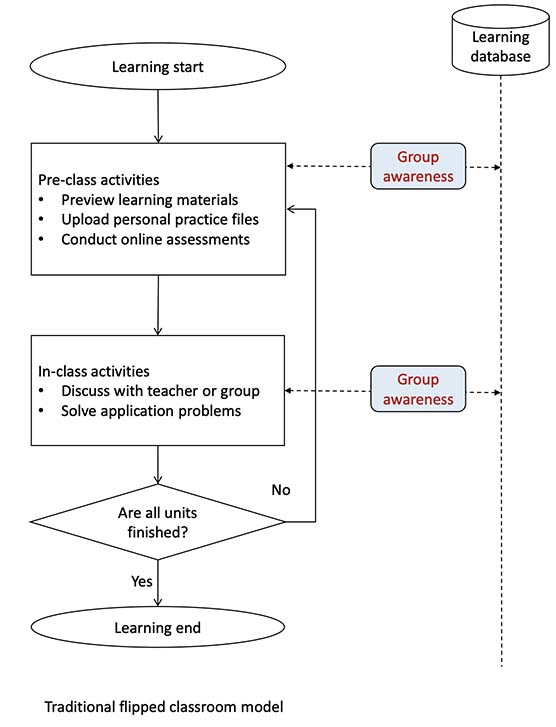
Therefore, we propose an FC+GA model (Figure 1) and develop a corresponding online FC auxiliary platform to facilitate the implementation of the proposed model. The GA information we provide includes students’ online time browsing learning materials, their online assessment scores, and the results of their work. The GA information not only offers students opportunities for self-reflection but also guides their self-regulated learning behavior (Lin et al., 2016; Lin, 2018).
For our study, we selected two classes of students enrolled in the same first-year university course. One of these classes was randomly assigned as the experimental class that would follow the FC+GA process and use the developed system, depicted in Figure 1. The other class served as the control class and followed the traditional FC process using the traditional FC system. Both classes underwent three units of FC teaching, with each unit comprising one FC session per week, resulting in a total of three weeks of repeated FC learning processes. Prior to each session, students in both classes were required to engage in pre-class activities, which included previewing learning materials, completing online assessments, and uploading practice files. During the in-class activities, students in both classes worked on problem-solving tasks provided by the teacher.
This study addressed the following research questions (RQs):
RQ1: Is there a significant difference between the two classes in terms of pre-class learning activities, including online preview time, online assessment scores, and the number of uploaded practice files?
RQ2: Is there a significant difference between the two classes in learning outcomes (i.e., scores on application questions)?
RQ3: After completing the experiment, do the two classes exhibit any differences in their attitudes or perceptions toward the teaching method employed?
Figure 1 depicts the FC+GA model this study proposes. The left side of the figure represents the traditional FC model and the right side represents the integration of GA. The following subsections provide a detailed explanation of the pre-class activities, in-class activities, and the corresponding GA functions provided.
Figure 1
The Proposed Flipped Classroom Combined With Group Awareness (FC+GA) Model
To initiate the learning process for a unit of FC, students are required to engage in pre-class preparation activities, which include previewing learning materials, completing assessments, and uploading practice files. These activities are represented on the left side of Figure 1. Figure 2 illustrates the addition of GA functions, where students can refer to and browse the pre-class learning activities of their group members. The proposed FC+GA system is designed to display information about group members who have completed the pre-class learning tasks for the current unit. This information includes the amount of time they spent on learning, the number of personal practice files they uploaded, and their scores on the online assessment. These GA functions allow students to gain a better understanding of their group members’ engagement and efforts in preparing for the upcoming class.
The use of the GA tool raises privacy concerns, as students’ online learning status and progress become visible to their peers. To address this concern, the GA system this study implements displays students’ accounts without revealing their real names, ensuring that the privacy of individual students is protected while still allowing for the benefits of GA in promoting self-reflection and facilitating peer comparison.
Figure 2
Group Awareness Information About Pre-Class Learning Activities
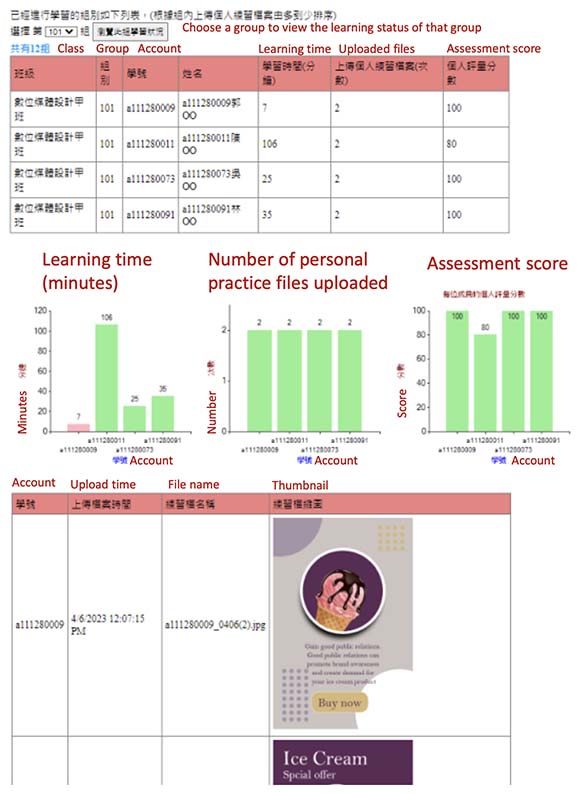
The table in the top part of Figure 2 provides a detailed overview of each group member’s learning activities. This includes information such as (1) the amount of time they spent on learning (in minutes), (2) the number of practice files they have uploaded, and (3) their scores achieved in the online assessment. This table offers a comprehensive view of the engagement and performance of each group member. The charts in the middle part of Figure 2 display three corresponding learning activities. These charts present graphical representations of the three key aspects of learning, allowing students to easily compare and analyze their progress in relation to that of their group members. The visual nature of the charts makes the data easier to access and interpret, helping the students to identify patterns and trends in their learning activities. The table in the bottom part of Figure 2 provides detailed information about the personal practice files uploaded by group members. This information includes the upload time, file names/types, and thumbnail previews of the practice files. This can facilitate knowledge-sharing within the group, as well as inspire ideas for their own learning practices.
In summary, Figure 2 provides a comprehensive representation of the GA information that supports students in tracking their own progress and comparing their performance with their peers and that facilitates the sharing of knowledge within the learning community.
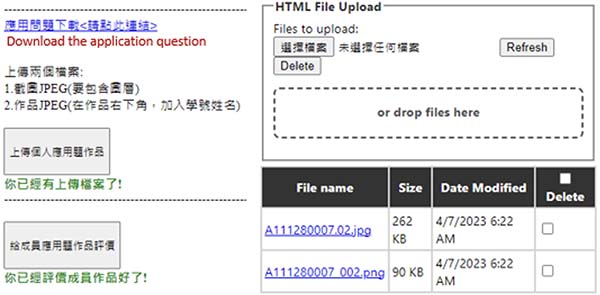
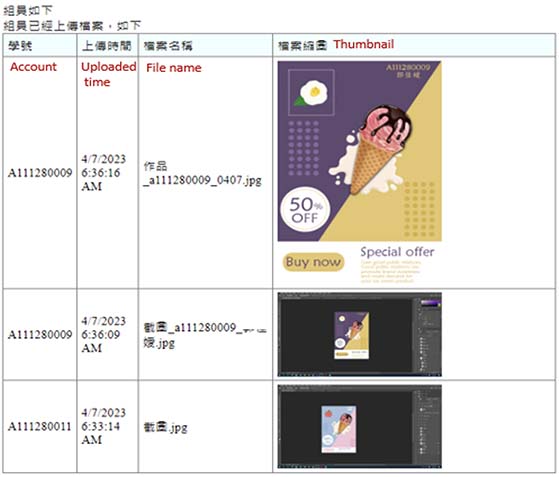
During the in-class session, teachers typically assign an application question for students. In this study, the FC+GA model incorporates GA functions that enable students to refer to their group members’ learning context during in-class learning activities, as depicted in Figure 3.
Panel A of Figure 3 illustrates the function allowing students to upload their individual work on the application question, allowing students to showcase their solutions. Panel B of Figure 3 presents detailed information about the application work uploaded by group members. This includes the upload time and thumbnail previews of the submitted work.
By displaying this information, students can gain insight into the progress and approaches their group members have taken, facilitating collaborative discussion and knowledge-sharing within the group. This also promotes a deeper understanding of different problem-solving strategies, encourages peer learning, provides peer feedback, and facilitates the identification of alternative perspectives and solutions.
By integrating GA functions into the in-class learning activities, the FC+GA model enhances students’ ability to access and leverage their group members’ knowledge and expertise. Providing detailed information about the uploaded work fosters a collaborative learning environment, where students can learn from one another and benefit from multiple perspectives and solutions.
Figure 3
Supportive In-Class Group Awareness Information
A. Students upload personal work on the application problem
B. All uploaded student work is displayed for reference
The course used in the experiment was Digital Image Design. This is a two-credit course, with two lessons scheduled per week. The course primarily covers digital image knowledge and the use of Adobe Photoshop for designing digital images. The first three weeks of the course focus on teaching fundamental image concepts and the operation of Photoshop, providing prerequisite knowledge and skills for the later lessons. These early weeks of the course concentrate on essential concepts and techniques, including image sizing, selection tools, moving and cropping, brightness adjustments, polygonal selections, image deformations, text insertion, stamp tools, layer management, image repair techniques, fill tools, masks, and gradients. During these weeks, both the experimental and the control class followed a traditional teaching approach, with the teacher delivering instructions during class time, followed by students practicing and implementing the learned concepts.
Following the completion of these first three weeks, students taking this course are expected to possess a solid foundation in the subject matter, along with a comprehensive understanding of commonly used functions and special effects necessary for practical applications. Once the students acquire the fundamental knowledge and skills, the subsequent weeks of the course shift to a weekly FC teaching approach, with a specific focus on practical examples, such as the creation of commercial product advertisements.
The experiment was conducted over these subsequent three weeks. One class used the traditional FC model (system), while the other class used the proposed FC+GA model (system). Each week, the course covered one learning unit, focusing on practical design projects. The three practical units covered during the experiment were Designing a Web Banner, Designing a Speech Poster, and Designing an Ice Cream Advertisement. Prior to the start of the experiment, students from both classes registered their accounts and logged into their respective systems. This allowed the systems to store and track students’ online learning behaviors throughout the experiment. Recording their activities on the systems provided students with valuable data for analysis and evaluation purposes.
We began by implementing the first unit FC experiment as follows. The teacher instructed students in both the experimental and control classes to engage in various learning activities prior to the class session. These activities included previewing the learning materials and teaching videos, uploading personal practice files, and completing an online assessment. The content of the online learning videos and teaching materials was identical for both classes. The videos consisted of recordings of the teacher’s screen operations accompanied by audio explanations. Additionally, students were provided with relevant teaching slides that they could download from their respective systems. Students from both classes had the opportunity to practice on their individual computers while they viewed the teaching videos. Upon completion of the self-practice, students from both classes were required to upload their practice files to their respective systems. Students were advised to practice several times to become familiar with the learning content. Subsequently, they had to complete an online assessment of around 10 multiple-choice questions. If a student answered a question incorrectly, the correct answer was provided. Importantly, during this stage, the experimental class had access to the GA function (Figure 2) while the control class did not.
During the in-class session, students in both the experimental class and control class had the opportunity to raise any difficulties or challenges they encountered during the pre-class learning activities and discuss them with the teacher. The teacher provided guidance and clarification to help students overcome these challenges. After the discussion, the teacher presented an advanced practical application question and provided raw materials (such as pictures or text) for the question that were different than the materials used during the pre-class learning. Each student was required to incorporate these specified materials into their application work, showcasing their creativity and imagination. For example, in the Designing a Web Banner unit, the teacher provided specific pictures and texts that students were to include in their application work. Students were encouraged to use these materials as a starting point and then add their own creative elements to design diverse and unique web banners.
Both classes were given approximately 90 minutes to complete the application question. In the FC+GA class, students had the advantage of being able to browse the uploaded work of their group members, as shown in Figure 3. This feature allowed them to learn from and be inspired by their peers and to gain insights from observing different design approaches. In contrast, the students in the FC class did not have access to this feature and relied solely on their own creativity and problem-solving skills. If they were dissatisfied with their work, students in both classes could refine it and re-upload a revised version, replacing the previous submission. In this way, students could continuously improve their design and strive for a better outcome. Before the end of the session, students in both classes had to upload their final work to be graded by the teacher. This marked the completion of the FC teaching for one learning unit.
The FC teaching process for the second and third learning units followed the same structure as described for the first unit above. It is worth noting that some research has suggested that while computer-assisted learning may initially have positive effects, these effects can diminish over time as students become more familiar with the learning system (Wang, 2011; Wang, 2015). To address this concern, this study’s parameters—conducting a three-week experiment consisting of three learning units—allowed for a comprehensive analysis of the learning behavior and its trend changes in both classes under different FC teaching modes (Lin & Tsai, 2016).
Upon completion of the experiment, students of both classes were asked to fill out a questionnaire. The questionnaire, adapted from Lin (2019) with moderate modifications, included four questions that required participants to rate their agreement on a 5-point scale ranging from strongly agree (5) to strongly disagree (1).
A quasi experiment was conducted using approximately 100 students from two first-year classes majoring in information management in an urban university located in northern Taiwan. The students in both classes were aged between 18 and 20 years, had participated in computer courses, and were familiar with computers and the Internet. Each class comprised approximately 50 students. One class was randomly assigned as the experimental class, where the proposed FC+GA model (Figure 1) and online FC+GA system, incorporating all the functions shown in Figure 2 to Figure 3, were implemented. The other class served as the control class and followed traditional FC teaching methods using a traditional online FC system.
Prior to the start of the experiment, both classes were informed that they would undergo three weeks of FC teaching, covering three learning units. The classes were also introduced to their systems. Additionally, the students were instructed to form their own groups, with each group consisting of four to five students.
Throughout the experiment, both classes had unrestricted access to their respective learning systems, and students could analyze each others’ anonymized data. This ensured the privacy of the students and allowed the researchers to collect and examine relevant data to evaluate the effectiveness of the proposed FC+GA model.
The study used normal statistical tests (Kolmogorov-Smirnov test) to determine whether the data were normally distributed (Adalier, 2012); the null hypothesis was that the obtained data were normal. If the null hypothesis was accepted, a t-test was performed. Otherwise, a nonparametric Mann-Whitney U test was performed. SPSS software was used for all data analyses.
For RQ1, the study used two FC systems to record students’ online learning behavior and participation, which encompassed activities such as login frequency, learning duration, uploaded practice files, and assessment results. The necessary data for analyzing RQ1 were extracted from the databases of these systems.
For RQ2, two relevant experts graded the application work submitted by students in both classes. The grading criteria for the student work, with a maximum score of 100, primarily considered the following aspects: (1) overall presentation of the final work (weighted 30%); (2) use of the materials specified by the teacher (35%); and (3) application of the learned methods and techniques (35%), such as image effects, layer styles, and text effects. The final score was determined by averaging the scores given by the two experts. In cases where the difference in final scores exceeded 10 points, the two experts engaged in further discussions to reach a consensus. To ensure students took the assignments seriously, the teacher announced that the assignment grades would be parts of the final grade of the course.
The Kolmogorov-Smirnov test showed that these data were normally distributed (p > 0.05); t-tests were therefore performed. Table 1 presents the statistical results for learning Unit 1. The analysis indicated no significant differences between the FC+GA class and the FC class in terms of the learning preparation activities conducted before class, such as total learning time and the number of logins. Furthermore, the results showed no significant differences in the application scores obtained by the two classes during the in-class activities. Overall, based on the statistical analysis of learning Unit 1, we found no significant differences between the experimental and control classes in terms of learning preparation activities and application scores.
However, in learning Unit 2, the statistical analysis revealed significant differences between the FC+GA class and the FC class in various learning preparation activities. Specifically, compared with the FC class, the FC+GA class demonstrated superior performance in terms of total learning time, the number of logins, the number of practice files uploaded, and assessment scores. Additionally, the FC+GA class achieved a significantly higher application score than that of the FC class during the in-class activities. This suggests that the incorporation of the FC+GA system had a positive impact on students’ engagement and performance in learning preparation activities as well as their ability to apply the learned concepts and skills in the practical application tasks.
Similarly, in learning Unit 3, we observed significant differences between the FC+GA class and the FC class across five learning preparation activities, even including “advance preparation days.” This suggests that the FC+GA class had a higher level of engagement and participation in the learning activities than the FC class. Additionally, the application score in class showed a significant difference between the FC+GA class and the FC class. The FC+GA class achieved a higher score, indicating better performance in applying the learned concepts and skills during the in-class activities.
These results demonstrate that the use of the FC+GA system has a sustained and positive impact on student learning. The FC+GA class consistently outperformed the FC class in terms of learning preparation activities and application scores in learning units 2 and 3. Overall, these findings emphasize the continuous and positive effects of using the FC+GA system on student learning outcomes.
Table 1
Comparison of the Two Classes
| Learning Unit | Learning stage | Variables (learning activities) | Class | Na | M | SD | t-value | p-value |
| Unit 1 | Before class | Total learning (retention) time | FC+GA | 29 | 35.79 | 37.14 | -0.85 | 0.19 |
| FC | 36 | 43.33 | 37.85 | |||||
| Number of logins | FC+GA | 29 | 1.48 | 0.87 | -0.99 | 0.16 | ||
| FC | 36 | 1.69 | 0.82 | |||||
| Advance preparation days | FC+GA | 29 | 1.17 | 0.46 | -1.62 | 0.06 | ||
| FC | 36 | 1.83 | 2.02 | |||||
| Number of practice files uploaded | FC+GA | 29 | 0.42 | 0.08 | -0.43 | 0.33 | ||
| FC | 36 | 0.49 | 0.75 | |||||
| Assessment score | FC+GA | 29 | 26.68 | 38.23 | -0.05 | 0.48 | ||
| FC | 36 | 27.12 | 38.13 | |||||
| In class | Application score | FC+GA | 36 | 59.90 | 41.18 | -1.03 | 0.15 | |
| FC | 43 | 67.45 | 32.02 | |||||
| Unit 2 | Before class | Total learning (retention) time | FC+GA | 44 | 99.06 | 92.46 | 2.06* | 0.02 |
| FC | 39 | 63.39 | 82.41 | |||||
| Number of logins | FC+GA | 44 | 2.52 | 1.88 | 2.29* | 0.01 | ||
| FC | 39 | 1.75 | 1.52 | |||||
| Advance preparation days | FC+GA | 44 | 3.10 | 3.79 | 0.56 | 0.28 | ||
| FC | 39 | 2.71 | 3.16 | |||||
| Number of practice files uploaded | FC+GA | 44 | 1.13 | 1.08 | 2.10* | 0.02 | ||
| FC | 39 | 0.65 | 1.26 | |||||
| Assessment score | FC+GA | 44 | 44.61 | 37.02 | 2.24* | 0.01 | ||
| FC | 39 | 28.61 | 35.30 | |||||
| In class | Application score | FC+GA | 47 | 87.77 | 4.14 | 2.53* | 0.01 | |
| FC | 46 | 83.80 | 9.84 | |||||
| Unit 3 | Before class | Total learning (retention) time | FC+GA | 50 | 74.71 | 65.51 | 2.18* | 0.02 |
| FC | 38 | 43.98 | 77.05 | |||||
| Number of logins | FC+GA | 50 | 1.94 | 1.21 | 2.31* | 0.01 | ||
| FC | 38 | 1.39 | 1.20 | |||||
| Advance preparation days | FC+GA | 50 | 1.98 | 1.33 | 3.62* | 0.00 | ||
| FC | 38 | 1.14 | 1.00 | |||||
| Number of practice files uploaded | FC+GA | 50 | 1.98 | 1.60 | 3.03* | 0.00 | ||
| FC | 38 | 1.04 | 1.54 | |||||
| Assessment score | FC+GA | 50 | 63.20 | 39.07 | 2.78* | 0.00 | ||
| FC | 38 | 40.01 | 45.32 | |||||
| In class | Application score | FC+GA | 46 | 90.26 | 4.67 | 2.21* | 0.01 | |
| FC | 45 | 88.11 | 4.68 |
a N represents the number of students who used their systems; the FC+GA class had a total of 52 students and the FC class had a total of 51 students, but not all of the students used their systems.
The Kolmogorov-Smirnov test showed that these data were normally distributed (p > 0.05), and t-tests were therefore performed. Table 2 presents the results of the questionnaire. In regard to questions 1 and 2, the findings show that students in both classes shared the perspective that the FC approach is more effective than traditional learning, but they also acknowledged that it induces more stress.
Concerning questions 3 and 4, the findings show that students in the FC+GA class had a better understanding of their group members’ learning progress and were more influenced by group members than students in the FC class were. This suggests that the FC+GA approach improved comprehension of group dynamics and increased influence from peers in the learning process, as reported by students in the FC+GA class.
Table 2
Questionnaire Results
| Class | Na | M | SD | t-value | p-value | |
| Was flipped learning more effective than traditional learning? | FC+GA | 48 | 4.15 | 0.74 | 0.28 | 0.39 |
| FC | 43 | 4.09 | 1.04 | |||
| Did you feel more stress with flipping learning than with traditional learning? | FC+GA | 48 | 3.63 | 1.16 | 0.74 | 0.23 |
| FC | 43 | 3.44 | 1.18 | |||
| Did flipped learning online system help you understand internal members’ learning status? | FC+GA | 48 | 4.06 | 0.83 | 3.69* | 0.00 |
| FC | 43 | 3.33 | 1.06 | |||
| During flipped learning, were you more likely to be influenced by group members? | FC+GA | 48 | 3.71 | 0.96 | 2.16* | 0.02 |
| FC | 43 | 3.21 | 1.22 |
a N represents the number of valid questionnaires.
In Unit 1, students in both classes were novices at using their respective systems. Both classes were physically exploring their systems for the first time. Notably, only 29 of 52 students (55%; Table 1) in the FC+GA class and 36 of 51 (70%) in the FC class participated in the preparation activities offered by their respective systems. Therefore, it is very likely that less than 55% of the students in the FC+GA class had access to the information provided by GA. Consequently, no significant differences are seen between the two classes in terms of all pre-class learning activities (Unit 1 in Table 1), such as total learning time and number of practice files uploaded.
However, after Unit 1, students became aware that they could see the preparation efforts of other members and that their own efforts were also visible to others (as shown in Figure 2). This awareness likely spread through word-of-mouth or social media messages shared among peers in the class. As a result, in Unit 2, 44 out of 52 (85%; Table 1) of students in the FC+GA class participated in preparation activities, while 39 out of 51 (76%) of students in the FC class participated in preparation activities. The participation rate in the FC+GA class increased from 55% to 85%, while in the FC class it increased from 70% to 76%. This indicates that the boost in participation in the FC+GA class was greater than that in the FC class. In addition, the two classes in Unit 2 show significant differences in terms of pre-class learning preparation activities, with the exception of “advance preparation days.” Specifically, the FC+GA class exhibits significantly higher total learning time, number of logins, number of practice files uploaded, and assessment scores compared with the FC class (Unit 2 in Table 1). Because the students in the FC+GA class engaged in more comprehensive learning preparation before class than the students the FC class, the FC+GA class also achieved significantly higher “application scores” than the FC class.
The phenomenon observed in Unit 2, as described above, continued into Unit 3. Additionally, during Unit 3, we observed significant differences between the two classes in terms of all learning preparation activities conducted before class, including “advance preparation days.” Specifically, in the FC+GA class, the participation rate remained high, with an increased awareness of the visibility of preparation efforts among peers. This led to continued active engagement, as evidenced by higher total learning time, number of logins, number of practice files uploaded, and assessment scores compared with the FC class (Unit 3 in Table 1). These differences are statistically significant, indicating a consistent pattern of more thorough learning preparation in the FC+GA class throughout Unit 3.
In a previous study, Lin and Lai (2019) emphasized the significance of extended experiments in uncovering users’ evolving patterns of hands-on behavior as they become more acquainted with the system’s functions. In our study, a similar pattern emerges as students in the FC+GA class gradually familiarized themselves with the system, resulting in an increased inclination to engage in learning preparation activities for units 2 and 3. Notably, the students in the FC+GA class also expressed agreement with the notion that they gained a better understanding of their peers’ learning context and acknowledged being influenced by it (Table 2). This suggests that the introduction of GA tools allows for a more comprehensive understanding of the collective learning progress within the class, fostering a positive impact on individual students’ learning behaviors and outcomes. Therefore, our research findings support the viewpoint proposed by Lin and Lai (2019), emphasizing the importance of conducting extended experiments to capture users’ evolving behavior over time.
The availability of GA information allows students to view the impressive work of their peers, which potentially triggers social comparison among them. In other words, students are motivated to outperform their peers and strive for excellence (Lin et al., 2022). This creates a positive cycle where students are inspired by their peers’ achievements, leading them to diligently prepare for the subsequent FC learning sessions. The motivation to outperform and the drive to excel fosters healthy competition and a continuous cycle of improvement in class. Students become motivated to put in more effort and dedication, driven by the desire to surpass their peers and achieve their own academic goals (Lin & Tsai, 2016).
In contrast, students who are ill-prepared and do not engage in sufficient learning preparation activities become aware that their lack of preparation is noticeable to their peers (Lin et al., 2016). During the class, they often find themselves needing to seek help from others to solve application questions. These experiences of relying heavily on others and experiencing feelings of awkwardness should serve as a catalyst for them to recognize the importance of adequately preparing for the next FC learning session. The realization that their peers are more prepared and capable can create a sense of discomfort and the desire to avoid similar situations in the future. This discomfort can motivate students to reflect on their own learning habits and take the necessary steps to improve their preparation, ensuring that they are better equipped to actively participate in the next FC learning session.
Thus, integrating GA into MOOCs is expected to boost learner preparedness, motivation, and collaboration while reducing dropout rates. GA visualizations (e.g., forum participation, quiz completion) help learners find study partners, fostering knowledge-sharing and group participation. GA-based reminders (e.g., “You are behind X% of your peers”) keep learners on track, creating more interactive and effective large-scale online learning experiences.
Notably, GA tools provide students with insight into their peers’ achievements, fostering motivation and healthy competition. However, this transparency may also lead to stress, particularly for those who feel they are falling behind. Struggling students may experience increased anxiety due to performance pressures and constant peer comparisons, which can undermine self-confidence. To mitigate these negative effects, future GA tools can add individualized progress tracking, encourage self-reflection, and provide constructive feedback (e.g., You have improved since last time—keep up the good work!). Creating a supportive and balanced learning environment can help maximize motivation while minimizing stress.
This study introduced the FC+GA teaching model, which combines GA tools with the traditional FC approach. To support this model, we developed an online auxiliary platform, also called FC+GA. The GA tools incorporated in FC+GA enable students to gain insights into their peers’ online learning progress through visual representations such as statistical tables or graphs.
The results of the extended experiment conducted in this study reveal that the FC+GA model significantly enhances students’ level of preparation before class, thereby leading to improved learning outcomes compared with the traditional FC approach. These findings highlight the practical value and efficacy of the proposed FC+GA model, making it a valuable resource for instructors seeking to implement FC in their teaching practices.
However, implementing the proposed FC+GA model and maintaining the online platform may require additional efforts, including time, funding, and technical support. While the FC+GA model and online platform offer several benefits, it is important to acknowledge their limitations. The proposed teaching model is more suitable for courses where the learning process, assessment results, or learning outcomes can be recorded on a computer. It is well-suited for general courses such as information technology (multimedia courses, programming languages), business management courses, and applied foreign language courses. However, it may be less suitable for courses that require specific equipment or instruments, such as culinary arts courses or courses involving electronic or mechanical equipment. This is because the proposed FC+GA model currently cannot record students’ hands-on activities and outcomes with actual instruments or equipment. Nevertheless, if, in the future, the possibility arises of integrating the equipment or instruments with computers to record students’ hands-on activities and outcomes, and if this data could be seamlessly integrated with the provided FC+GA model, this would warrant further research.
However, it is important to acknowledge that students have diverse learning styles and preferences. Consequently, not all students may thrive in this particular learning environment. Future research can explore how the FC+GA model impacts students with diverse learning styles and preferences, enabling further refinements to better support all learners. Additionally, since the experiment covered only three learning units, which may be insufficient to determine the long-term sustainability of its positive effects, further longitudinal research is needed to explore this issue.
Adalier, A. (2012). Turkish and English language teacher candidates’ perceived computer self-efficacy and attitudes toward computer. Turkish Online Journal of Educational Technology-TOJET, 11(1), 192-201. https://eric.ed.gov/?id=EJ976583
Akçayır, G., & Akçayır, M. (2018). The flipped classroom: A review of its advantages and challenges. Computers & Education, 126, 334-345. https://doi.org/10.1016/j.compedu.2018.07.021
Alraimi, K. M., Zo, H., & Ciganek, A. P. (2015). Understanding the MOOCs continuance: The role of openness and reputation. Computers & Education, 80, 28-38. https://doi.org/10.1016/j.compedu.2014.08.006
Al-Samarraie, H., Shamsuddin, A., & Alzahrani, A. I. (2020). A flipped classroom model in higher education: A review of the evidence across disciplines. Educational Technology Research and Development, 68(3), 1017-1051. https://doi.org/10.1007/s11423-019-09718-8
Al-Zahrani, A. M. (2015). From passive to active: The impact of the flipped classroom through social learning platforms on higher education students’ creative thinking. British Journal of Educational Technology, 46(6), 1133-1148. https://doi.org/10.1111/bjet.12353
Bodemer, D. & Dehler, J. (2011). Group awareness in CSCL environments. Computers in Human Behavior, 27, 1043-1045. https://doi.org/10.1016/j.chb.2010.07.014
Dehler, J., Bodemer, D., Buder, J., & Hesse, F. W. (2011). Guiding knowledge communication in CSCL via group knowledge awareness. Computers in Human Behavior, 27(3), 1068-1078. https://doi.org/10.1016/j.chb.2010.05.018
DiMicco, J., Hollenbach, K., Pandolfo, A., & Bender, W. (2007). The impact of increased awareness while face-to-face. Human-Computer Interaction, 22(1), 47-96. https://www.tandfonline.com/doi/abs/10.1080/07370020701307781
Divjak, B., Rienties, B., Iniesto, F., Vondra, P., & Žižak, M. (2022). Flipped classrooms in higher education during the COVID-19 pandemic: findings and future research recommendations. International Journal of Educational Technology in Higher Education, 19(1), 9. https://doi.org/10.1186/s41239-021-00316-4
Fautch, J. M. (2015). The flipped classroom for teaching organic chemistry in small classes: Is it effective? Chemistry Education: Research and Practice, 16(1), 179-186. https://doi.org/10.1039/C4RP00230J
Flumerfelt, S., & Green, G. (2013). Using lean in the flipped classroom for at risk students. Educational Technology & Society, 16(1), 356-366. https://www.jstor.org/stable/jeductechsoci.16.1.356
Forsey, M., Low, M., & Glance, D. (2013). Flipping the sociology classroom: Towards a practice of online pedagogy. Journal of Sociology, 49(4), 471-485. https://doi.org/10.1177/1440783313504059
Hao, Y. (2016). Exploring undergraduates’ perspectives and flipped learning readiness in their flipped classrooms. Computers in Human Behavior, 59, 82-92. https://doi.org/10.1016/j.chb.2016.01.032
Howitt, C., & Pegrum, M. (2015). Implementing a flipped classroom approach in postgraduate education: An unexpected journey into pedagogical redesign. Australasian Journal of Educational Technology, 31(4), 458-469. https://doi.org/10.14742/ajet.2439
Huang, Y. N., & Hong, Z. R. (2016). The effects of a flipped English classroom intervention on students’ information and communication technology and English reading comprehension. Educational Technology Research & Development, 64, 175-193. https://doi.org/10.1007/s11423-015-9412-7
Janssen, J., Erkens, G., Kanselaar, G., & Jaspers, J. (2007). Visualization of participation: Does it contribute to successful computer-supported collaborative learning? Computers & Education, 49(4), 1037-1065. https://doi.org/10.1016/j.compedu.2006.01.004
Kimmerle, J. & Cress, U. (2008). Group awareness and self-presentation in computer-supported information exchange. International Journal of Computer-Supported Collaborative Learning, 3, 85-97. https://doi.org/10.1007/s11412-007-9027-z
Kitsantas, A., & Dabbagh, N. (2010). Learning to learn with integrative learning technologies (ILT): A practical guide for academic success. Information Age Publishing.
Kwon, K. (2020). Student-generated awareness information in a group awareness tool: What does it reveal? Educational Technology Research and Development, 68(3), 1301-1327. https://doi.org/10.1007/s11423-019-09727-7
Lai, C. L., & Hwang, G. J. (2016). A self-regulated flipped classroom approach to improving students’ learning performance in a mathematics course. Computers & Education, 100, 126-140. https://doi.org/10.1016/j.compedu.2016.05.006
Lin, J. W. (2018). Effects of an online team project-based learning environment with group awareness and peer evaluation on socially shared regulation of learning and self-regulated learning. Behaviour & Information Technology, 37(5), 445-461. https://doi.org/10.1080/0144929X.2018.1451558
Lin, J. W. (2019). The impact of team‐based learning on students with different self‐regulated learning abilities. Journal of Computer Assisted Learning, 35(6), 758-768. https://doi.org/10.1111/jcal.12382
Lin, J. W. (2022). Hybrid online learning for a software practice course and how it affects students with different self-regulated learning levels. Australasian Journal of Educational Technology, 38(5), 87-99. https://doi.org/10.14742/ajet.7678
Lin, J. W., & Lai, Y. C. (2019). User acceptance model of computer-based assessment: Moderating effect of self-regulation. Australasian Journal of Educational Technology, 35(1), 163-176. https://doi.org/10.14742/ajet.4684
Lin, J. W. *, Lai, Y. C., Lai, Y. C., & Chang, L. C. (2016). Fostering self-regulated learning in a blended environment using group awareness and peer assistance as external scaffolds. Journal of Computer Assisted Learning, 32(1), 77-93. https://doi.org/10.1111/jcal.12120
Lin, J. W., Lin, H. C. K., & Chen, H. R. (2022). Developing an e-learning platform capable of being aware of self-regulated learning behaviors of role models. IEEE Transactions on Learning Technologies, 15(6), 697-708. https://doi.org/10.1109/TLT.2022.3200398
Lin, J. W. & Tsai. C. W. (2016). The impact of an online project-based learning environment with group awareness support on students with different self-regulation levels: an extended-period experiment. Computers & Education, 99, 28-38. https://doi.org/10.1016/j.compedu.2016.04.005
Liou, W.-K., Bhagat, K. K., & Chang, C.-Y. (2016). Beyond the flipped classroom: A highly interactive cloud-classroom (HIC) embedded into basic materials science courses. Journal of Science Education and Technology, 25(3), 460-473. https://doi.org/10.1007/s10956-016-9606-8
Liu, M., Liu, L., & Liu, L. (2018). Group awareness increases student engagement in online collaborative writing. The Internet and Higher Education, 38, 1-8. https://doi.org/10.1016/j.iheduc.2018.04.001
Rasheed, R. A., Kamsin, A., Abdullah, N. A., Kakudi, H. A., Ali, A. S., Musa, A. S., & Yahaya, A. S. (2020). Self-regulated learning in flipped classrooms: A systematic literature review. International Journal of Information and Education Technology, 10(11), 848-853. https://doi.org/10.18178/ijiet.2020.10.11.1469
Sangin, M., Molinari, G., Nüssli, M. A. & Dillenbourg P. (2011). Facilitating peer knowledge modeling: Effects of a knowledge awareness tool on collaborative learning outcomes and processes. Computers in Human Behavior, 27(3), 1059-1067. https://doi.org/10.1016/j.chb.2010.05.032
Silverajah, V. G., Wong, S. L., Govindaraj, A., Khambari, M. N. M., Rahmat, R. W., & Deni, A. R. M. (2022). A systematic review of self-regulated learning in flipped classrooms: Key findings, measurement methods, and potential directions. IEEE Access, 10, 20270-20294. https://doi.org/10.1109/ACCESS.2022.3143857
Sun, J. C.-Y., Wu, Y.-T., & Lee, W.-I. (2017). The effect of the flipped classroom approach to OpenCourseWare instruction on students’ self-regulation. British Journal of Educational Technology, 48(3), 713-729. https://doi.org/10.1111/bjet.12444
Theophilou, E., Sanchez-Reina, R., Hernandez-Leo, D., Odakura, V., Amarasinghe, I., & Lobo-Quintero, R. (2024). The effect of a group awareness tool in synchronous online discussions: Studying participation, quality and balance. Behaviour & Information Technology, 43(6), 1149-1163. https://doi.org/10.1080/0144929X.2023.2200543
Tune, J., Sturek, M., & Basile, D. (2013). Flipped classroom model improves graduate student performance in cardiovascular, respiratory, and renal physiology. Advances in Physiology Education, 37(4), 316-320. https://doi.org/10.1152/advan.00091.2013
van Vliet, E. A., Winnips, J. C., & Brouwer, N. (2015). Flipped-class pedagogy enhances student metacognition and collaborative-learning strategies in higher education but effect does not persist. CBE-Life Sciences Education, 14(3), 1-10. https://doi.org/10.1187/cbe.14-09-0141
Wang, A. I. (2015). The wear out effect of a game-based student response system. Computers & Education, 82, 217-227. https://doi.org/10.1016/j.compedu.2014.11.004
Wang, T. H. (2011). Developing Web-based assessment strategies for facilitating junior high school students to perform self-regulated learning in an e-Learning environment. Computers & Education, 57(2), 1801-1812. https://doi.org/10.1016/j.compedu.2011.01.003
Wanner, T., & Palmer, E. (2015). Personalising learning: Exploring student and teacher perceptions about flexible learning and assessment in a flipped university course. Computers & Education, 88, 354-369. https://doi.org/10.1016/j.compedu.2015.07.008
Wilson, S. G. (2013). The flipped class: A method to address the challenges of an undergraduate statistics course. Teaching of Psychology, 40(3), 193-199. https://doi.org/10.1177/0098628313487461
Yoon, M., Hill, J., & Kim, D. (2021). Designing supports for promoting self-regulated learning in the flipped classroom. Journal of Computing in Higher Education, 33(2), 398-418. https://doi.org/10.1007/s12528-021-09269-z

Flipped Classroom Combined With Group Awareness by Jian-Wei Lin, Hao-Chiang Koong Lin, and Min-Ling Hung is licensed under a Creative Commons Attribution 4.0 International License.