
Volume 26, Number 2
Maimoona Al Abri and Abdelrahman Elhaj
Sultan Qaboos University
The rapid growth of online education has brought to the forefront the critical need for designing high-quality online courses that effectively engage learners and facilitate their success in the digital realm. This study explored the key components and practical guidelines for designing high-quality online courses. Qualitative research was conducted through a comprehensive literature review to determine a set of quality guidelines and analysis of existing online courses to assess the application of these guidelines. The study underscored the significance of robust and comprehensive course components in fostering student engagement and learning. It placed particular emphasis on the careful selection and organization of course materials, interactive elements, assessments, and multimedia resources, all of which play a vital role in creating a rich and immersive learning experience. Moreover, in light of the growing number of instructors transitioning to online teaching, the study has provided practical tips and guidelines for instructors. These insights may serve as valuable resources for educators seeking to enhance their instructional design skills and create engaging online learning environments that promote active participation and knowledge retention.
Keywords: guideline, key components of online courses, quality online courses, instructional design
Because of the widespread adoption of hybrid and online learning, especially post-pandemic, digital learning has become vital to higher education. The EDUCAUSE Horizon Report (2021) noted that most institutions had embraced hybrid learning, incorporating both on-campus and online components. However, teaching online is not simply a shift from face-to-face instruction to hybrid or online formats; it involves ensuring the quality of the learning experiences provided to students. The quality of online and blended courses remains a concern. How are these digital courses designed? What criteria are used to ensure their quality? Are there guidelines that faculty can follow during the design process? For example, the University of Florida has developed a set of resources to guide faculty in course design, digital accessibility, online advising, and the implementation of learning technologies, all aimed at ensuring the quality of online teaching and learning (EDUCAUSE, 2021). The current study presents guidelines and principles that educators can use to design high-quality digital courses, thereby enhancing students’ learning experiences.
In 2021, approximately 8.5 million students were enrolled in online classes at public colleges, and an additional 2.7 million attended private schools in the US, as reported by the National Center for Education Statistics (Hamilton, 2023). The COVID-19 pandemic significantly increased the prevalence of online learning in higher education, with over 14 million post-secondary students, or 75% of the total, taking online classes in the fall of 2020 compared to 36% in the fall of 2019.
To ensure the quality of online courses, several rubrics have been developed to measure the level of online course quality in terms of various indicators. For example, the quality matters rubric, developed by Maryland Online, stands out as a prominent course assessment tool in the realm of online education (Shattuck, 2015). This rubric addresses various criteria, encompassing aspects such as course introduction, learning objectives, assessment methods, instructional materials, learner interaction and engagement, course technology, learner support, and accessibility (McGahan et al., 2015).
More recently, Xu et al. (2020) developed a comprehensive online course quality rubric with six key components. These components covered:
This rubric has served as a valuable benchmark for those aiming to develop high-quality college-level online courses. It differs from other rubrics in that it has addressed the specific challenges of virtual learning environments. This current study was intended to offer valuable insights and guidelines for educators transitioning their courses to the online format. By synthesizing research findings and incorporating practical tips, it aimed to serve as a resource for instructors seeking to enhance their instructional design skills to create engaging online learning environments.
Instructional design (ID) is a systematic approach to creating effective and engaging learning experiences. ID refers to the systematic process of planning, developing, and adapting instructional practices based on course requirements and students’ needs (Jones & Davis, 2008). ID has been used for designing and assessing instructional products (Nichols Hess & Greer, 2016). Instructional design has been based on three prominent learning theories—behaviorism, cognitivism, and constructivism. This study focused on the principles of constructivism for creating quality online courses. Constructivism promotes the notion of learners constructing knowledge through real-world experiences (Bergstrom-Lynch, 2019). In addition, it emphasizes the importance of context, relevance, and collaborative construction of knowledge. Several instructional strategies have been highlighted, such as scaffolding, modelling and coaching, problem-solving, exploration, discussion, and negotiation (Dabbagh et al., 2019).
A key principle of instructional design is the use of design models. Several ID models have been used to design high-quality online courses, such as ADDIE, Successive Approximation Model (SAM), design thinking, backward design, and others (Abuhassna & Alnawajha, 2023). These models consist of various stages that guide instructional designers and educators to design courses, including online courses. The process of designing courses differs from one model to another based on the functionality of each stage in a particular model. For example, design thinking can be applied to create innovative and learner-centered learning experiences. The design thinking process begins by understanding the learners’ needs, motivations, and challenges (Ní Shé, 2021). Instructional designers can gather data using surveys, interviews, or observations to gain insights into learners’ needs. Then, they use this data to define the learning objectives and desired outcomes for the courses. Next, at the ideation stage, a diverse range of learning experiences is created to help learners achieve the desired outcomes. Finally, instructional designers create different formats of prototypes to be tested by users. Through these stages, designers test and validate courses and gather feedback from learners for further improvement until they achieve the desired results.
Backward design is a curriculum design method formulated by Wiggins and McTighe (2005). It involves defining the overarching goals first and then progressing to determine learning outcomes, activities, assignments, resources, and assessment methods. The model comprises three stages: identifying desired results, determining acceptable evidence, and planning learning experiences. Each stage includes several guiding questions to help instructors design the various components of the course.
To design high-quality digital courses, instructional design principles should be used to align learning outcomes with instructional strategies and assessment practices. Building high-quality digital courses offers better learning experiences for students, leading to better success in the digital age (Gunder et al., 2021). The meaningful online learning framework developed by Dabbagh et al. (2019) was developed to promote learning by doing and active learning through its five attributes: (a) active, (b) constructive, (c) cooperative, (d) authentic, and (e) intentional learning. Applying these attributes to the design of digital courses ensures the creation of high-quality learning experiences to foster students’ success.
Universal design for learning (UDL) is a set of guidelines that can be used by educators and curriculum developers in any discipline. The aim of UDL is to ensure that all learners can access and participate in meaningful and challenging learning opportunities (CAST, 2018). The UDL guidelines address three aspects of learning. The first, why, focuses on providing multiple options for engagement. The second, what, involves offering multiple options for representing knowledge to learners. Finally, how includes providing multiple options for supporting learners in showing actions and expressing their learning. These three aspects offer opportunities at three different levels, namely access, build, and internalize. A recent study (Bedir, 2022) has shown that most schoolteachers in Turkey reported a positive attitude toward UDL practices. The study found that using UDL in teaching and learning contributed to (a) meeting individuals’ needs, (b) supporting equity of opportunities in learning, (c) providing options for learning, and (d) ensuring accessibility to information. These practices contributed to increasing the quality of education. Nieves et al. (2019) conducted a pilot study at the University of Atlántico in Colombia, redesigning an open online course based on UDL principles. The study examined the impact of using UDL principles to promote inclusive virtual education to improve other courses accordingly. The study revealed that implementing UDL principles enhanced the quality of inclusive virtual education, improved access to information through the platform without additional requirements, and enhanced participants’ engagement in the learning process.
This study had three key purposes:
Qualitative research was conducted to explore the criteria and guidelines for designing quality online courses in higher education. In this study, a comprehensive literature review was undertaken, involving an exploration of existing research related to the quality of online courses. By synthesizing insights from diverse sources, this review aimed to identify key components and guidelines for high-quality online courses. After that, an existing online course was analyzed using the data obtained from the literature review. This research methodology combined the strengths of a thorough literature review and a data-driven analysis. The goal was to offer tips and guidelines for educators to design high-quality courses in digital learning environments. Three research questions guided this study.
The course analyzed in this study was Distance Education and Use of Internet, taught at the affiliated university for instructional and learning technologies students. The course has been developed to equip students with essential knowledge and skills to design and facilitate online courses. Therefore, the course included both theoretical and practical content. It spanned approximately 15 weeks. It combined synchronous and asynchronous delivery modes, focusing on the design, development, management, and facilitation of online courses using instructional design models to create engaging and interactive online learning experiences. Learners studied a variety of pedagogical models, instructional strategies, and assessment methods, as well as a range of technologies for delivering online courses.
The initial step in this study involved reviewing the literature related to criteria and key components for designing high-quality online courses. This review included research studies, scholarly articles, and academic publications, with a focus on materials dating from 2015 and onwards. Keywords were used to select relevant literature, namely (a) criteria of quality online courses, (b) rubric for course design, (c) components of online courses, and (d) engaging online courses. With the insights and recommendations gleaned from this investigation we examined the chosen online course using these guidelines.
In this section, we discuss the results of the literature review regarding key components and guidelines for designing quality online courses. The results of the course analysis are also presented.
To facilitate online teaching, it is beneficial to consider developing digital learning environments that supplement traditional classroom learning or serve as the main platform for course materials and education (Gunder et al., 2021). Enhancing a digital learning space involves (a) creating simple and clear ways to access course materials; (b) offering synchronous classes such as live sessions; (c) providing environments for students to connect with both their peers and instructor; (d) interacting in virtual office hours and online discussion boards; and (e) offering formative assessments and activities.
Although there are similarities between the components of online courses and those of face-to-face and hybrid courses, online learning calls for particular factors that must be taken into account to ensure a positive learning experience. Moreover, it is crucial to make significant choices concerning the selection of materials and strategies (Cuesta, 2010). Zimmerman et al. (2020) showed that important components of course design, as identified by renowned online teachers, included (a) authentic and pertinent course materials; (b) multimedia resources; (c) activities that encourage learners to collaboratively generate digital content; (d) chances for learners to reflect on their own learning; and (e) “the instructor’s explanation of the purpose of activities, technologies, and assessments in the online course” (Kumar et al. 2019, p.166). The following section provides an overview of the course components that are commonly found in different disciplines and types of courses, namely course content, course structure, interaction, and assessment.
Material designers are primarily concerned with identifying a framework that facilitates the process of customizing materials to align with the learning objectives, cognitive processes, topics, and subtopics that the material will cover (Cuesta, 2010). Consequently, the selection of course materials is a crucial aspect of providing robust learning experiences for students. While journal articles and textbooks are commonly used, online courses offer additional options to consider. In addition to traditional materials, instructors can also integrate online courseware and other digital content that can be easily incorporated into the learning management system (LMS). To help instructors identify appropriate resources, Course Gateway provides a selection tool, and EdSurge curates a range of courseware options (Gunder et al., 2021). Moreover, open educational resources available online at no or low cost and incorporating multimedia approaches are alternatives that can support an engaging and adaptable learning experience (Gunder et al., 2021). They can also be a more cost-effective solution than traditional textbooks. As well, instructors can use a wide range of multimedia resources such as audio and video content, interactive activities and games, and student-created learning resources to reinforce learning and enhance student engagement.
Creating coherent and logical arrangements of course content is crucial to help students engage with the materials effectively. One way to achieve this is by organizing the content into topic-based or weekly modules. To ensure that the course structure is effective, it is advisable to create a course outline or blueprint. This involves taking the course map and developing an outline that details the key components for each module. The blueprint serves as a guide to organizing the course content in the online space, whether LMS or a Website. By providing a clear and consistent flow of information, students can navigate through the course with ease.
In online teaching, creating an introduction that allows students to interact and get to know one another is crucial. This sets the tone for the course, establishes expectations, and fosters a sense of trust among learners (Gunder et al., 2021). While the syllabus of an online course serves the same purpose as in a face-to-face course, it requires additional information and customization to make it accessible and usable. The syllabus is also an opportunity to create a welcoming atmosphere and establish a learning community among students. An icebreaker or personal artifact-sharing activity can help teachers better understand their students’ experiences and backgrounds. For example, Bryan Dewsbury invites his students to write an essay titled “This I Believe” to describe their daily life values (Gunder et al., 2021). Finally, Beach (2018) emphasized that the course structure is an important factor for designing online courses to encompass easy access to materials, clear deadlines for tasks and assignments, consistent announcements, and distributed assignments throughout the course.
In addition, Cuesta (2010) pointed out that when determining the structure for course materials, it is important to consider both organization and interactivity, as they provide users with accessible ways to use the material as well as engaging modes of content presentation.
In an online setting, the interaction between students and faculty is a crucial indicator of quality. Interaction within the course can be classified into three groups: student-to-student, instructor-to-student, and student-to-content. According to Gilbert and Moore (1998), interaction refers to “an exchange in which individuals and groups influence each other occurring when there are reciprocal events requiring two objects and two actions” (p. 20).
Instructors’ interactions with students in an online course can be facilitated through multimedia announcements, virtual meetings, and providing feedback. Regular and sustained interaction between learners and the instructor is crucial for the success of an online course; synchronous and asynchronous opportunities can be structured using basic tools available in the LMS. These opportunities include scheduled study sessions, collaborative work, virtual office hours, peer reviews, annotating group documents, and participating in discussion boards. (Cuesta, 2010; Gunder et al., 2021).
Assessment and feedback are important components of the learning process, and for effective online learning, specific requirements need to be met. Learning outcomes should be specific, measurable, and clearly stated with active verbs. Grading policies should be clearly stated in the course information area or syllabus, and frequent and appropriate methods should be used to assess mastery of content. Criteria for graded assignments should be clearly articulated, and learners should have opportunities to review their performance and assess their own learning throughout the course. Learners should also be informed when a timed response is required and have access to an up-to-date gradebook. They should also have multiple opportunities to provide descriptive feedback on course design, content, their experience, and online technology. Finally, assessments should be authentic and designed with personal and real-world relevance (University of Toronto, 2023). Assessment instructions should be detailed and clear, including the deadline for submission (Dabbagh et al., 2019).
To address our first research question, a comprehensive survey was conducted, drawing from a range of studies as well as guides from various reputable universities. The aim was to provide valuable insights for faculty members seeking to enhance the design of their online courses.
Creating a successful online course, in Web-based a hybrid format, can pose a significant challenge. It demands a substantial time investment from the faculty course developer. Various research studies have indicated that the effort needed to design and teach online courses is comparable to that of developing and teaching the same course in a traditional face-to-face setting. For example, at the University of Pittsburgh, the college of general studies academic affairs designed a guidebook for instructors developing online courses (Boettcher & Conrad, 2021). It included the following important guidelines.
In addition, the following tips and guidelines were intended to help instructors create a successful online course (O'Keefe et al., 2020).
As online learning continues to grow, institutions must prioritize the creation and verification of high-quality online courses and program offerings (Zimmerman, 2020). Course design standards for higher education can vary depending on the institution and program. However, a rubric should provide a clear and consistent framework for assessing the quality of a course and ensure that it aligns with institutional and program standards. A well-designed rubric can help ensure that courses meet expected standards and promote student success.
The State University of New York developed the OSCQR course design review scorecard, a quality rubric used to review and enhance the instructional design and accessibility of online courses. The rubric comprised 50 standards related to online best practices and covers categories such as course technology and tools, design and layout, content and activities, interaction, assessment, and feedback. This rubric was designed for targeted identification and improvement of aspects of online courses that require enhancement (Gunder et al., 2021).
In addition, Kent State University developed a guide for designing an online course (Kent State Online, 2023). This guide outlined a set of standards to support the creation of high-quality online courses. It was designed for use in developing new courses, reviewing previously developed ones, or providing suggestions for enhancing existing courses. The guide’s checklist aligns with the quality matters rubric, which was grounded in online learning and instructional design research (Kent State Online, 2023).
The University of Toronto (2023) also developed online course design guidelines based on the SUNY online course quality review rubric OSCQR. These guidelines provided a roadmap for instructors during the course design process or as a self-evaluation tool to assist instructors in revising an existing online course using the rubric and suggested examples. Table 1 summarizes the main topic areas and components of a rubric to design or assess a quality online course.
Table 1
Components of a Quality Online Course Rubric
| Course component | Description of quality |
| Course overview and objectives | Course goals and learning outcomes are clearly defined and aligned with institutional and program objectives. Course overview provides a clear and concise description of the course and its purpose. |
| Content and instruction | Course content is relevant, current, and aligned with best practices in the field. Instructional strategies and materials are varied, engaging, and promote active learning. The course includes opportunities for students to apply knowledge through hands-on activities, projects, or assignments. Learning activities are designed to accommodate diverse learning styles and needs. |
| Assessment and evaluation | Assessment methods are varied, authentic, and aligned with course objectives. Assessment criteria and expectations are clearly communicated to students. Feedback on student work is provided in a timely and constructive manner. The grading system is fair, transparent, and consistent. |
| Technology and resources | Technology is used effectively to support learning, communication, and collaboration. Course materials and resources are easily accessible and well-organized. Students have access to appropriate technology and resources needed for the course. |
| Course management and administration | Course policies and procedures are clearly stated and adhered to. The course syllabus includes important information such as course schedule, deadlines, and contact information. Communication with students is timely, effective, and professional. The course is well-organized and easy to navigate. |
| Instructor competencies | The instructor is knowledgeable, experienced, and qualified to teach the course. The instructor communicates effectively and engages students in the learning process. The instructor is responsive to students’ needs and concerns. The instructor promotes a positive and inclusive learning environment education in the digital age. |
The course analysis was based on the guidelines and rubrics explored above. The results of that analysis is summarized in Table 2 and discussed in the section that follows.
Table 2
Evaluation of the Selected Course as it Aligned With Rubric Guidelines
| Course component | Rubric guidelines | Applied in selected course? |
| Course overview and objectives | Clearly define the learning objectives of your course, identifying the knowledge and skills you want students to acquire by the course’s end. | Applied |
| Content and instruction | Choose content that is suitable for target audience, engaging, and relevant. Use multimedia elements (e.g., videos, images, interactive activities) to boost student engagement. Encourage interaction and collaboration among students by using discussion forums, group projects, and collaborative activities to create a sense of community and increase engagement. Organize course into modules or units with a clear and logical structure. Use headings, subheadings, and bullet points to make content easy to navigate and comprehend. | Applied |
| Assessment and evaluation | Provide students with clear, detailed instructions for assignments, assessments, and activities. Use examples and rubrics to clarify what is expected. Encourage interaction and collaboration among students by using discussion forums, group projects, and collaborative activities to create a sense of community and increase engagement. Organize course into modules or units with a clear and logical structure. Use headings, subheadings, and bullet points to make content easy to navigate and comprehend. Provide timely and constructive feedback on assignments, assessments, and activities to help students understand their strengths and weaknesses, and improve their performance. | Applied |
| Technology and resources | Choose appropriate technology that is user-friendly and accessible to all students. Ensure the technology you use is reliable and works seamlessly with your course content. Make sure course is accessible to all students, including those with disabilities. Use captions for videos, provide alternative text for images, and ensure that course is compatible with screen readers. | Applied, but without considering learners with disabilities |
| Course management and administration | Applied, but effectiveness and usability need to be examined | |
| Instructor competencies | This course component was not analyzed. | Not applied |
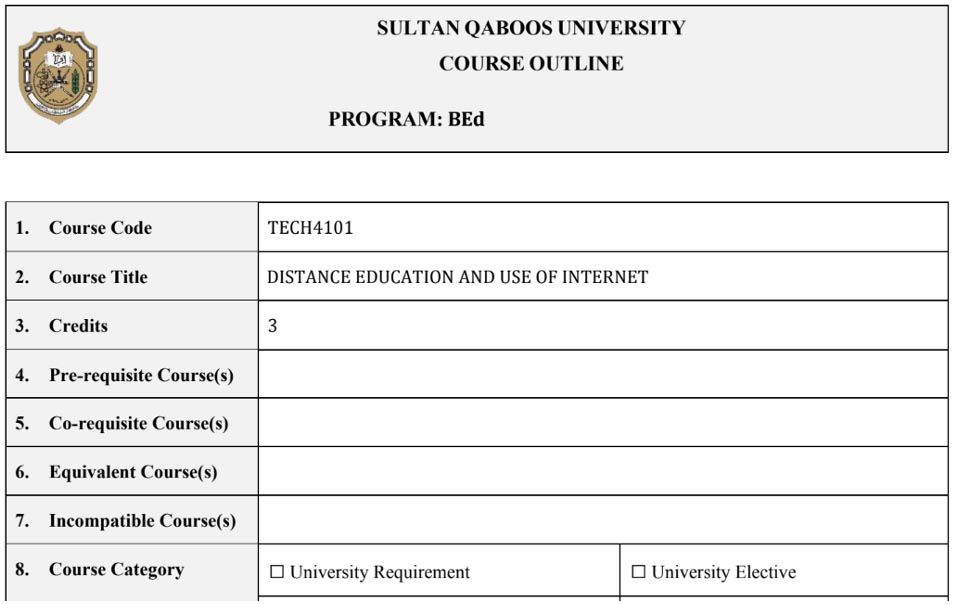
Figure 1 shows the evidence from the course regarding the course overview and objectives. Learning objectives and the course description were available in the course syllabus. The syllabus was posted on Moodle under the course overview. A separate page was designed for the course overview including a clear description of the course as well as the syllabus.
Figure 1
Evidence Regarding the Course Overview and Objectives
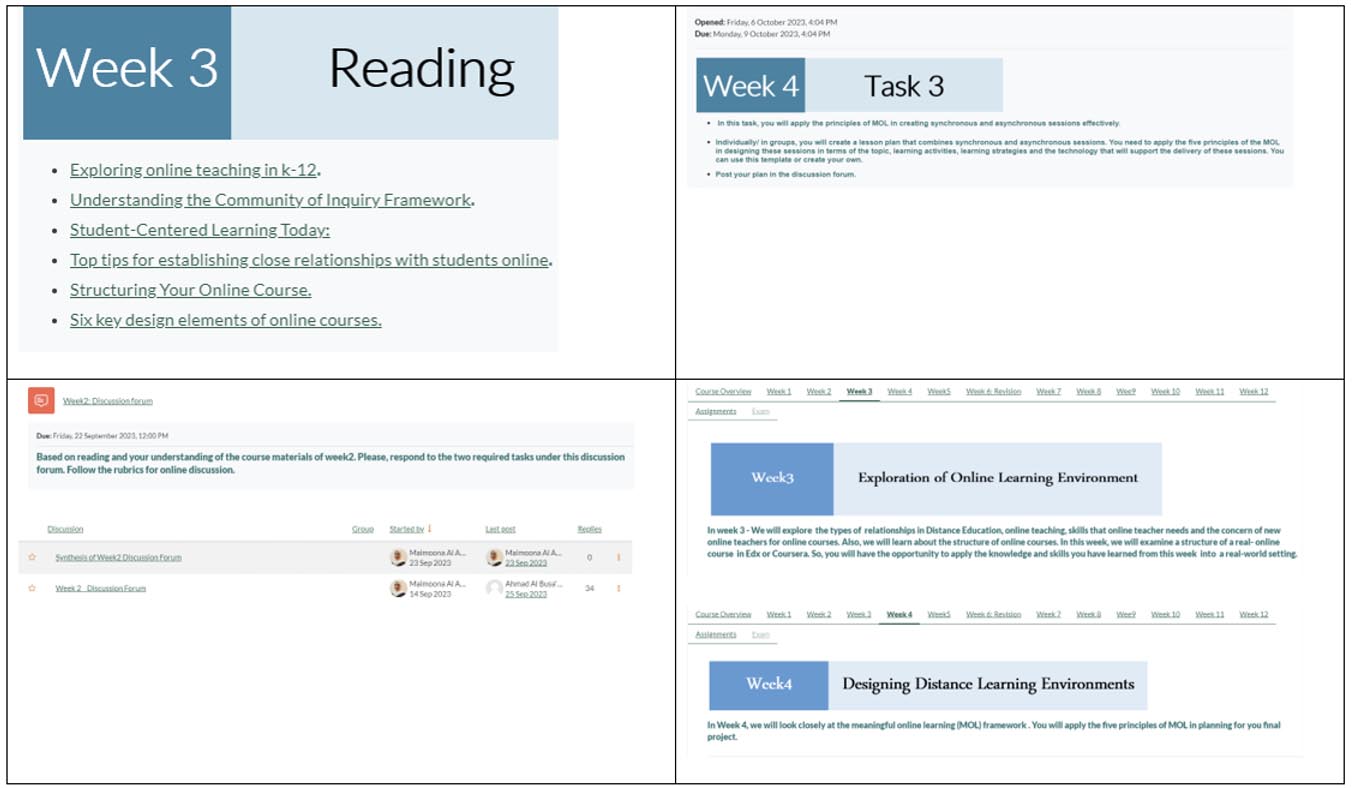
Regarding content and instruction, evidence from the course is shown in Figure 2. This course was designed according to a week-by week schedule. A variety of resources were provided for students under each week. In this course, learners were encouraged to apply what they learned by using their new knowledge and skills in projects. Engaging activities were incorporated throughout the course, such as (a) reflection through discussion forums and responding to each other, (b) working in groups on projects, (c) facilitating online courses with a targeted audience, and (d) participating in large discussions. All these learning activities were designed to accommodate diverse learning styles and needs. However, further improvement is needed.
In addition, different strategies were employed to engage learners effectively in an online learning environment, synchronous and asynchronous, as follows. Discussion forums asked students to reflect on their understanding of the topics being taught in that specific week. Guiding questions and an online discussion forum protocol were provided. In the end, the instructor provided a synthesis of students’ understanding of the topic of the discussion. Also, students were assigned to groups to work collaboratively on the main assignments and projects in the course. A table was created to help students form their groups.
Figure 2
Evidence From the Course Regarding Course Content and Instructions
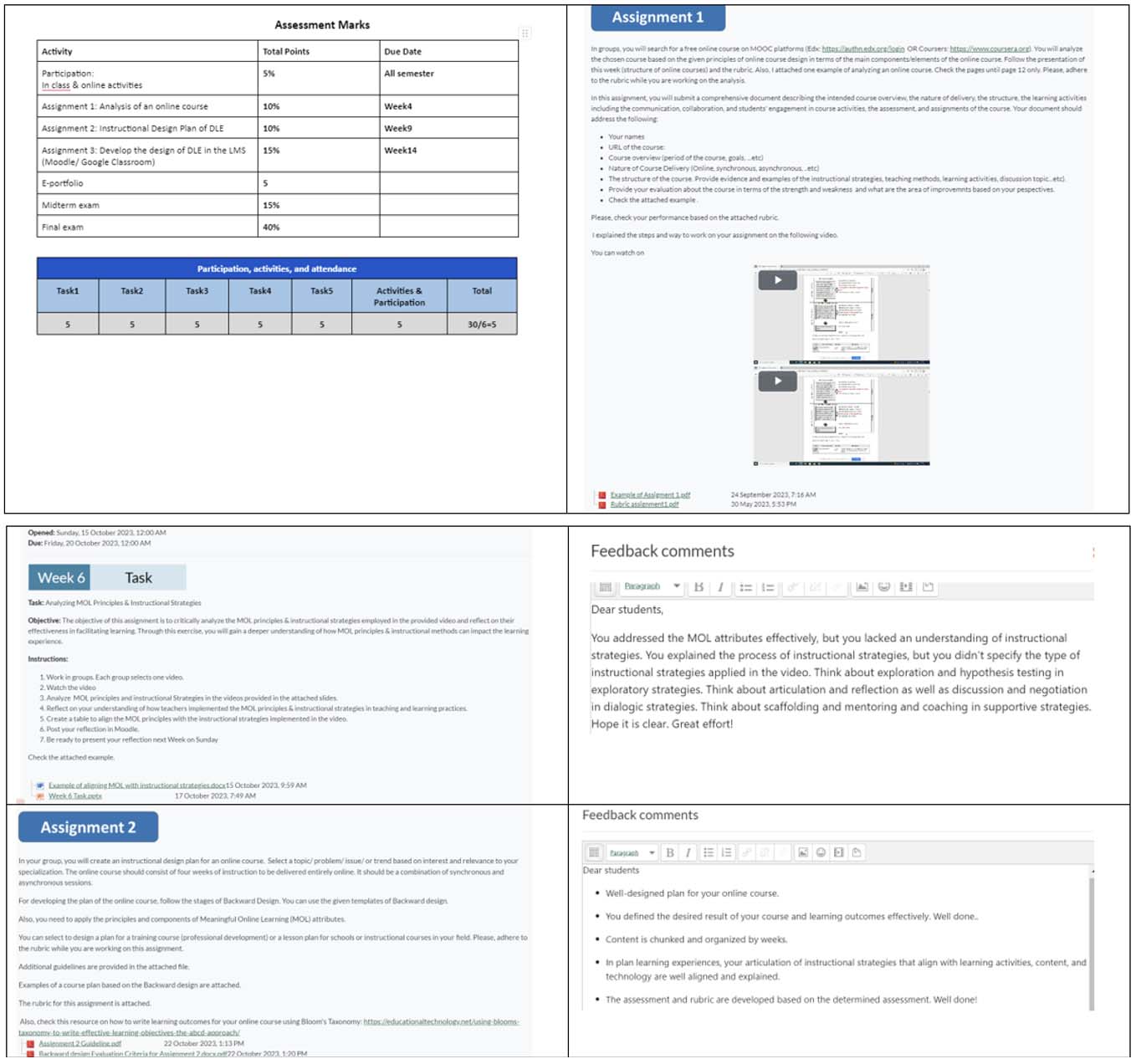
The assessment was included in the syllabus and distributed throughout the semester (see Figure 3). Additionally, the type of assessment and grade distribution were included in the syllabus and posted separately on Moodle. Detailed assignment instructions were provided, including posting examples and rubrics for learners to follow while working on their projects. Furthermore, a recorded video explaining the assignments’ requirements was developed and posted under the assignments in Moodle.
A separate tab was created for the course assignments to make it easy for students to navigate. All assessments aligned with the course’s learning objectives. Learners applied meaningful online learning concepts, including instructional strategies and assessments, to design a plan for an online course. Learners then used this plan to design and facilitate the online course in the LMS with their target audience.
Regarding providing timely and constructive feedback on the different types of assessments, evidence from this course indicated that constructive feedback was provided on students’ responses in discussion forums (e.g., reflecting on a video to extract the principles of meaningful online learning applied in the video). Learners were given feedback on the task in week six, namely to analyze the instructional strategies of meaningful online learning applied in the video. Students were provided with feedback on all their assignments; evaluation was based on rubrics. Feedback was provided immediately after the deadlines for assignment submission.
Figure 3
Evidence From the Course Regarding Assessment and Evaluation
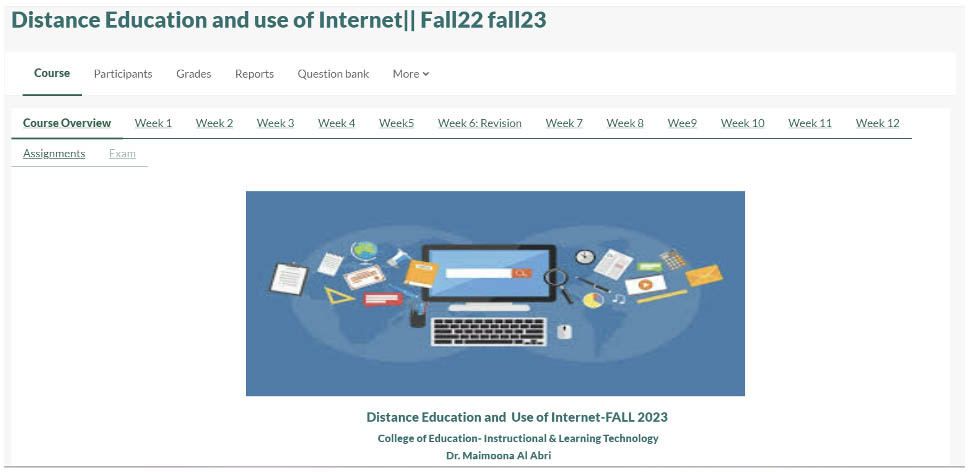
Regarding technology integration and supporting resources, the university used the Moodle LMS. Since it was used in all courses, students are familiar with using it. The course was accessible to all students who were enrolled. Other technologies used for assignments and projects were open source and accessible such as the edX platform, where learners were advised to search for a free online course from which to perform an assignment related to the course. Learners also used Canva and Google applications, which were accessible to all students. Evidence from the course is presented in Figure 4.
The course was designed based on standard principles without considering accommodation for those learners with a disability. The videos were screen recordings developed without captions. The text did not offer features such as zoom in and zoom out. Sign language was not provided or accommodated. Our analysis indicated that the course needed to be rebuilt to be compatible with universal design for learning, making it accessible for all learners, including those with disabilities.
Figure 4
Evidence From the Course Regarding Technology and Resources
Illustrates that the syllabus was accessible to all learners through Moodle. Information about university policies, the course schedule, assignment deadlines, and instructors’ contact details, including office hours, office location, phone extension, and communication channels, were all provided.
The course was designed on a week-by-week basis, making it easy to navigate. However, a study should be carried out to examine the effectiveness of the course from learners’ perspectives, including the online course’s ease of use.
Figure 5
Evidence From the Course Regarding Course Management and Administration
The instructor competencies were not examined or analyzed. Peer evaluation should be conducted to assess the instructor’s competencies in terms of their knowledge, skills and other experiences.
Collectively, based on the principles, guidelines, and rubrics that have been developed by several institutions, the following tips and guidelines were extracted through this study.
Table 3
Recommended Guidelines for Designing Online Courses
| Course component | Guideline |
| Fundamental principles | Course design should be based on instructional design principles. |
| Overview and objectives | Provide a clear and concise description of the course. Identify desired objectives of the course (to highlight required knowledge and skills) Define learning objectives for each module |
| Content and instructional strategies | Design a course blueprint or course map. Organize the course with a logical structure using modules and clear formatting. Select relevant and current content. Align content,instructional strategies, engaging learning activities, resources, and technology with learning objectives. |
| Assessment and evaluation | Design varied assessment methods that are authentic and intentional. Provide detailed instructions for assignments and activities, including examples and rubrics. Offer timely and constructive feedback to help students understand and improve their performance. |
| Collaboration and communication | Foster interaction and collaboration among learners through discussion forums, group projects, and hands-on activities. |
| Technology and resources | Select appropriate technology and resources that align with the learning activities. Choose user-friendly and accessible technology and resources that seamlessly integrate with course content. |
| Accessibility | Ensure inclusivity by making the course resources accessible to all students, including those with disabilities. |
This study has presented a comprehensive approach to designing quality online courses. The findings of this study were derived from a theoretical perspective and by analyzing an existing online course. This data provided a deep understanding of the key elements and guidelines for effective online course design. Incorporating instructional design principles such as constructivism and leveraging design models such as backward design will create a solid foundation for creating engaging and meaningful online learning experiences. The importance of robust and comprehensive course components has been emphasized, including course learning objectives and the careful organization of materials, interactive elements, clear instructions, assessments and evaluation, and the careful selection of technologies. A well-structured course with logical organization and clear navigation supports students’ engagement with the material. Finally, this study has provided practical tips and guidelines for educators who are transitioning their courses to an online format. It can serve as a valuable resource for improving instructional design skills and creating engaging online learning environments.
The data derived from the analysis of the online course showed that there were areas for improvement. Accessibility features were not functioning well enough for the course to accommodate everybody, particularly students with disabilities. Also, the instructor’s competencies in terms of their level of knowledge, skills, and ability to create engaging learning experiences for students were not examined. Future research is recommended to investigate these competencies by conducting peer evaluation and focus groups with students. Finally, the usability and usefulness of the course needs to be assessed from students’ perspectives. By incorporating these essential components and guidelines into the design process, educators can create high-quality online courses that effectively engage learners and promote learning success. As online education continues to grow, designing effective and meaningful online courses will become increasingly important in delivering quality.
The study’s limitation is rooted in its methodology, relying on literature review and course analysis. To gather comprehensive data from various perspectives, including instructors and students, empirical research is necessary. Furthermore, the study was confined to the analysis of a single course. It is crucial to extend the scope by selecting additional online courses for examination against the guidelines derived from this study.
The study’s main recommendation is to extend the scope of this study to examine the derived guidelines against number of online courses in the university to validate these guidelines. Also, analysis of the online course revealed areas for improvement, including accessibility issues for students with disabilities as well as enhancing some key components of the course. In addition, instructor competencies and student perspectives on usability and usefulness of the course warrant further investigation.
Abuhassna, H., & Alnawajha, S. (2023). Instructional design made easy! Instructional design models, categories, frameworks, educational context, and recommendations for future work. European Journal of Investigation in Health, Psychology and Education, 13(4), 715-735. https://doi.org/10.3390/ejihpe13040054
Beach, M. (2018). When great teaching is not enough: Utilizing student perception to increase retention in online learning. In T. Bastiaens, J. Van Braak, M. Brown, L. Cantoni, M. Castro, R. Christensen, G. Davidson-Shivers, K. DePryck, M. Ebner, M. Fominykh, C. Fulford, S. Hatzipanagos, G. Knezek, K. Kreijns, G. Marks, E. Sointu, E. Korsgaard Sorensen, J. Viteli, J. Voogt, P. Weber, E. Weippl & O. Zawacki-Richter (Eds.), Proceedings of EdMedia: World conference on educational media and technology (pp. 1940-1944). Association for the Advancement of Computing in Education (AACE). https://www.learntechlib.org/primary/p/184431/.
Bedir, G. (2022). Teachers’ views on the practices of universal design for learning. International Journal of Curriculum and Instruction, 14(2), 1324-1342. https://eric.ed.gov/?id=EJ1340721
Bergstrom-Lynch, Y., (2019). LibGuides by design: Using instructional design principles and user-centered studies to develop best practices. Public Services Quarterly, 15(3), 205-223. https://bit.ly/4dANhxI
CAST. (2018). Universal design for learning guidelines. http://udlguidelines.cast.org
Boettcher, J. V., & Conrad, R. M. (2021). The online teaching survival guide: Simple and practical pedagogical tips. John Wiley & Sons.
Cuesta, L. (2010). The design and development of online course materials: Some features and recommendations. Profile Issues in Teachers Professional Development, 12(1), 181-201.
Dabbagh, N., Marra, R., & Howland, J. (2019). Meaningful online learning: Integrating strategies, activities, and learning technologies for effective designs. Routledge.
EDUCAUSE. (2021). 2021 EDUCAUSE horizon report: Teaching and learning edition. https://www.educause.edu/horizon-report-teaching-and-learning-2021
Gilbert, L., & Moore, D. R. (1998). Building interactivity into Web courses: Tools for social and instructional interactions. Educational Technology, 38(3), 29-35. https://bit.ly/4bipeSL
Gunder, A., Vignare, K., Adams, S., McGuire, A., & Rafferty, J. P. (2021). Optimizing high-quality digital learning experiences: A playbook for faculty. Online Learning Consortium. https://www.everylearnereverywhere.org/resources/
Hamilton, I. (2023, May 24). By the numbers: The rise of online learning in the US. Forbes Advisor. https://bit.ly/3TTfTei
Jones, P., & Davis, R. (2008). Instructional design methods integrating instructional technology. In T. T. Kidd & H. Song (Eds.), Handbook of research on instructional systems and technology (pp. 15-27). IGI Global. https://bit.ly/4dEZ3al
Kent State Online. (2023). Online course design best practices checklists. Retrieved November 3, 2023 from https://www.kent.edu/onlineteaching/checklists
Kumar, S., Martin, F., Budhrani, K., & Ritzhaupt, A. (2019). Award-winning faculty online teaching practices: Elements of award-winning courses. Online Learning, 23(4), 160-180. https://doi.org/10.24059/olj.v23i4.2077
McGahan, S. J., Jackson, C. M., & Premer, K. (2015). Online course quality assurance: Development of a quality checklist. InSight: A Journal of Scholarly Teaching, 10, 126-140. https://bit.ly/4bhNoN6
Nichols Hess, A., & Greer, K. (2016). Designing for engagement: Using the ADDIE model to integrate high-impact practices into an online information literacy course. Communications in Information Literacy, 10(2), 6. https://bit.ly/4atIoDU
Nieves, L. H., Moya, E. C., & Soldado, R. M. (2019). A MOOC on universal design for learning designed based on the UDL paradigm. Australasian Journal of Educational Technology, 35(6), 30-47. https://bit.ly/3wHe4I7
Ní Shé, C., Farrell, O., Brunton, J., & Costello, E. (2021). Integrating design thinking into instructional design: The #OpenTeach case study. Australasian Journal of Educational Technology, 38(1), 33-52. https://doi.org/10.14742/ajet.6667
O'Keefe, L., Rafferty, J., Gunder, A., & Vignare, K. (2020). Delivering high-quality instruction online in response to COVID-19: Faculty playbook. Online Learning Consortium. https://eric.ed.gov/?id=ED605351
Shattuck, K. (2015). Focusing research on quality matters. American Journal of Distance Education, 29(3), 155-158. https://doi.org/10.1080/08923647.2015.1061809
University of Toronto. (2023). Online course design guidelines. https://teaching.utoronto.ca/resources/online-course-design-guidelines/
Wiggins, G., & McTighe, J. (2005). Understanding by design. Pearson Education.
Xu, D., Li, Q., & Zhou, X. (2020). Online course quality rubric: A tool box. Online Learning Research Center. https://par.nsf.gov/servlets/purl/10232436
Zimmerman, W., Altman, B., Simunich, B., Shattuck, K., & Burch, B. (2020). Evaluating online course quality: A study on implementation of course quality standards. Online Learning, 24(4), 147-163. https://doi.org/10.24059/olj.v24i4.2325

Quality Criteria for Online Courses Development by Maimoona Al Abri and Abdelrahman Elhaj is licensed under a Creative Commons Attribution 4.0 International License.