Volume 26, Number 3
Kelly Arispe1, Amber Hoye2, and Meagan Haynes3
1Boise State University; 2The Rebus Foundation; 3Independent Researcher
This paper reports the findings from cycles three and four in a longitudinal design-based research (DBR) study with K–12 teachers to evaluate their gains in awareness, use, and perceptions about open educational resources (OER) in general and after engaging with the Pathways Project (PP), a repository of 900 world language activities. Two groups of teachers participated in distributed learning with different engagement levels to apply the 5Rs of OER (i.e., retain, reuse, revise, remix, and redistribute), specifically using OER from the PP. The Pathways subscribers (n = 23) attended webinars and received monthly newsletters throughout the project period. A smaller group, referred to as the Pathways training cohort (n = 16), participated in a four-month cohort including a synchronous workshop, monthly synchronous meetings, and asynchronous tasks. The study was conducted in the Mountain West region of the United States, where access to quality teaching materials varies across rural and urban districts, and professional development (PD) opportunities are lacking. The findings revealed that the training cohort self-reported statistically significant increases in awareness of all 5Rs, and increased frequency of revising and remixing OER; their belief in the effectiveness of OER for learning also increased. Conversely, while the subscribers group did show some gains in awareness, use, and perceived value of OER, none of these were statistically significant. These findings suggested that K–12 teachers valued OER but require strategic, long-term PD to achieve gains in awareness, use, and perceived value of OER. This study responded to the challenge of sustaining open pedagogy, particularly for an under-studied K–12 population.
Keywords: OER, OEP, K-12 teachers, professional development
This study responded to a needs assessment conducted in 2016 with K–12 world language teachers struggling to align their teaching practices to new state standards in a state characterized as 80% rural in the Mountain West region of the United States. The needs assessment revealed two fundamental problems: a need for quality teaching materials and time for teachers to evolve their teaching practices. These challenges were further exacerbated by two factors. First, this region is largely characterized as rural, and in many cases, it has been physically impossible for teachers to attend professional development (PD) opportunities. Second, teachers outside of STEM or English Language Arts have been chronically under-resourced and content-isolated, often the only instructors in their district or county. Not only have they lacked PD, but much of their time has been dedicated to looking for digital teaching materials, often inefficiently and unsuccessfully (Arispe et al., 2023).
Open educational resources (OER) and OER-enabled pedagogy (OEP) can help solve some of these challenges. The OEP rationale has posited that teachers transform their pedagogy by engaging in the 5Rs of OER (i.e., retain, reuse, revise, remix, redistribute; Wiley & Hilton, 2018) to adopt and adapt high-quality teaching materials. Although sparse, the OER K–12 literature has suggested that teachers value OER because they can modify materials to fit their local needs (Blomgren, 2018; de los Arcos et al., 2016; Kimmons, 2015). However, primary and secondary teachers have needed help accessing materials online (Tang, 2020) and, in many cases lacked knowledge of the existence of OER altogether (Seaman & Seaman, 2023a). Unfortunately, these challenges have prevented teachers from benefiting from what OER and OEP have to offer.
In 2023, an open education (OE) global conference (Open Education Global, 2023) was dedicated to building a sustainable world through open education. One of the greatest threats to equitable and sustainable OE is that K–12 educators have lagged behind in OER awareness and use. The most recent Bayview Analytics report (Seaman & Seaman, 2023b) found that nearly two-thirds (64%) of higher education faculty are aware of OER, compared to 28% of K–12 teachers. Unfortunately, the disparity in awareness of OER between K–12 and higher education practitioners is representative of the attention paid by OER academic researchers and education stakeholders, who have generally focused much more on higher education. For example, a simple comparison of the presentations from 2023 OE global conference revealed that 21 sessions were focused on the K–12 sector compared to 79 on the higher education sector. This present study reflected a long-term partnership between higher education faculty, staff, and undergraduate students with K–12 world language teachers by using the Pathways Project (PP) to foster a community of practice (Arispe & Hoye, 2023b). Importantly, it contributes research findings about the impact of OEP on awareness, use, and perceptions of OER to address the paucity of K–12 OER research, and serves as a call to action for future K–12 OER research as a critical component in the sustainability of OE.
One of the most informative findings on K–12 teacher practices and beliefs related to curricula and teaching materials has come from the Bayview Analytics Report by Seaman and Seaman (2023a). This report included responses from 1,205 teachers and 487 administrators from all 50 US states, across 1,109 school districts. Most notably, it was conducted after the COVID-19 pandemic, this reflected the state of teacher beliefs and practices at a critical juncture in the profession. One of the notable findings from their study was that while 72% of K–12 teachers required textbooks, 78% reported they also relied on digital supplemental materials. This suggested that many teachers used a combination of both types of resources to meet their instructional needs rather than relying on a single source. Interestingly, they found a five to six percent decrease in teachers’ use of online commercial materials, whereas 77% of teachers said they used digital materials to create supplemental resources themselves. “The high use of self-created materials may be related to their lack of flexibility to fit individual classrooms and the perceptions of poor quality or lack of options for those provided by the curricula creator (commercial or otherwise)” (Seamen & Seamen, 2023, p. 21). This tendency to create one’s own teaching materials supported what de los Arcos et al. (2016), Blomgren (2018), and Kimmons (2015) have all found, whereby K–12 teachers particularly valued OER because they allowed teachers to make changes to materials for their local classroom and learner needs. For example, Blomgren explained that differentiation, individualization, and personalization were educational practices K–12 teachers considered when selecting teaching materials because teachers were in a constant state of flux in response to evolving curriculum and teaching standards. It is precisely this challenge that catalyzed the Pathways Project, an OER of ancillary materials to be used and modified to fit within a curriculum for world language teaching and learning.
Blomgren (2018) also addressed the affordance of teacher creativity that came from engaging in OEP, perhaps reflecting a fundamental difference between what K–12 teachers and higher education faculty value. Whereas higher education faculty may not value creating teaching materials or openly licensing textbooks as a critical component of their academic identity, curating and creating teaching materials are critical to the K–12 teacher’s role. Interestingly, Seamen and Seamen (2023b) did not ask higher education faculty to select their curricula sources; their assumption was that faculty relied on textbooks and other copyrighted or openly licensed materials. Seamen and Seamen’s (2023a) Bayview report for the K–12 sector, on the other hand, asked several questions about teachers’ curricula choices, implying that K–12 teachers drew from a variety of teaching materials, including creating their own. This suggests that in the K–12 sector, teacher creativity has been an important feature of the profession, making the disparity in OER awareness between K–12 and higher education all the more concerning; three quarters of K–12 teachers were not tapping into OER even though three quarters of teachers relied on non-textbook classroom material.
Another affordance of OEP has been how it can positively transform one’s educational practice. Hegarty (2015) explained that open pedagogy invites teachers to collaborate through peer learning and reflective practices in a participatory culture where teachers can make changes to learning environments and educational practices in the community. While open pedagogical participatory culture has been available to all educators, it has remained largely untapped within K–12 teaching environments. One probable obstacle may have stemmed from digital and information literacy gaps pervasive in K–12 environments. While Seamen and Seamen (2023a) showed a slight, steady increase in OER awareness among K–12 teachers overall, most of those who were aware of OER still did not know how to use them. One of the principals quoted in the report remarked that “OER can be difficult to navigate. Teachers often struggle to find what they need” (Seamen & Seamen, 2023a, p. 28). PD that helps teachers overcome these barriers is one practical solution but, currently, this is not the case. The report found that a third of teachers give PD effectiveness a failing score.
Both teachers and administrators do not give high ratings to the current state of professional development. Previous research has shown that professional development, when implemented well, can greatly improve teacher perceptions and implementation of curricula. The post-pandemic K–12 classrooms, while very similar to pre-pandemic, have evolved and will need new professional development to support current and future teachers. (Seamen & Seamen, 2023a, p. 32)
One way PD can improve is to focus on both OER awareness and use; it might not be enough for teachers to know where to find OER. PD should provide teachers with practice applying the 5Rs to their local context. Tang and Bao (2021) identified three key barriers to OER adoption among K–12 teachers—lack of resources, insufficient knowledge, and inadequate institutional support—highlighting the need for targeted PD to address these challenges. They found that only 10% of the teachers in their study actually created OER but that all K–12 teachers were eager to find discipline-specific OER to use in their classroom. Thus, the gap in addressing this need is strategically train K–12 teachers in OEP to create and share OER. However, the value of professional development is more than just helping teachers create and share resources; it has long-lasting impacts. Tang et al. (2021) found that engaging teachers in OEP increased their perceived usefulness of OER and enhanced their self-efficacy and willingness to share resources. Moreover, they noted that the authenticity of the task allowed teachers to practice and hone the very skills they needed to engage in OEP successfully. “We thus speculate that affording a contextualized opportunity for teachers to gain awareness of OER and then implement OER in an authentic context might be an initial step to improve teachers’ self-efficacy and readiness of implementing OER” (Tang et al., 2021, p. 3224).
Indeed, one of the greatest appeals for K–12 teachers to engage in OEP has been the snowball effect. OER are designed to be adopted and adapted, and open licenses permit users to make changes to OER they find. Especially when it comes to ancillary OER, the snowball effect is a positive outcome of OEP that grows the breadth of the repository when users adapt and redistribute what they create. Very few OER studies have considered redistribution practices amongst educators which is critical to the sustainability of open pedagogy. Beaven (2018) looked at the barriers, drivers, and enablers that impacted teacher engagement with OER at The Open University. She found that while teachers were engaging with OER at all levels, they were doing so in hidden spaces which made it a challenge to measure such use. For example, teachers shared materials with other teachers in their local or close-knit network. The tendency for teachers to engage in what Beaven called dark reuse was not a threat to the effectiveness or value of OEP as a practice, however, it was a threat to long-term sustainability. If teachers do not know how to share back their materials openly, there is no snowball effect, and other teachers will continue to rely on paying for resources (i.e., teachers paying teachers) or creating their own from scratch. Considering the changes to the profession in a post-pandemic era, teachers have relied heavily on digital materials for their classroom; however, challenges related to OER awareness, use, and sharing back are obstacles to overcome. As another principal remarked in the Bayview Report “it is incredibly important to involve teachers in the decision-making process for instructional materials. It would be beneficial for my admin team and teachers to learn more about OER, where to access these resources, [and so forth]” (Seamen & Seamen, 2023a, p. 27).
Despite these challenges, there has been momentum rising in the K–12 open education community. Recently, Walz and Farley (2023) published a collaboration toolkit for higher education designed to help faculty, librarians, and instructional designers engage with pre-K–12 to create OER. This toolkit was the first of its kind, bridging the gap between pre-K–12 and higher education (see Arispe & Hoye, 2023a) through practical materials and best practices that supported this type of collaboration. Additionally, according to the Institute for the Study of Knowledge Management in Education (ISKME) the #GoOpen National Network has been a driving force for K–12 that aims to grow awareness of OER and “build capacity and elevate OER through collaboration, knowledge sharing, and strategic action” with stakeholders at all levels (ISKME, 2007). Formerly part of the federal #GoOpen initiative from the US Department of Education Office of Ed Tech, ISKME has developed a steering committee with a centralized hub and network to initiate policy, including a robust agenda of OER professional learning webinars designed to impact awareness and use (GoOpen National Network, 2024). This current study joined these initiatives to evaluate strategic engagement via distributed PD with the K–12 community by measuring the gains in awareness, use, and perceptions of OER over time.
In 2018, the PP was created in response to a needs assessment that identified two primary challenges in K–12 world language teaching: (a) lack of high-quality teaching materials, and (b) time to transform one’s teaching practice. At the time, a world language resource center at a university in the region was creating hundreds of high-quality digital materials to foster conversational language development for undergraduate students in 10 languages and across multiple levels of proficiency (for more details about the PP activities, see Arispe & Hoye, 2023b). By openly licensing these activities, the PP became a repository of ancillary activities that could be shared with a wider community of language teachers, including those in K–12 teaching similar content. It became clear, however, that sharing the repository via e-mail communication was not enough to support teachers retaining and reusing the materials for their local contexts. PD was needed to help them adopt and adapt the activities so that they could be localized to their teaching and learning environment. This present study reported the research findings that compared the effectiveness of two types of PD administered to K–12 teachers over time.
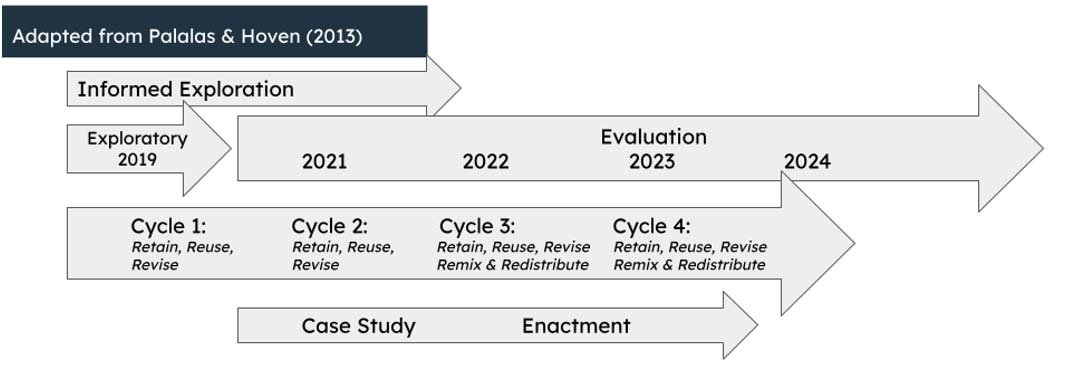
The researchers used a design-based research (DBR) framework to engage with the K–12 teachers in the community so that both the tool (the PP OER) and the PD experiences could evolve based on user input. DBR is a method in educational research that is both long-term and cyclical, allowing the study’s design to adapt based on emerging insights, thereby influencing teaching methods. Researchers collaborate closely with educators to assess and refine the interventions to positively enhance the teaching and learning environment. Drawing on the integrative learning design framework from Bannan (2009), adapted from Palalas and Hoven (2013), the DBR framework used in this study had four cycles that were conducted from 2019 to 2023. As is typical with many DBR longitudinal studies, the participants varied over time; however, the iterative nature of the process enabled continuous refinement of both the OER PP tool and the OEP PD experience. Figure 1 below demonstrates the nature of the exploratory and case studies that informed the enactment phase, cycles three and four, which are the focus of this present study.
Figure 1
Design-Based Research Framework
In cycles one and two of the DBR, Arispe et al. (2023) found that transformative OEP did not happen with short-term PD, and certain design features of the PP activities acted as barriers to accessibility (see Hoye & Arispe, n.d.). As a result, the training design was improved and in 2022 the PP research team was awarded a Level II Digital Humanities Advancement Grant (DHAG) from the National Endowment for the Humanities to carry out the enactment phase to measure the impact of longer (four-month asynchronous/synchronous) OER PD on K–12 teacher practices. While the first two cycles informed the structured intervention described in this study, due to space constraints, full details of these cycles will be published separately.
Specifically, this study compared two groups of K–12 teachers who received different PD experiences reflecting different levels of intensity. The following research questions were investigated:
Since 2018 when it was founded, the PP has built a subscriber base of K–16 world language teachers by collecting information from visitors who navigated to the website that hosted the PP, as well as through the OER Commons where the PP activities have been curated. One of the outcomes of the DHAG award was to initiate a monthly PP newsletter that had three primary objectives: (a) showcase PP activities and their features to promote widespread use, (b) promote PP PD opportunities, and (c) publicize other OER and PD opportunities specific to language teaching. The two groups being compared in this study were a subset of the PP subscriber population. Prior to participating, teacher participants completed an institutional review board protocol in compliance with institutional ethics for research involving human subjects.
The subscribers was the largest group (n = 23), representing K–12 teachers who received the monthly Pathways Post newsletter; they were invited to attend four, one-hour webinars and complete pre- and post-PD surveys. Attendance for webinars was verified using Zoom meeting reports, which logged participation data and timestamps. The training cohort (n = 16) completed the same treatment as the subscribers group as well as a one-day synchronous workshop and three virtual training modules (including asynchronous and synchronous activities) centered on adapting and adopting PP materials for their classroom.
The two groups represented different levels of outreach and PD that might be replicated in other K–12 OER PD in the future. Where the subscribers group required minimal cost and passive engagement, the training cohort took a different approach. Each teacher participant received a $1,000 stipend for attending and completing the training activities, and the facilitators provided high-level feedback in synchronous meetings and through asynchronous assignments.
By comparing the groups, OER researchers and education leaders considered the potential impacts based on the type of OER PD for the future. Table 1 below depicts the differences in OER PD treatment per group.
Table 1
Pathways Project Treatment Offerings
| Offerings | Group | |
| Subscribers | Training cohort | |
| Received a monthly newsletter | ✓ | ✓ |
| Access to four live or on-demand webinars | ✓ | ✓ |
| Completed pre- and post-PD surveys | ✓ | ✓ |
| Attended full-day workshop | x | ✓ |
| Participated in a four-month online cohort | x | ✓ |
| Completed three training modules | x | ✓ |
The full-day, hands-on workshop was designed to introduce OER, the PP, and have teachers practice retaining the PP materials for their upcoming units. Based on the findings from the case study described in Arispe et. al (2023), it was important to devote the four-month online cohort activities to those three of the 5Rs with which teachers previously struggled the most: revising, remixing, and redistributing materials back to the PP repository. To create a scaffolded learning environment, two former participants from cycle two were recruited to support participants as teacher mentors in cycles three and four; this enabled participants to receive feedback from peers who had recently completed similar professional development. These teacher mentors attended synchronous meetings, modeled best practices through activity exemplars, and provided high-level feedback on training activities for each of the teacher participants.
Teacher participants were instructed to download and retain PP activities aligned by theme to an upcoming unit. The training strategically guided them through the process of revising, remixing, and redistributing the PP activities they adopted and adapted. Table 2 summarizes the activities by theme as well as learning objectives from both the full-day synchronous workshop and the three modules.
Table 2
Training Modules: Descriptions and Outcomes
| Workshop | Module 1: Revise | Module 2: Remix | Module 3: Redistribute |
Discussion: Introduce teachers to OER and PP, with hands-on practice for integrating PP materials into their upcoming units. | Discussion: Revise an existing PP activity to meet the needs of their classroom and local contexts. | Discussion: Remix an activity to include authentic materials and digital humanities sites. | Discussion: Publish the final activity, which was shared back to the PP community. |
Outcomes:
| Outcomes:
| Outcomes:
| Outcomes:
|
In addition to the treatment, the two comparison groups differed in their geographic demographics. The subscribers (n = 23), a subset of a larger subscriber base, were K–12 teachers in the US. Due to the DHAG funding source that allowed the researchers to stipend teachers from rural and urban districts to participate in the four-month cohort, all members of the training cohort were K–12 language educators in the state of Idaho. Initially, recruiting teachers was challenging. For this reason, there was a smaller fall cohort (n = 6) and a larger spring cohort (n = 10), however only 12 completed both the pre- and post-PD surveys. Most participants in the first cohort resided in southern Idaho and predominantly in urban districts. Most of those in the second cohort resided in northern and eastern Idaho with a mixture of urban and rural districts. Table 3 shows the combined participant demographics for the training cohort groups. It should be noted that most participants were Spanish teachers because other languages were not commonly taught in rural districts.
Table 3
Participant Demographics for the Pathways Training Cohort
| Characteristic | n | % | |
| District type | Rural | 5 | 33 |
| Urban | 11 | 67 | |
| Language | Spanish | 12 | 75 |
| Non-Spanish | 4 | 25 | |
| Level | Primary | 2 | 12 |
| Secondary | 12 | 88 | |
| Experience Teaching | 0 to 2 years | 2 | 13 |
| 2 to 5 years | 3 | 19 | |
| 5 to 10 years | 1 | 6 | |
| 10+ years | 10 | 63 | |
Both groups, the subscribers and the training cohort, received a baseline survey prior to their PD in May 2022. The project team designed the survey instrument to measure respondents’ awareness, use, beliefs, and perceptions of OER and the PP materials. Questions were grouped according to Wiley’s 5Rs (Wiley et al., 2017) because the activities associated with both groups were designed according to OER engagement, where teachers learned to retain, reuse, revise, remix, and redistribute the PP materials. The survey was sent by e-mail to all members of the PP monthly newsletter subscribers list. The list contained both K–12 educators and post-secondary educators across the United States and internationally. However, for the scope of this current study, all post-secondary and international respondents were excluded to focus the study on the PD gains for primary and secondary educators. If members of the training cohort had not completed the baseline survey in May, they were asked to complete it before beginning the PD. After the PD was completed, a post-PD survey was sent to both the subscriber and training cohort groups. This survey instrument measured changes in respondents’ awareness, use, and perceptions of OER and the PP over time as a result of the treatment (subscribers vs. training cohort).
To compare individual differences over time, respondents were only included in the analysis if they completed both the pre- and post-PD surveys. In both surveys, respondents were asked to rate their familiarity with each of the 5Rs (i.e., retain, reuse, revise, remix, and redistribute) using a 5-point Likert scale (1 = not familiar at all; 5 = extremely familiar). Respondents also reported their frequency of OER use for teaching and learning purposes in an average school year; frequency options ranged from never to daily. Similarly, those who reported using OER materials also rated how frequently they revised, remixed, and redistributed materials back to an OER website after retaining (i.e., downloading the activity or bookmarking it) and reusing them. Finally, respondents rated how effective they believed OER was for teaching and learning purposes, specifically for helping students learn classroom content, using a 5-point Likert scale (1 = strongly disagree; 5 = strongly agree). Comparative analyses were used to identify any significant changes between pre- and post-PD survey scores for each item. Wilcoxon-Signed rank tests for non-parametric and small samples were conducted to account for the minimal sample size within each group to establish if the two scores were statistically different from one another.
After completing an intensive four-month training period, the training cohort demonstrated significant increases in self-reported familiarity with all 5Rs. Conversely, the subscribers group did not report any significant increase in familiarity with these aspects of OER over time. The training cohort indicated a lower average familiarity for all 5Rs in the baseline survey compared to the subscribers (see Table 4). However, by the end of the training period, the training cohort outscored their peers in all aspects, reporting at least an average familiarity level of 4.31 on a five-point scale. While the training cohort demonstrated significant increases in familiarity for each of the 5Rs, the subscribers reported only slight non-significant increases in familiarity for each, with only the retain component slightly decreasing over time. In the baseline survey, both groups reported the least familiarity with redistributing materials but by the end of the training period, the training cohort reported the highest growth in this area. Conversely, the subscribers measured only a slight increase in this area.
Table 4
Participants’ Familiarity With OER Components
| OER component | Training cohort (n = 12) | Subscribers (n = 12) | ||
| Pre-PD M | Post-PD M | Pre-PD M | Post-PD M | |
| Retain | 2.08** | 4.31** | 3.59 | 3.56 |
| Reuse | 2.09** | 4.27** | 3.59 | 3.72 |
| Revise | 2.18** | 4.27** | 3.35 | 3.72 |
| Remix | 2.09** | 4.27** | 3.41 | 3.61 |
| Redistribute | 2.00** | 4.27** | 3.18 | 3.28 |
Note. *** indicates statistically significant differences between pre- and post-PD scores (p < .005)
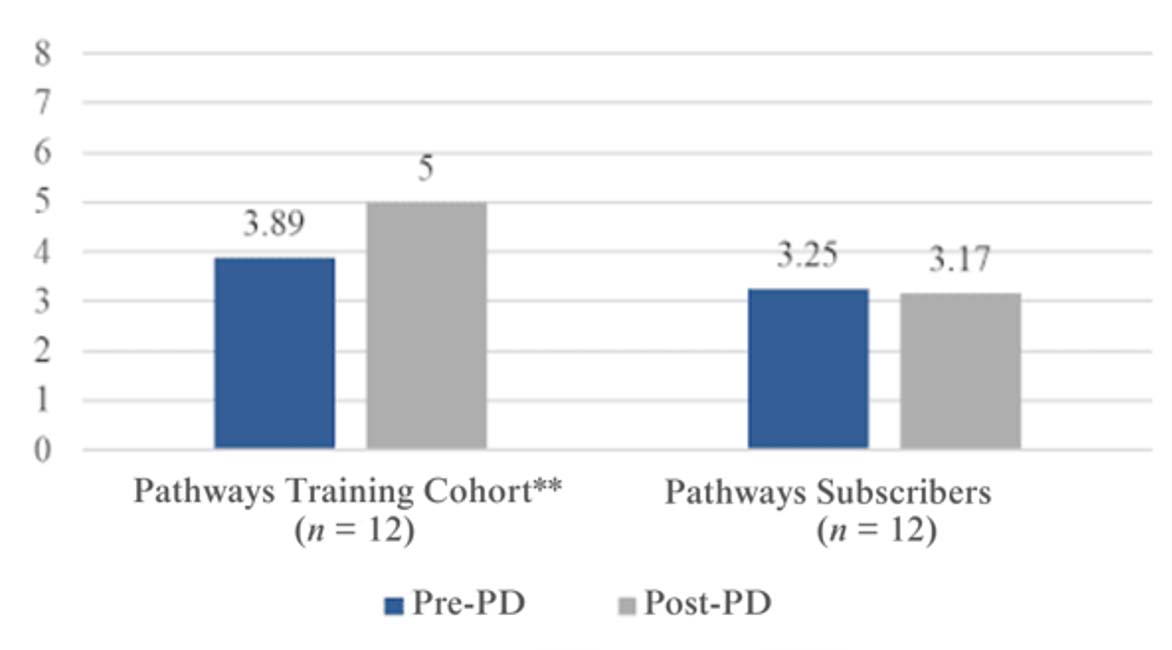
The webinars and training modules (described in Table 2) focused on the components of OEP that have been most challenging for teachers in the past. For this reason, to address the second research question, researchers were interested in measuring both general OER use over time as well as the frequency of revising, remixing, and redistributing OER, specifically. The training cohort experienced significant increases in their self-reported frequency of OER use between pre- and post-PD survey (pre-PD M = 3.8, post-PD M = 5.0; z = 2.04; p = .04). The subscribers, on the other hand, reported a slight insignificant decrease over time (pre-PD M = 3.25; post-PD M = 3.17; z = -1.49; p = .14). Figure 2 illustrates the average frequency of participants’ OER use.
Figure 2
Participants’ Frequency of OER Use
Note. **Indicates a significant difference between pre- and post-PD survey scores (p < .05). Response scale: 1 = never, 8 = daily.
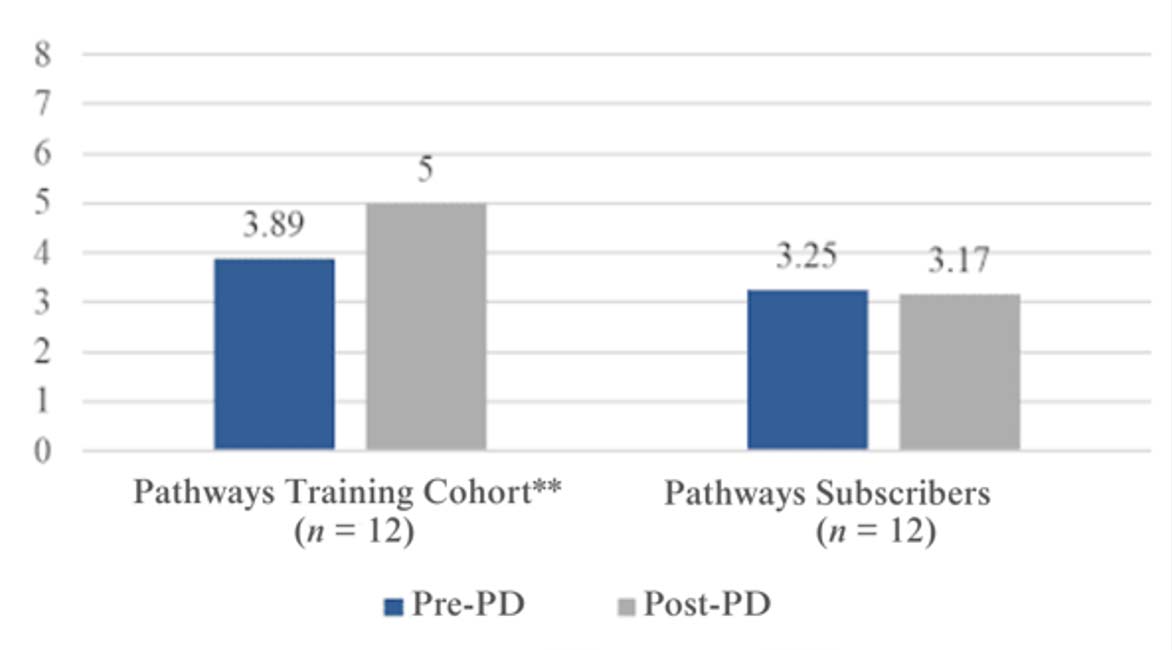
As illustrated in Figure 3, frequency scores for revising OER also significantly increased for the training cohort (pre-PD M = 2.89; post-PD M = 4.11; z = -2.29; p = .027), while slightly decreasing for those in the subscribers group (pre-PD M = 3.25; post-PD M = 3.17; z = -.98; p = .38). The training cohort reported lower levels for revising in the pre-PD survey compared to their peers. However, by the end of the training, they reported a higher average frequency for revising than did the subscriber group.
Figure 3
Participants’ Frequency of Revising OER Materials
Note. **Indicates a significant difference between pre- and post-PD survey scores (p < .05). Response scale: 1 = never, 5 = always.
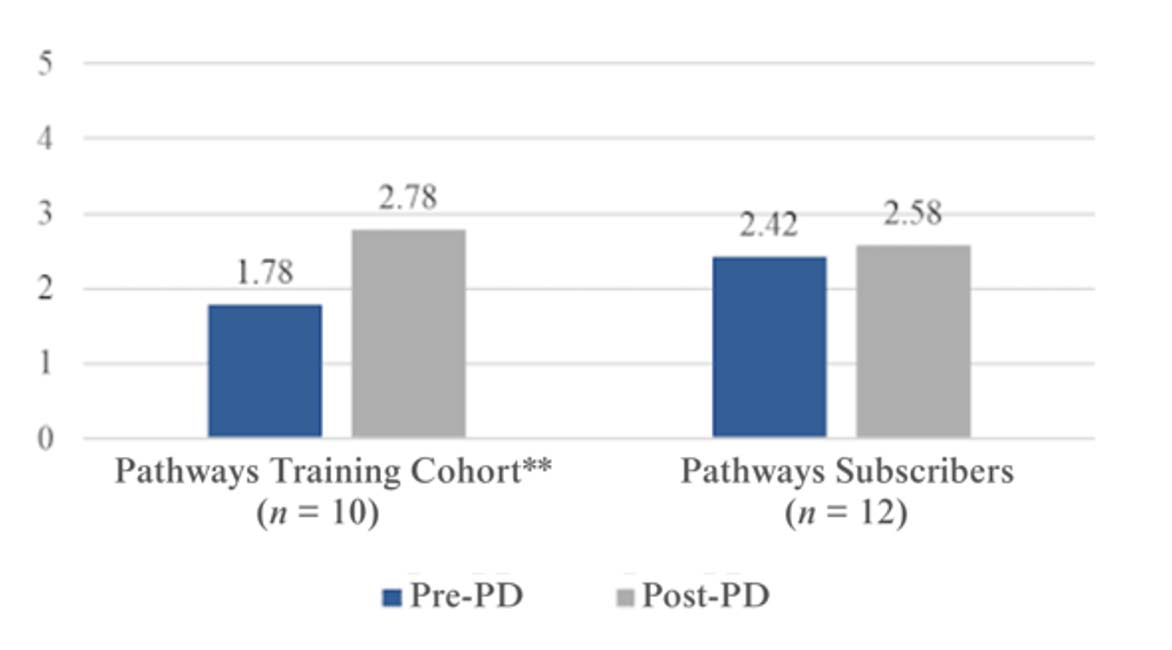
For the training cohort, frequency scores for remixing increased significantly increased from pre-to post-PD survey (M = 1.78, M = 2.78; z = -2.04; p = .041), while the subscriber group reported only reported slight non-significant increases over time (pre-PD M = 2.42; post-PD M = 2.58; z = -.57; p = .56). See Figure 4. Similar to the results for revising above, the training cohort reported lower frequencies for remixing in the pre-PD survey compared to their peers but reported remixing more frequently by the end of the period.
Figure 4
Participants’ Frequency of Remixing OER Materials
Note. **Indicates a significant difference between pre- and post-PD survey scores (p < .05). Response scale: 1 = never, 5 = always.
Finally, frequency scores for redistributing did not significantly change for either group from pre- to post-PD survey (see Figure 5).
Figure 5
Participants’ Frequency of Redistributing OER Materials
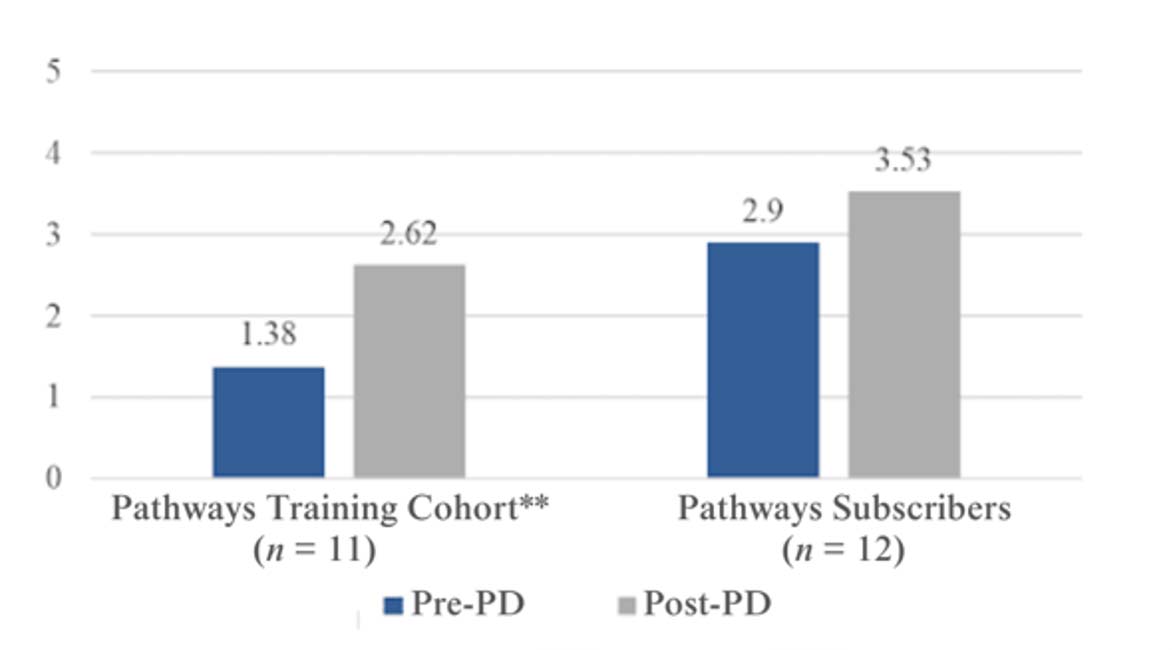
Note. **Indicates a significant difference between pre- and post-PD survey scores (p < .05). Response scale: 1 = never, 5 = always.
In addition to evaluating awareness and use, the third research question addressed researchers’ interest in how the participants perceived OER materials for learning over time. The training cohort indicated significant increases in their agreement that OER materials were effective in helping students learn classroom content (pre-PD M = 4.0; post-PD M = 4.78; z = -2.64; p = .008). Conversely, the subscriber group did not differ significantly in this belief over time (see Figure 6).
Figure 6
Participants’ Perspectives on OER Effectiveness for Learning
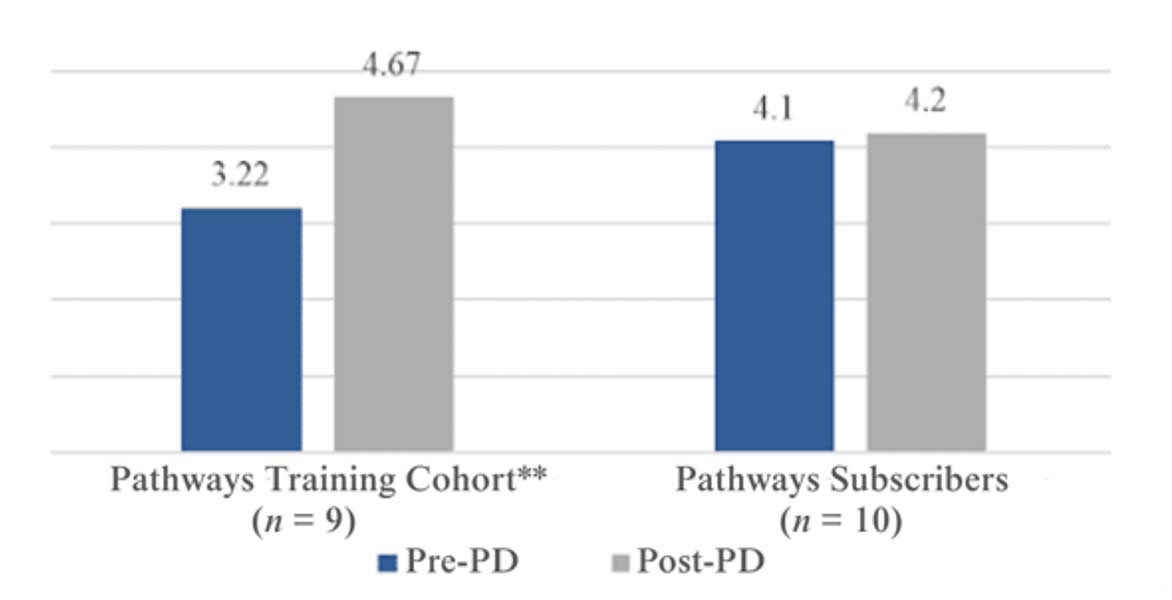
Note. **Indicates a significant difference between pre- and post-PD survey scores (p < .05). Response scale: 1 = strongly disagree, 5 = strongly agree.
This study has reported the findings from the enactment (final) phase of a DBR framework that explored teacher awareness, use, and perceptions when using the PP OER, and compared different levels of PD engagement over time. Previous literature suggested that most K–12 teachers did not know about OER as a tool for teaching and learning and, if they did, they did not know how to use it. PD can be a critical solution to grow OER awareness in the K–12 sector and to bridge the gap between awareness and use. Importantly, the findings in this study indicated that passive OER PD was not enough to create change. Whereas webinars and newsletters have provided equitable distributed learning to K–12 teachers everywhere, effective PD holds participants accountable to do something with what they have learned. While this finding alone might not be surprising, the results from this research have provided evidence that can compel stakeholders to invest in OER PD opportunities that are strategic, long-term, and require active engagement. This also has important implications for what equitable PD entails. While the findings that compared rural and urban OEP practices were beyond the scope of this paper, the study was designed to impact equitable access to OEP by offering PD opportunities to teachers who were geographically isolated. The pandemic changed the nature of PD by normalizing distributed PD for teachers everywhere, regardless of their geographic location. However, access to knowledge alone has not been enough to help teachers transform their pedagogy, an intended outcome of OEP. This study revealed the difference in passive versus active PD engagement and has important implications for how OER training is implemented, especially for K–12 teaching communities in the humanities located in rural districts where isolation is a given.
The PD provided to the training cohort had two critical ingredients that positively impacted their awareness, use, and perceptions of OER. First, in every module of the PD training, teachers had to apply their knowledge of OER to their local context through OEP activities. Second, feedback from the mentor teachers allowed participants to reflect on their learning process in the community, enacting what Hegarty (2015) referred to as participatory culture. Whereas the webinars and newsletters highlighted OEP best practices, including teacher exemplars, and encouraged teachers to apply what they learned to their local context, the teacher participants in this study only benefited when there was an accountability measure in their PD experience. This accountability was experienced by the training cohort when participants turned in assignments and received timely feedback on the evidence of their learning.
However, one component of OEP remained a challenge for K–12 teachers, namely, redistribution. Interestingly, the familiarity of redistributing was where the training cohort had the highest increase in awareness, but it was also the only category in which there was not a significant increase in use over time. Teachers gained familiarity with redistributing as a concept (i.e., OER invites users to share back material they have revised or remixed), but the PD did not influence them to redistribute more frequently.
There are several possible interpretations of this finding that must be explored, especially as the OER field considers its sustainability and growth in the K–12 sector. One possible explanation is that teachers came to OER expecting a product they could use, not necessarily something they created or adapted. K–12 teachers may not have known that their creativity and expertise was of value to the open community, to be shared easily. Another possible explanation is that teachers lacked digital competence to redistribute their materials effectively and efficiently, perhaps falling back on dark reuse tendencies by only sharing what they adapted locally and informally. Similarly, they may have felt insecure about open licensing and lacked practice applying open licenses to material they revised or remixed. While the training provided to both groups included an overview and access to interactive tools to navigate open and fair-use licensing, teachers in the training cohort required more support from mentor teachers in this module compared to the other two modules. This suggests that redistribution was the more complex of the 5Rs, requiring time and practice for mastery, especially with K–12 teachers less familiar with publishing compared to higher education faculty. In sum, this finding may spark future researchers to investigate what motivates K–12 instructors to redistribute and elucidate the barriers that prevent them from sharing back, as well as to consider sustainable incentives to encourage redistribution as an educational practice in K–12 contexts.
This study aimed to spark further discussion and action surrounding the sustainability of OEP by addressing a major component of the educational ecosystem that is underrepresented in the OER literature. The results suggested that the more teachers were exposed to OER and given the chance to practice engaging in OEP, the more they used OER and valued it in their practice, corroborating Tang et. al (2021). Return on investment contributed to the snowball effect wherein OER grow in breadth and depth and teachers can access materials more effectively without having to reinvent the wheel. Whereas previous literature has indicated a knowledge-use gap for K–12 teachers, the results from this research pointed to the effectiveness of OER PD to help teachers learn about the 5Rs of OER and apply them to their practice. In addition to findings from Bayview Analytics (Seaman & Seaman, 2023a, 2023b), initiatives like the #GoOpen National Network and ISKME’s efforts have sought to expand OER awareness among K–12 educators. These initiatives, along with growing state policies on OER adoption, have highlighted the increasing momentum in integrating open practices in K–12 settings. Future research should explore how these efforts intersect with professional development strategies similar to those studied here.
One limitation of this study was the small sample size and the fact that not all respondents completed every question in the surveys. A larger sample size would increase the reliability and validity of findings and allow for further exploration of PD effects on individual respondents. Non-parametric tests were used when comparing data to account for these uneven distributions and low sample sizes; however, future research could expand the scope to include participants on a national scale. Another limitation of this study was related to the nature of measuring active versus passive PD engagement. The subscriber group was drawn from the larger subscriber population which included K–12 teacher participants across the US compared to the training cohort which included K–12 teacher participants in the region only. In many instances, the subscriber base had a higher awareness of OER and the 5Rs at the beginning of the study as measured by the pre-PD survey. This may have been due to other types of OER PD exposure supported by state or national initiatives and/or OER policies which have varied greatly across the nation. Unfortunately, this variance was not considered, and the researchers could not control other types of OER exposure that may have impacted subscribers’ base level knowledge. While the scope of this paper was to elucidate the quantitative findings from the final cycles of the DBR, qualitative analysis was also conducted and will be discussed in a future paper.
The increased engagement among the training cohort participants may be attributed to their extended time on task. Longer training durations that allowed for deeper understanding and more hands-on practice in OEP, may explain the significant gains in awareness and frequency of use in this group. Finally, another limitation of this study was the financial incentive of $1,000 that was provided to each participant in the training cohort. This stipend may have positively influenced engagement levels, making the findings less replicable in contexts without such funding. As well, the study did not assess whether engagement would continue to be sustained once the financial incentive and structure support were removed.
Arispe, K., & Hoye, A. (2023a). Accessing and integrating openly licensed digital materials for teaching and learning. In R. E. Ferdig, R. Hartshorne, E. Baumgartner, R. Kaplan-Rakowski, & C. Mouza (Eds.), What pre-K-12 teachers should know about educational technology in 2023: A research-to-practice anthology (pp. 417-426). Retrieved July 31, 2023, from https://www.learntechlib.org/p/222690/
Arispe, K., & Hoye, A. (2023b). Partnering higher education and K-12 institutions in OER: Foundations in supporting teacher OER-enabled pedagogy. The International Review of Research in Open and Distance Learning, 24(2). https://doi.org/10.19173/irrodl.v24i2.6856
Arispe, K., Hoye, A., & Palmer, K. (2023). The impact of open educational resource professional development for teachers in secondary education. Open Praxis, 15(4), 303-313. https://doi.org/10.55982/openpraxis.15.4.593
Bannan, B. (2009). The integrative learning design framework: An illustrated example from the domain of instructional technology. In T. Plomp & N. Nieveen (Eds.), An introduction to educational design research (pp. 53-73). SLO-Netherlands Institute for Curriculum Development.
Beaven, T. (2018). ‘Dark reuse’: An empirical study of teachers’ OER engagement. Open Praxis, 10(4), 377-391. https://doi.org/10.5944/openpraxis.10.4.889
Blomgren, C. (2018). OER awareness and use: The affinity between higher education and K-12. The International Review of Research in Open and Distributed Learning, 19(2), 55-70. https://doi.org/10.19173/irrodl.v19i2.3431
de los Arcos, B., Farrow, R., Pitt, R., Weller, M., & McAndrew, P. (2016). Adapting the curriculum: How K-12 teachers perceive the role of open educational resources. Journal of Online Learning Research, 2(1), 23-40. Retrieved May 1, 2024, from https://www.learntechlib.org/primary/p/151664/
Ganapathi, J. (2019). User-generated content’s impact on the sustainability of open educational resources. Open Praxis, 11(3), 211-225. https://doi.org/10.5944/openpraxis.11.2.941
GoOpen National Network [#GoOpen National Network]. (2024, April 30). Navigating the digital divides: A strategic conversation on implementing the NETP [Video]. YouTube. https://youtu.be/hhbdTrmLtg4?si=DulT6rdstNd51Lcw
Hegarty, B. (2015). Attributes of open pedagogy: A model for using open educational resources. Educational Technology, 55(4), 3-13. http://www.jstor.org/stable/44430383
Hoye, A. & Arispe, K. (n.d.). Creating an OER ancillary material repository for K-16 teachers: A design case. Manuscript submitted for publication.
Institute for the Study of Knowledge Management in Education. (2007). #GoOpen National Network. Retrieved May 1, 2024, from https://oercommons.org/hubs/GoOpen
Kimmons, R. (2015). OER quality and adaptation in K-12: Comparing teacher evaluations of copyright-restricted, open, and open/adapted textbooks. The International Review of Research in Open and Distributed Learning, 16(5). https://doi.org/10.19173/irrodl.v16i5.2341
Open Education Global. (2025, November 10-13). OE Global 2025: Connecting the global open education community. OE Global Conference, Edmonton, AB, Canada.
Palalas, A., & Hoven, D. (2013). Implications of using DBR to investigate the iterative design of a mobile-enabled language learning system. In J. Rodrigues & C. Pardo-Ballester (Eds.), Design-based research in CALL (CALICO Monograph Series, Vol. 11, pp. 41-66). https://www.academia.edu/3607193/Palalas_A_and_Hoven_D_2013_Implications_of_Using_DBR_to_Investigate_the_Iterative_Design_of_a_Mobile_Enabled_Language_Learning_System
Seaman, J. E., & Seaman, J. (2023a). Curricula of many sources: Educational resources in U.S. K-12 education, 2023. Bay View Analytics. https://www.bayviewanalytics.com/reports/curricula-of-many-sources-2023.pdf
Seaman, J. E., & Seaman, J. (2023b). Digitally established: Educational resources in U.S. higher education, 2023. Bay View Analytics. https://www.bayviewanalytics.com/reports/digitallyestablished-2023.pdf
Tang, H. (2020). A qualitative inquiry of K-12 teachers’ experience with open educational practices: Perceived benefits and barriers of implementing open educational resources. The International Review of Research in Open and Distributed Learning, 21(3), 211-229. https://doi.org/10.19173/irrodl.v21i3.4750
Tang, H., & Bao, Y. (2021). Latent class analysis of K-12 teachers’ barriers to implementing OER. Distance Education, 42(4), 582-598. https://doi.org/10.1080/01587919.2021.1986371
Tang, H., Lin, Y.-J., & Qian, Y. (2021). Improving K-12 teachers’ acceptance of open educational resources by open educational practices: A mixed methods inquiry. Educational Technology Research and Development, 69(6), 3209-3232. https://doi.org/10.1007/s11423-021-10046-z
Van Allen, J., & Katz, S. (2019). Developing open practices in teacher education: An example of integrating OER and developing renewable assignments. Open Praxis, 11(3), 311-319. https://doi.org/10.5944/openpraxis.11.3.972
Walz, A., & Farley, J. (2023). Making open educational resources with and for pre-K12: A collaboration toolkit for higher education. Virginia Tech Libraries. Retrieved May 1, 2024, from https://open.umn.edu/opentextbooks/textbooks/1633
Wiley, D., Webb, A., Weston, S., & Tonks, D. (2017). A preliminary exploration of the relationships between student-created OER, sustainability, and students’ success. The International Review of Research in Open and Distributed Learning, 18(4). https://doi.org/10.19173/irrodl.v18i4.3022
Wiley, D., & Hilton III, J. L. (2018). Defining OER-Enabled Pedagogy. The International Review of Research in Open and Distributed Learning, 19(4). https://doi.org/10.19173/irrodl.v19i4.3601

The Impact of Professional Development on K-12 Teacher Awareness, Use, and Perceptions of OER by Kelly Arispe, Amber Hoye, and Meagan Haynes is licensed under a Creative Commons Attribution 4.0 International License.