Volume 25, Number 4
Irem Nur Akkan1 and Seval Eminoglu Kucuktepe2
1Ondokuz Mayis University, Educational Sciences, Curriculum and Instruction, Samsun/Turkey; 2Marmara University, Educational Sciences, Curriculum and Instruction, Istanbul/Turkey
During the COVID-19 pandemic, many things changed in people’s educational lives as individuals transitioned to remote learning. While technologically advanced countries swiftly adapted to the new normal, less developed countries encountered substantial obstacles. This study aimed to compare distance education practices during the lockdown in four OECD countries (Belgium, Japan, Spain, and Türkiye) and provide future-oriented suggestions. A systematic literature review was conducted using OECD documents on distance education practices accessed through the OECD iLibrary database with a keyword search. Nine papers out of 1,294 meeting inclusion criteria were thoroughly reviewed, focusing on categories such as general information, sample practices, implementation challenges, conducting courses, supporting students during the lockdown, and evaluation and national examinations. A descriptive analysis was performed based on coding categories. Findings revealed that school closure durations varied by country and educational level, with each country adopting approaches suitable for distance learning. Online learning platform development was similar across countries, except for Japan, which has a distinct curriculum structure. Challenges, including technological limitations and resistance to change, were common, exacerbated by a lack of expertise and the need for rapid adaptation. Distance education primarily relied on computers, television, and homework, with radio use varying. Decision-making processes differed across countries, with centralized decision-making observed in Türkiye. Supporting disadvantaged students and addressing learning losses were prioritized, and national exams were postponed with changes in content and the number of questions.
Keywords: COVID-19 lockdown, OECD, distance education, country policy
The COVID-19 pandemic has changed individuals’ educational lives due to emerging conditions. UNESCO (2020) reported that 363 million students from the pre-primary to tertiary level, including 57.8 million learners in higher education, were affected and had to stay away from schools. During the pandemic, remote learning became necessary worldwide, posing challenges for technologically underdeveloped countries but prompting swift adaptation in developed ones. Around the globe, school closures, which lasted around 95 days on average, from March 11, 2020 to February 2, 2021, significantly impacted education. Latin America and the Caribbean, South Asia, and East and South African countries experienced the longest closures, with averages of 158, 146, and 101 days respectively (UNICEF, 2021). Despite disruptions, the lockdowns also spurred the use of alternative educational tools such as television, radio, and telephone (Li et al., 2022). During lockdown, distance education’s significance increased. This event, which has initiated a paradigm shift, has demonstrated to the world that face-to-face education alone is not sufficient during times of crisis. With the increasing interest in COVID-19 and its effects on education, various studies have been done, including systematic literature reviews. While some studies have dealt with higher education-related issues from local and global perspectives (Aristovnik et al., 2020; Bao, 2020; Crawford et al., 2020; Iglesias-Pradas et al., 2021), others have presented research about teachers and teacher education (Kim et al., 2022; König et al., 2020; Kulikowski et al., 2022; Marek et al., 2021; Ozamiz-Etxebarria et al., 2021). Systematic literature review studies have illustrated: the transition from face-to-face education to distance education, practices, and its effects (Abu Talib et al., 2021; Divjak et al., 2022; Huck & Zang, 2021; Walugembe et al., 2022); distance and online learning in different fields (Cevikbas & Kaiser, 2023; Muhaimin et al., 2023; Soon & Aziz, 2022); students’ and teachers’ experiences (Ahmad Shazli et al., 2023; Ibda et al., 2023; Westphal et al., 2022); technology use (Saikat et al., 2021); and research trends (Al Balushi et al., 2022; Bond, 2020; Husamah et al., 2022; Sianes-Bautista et al., 2022). These studies have generally covered global data or data related to only one context. These have also illustrated that some countries, already familiar with distance education, were able to make rapid arrangements, while other countries experienced many obstacles and needed time to arrange education. For this reason, the educational process during the COVID-19 pandemic was named with different terms in different countries (e.g., distance education, e-learning, online education, homeschooling, emergency remote teaching, etc.; Bozkurt et al., 2020). The most popular term used was emergency remote teaching or education. Therefore, evaluating the first distance teaching practices from this perspective enables people to understand countries’ priorities for education and their perspectives on distance education during a time of crisis. Such an evaluation can show what should come next to improve distance education practices. For this reason, the difference between emergency remote teaching and distance education is discussed first in this study. After explaining the difference, a systematic literature review examines what has been done by countries during the COVID-19 lockdown, and we have provided a comparison of four countries’ educational practices.
Distance education provides a structure that gives learners responsibility, flexibility, and choice rather than simply transferring specific content to them. In distance education, learners’ needs, the learning context, and the availability of tools are important (Bozkurt & Sharma, 2020). Careful planning for distance education includes deciding the content to cover and carefully evaluating how to enable different types of interactions that are important to the learning process (Barbour et al., 2020). The instructional designer must consider modality, pacing, pedagogy, students’ and instructors’ roles and numbers, synchronization of communication, evaluation, and feedback (Means et al., 2014). Moreover, in this type of education, individuals must manage their learning process and be motivated to do so (Anderson, 2020). Distance education is generally defined by the dominant technologies used for instructional delivery, such as letters, television, radio, audio, video, web, and so forth. Anderson and Dron (2011) approached distance education pedagogies as three generations: cognitive-behaviorist, social-constructivist, and connectivist pedagogy. Cognitive-behaviorist distance pedagogy, centered on the teacher, employs postal services and message redistribution but lacks social and cognitive presence. Social-constructivist pedagogy, using email, bulletin boards, and the Web, fosters student-student and student-teacher interaction, albeit at a high cost. Connectivist pedagogy goes further, leveraging digital technologies for collaborative, self-directed learning. It encourages active engagement with diverse sources but lacks standardized goals, making implementation challenging in some contexts. These pedagogies are also evolving with different technological improvements.
Whatever technologies are used for the delivery of instruction, distance education results from careful design and planning using a model. During the lockdowns, the rapid shift to online left little time for either design or planning. The form of education delivered, while labelled distance education by many, did not exhibit its usual characteristics. Mishra and his colleagues (2021) searched research trends in online distance learning during the pandemic and found that studies mostly covered remote teaching, the assessment of distance learning, emergency online teaching, virtual learning environments, and student readiness topics. Researchers in the field added remote education as a new term to define both distance and online learning.
Emergency remote teaching refers to temporarily adapting instructional delivery methods to respond to crises. This includes using fully remote teaching approaches for courses normally conducted face-to-face or through blended learning (Barbour et al., 2020). The intention is not to replicate a comprehensive educational environment but to swiftly establish access to instruction and support services during emergencies like the COVID-19 pandemic. Once the crisis subsides, instruction typically returns to its original format. Al Lily and his colleagues (2020) called it crisis distance education and summarized the differences between traditional distance education and crisis distance education as follows: it was a sudden change derived from unforeseen needs and without preparation; it had an international concern and popularity; it was used even in primary schools because of an obligation; it included both theoretical and practical courses; and so forth. This process increased teachers’ responsibility since, during the crisis, many teachers had no experience or education related to distance education and schools did not adopt strategies to apply remote teaching (Bergdahl & Nouri, 2021). It also showed the importance of teacher training. A study done with pre-service teachers showed that they did not conceptualize online learning comprehensibly; they only associated it with technology without thinking of pedagogy, skills, and more (Tarchi et al., 2022). Considering the differences between distance education and emergency remote teaching, it is believed that actions taken in an unprepared process could provide a foundation for unforeseen events that may occur later. It is essential to think about possible scenarios for the future based on the contemplation of present data (Aladsani et al., 2022). Making decisions about the next steps without a deep understanding of what has been done can lead to problems. It is essential first to evaluate the decisions made by countries during the lockdown and the consequences of these decisions. This way, the areas that need improvement can be identified. Considering that five years have passed since the pandemic’s beginning, it is essential to assess past experiences closely to contribute to distance education theories and practices. Thanks to technological developments, it is inevitable that distance education will be used intensively from now on. Hybrid and blended learning are becoming prominent post-pandemic (Aladsani et al., 2022) because they support learners’ potential and involvement in education (Tong et al., 2022). As a requirement of comparative education, it is crucial to know how effectively the countries in this process take the necessary measures and steps, what kind of information exchange takes place internationally, and how governments and education systems will be affected by this situation.
This study aimed to comparatively examine the distance education practices during the COVID-19 lockdown in Belgium, Japan, Spain, and Türkiye selected within specific criteria and present suggestions for the future in this direction. Based on this aim, answers to the following questions were sought:
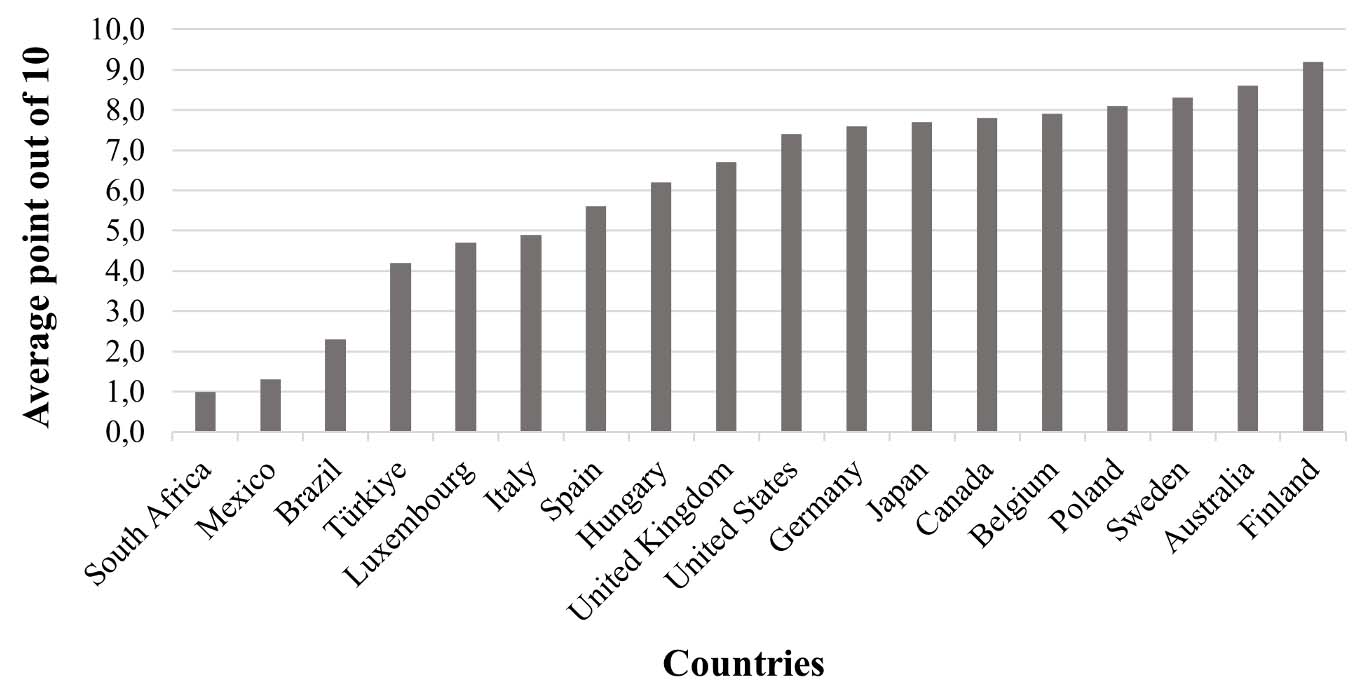
In this study, a systematic literature review was carried out. A systematic literature review is necessary to identify studies and show where new ones are needed (Petticrew & Roberts, 2006). This study was conducted to clarify the impact of the COVID-19 lockdown on educational practices in various countries during the period from 2019 to 2022. The aim was to investigate what occurred during this time and to identify areas where further research is needed. In this study, Xiao and Watson’s (2019) steps were used for the review process: determining the research problem, specifying the protocol for performing the search, undertaking a literature review, limiting according to the inclusion criteria, evaluating the quality, obtaining the data within the purpose, analyzing and synthesizing the data, and creating the report. First, the study aimed to examine distance education practices during COVID-19 lockdowns in four different countries. In line with this purpose, the database for the review was determined, and the countries for comparison selected. The OECD iLibrary database (books, papers, and statistics published by the OECD) was chosen due to its diversity of international reports and data on various countries. It serves many as a foundation for international planning and studies and is readily accessible to all (OECD, 2024a). Since the COVID-19 pandemic led to unplanned and rapid changes in the education systems, what the world tried to do to prevent its adverse effects on education and, specifically, all students became important. For this reason, three different countries with various levels of development were selected based on the education category of OECD’s Better Life Index (Figure 1), and our own country was added as the fourth country.
Figure 1
OECD Better Life Index—Education
Note. Adapted from “Education- OECD Better Life Index,” by OECD, 2024b (https://www.oecdbetterlifeindex.org/topics/education/). Copyright 2024 by OECD.
As seen in Figure 1, Türkiye is the least developed among the chosen countries in terms of education. It is followed by Spain, Japan, and the most developed, Belgium. Since education is associated with other sectors such as health, policy, and economy, it is an essential indicator to evaluate countries’ development, quality of life and well-being by researchers, policy makers or various organizations. After deciding on the countries, “pandemic” and “COVID-19” were chosen as keywords for the review, with the expectation of accessing more sources. Criteria were established to decide which documents to include in the study. These criteria are as follows:
After establishing the inclusion criteria, the first query with the keywords was conducted. The systematic literature review process is summarized in Figure 2.
Figure 2
Steps of Systematic Literature Review on Distance Education in Four Countries During the COVID-19 Pandemic
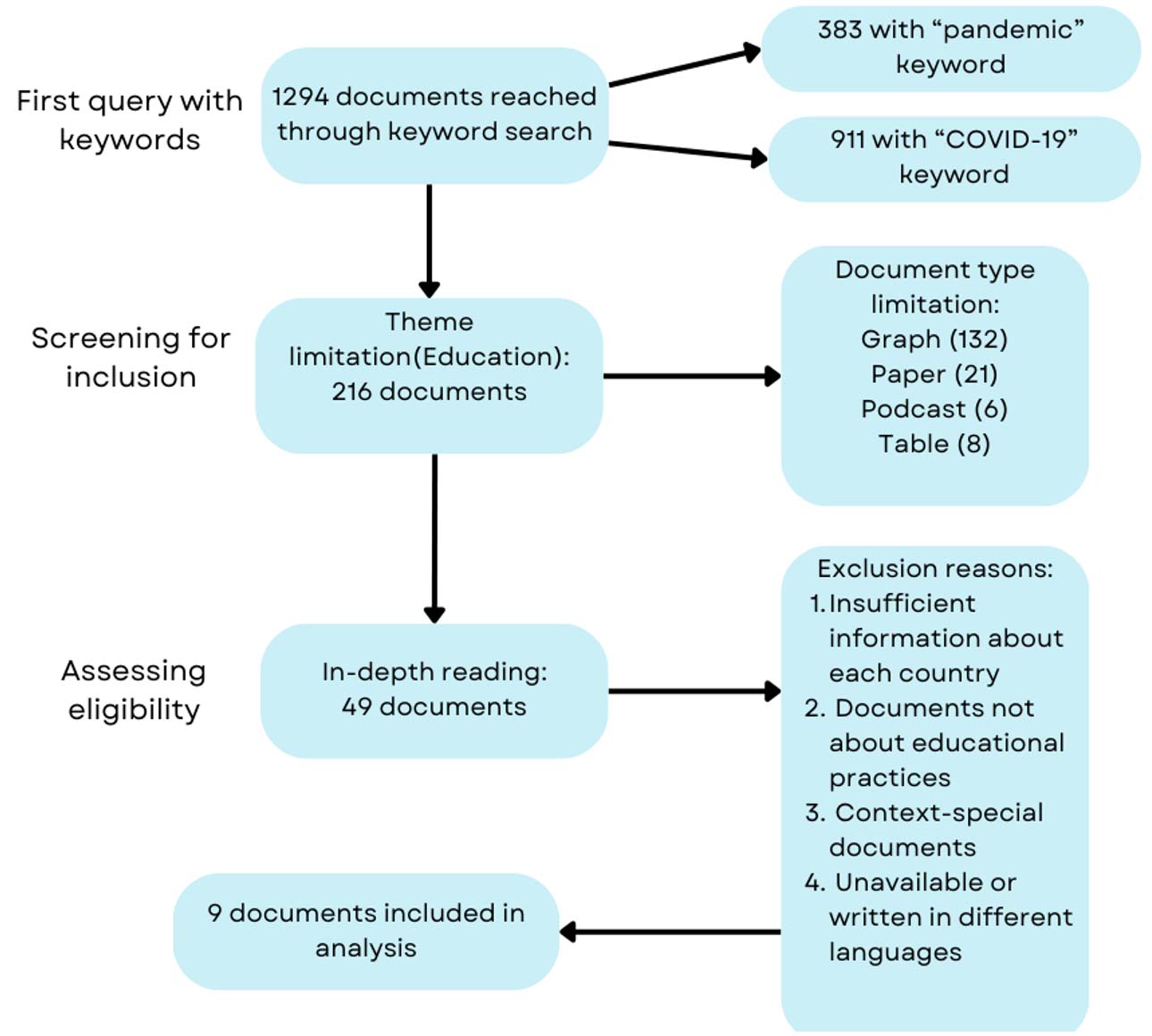
The nine documents included were reviewed superficially to determine the categories for comparing countries. The documents can be seen in Table 1.
Table 1
Eligible Study Documents
| Reviewed documents | Type of document | Language |
| How Learning Continued During the COVID-19 Pandemic: Global Lessons from Initiatives to Support Learners and Teachers | Book | English |
| Implications of the COVID-19 Pandemic for Vocational Education and Training | Report | English |
| COVID-19: The Second Year of The Pandemic | Chapter in Education at a Glance 2022 | English |
| Using Digital Technologies for Early Education during COVID-19: OECD Report for the G20 2020 Education Working Group | Report | English |
| Lessons for Education from COVID-19: A Policy Maker‘s Handbook for More Resilient Systems | Book | English |
| The State of Higher Education: One Year into the COVID-19 Pandemic | Report | English |
| The State of Global Education: 18 Months into the Pandemic | Report | English |
| The State of School Education: One Year into the COVID-19 Pandemic | Report | English |
| How Prepared Are Teachers and Schools to Face the Changes to Learning Caused by the Coronavirus Pandemic? Teaching in Focus | Report | English |
After reviewing these documents, the coding categories were determined as follows: general information, sample practices, implementation challenges, conducting courses, supporting students during the lockdown, evaluation, and national examinations. The documents were examined in detail based on these categories first, and necessary information was saved per the determined criteria for each country. A descriptive analysis was conducted, and then a joint report was presented by comparing the data in each country’s report prepared by the authors. Finally, the authors evaluated the analysis through discussions until they reached a consensus. For ethical considerations, permission was obtained from the Social and Human Sciences Ethics Committee of Ondokuz Mayis University.
The findings are presented under headings that correspond with the coding categories used in the review.
As the COVID-19 pandemic spread globally, many countries closed schools as a preventive measure. School closures and the related decisions made in this period are summarized in Table 2.
Table 2
Summary of School Closures in the Studied Countries
| Country | School closure duration – K-12 (days) | Closure duration in higher education (days) | Restrictions on online learning | Changes in vocational training |
| Belgium | ⁓50 | ⁓30–40 | No restrictions | 40-day closure, adjustments in 2020-2021 |
| Spain | < 50 | ⁓50 | No restrictions | 45-day closure, compensatory training provided |
| Türkiye | Preschool: ⁓90 Primary: ⁓120 *Secondary: ⁓140 High School: > 200 | From 2020 to February 2021 | Restrictions on all levels | Around 110-day closure, prioritized changes |
| Japan | Preschool: ⁓35 No other school closures | Optional | Undergraduate and short-term programs | Adjustments made regionally, no closure in vocational high schools |
*Note. In Türkiye, secondary school includes grades 5 to 8 and high school includes grades 9 to 12. Secondary school provides general education while high school offers specialized education in academic, religious, vocational programs and fine arts.
According to an OECD report (2021a), Belgium closed its schools for about 50 days, nearly half of the OECD average, with no differentiation by educational level. High schools closed for five days between January and May 2021. Belgium avoided transitioning to distance education for preschoolers, keeping preschools open in the Flemish region. In Türkiye, school closures lasted longer than the OECD average, with preschools closed for 85-90 days and primary schools for about 120 days, secondary schools for approximately 140 days, and high schools for more than 200 days. Japan experienced a brief closure of around five weeks for primary schools but kept preschools open, using digital technologies extensively. Spain had shorter school closures (less than 50 days), and by May 2021, all levels were fully open despite the country having had the highest number of cases in Europe (OECD, 2021a; OECD, 2021b; OECD, 2021c; OECD, 2021d).
Regarding higher education, in Belgium, universities were closed from March 16 to May 18, 2020, with limited reopening in November and December 2020. Türkiye experienced closures until February 2021, while Japan did not mandate closures, allowing universities the option to postpone in-person classes as needed. In 2020, Türkiye had no face-to-face higher education classes, while students in Belgium mostly attended online classes. However, Belgium allowed face-to-face exams with protocols (OECD, 2021b). Spain’s universities were closed from March 14 to May 22, 2020, with partial closures continuing into 2021. Higher education had approximately 50 days of closure in Spain in 2020 (OECD, 2021b).
The OECD noted that Japan and Türkiye imposed restrictions on the scope of publicly permitted online learning, whereas Belgium did not. In Türkiye, restrictions were applied to undergraduate, graduate, and postgraduate levels, while Japan restricted mainly undergraduate and short-term programs (OECD, 2021b). Changes in Japan’s higher education calendar and programs were regional, with additional funding allocated for the 2019 and 2020 academic years. Belgium and Spain increased funding for higher education between 2019 and 2021, but Türkiye’s decisions on academic calendar changes were centralized without increased funding (OECD, 2021b). Vocational and technical schools in Belgium and Spain experienced 40 and 45 days of closures, respectively, while Türkiye had approximately 110 days of closure (OECD, 2021e). Distance education in vocational training was limited in the Flemish Community, with specific arrangements made in the 2020–2021 academic year. Japan made regional changes to vocational education, with closures only in technical colleges. Belgium, Japan, and Spain provided compensatory training for vocational students, with Belgium offering additional workplace training days and increased incentives for employers. At the same time, Spain allowed regional exceptional measures for training programs (OECD, 2021e).
During the lockdowns, countries implemented specific changes and sometimes strengthened certain practices in their education systems. First, in Belgium, KlasCement, managed by the Flemish Ministry of Education and Training, supported teachers and pre-service teachers with professional learning and online teaching activities. Established in 1998 as a teacher-focused network, KlasCement allowed teachers to share educational resources and ideas via forums. Following school closures in March 2020, KlasCement expanded its website to include sections for distance education and learning, edited existing resources, and sought additional support from partners.
In Japan, when schools closed in March 2020, Obiyama Nishi Elementary School in Kumamoto City launched a YouTube video series to implement the curriculum without ignoring the “tokkatsu” (Japanese non-subject education) included in it normally. Teachers made a study plan to discuss what children needed to know according to their classes during school closures and then developed and edited the videos. Children were given timetables to reach resources. Each morning and afternoon, classes started with exercise activities or dancing. LoiLoNote School was seen as helpful in conducting collaborative online interactive courses, and MetaMoJi ClassRoom and Zoom applications that allow collaboration were used in the classrooms.
In Spain, during the lockdown, the ProFuturo digital education program implemented the #SeeYouInDigital contingency plan to ensure teacher education and student learning continuity outside classrooms. This plan provided accessible courses and resources for all, adjusted for students without technology or Internet access. Additionally, the Spanish Ministry of Education and Vocational Education launched the Aprendo en Casa (Learn at Home) initiative within 10 days, offering quality educational resources and online tools for teachers, families, and students.
In Türkiye, the Education Information Network (EBA) and TRT School channel delivered distance education. The Ministry of National Education developed a mobile app to support students with special needs, providing specific resources for parents or caregivers. This app also offered technical features to accommodate various dysfunctions (on-screen text reading, sign language, dyslexia-friendly fonts) and created a social network for users to share their work (Vincent-Lancrin et al., 2022).
While countries adopted different sample practices, they faced some implementation challenges, as summarized in Table 3.
Table 3
Distance Education Challenges Faced by Four Countries During the COVID-19 Pandemic
| Country | Challenges |
| Belgium | ICT infrastructure tools Coordinating remote work on KlasCement Privacy issues with video and audio platforms Quick transition to new platforms |
| Japan | Internet access issues Technological device limitations Challenges with online teaching tools |
| Spain | Limited Internet access in remote areas Lack of devices among teachers |
| Türkiye | Challenges in assembling an expert team Mobilizing resources Application development Difficulty reaching students with special needs at home |
Note. Information and Communication Technology (ICT) includes a wide range of technological tools and resources to access, create, store, and share information.
The implementation challenges of KlasCement in Belgium mainly occurred in ICT infrastructure tools and the need for the team to coordinate work on the platform remotely. Due to privacy issues, KlasCement had to stop using chosen video and audio platforms for teacher webinars. The transition to a new video and audio platform had to be done quickly, which brought additional challenges. Considering this experience, the government then decided to invest in new tools and purchase a server to facilitate the organization of webinars and other similar activities. Remote coordinated work on KlasCement with limited social contact among team members created extra challenges regarding time and plans.
In Japan, these challenges included problems related to Internet access, technological devices, and online applications used for teaching and learning.
In Spain, the pandemic posed a significant challenge as ProFuturo operated in remote areas where teachers did not always have Internet access and, in most cases, did not have a computer or even a smartphone. To solve this, resources were printed and distributed door-to-door, complemented by interactive presentations, podcasts, audio and video courses for radio and TV broadcasting, and WhatsApp forums. For Aprendo en Casa, the implementation challenge was primarily the need for more resources.
In Türkiye, gathering a team of experts for the implementation, mobilizing appropriate resources, and developing the application were quite challenging. After the application was presented, reaching students with special needs at home became the most difficult part. To overcome this challenge, the application was introduced through various channels (Vincent-Lancrin et al., 2022).
To conduct courses, countries generally used similar solutions with some differences. Table 4 outlines how courses were conducted and the decision-making process regarding educational practices during the pandemic.
Table 4
Course Delivery Mode and Decision-Making Processes in Four Countries During the COVID-19 Pandemic
| Country | Challenges | Decision-making process |
| Belgium | Online platforms Correspondence-based homework Television Smartphones Radio (Flemish Community) | School-level decisions Decisions included closing/opening schools, educational resources, teacher competencies, and pedagogical approaches |
| Japan | Online platforms Correspondence-based homework Television Smartphones Radio | Local-level decisions within a general framework Regional-level decisions on teacher‘ teaching and learning requirements School-level decisions on teaching activities and approaches |
| Spain | Online platforms Correspondence-based homework Television Smartphones | National, regional, and local authorities collaborated Regional-level decisions on school closures Decisions on available resources at all levels Regional-level decisions on teacher qualifications Decisions on course delivery during school re-opening at all levels |
| Türkiye | Online platforms Correspondence-based homework Television Smartphones Other modalities | All decisions made at the center |
According to the OECD (2021c) report, online platforms, correspondence-based homework, television, and smartphones were used in the French Community of Belgium, while the Flemish Community also employed radio training. In Türkiye, in addition to these, other distance education modalities such as apps or video conferencing were used, and priority was given to reading and mathematics. Regarding decision-making, schools in both Belgian communities had autonomy over closure/opening decisions, educational resources, teacher competencies, and pedagogical approaches, whereas decisions in Türkiye were centralized (OECD, 2021c). In Japan, the same delivery modes were used. The lockdown made partaking of Japan’s non-subject curriculum challenging, as it typically relies on extensive in-person interactions (Vincent-Lancrin et al., 2022). The decisions were taken at the local level within the scope of a general framework. Decisions regarding teachers’ teaching and learning requirements were handled at the regional level. Decisions at the school level were about which teaching activities and approaches teachers would adopt.
In Spain, education during this period prioritized the disadvantaged, with arrangements made for the 2020–2021 academic year regarding the education process and curriculum content. Online platforms, correspondence-based homework, television, and smartphones were used, with no use of radio. National, regional, and local authorities collaborated to support education continuity. While regional authorities decided school closures and teacher qualifications by themselves, decisions on course delivery during school reopening and resource allocations were taken at all levels (OECD, 2021c).
To support different groups of students, countries differentiated their policies and practices. These are summarized in Table 5.
Table 5
Measures Taken to Support Students in Four Countries During the COVID-19 Pandemic
| Country | Measures taken for disadvantaged groups during lockdown | Measures against learning losses during school reopening | Policies and support measures implemented in 2022 |
| Belgium | Internet support through GSM operators Asynchronous courses Infrastructure improvements for remote learning Tablets and computers Special efforts for students in migrant, seasonal worker, or refugee camps and with disabilities | Assessed learning losses Compensatory education Special measures for disadvantaged (students at risk of dropping out, immigrant, ethnic minority and refugee students, vocationally-oriented students) | Extended instructional time Psychological counseling services Grouped students based on competencies for targeted instruction (French community) |
| Japan | Support for lower-income students (cash-transfer) Internet support through GSM operators Asynchronous courses Infrastructure improvements for remote learning Special efforts for students in migrant, seasonal worker, or refugee camps and with disabilities Tablets and computers | Assessed learning losses Compensatory education Special measures for disadvantaged (students at risk of dropping out, vocationally-oriented students, students taking national exams and transitioning between ISCED levels) | Nationwide psychological counseling services Strengthened water sanitation Cash transfers, curriculum adjustments, extended instructional time, personalized instruction, and improved nutrition services at the local level |
| Spain | Support for lower-income students (cash-transfer) Internet support through GSM operators Asynchronous courses Infrastructure improvements for remote learning Tablets and computers Special efforts for students with disabilities | Assessed learning losses Compensatory education Special measures for disadvantaged (students at risk of dropping out, immigrant, ethnic minority and refugee students, vocationally-oriented students, students taking national exams and transitioning between ISCED levels) | Warning systems for students at risk of dropping out Automatic re-enrollment mechanisms Curriculum adjustments, extended instructional time, personalized instruction, campaigns to attract students to school, financial and emotional support for tutoring, counseling services, systems for directing students to specialized services and strengthened water sanitation at the local level |
| Türkiye | Internet support through GSM operators Asynchronous courses Infrastructure improvements for remote learning Special efforts for students in migrant, seasonal worker, or refugee camps and with disabilities Tablets and computers | Compensatory education Special measures for disadvantaged (immigrant, ethnic minority and refugee students, students taking national exams and transitioning between ISCED levels) | Accelerated education programs Campaigns to attract students to school Cash transfers Financial and emotional support for tutoring Counseling services Automatic re-enrollment mechanisms Strengthened water sanitation Systems for directing students to specialized services |
Note. International Standard Classification of Education (ISCED) serves as a reference to organize education programs and associated qualifications based on levels and fields internationally.
Measures taken for disadvantaged groups were mentioned in the OECD report (2021c). The first measure in all four countries was to provide Internet support through Global System for Mobile Communications (GSM) operators. In addition, asynchronous courses were offered in all countries, and flexible learning opportunities were offered to students. Infrastructure improvements were made for students living in remote areas and those living in the city but needing help connecting to classes due to overloading. Special efforts were made to ensure access to education for students residing in migrant, seasonal worker, or refugee camps except in the case of Spain and the Flemish Community’s primary level. Moreover, tablets and computers were provided to students, and necessary arrangements were made for students with special needs. While those with low socioeconomic status were ignored in Belgium and Türkiye, students who spoke minority languages were supported only in Türkiye.
The same report outlined measures taken against learning losses when schools reopened in 2020, similar in Belgium’s Flemish and French communities, Spain, and Japan. These measures included assessing learning losses, providing compensatory education, and taking special measures for disadvantaged students, those unable to participate in distance education, and students at risk of dropping out or grade repetition. Spain and Japan also supported students taking national exams and transitioning between International Standard Classification of Education (ISCED) levels. However, Japan did not directly address immigrants, ethnic minorities, or asylum seekers, nor did it develop materials for speakers of minority languages. Türkiye made efforts at all levels except for assessing learning losses, remedial measures for vocational students, and economic support such as cash transfers, unlike Japan and Spain (OECD, 2021c). Regarding policies during the pandemic, the countries prioritized various support points. For example, Belgium, Japan, and Spain prioritized ensuring all students’ educational participation and benefit, focusing on student well-being, assessment approaches, and addressing learning losses. The French region of Belgium, Japan, and Türkiye adapted policies to changing circumstances by supporting educators and expanding remote learning capacity. Additionally, Belgium’s French region and Türkiye fostered collaboration with stakeholders beyond educational institutions, while Japan emphasized personalized and flexible learning approaches like Spain, unlike Belgium (OECD, 2020).
When examining OECD (2022) data to see what kinds of support were provided in the year 2022, a number of observations can be made. In the French-speaking region of Belgium, efforts were made to increase the time allocated to education and teaching through activities such as summer schools and extending school hours. Students were grouped based on their competencies rather than age, enabling targeted instruction. Psychological counseling services were also offered to students.
In Japan, nationwide psychological counseling services and strengthened water sanitation were implemented alongside local measures such as cash transfers, curriculum adjustments, and extended instructional time. Spain developed warning systems for identifying students at risk of dropping out and established automatic re-enrollment mechanisms, along with local campaigns to attract students to school and provide financial and emotional support for tutoring. Special services were created for students with special needs. Türkiye implemented accelerated education programs but did not address nutrition, targeted instruction, extending instructional time, or curriculum adjustments like other countries (OECD, 2020).
Other critical issues interrupted during the lockdowns were evaluations and exams. Belgium did not hold standardized examinations in 2020 and 2021. It took a similar stance to Japan, Spain, and Türkiye. National exams held in Türkiye were postponed, and adjustments were made for the content, as in Spain. As a result of the postponement, new dates were determined for the exams, which were carried out under certain precautions (OECD, 2021a). In Spain, the number of questions in national exams was also modified.
OECD (2021a) data show that extra health and safety measures were taken in Belgium, namely, in the Flemish Community, conducting online exams and in the French Community, cancelling exams. Different evaluation techniques were adopted. Teachers in Belgium and Spain assessed learning losses through formative assessment at the primary and secondary levels.
Moreover, OECD (2022) data shows the impact of school closure on learning outcomes in lower secondary education in 2021 and 2022. In Türkiye and Japan, studies have been conducted into national exam outcomes, while no research has been carried out for the results of school exams. In Spain, no work has been done in either dimension. As for Belgium, low number of participants or missing data make it difficult to assess the impact of school closures on outcomes.
This systematic literature review on distance education practices during lockdowns revealed the various measures taken. First, it was found that closure durations varied across countries, with Japan having the shortest closure and Türkiye the longest, reaching nearly two years (Ozer et al., 2022). Despite high case numbers, Spain had shorter closure periods, supported by studies emphasizing low infection risks in education centers (Filgueira-Vizoso et al., 2022). Belgium, Spain, and Japan did not favor distance education for early childhood education, leading to regional closures. Türkiye faced challenges in reopening schools due to its large student and teacher population (Ozer et al., 2022). Studies on Türkiye highlighted the need for improved distance education tools and resources, especially for early childhood education (Alan, 2021). Vocational education saw shorter closure periods across all countries, with compensatory education implemented in Belgium, Spain, and Japan. The International Labor Organization (2021) explained the need for compensatory education in a report. It described how training programs were disrupted, especially work-based learning, which suffered due to business closures, alongside the cancellation of assessment and certification exams. Higher education budget increases were observed in some countries but not in Türkiye, indicating the influence of various factors on lockdown decisions across different sectors such as economy, health, policy, and education.
Second, different adaptations and practices were seen in the countries in the short term. It was observed that teachers, students, and families outside Japan used online learning networks or platforms. Japan focused on trying to continue remote implementation of non-subject education practices. Additionally, remote education tools that enable collaborative learning were highlighted in Japan. Kang (2020) found that in primary, secondary, and high schools, distance education spread more slowly than in higher education, and most schools, with few exceptions, conducted teaching based on textbooks and paper teaching materials. Many concerns were observed regarding the perceptions of students and parents toward distance education. Included among these were whether students could achieve self-regulated learning, whether parents could support their children in learning at home, whether inadequate homeschooling would hinder learning development, whether and how children should socialize with classmates while being homeschooled, and whether students have a sufficient Internet environment to support distance learning.
In Türkiye, an important initiative was implemented for individuals with special needs, enhancing the educational experiences of disadvantaged groups. Unlike other countries, which primarily focused on making learning content accessible to individuals with special needs, Türkiye's approach went further by creating a special application. Also, Türkiye and Spain attempted to mitigate disadvantage by making content accessible to everyone on the learning platforms, even without Internet access. When examining the challenges encountered throughout such sample practices, it was observed that the rapid adaptation process and the inequality created by using distance education devices and technology posed significant issues. The unfamiliarity of teachers, students, or families with distance education and its tools further complicated the situation in all countries.
During this period, countries faced similar challenges in delivering lessons, primarily relying on online platforms, homework, television, and smartphones, with radio occasionally used as a supporting tool. Türkiye stood out by prioritizing mathematics and reading courses, reflecting its perspective on key subjects. Dede (2019) found that Turkish students prioritized math because of the national exams, daily life use, the relationship between math and other subjects, future careers, and games. Decision-making processes varied among countries, with Belgium adopting a school-by-school approach, while Japan and Spain addressed issues at multiple levels. In contrast, Türkiye centralized all decisions due to its existing education system. Teachers played a crucial role in using technology for teaching, with Türkiye exhibiting high self-efficacy and openness to change. This contrasts with Japan, where reluctance to adopt digital technologies persisted despite Japan’s technological prowess (Kang, 2020).
Lastly, countries prioritized different areas to support students’ daily lives and education. In Spain, Belgium, and Japan, addressing learning losses and providing targeted instruction was key, leading to curriculum and instructional changes. Japan also emphasized nutrition and well-being, while Spain focused on preventing dropouts. Belgium adopted competency-based classification for students. Türkiye implemented an accelerated education program to compensate for lost time but lacked economic support compared to other countries. Evaluation methods for national exams varied, with Belgium focusing on logistics, Türkiye on postponement and hygiene, and Spain on question quantity and content. Precise information on school exams was lacking in most countries except for Türkiye and Japan. Since school exams were not conducted in most countries, students were evaluated using different approaches. Protecting students from stress and the difficulty of conducting exams were among the reasons. However, during this period, many students were given grades similar to previous periods (Smith, 2021). In light of the data obtained, it was seen that the practices carried out by the countries in distance education were entirely about saving the moment, and context was an important factor that affected decisions. Since countries had their priorities, they shaped education to fit those priorities. However, in light of the success of the process, these future directions can now be considered.
Abu Talib, M., Bettayeb, A. M., & Omer, R. I. (2021). Analytical study on the impact of technology in higher education during the age of COVID-19: Systematic literature review. Education and Information Technologies, 26, 6719-6746. https://doi.org/10.1007/s10639-021-10507-1
Ahmad Shazli, I. F., Che Lah, N. H., Hashim, M., Mailok, R., Saad, A., & Hamid, S. (2023). A comprehensive study of students’ challenges and perceptions of emergency remote education during the early COVID-19 pandemic: A systematic literature review. Sage Open, 13(4). https://doi.org/10.1177/21582440231219152
Al Balushi, W., Al-Busaidi, F. S., Malik, A., & Al-Salti, Z. (2022). Social media use in higher education during the COVID-19 pandemic: A systematic literature review. International Journal of Emerging Technologies in Learning (iJET), 17(24), 4-24. https://doi.org/10.3991/ijet.v17i24.32399
Aladsani, H., Al-Abdullatif, A., Almuhanna, M., & Gameil, A. (2022). Ethnographic reflections of K–12 distance education in Saudi Arabia: Shaping the future of post-pandemic digital education. Sustainability, 14(16), Article 9931. https://doi.org/10.3390/su14169931
Alan, Ü. (2021). Distance education during the COVID-19 pandemic in Turkey: Identifying the needs of early childhood educators. Early Childhood Education Journal, 49, 987-994. https://doi.org/10.1007/s10643-021-01197-y
Al Lily, A. E., Ismail, A. F., Abunasser, F. M., & Alqahtani, R. H. A. (2020). Distance education as a response to pandemics: Coronavirus and Arab culture. Technology in Society, 63, Article 101317. https://doi.org/10.1016/j.techsoc.2020.101317
Anderson, J. (2020, March 29). The coronavirus pandemic is reshaping education. Quartz. https://qz.com/1826369/how-coronavirus-is-changing-education
Anderson, T., & Dron, J. (2011). Three generations of distance education pedagogy. The International Review of Research in Open and Distributed Learning, 12(3), 80-97. https://doi.org/10.19173/irrodl.v12i3.890
Aristovnik, A., Keržič, D., Ravšelj, D., Tomaževič, N., & Umek, L. (2020). Impacts of the COVID-19 pandemic on life of higher education students: A global perspective. Sustainability, 12(20), Article 8438. https://doi.org/10.3390/su12208438
Bao, W. (2020). COVID-19 and online teaching in higher education: A case study of Peking University. Human Behavior & Emerging Technologies, 2(2), 113-115. https://doi.org/10.1002/hbe2.191
Barbour, M. K., Hodges, C., Trust, T., LaBonte, R., Moore, S., Bond, A., Kelly, K., Lockee, B., & Hill, P. (2020). Understanding pandemic pedagogy: Differences between emergency remote, remote, and online teaching. Canadian e-Learning Network. https://doi.org/10.13140/RG.2.2.31848.70401
Bergdahl, N., & Nouri, J. (2021). COVID-19 and crisis-prompted distance education in Sweden. Technology, Knowledge and Learning, 26, 443-459. https://doi.org/10.1007/s10758-020-09470-6
Bond, M. (2020). Schools and emergency remote education during the COVID-19 pandemic: A living rapid systematic review. Asian Journal of Distance Education, 15(2), 191-247. https://www.asianjde.com/ojs/index.php/AsianJDE/article/view/517
Bozkurt, A., Jung, I., Xiao, J., Vladimirschi, V., Schuwer, R., Egorov, G., Lambert, S., Al-Freih, M., Pete, J., Olcott, Jr., D., Rodes, V., Aranciaga, I., Bali, M., Alvarez, A. J., Roberts, J., Pazurek, A., Raffaghelli, J. E., Panagiotou, N., de Coëtlogon, P., ... Paskevicius, M. (2020). A global outlook to the interruption of education due to COVID-19 pandemic: Navigating in a time of uncertainty and crisis. Asian Journal of Distance Education, 15(1), 1-126. https://www.asianjde.com/ojs/index.php/AsianJDE/article/view/462
Bozkurt, A., & Sharma, R. C. (2020). Emergency remote teaching in a time of global crisis due to the coronavirus pandemic. Asian Journal of Distance Education, 15(1), i-vi. https://www.asianjde.com/ojs/index.php/AsianJDE/article/view/447
Cevikbas, M., & Kaiser, G. (2023). Can flipped classroom pedagogy offer promising perspectives for mathematics education on pandemic-related issues? A systematic literature review. ZDM Mathematics Education, 55, 177-191. https://doi.org/10.1007/s11858-022-01388-w
Crawford, J., Butler-Henderson, K., Rudolph, J., Malkawi, B., Glowatz, M., Burton, R., Magni, P. A., & Lam, S. (2020). COVID-19: 20 countries’ higher education intra-period digital pedagogy responses. Journal of Applied Learning & Teaching, 3(1), 9-28. https://doi.org/10.37074/jalt.2020.3.1.7
Dede, Y. (2019). Why mathematics is valuable for Turkish, Turkish immigrant and German students? A cross-cultural study. In P. Clarkson, W. T. Seah, & J. Pang (Eds.), Values and valuing in mathematics education (pp. 143-156). Springer Open.
Divjak, B., Rienties, B., Iniesto, F., Vondra, P., & Žižak, M. (2022). Flipped classrooms in higher education during the COVID-19 pandemic: Findings and future research recommendations. International Journal of Educational Technology in Higher Education, 19, Article 9. https://doi.org/10.1186/s41239-021-00316-4
Filgueira-Vizoso, A., Castro-Santos, L., García-Diez, A. I., Puime Guillén, F., Lamas-Galdo, M. I., & Graña-López, M. Á. (2022). Opening or not opening educational centers in the time of SARS-COV-2? Analysis of the situation in Galicia (Spain). Sustainability, 14(9), Article 5564. https://doi.org/10.3390/su14095564
Huck, C., & Zhang, J. (2021). Effects of the COVID-19 pandemic on K-12 education: A systematic literature review. New Waves-Educational Research and Development Journal, 24(1), 53-84. https://eric.ed.gov/?id=EJ1308731
Husamah, H., Suwono, H., Nur, H., & Dharmawan, A. (2022). Global trend of research and development in education in the pandemic era: A systematic literature review. Research and Development in Education (RaDEn), 2(2), 89-100. https://doi.org/10.22219/raden.v2i2.23224
Ibda, H., Wulandari, T. S., Abdillah, A., Hastuti, A. P., & Mahsun, M. (2023). Student academic stress during the COVID-19 pandemic: A systematic literature review. International Journal of Public Health Science (IJPHS), 12(1), 286-295. http://doi.org/10.11591/ijphs.v12i1.21983
Iglesias-Pradas, S., Hernández-García, Á., Chaparro-Peláez, J., & Prieto, J. L. (2021). Emergency remote teaching and students’ academic performance in higher education during the COVID-19 pandemic: A case study. Computers in Human Behavior, 119, Article 106713. https://doi.org/10.1016/j.chb.2021.106713
International Labor Organization. (2021, February 1). Vocational training hampered by COVID-19 pandemic. https://www.ilo.org/resource/news/vocational-training-hampered-covid-19-pandemic
Kang, B. (2020). How the COVID-19 pandemic is reshaping the education service. In H. S. Han & J. Lee (Eds.), COVID-19 and the future of the service industry post-pandemic: Insights and resources (pp. 15-36). Springer.
Kim, L. E., Oxley, L., & Asbury, K. (2022). “My brain feels like a browser with 100 tabs open”: A longitudinal study of teachers’ mental health and well-being during the COVID-19 pandemic. British Journal of Educational Psychology, 92(1), 299-318. https://doi.org/10.1111/bjep.12450
König, J., Jäger-Biela, D. J., & Glutsch, N. (2020). Adapting to online teaching during COVID-19 school closure: Teacher education and teacher competence effects among early career teachers in Germany. European Journal of Teacher Education, 43(4), 608-622. https://www.doi.org/10.1080/02619768.2020.1809650
Kulikowski, K., Przytuła, S., & Sułkowski, Ł. (2022). E-learning? Never again! On the unintended consequences of COVID-19 forced e-learning on academic teacher motivational job characteristics. Higher Education Quarterly, 76(1), 174-189. https://doi.org/10.1111/hequ.12314
Li, J., Yang, S., Chen, C., & Li, H. (2022). The impacts of COVID-19 on distance education with the application of traditional and digital appliances: Evidence from 60 developing countries. International Journal of Environmental Research and Public Health, 19(11), Article 6384. https://doi.org/10.3390/ijerph19116384
Marek, M. W., Chew, C. S., & Wu, W. V. (2021). Teacher experiences in converting classes to distance learning in the COVID-19 pandemic. International Journal of Distance Education Technologies (IJDET), 19(1), 89-109. http://doi.org/10.4018/IJDET.20210101.oa3
Means, B., Bakia, M., & Murphy, R. (2014). Learning online: What research tells us about whether, when and how. Routledge.
Mishra, S., Sahoo, S., & Pandey, S. (2021). Research trends in online distance learning during the COVID-19 pandemic. Distance Education, 42(4), 494-519. https://doi.org/10.1080/01587919.2021.1986373
Muhaimin, M., Habibi, A., Riady, Y., Alqahtani, T. M., Chaerunisaa, A. Y., Wijaya, T. T., Milanda, T., Yusop, F. D., & Albelbisi, N. A. (2023, May 23). COVID-19 distance and online learning: A systematic literature review in pharmacy education. BMC Medical Education, 23, Article 367. https://doi.org/10.1186/s12909-023-04346-6
OECD. (2020). Lessons for education from COVID-19: A policy maker’s handbook for more resilient systems. https://doi.org/10.1787/0a530888-en
OECD. (2021a). The state of global education: 18 months into the pandemic. https://doi.org/10.1787/1a23bb23-en
OECD. (2021b). The state of higher education: One year into the COVID-19 pandemic. https://doi.org/10.1787/83c41957-en.
OECD. (2021c). The state of school education: One year into the COVID-19 pandemic. https://doi.org/10.1787/201dde84-en
OECD. (2021d). Using digital technologies for early education during COVID-19: OECD report for the G20 2020 Education Working Group. https://doi.org/10.1787/fe8d68ad-en
OECD. (2021e). Implications of the COVID-19 pandemic for vocational education and training. https://doi.org/10.1787/55afea00-en
OECD. (2022). Education at a glance 2022: OECD indicators. https://doi.org/10.1787/3197152b-en
OECD. (2024a). About OECD iLibrary. https://www.oecd-ilibrary.org/oecd/about
OECD (2024b). Education. OECD Better Life Index. Retrieved June 1, 2024, from https://www.oecdbetterlifeindex.org/topics/education/
Ozamiz-Etxebarria, N., Berasategi, N., Idoiaga-Mondragon, N., & Dosil-Santamaría, M. (2021, January 11). The psychological state of teachers during the COVID-19 crisis: The challenge of returning to face-to-face teaching. Frontiers in Psychology, 11. https://doi.org/10.3389/fpsyg.2020.620718
Ozer, M., Suna, H. E., Perc, M., Şensoy, S., & Ilıkhan, S. U. (2022). Turkey’s transition to face-to-face schooling during the COVID-19 pandemic. Turkish Journal of Medical Sciences, 52(3), 529-540. https://doi.org/10.55730/1300-0144.5343
Petticrew, M., & Roberts, H. (2006). Systematic reviews in the social sciences. Blackwell Publishing.
Saikat, S., Dhillon, J. S., Wan Ahmad, W. F., & Jamaluddin, R. A. (2021). A systematic review of the benefits and challenges of mobile learning during the COVID-19 pandemic. Education Sciences, 11(9), Article 459. https://doi.org/10.3390/educsci11090459
Sianes-Bautista, A., Rosado-Castellano, F., & Flores-Rodríguez, C. (2022). Research trends in education in the context of COVID-19 in Spain: A systematic literature review. Sustainability, 14(19), Article 12235. https://doi.org/10.3390/su141912235
Smith, J. A. (2021, June 29). Pedagogy in a pandemic: Teaching without exams. In 2021: Proceedings of the Canadian Engineering Education Association (CEEA–ACEG). Canadian Engineering Education Association. https://doi.org/10.24908/pceea.vi0.14885
Soon, H. C., & Aziz, A. A. (2022, May 11). Teaching English online during the COVID-19 pandemic: A systematic literature review (2020 – 2022). International Journal of Academic Research in Progressive Education and Development, 11(2), 678-699. http://dx.doi.org/10.6007/IJARPED/v11-i2/13251
Tarchi, C., Wennås Brante, E., Jokar, M., & Manzari, E. (2022). Pre-service teachers’ conceptions of online learning in emergency distance education: How is it defined and what self-regulated learning skills are associated with it? Teaching and Teacher Education, 113, Article 103669. https://doi.org/10.1016/j.tate.2022.103669
Tong, D. T., Uyen, B. P., & Ngan, L. K. (2022). The effectiveness of blended learning on students’ academic achievement, self-study skills and learning attitudes: A quasi-experiment study in teaching the conventions for coordinates in the plane. Heliyon, 8(12), Article e12657. https://doi.org/10.1016/j.heliyon.2022.e12657
UNESCO. (2020, March 10). With one in five learners kept out of school, UNESCO mobilizes education ministers to face the COVID-19 crisis. https://www.unesco.org/en/articles/one-five-learners-kept-out-school-unesco-mobilizes-education-ministers-face-covid-19-crisis
UNICEF. (2021). COVID-19 and school closures: One year of education disruption. https://digitallibrary.un.org/record/3905510?v=pdf
Walugembe, A., Ntayi, J., Olupot, C., & Elasu, J. (2022, November 24). Adaptive behaviors in education institutions before and after COVID-19: A systematic literature review. Frontiers in Psychology, 13. https://doi.org/10.3389/fpsyg.2022.1017321
Westphal, A., Kalinowski, E., Hoferichter, C. J., & Vock, M. (2022, September 1). K-12 teachers’ stress and burnout during the COVID-19 pandemic: A systematic review. Frontiers in Psychology, 13, Article 920326. https://doi.org/10.3389/fpsyg.2022.920326
Vincent-Lancrin, S., Romaní, C. C., & Reimers, F. (Eds.). (2022). How learning continued during the COVID-19 pandemic: Global lessons from initiatives to support learners and teachers. OECD. https://doi.org/10.1787/bbeca162-en
Xiao, Y., & Watson, M. (2019). Guidance on conducting a systematic literature review. Journal of Planning Education and Research, 39(1), 93-112. https://doi.org/10.1177/0739456X17723971

Distance Education Practices During the COVID-19 Lockdown: Comparison of Belgium, Japan, Spain, and Turkiye by Irem Nur Akkan and Seval Eminoglu Kucuktepe is licensed under a Creative Commons Attribution 4.0 International License.